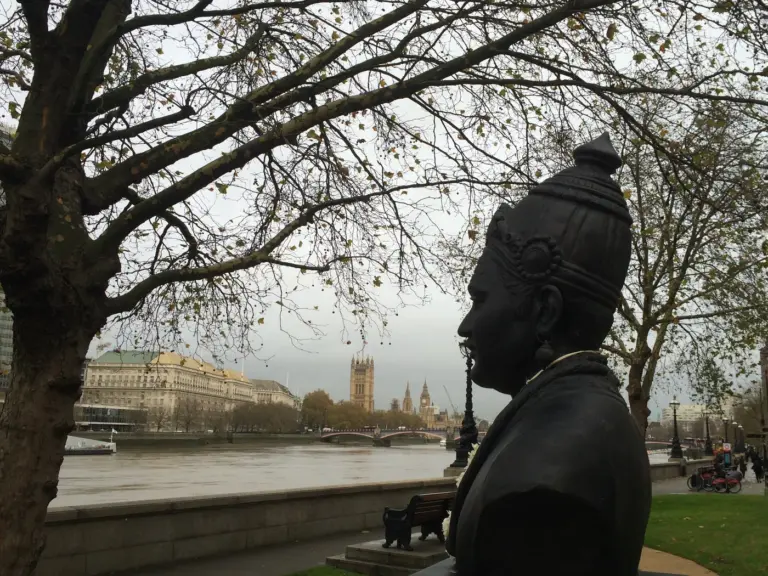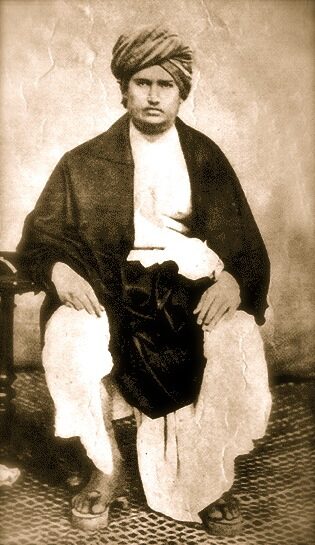
The Arya Samaj was the most assertive Hindu reform movement of the nineteenth century. Swami Dayananda Saraswati founded it in Bombay on 10 April 1875 and gave it a single rallying cry: Back to the Vedas. He argued that the four Vedas were the infallible word of God, that everything in later Hinduism that contradicted them was a corruption, and that an honest reading of the Vedas would dissolve idolatry, caste, untouchability, child marriage and the priestly monopoly on Hindu life. The Arya Samaj built schools, ran the Shuddhi reconversion campaign, sent missionaries to colonies, and turned Punjab into the centre of organised Hindu reform.
For UPSC General Studies I on modern Indian history and Indian society, the Arya Samaj completes the picture begun by the Brahmo Samaj. Where Raja Ram Mohan Roy worked through Bengali Enlightenment idiom, Dayananda Saraswati used Sanskrit scholarship and aggressive public debate. Where the Brahmos treated all scripture as fallible, the Aryas accepted the Vedas as the literal revelation of Ishvara. The Arya Samaj therefore grew faster, recruited a wider social base, and entered the mainstream of the Indian National Congress and the freedom struggle in ways the Brahmo Samaj never quite managed.
This article walks through the founding of the Arya Samaj, Dayananda’s biography and key text the Satyarth Prakash, the principal reform programmes, the Shuddhi and DAV networks, the Lahore split of 1893, and the contrast with the Brahmo Samaj that is a UPSC favourite.
Quick Facts
- Founded: 10 April 1875 at Girgaum in Bombay by Swami Dayananda Saraswati
- Headquarters shifted: Lahore in 1877, then Delhi after Partition
- Founder: Mool Shankar of Tankara in Kathiawar, ordained Dayananda Saraswati in 1847
- Core slogan: Vedon ki ore lauto, Back to the Vedas
- Foundational text: Satyarth Prakash, first edition 1875, revised 1882–84
- Ten principles: framed at the Lahore congress of 1877
- DAV Trust founded: 1 June 1886 at Lahore, after Dayananda’s death
- Lahore split of 1893: College party led by Lala Hans Raj, Mahatma or Gurukul party led by Swami Shraddhanand
Dayananda Saraswati and the Founding of the Arya Samaj
Dayananda Saraswati was born Mool Shankar in 1824 at Tankara in the Morbi state of Kathiawar, in the present Rajkot district of Gujarat. The traditional founding story records that as a boy of fourteen he watched a mouse run over a Shiva linga on Mahashivratri night and concluded that the idol could not be the true God. He left home around 1846 and was ordained Dayananda Saraswati in 1847.
His decisive teacher was Swami Virjananda Saraswati, a blind Sanskrit scholar at Mathura, with whom Dayananda studied from 1860 to 1863. Virjananda distinguished the Arsha texts, the Vedas and major Upanishads, from the Anarsha texts, meaning the Puranas and most medieval Hindu literature. Dayananda accepted only the Arsha canon. He began public preaching in Hindi after 1869, debating Pandits at Banaras and Calcutta. He met Brahmo leaders Debendranath Tagore and Keshub Chandra Sen in 1872, who urged him to organise his work into a formal society and to preach in Hindi. The Arya Samaj was founded on 10 April 1875 in the house of Hardevji Pandurang at Girgaum in Bombay, with ten signatory members. He died at Ajmer on 30 October 1883, allegedly of poisoning.
Satyarth Prakash and the Vedic Hermeneutic
Dayananda’s main work, the Satyarth Prakash or Light of Truth, was first published in 1875 and revised between 1882 and 1884. It runs to fourteen chapters in Hindi prose. The first ten lay out Vedic theology, ethics and social order; the last four are polemics against the Puranas, Jainism, Christianity and Islam.
Three hermeneutic moves matter. First, the Vedas are the primordial revelation of one formless Ishvara, and idol worship has no Vedic basis. Second, the four varnas of the Purusha Sukta are functional categories by aptitude and karma, not hereditary castes. Third, the Vedas already contain rational, even scientific knowledge, and India lost its primacy because Hindus abandoned the Vedas for the Puranas. The Arya Samaj formalised its doctrine at the Lahore congress of 1877 in the famous ten principles, covering monotheism, the authority of the Vedas, and social commitments to truth, equality, education and the public good.
Reform Programme: Caste, Child Marriage and Women’s Rights
The Arya Samaj treated the Vedic claim as a programme of immediate social reform. The first commitment was the rejection of hereditary caste and untouchability. The Samaj campaigned to allow Shudras and untouchables to study the Vedas, perform sacred thread ceremonies and inter-dine with upper castes. The second was opposition to child marriage. Dayananda fixed the minimum marriageable age at 16 for girls and 25 for boys, well above the contemporary norm. The third was the advocacy of widow remarriage, in continuity with the campaign that led to the Widow Remarriage Act 1856.
The fourth commitment was the education of girls. Arya Samaj branches founded the first generation of girls schools across Punjab, Haryana, the United Provinces and Rajputana. The Kanya Mahavidyalaya at Jalandhar of 1896, founded by Lala Devraj on the Gurukul model, was the most ambitious. The fifth was the rejection of intoxicants. The Samaj also opposed missionary work of Christians and Muslims among Hindus, which seeded the Shuddhi movement.
Shuddhi: Reconversion as Reform
Shuddhi literally means purification. In the Arya Samaj programme it became a ritual for the readmission of converts to Christianity and Islam back into the Hindu fold, and over time a campaign for the elevation of untouchables into full Hindu status. The first organised Shuddhi was performed in Punjab in 1877. The campaign reached its peak under Swami Shraddhanand between 1922 and 1926. Shraddhanand, born Munshi Ram, founded the Gurukul Kangri in 1902 at Haridwar. In 1922 he formed the Bharatiya Shuddhi Sabha and led the reconversion of Malkana Rajputs in western Uttar Pradesh, reconverting about 1,63,000 people and drawing Muslim countermobilisation through the Tabligh and Tanzeem movements. Shraddhanand was assassinated by Abdul Rashid on 23 December 1926. Shuddhi remains the single most controversial element of the Arya Samaj legacy.
DAV and the Gurukul Education Networks
The Arya Samaj’s largest concrete legacy is its education network. After Dayananda’s death in 1883, his followers formed the Dayanand Anglo-Vedic Trust in 1886 at Lahore to commemorate him through schools. The first DAV School at Lahore opened in 1886 and the DAV College in 1889 under Lala Hans Raj as honorary principal. The DAV system taught English and modern sciences alongside Sanskrit and Vedic studies and operated entirely on Indian funding.
A second strand favoured a more orthodox Sanskrit-medium and Gurukul-style education. Swami Shraddhanand founded the Gurukul Kangri in 1902 with Vedic curriculum, daily Yajna, and ten-year residential courses. The two strands disagreed about how much modern science and English the curriculum should contain. The disagreement caused the Arya Samaj split of 1893 at Lahore between the College party of Lala Hans Raj and the Mahatma party of Lala Munshi Ram, later Shraddhanand.
The DAV network became the largest private school chain in pre-Partition India. After Partition, the DAV Managing Committee shifted from Lahore to Delhi and rebuilt rapidly. Today the DAV system runs roughly 900 schools and colleges in India and abroad. The Gurukul Kangri became a deemed university in 1962. The split of 1893 was therefore productive rather than destructive. Both wings built durable institutions.
Political Influence and the National Movement
Arya Samaj members supplied a large fraction of the Punjabi and Hindi belt leadership of the Indian National Congress. Lala Lajpat Rai, an Arya Samaj convert, led the Simon Commission boycott in Lahore in 1928 in which the lathi charge on him led to his death and the subsequent assassination of Saunders. Lala Hardayal, founder of the Ghadar Party in 1913, was raised in an Arya Samaj household. Bhagat Singh’s family were active Arya Samajis. The Age of Consent Act of 1891 had Brahmo Samaj and Arya support against orthodox opposition. The Sarda Act of 1929, which raised the minimum age of marriage to fourteen for girls and eighteen for boys, was framed by Harbilas Sarda, an Arya Samaj judge from Ajmer.
Arya Samaj and Brahmo Samaj: The UPSC Comparison
The Arya Samaj and the Brahmo Samaj together define the spectrum of nineteenth century reform. On scripture, the Brahmo Samaj treated all scripture as fallible and held reason above any text; the Arya Samaj treated the four Vedas as the infallible revelation. On region, the Brahmo Samaj was Bengali bhadralok; the Arya Samaj rooted itself in Punjab, Haryana, the United Provinces, Rajputana and Sind, reaching a wider base. On method, the Brahmos worked through legislation and journals; the Aryas added mass campaigns through Shuddhi and Gurukul education. On Hindu identity, the Brahmo Samaj sat at the edge of Hinduism while the Arya Samaj insisted it was the true Hindu position. The contrast with the Ramakrishna Mission of Swami Vivekananda is also instructive: Vivekananda was inclusive of Puranic Hinduism. The administrative state of Lord Dalhousie and his successors created the framework within which all three worked.
Decline and Continuity
The Arya Samaj plateaued after 1940. The rise of the Hindu Mahasabha and the RSS absorbed much of its political energy. The Partition of 1947 destroyed the Lahore headquarters and the dense network of Arya Samaj branches across West Punjab and Sind. The Sarvadeshik Arya Pratinidhi Sabha at New Delhi remains the apex body. The DAV Managing Committee runs hundreds of schools. The Gurukul Kangri University at Haridwar produces Sanskrit and Ayurveda graduates. International branches operate in Mauritius, Fiji, Trinidad, Guyana, Kenya, the United Kingdom, the United States, Canada and Australia. For UPSC the Arya Samaj is best understood as the most successful and durable Hindu reform movement of modern India.
Frequently Asked Questions
Who founded the Arya Samaj and when?
The Arya Samaj was founded by Swami Dayananda Saraswati on 10 April 1875 in Bombay. The headquarters moved to Lahore in 1877, where Dayananda framed the ten principles that remain the doctrinal core of the movement.
What is the central teaching of the Arya Samaj?
The Arya Samaj teaches that the four Vedas are the infallible revelation of one formless God, that idolatry, caste, untouchability, child marriage and priestly mediation are un-Vedic corruptions, and that Indians must return to a rational Vedic religion through education and reform.
What is the Satyarth Prakash?
The Satyarth Prakash or Light of Truth is the principal text of Swami Dayananda Saraswati. First published in 1875 and revised in 1882–84, it lays out Vedic theology and ethics in ten chapters and criticises Puranic Hinduism, Jainism, Christianity and Islam in the last four chapters.
What was the Shuddhi movement of the Arya Samaj?
Shuddhi was the Arya Samaj ritual and campaign for the readmission of converts to Christianity and Islam back into Hinduism and for the elevation of untouchables into full Hindu status. It peaked under Swami Shraddhanand between 1922 and 1926, including the Malkana Rajput reconversion in western Uttar Pradesh.
What is the difference between the Arya Samaj and the Brahmo Samaj?
The Brahmo Samaj treated all scripture as fallible and used Enlightenment reason as the test of truth. The Arya Samaj treated the Vedas as the infallible word of God and judged later texts by Vedic standards. The Brahmo Samaj was confined to Bengal; the Arya Samaj spread across Punjab, Haryana, the United Provinces, Rajputana and the Indian diaspora.
What is the DAV school system?
The Dayanand Anglo-Vedic Trust was founded in 1886 at Lahore in memory of Swami Dayananda. The first DAV School opened the same year and the DAV College in 1889. The DAV system today runs about 900 schools and colleges in India and abroad, teaching English and modern sciences alongside Sanskrit and Vedic studies.
Did the Arya Samaj contribute to the freedom struggle?
Yes. Lala Lajpat Rai, Lala Hardayal, Bhagat Singh, Madan Lal Dhingra and Swami Shraddhanand were all Arya Samaj members or products of Arya Samaj families. The Punjab Provincial Congress and the Ghadar Party drew heavily on the Arya Samaj network. The Sarda Act of 1929 on the minimum age of marriage was framed by Harbilas Sarda, an Arya Samaj judge from Ajmer.
Is the Arya Samaj still active today?
Yes. The Sarvadeshik Arya Pratinidhi Sabha at New Delhi is the apex body. The DAV Managing Committee, the Gurukul Kangri University at Haridwar and hundreds of provincial and overseas Arya Samaj branches continue to run schools, colleges, weekly havans and Vedic study circles in India, Mauritius, Fiji, Trinidad and Tobago, Guyana, the United Kingdom, the United States and East Africa.
Tell Google you want more of this.
Add Anantam IAS as a preferred sourceOne tap, and this site shows up more often in your own Top Stories, AI Overviews and AI Mode. Remove it any time.