
Disclosure: this guide contains Amazon affiliate links. As an Amazon Associate, Anantam IAS earns from qualifying purchases — at no extra cost to you.
The best books for UPSC in Hindi medium are the editions you can understand, annotate and use with questions. Start with relevant Hindi NCERTs and one suitable reference for the subject you are studying. Check the language on the actual listing before ordering.
Hindi editions are available for many standard preparation titles, but their publication details and translations vary. Choose by the contents and sample explanation rather than assuming that every Hindi edition is identical to the English one.
How many books do you actually need in Hindi medium?
There is no fixed five-book requirement. Begin with polity, history, geography or economy according to your plan, and add environment and other subjects as needed. A GK compendium is an optional recall aid, not a substitute for the subject foundations.
Use current official releases for changing facts regardless of your book’s language. Keep a small glossary when a technical term causes confusion, and check the definition rather than guessing from a similar translation. The Prelims booklist and Mains booklist explain the wider preparation needs.
Polity: Bharatiya Rajvyavastha by M. Laxmikanth
Bharat Ki Rajvyavastha by M. Laxmikanth is the linked eighth-edition Hindi courseware. Use it as an organized reference for the Constitution and institutions. Check unfamiliar terminology against the relevant Hindi NCERT or official text.
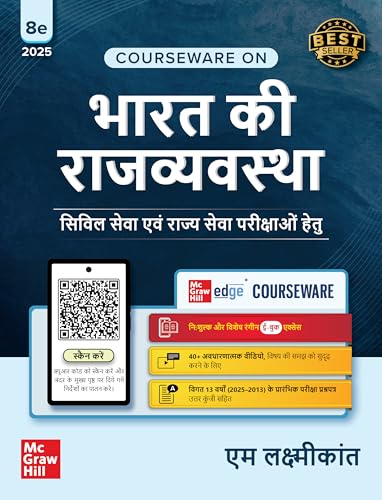
भारत की राजव्यवस्था – एम. लक्ष्मीकांत
- आठवें संस्करण की हिंदी सूची
- संविधान और संस्थाओं का संदर्भ
- पिछले प्रश्नों और प्रासंगिक अपडेट के साथ पढ़ें
What to read: every chapter from Fundamental Rights and DPSP through Parliament, the judiciary, and federalism, plus the constitutional and non-constitutional bodies near the end, which is where prelims loves to pick “odd one out” questions. What to skip on the first pass: the long appendices and the committee-report timelines; come back to those only in revision. The book is heavy, so don’t try to finish it in one sitting. Three calm passes beat one anxious sprint, and that’s the whole secret to polity.
If you already have a usable polity reference and notes, compare the contents and updates before buying another edition. Near the exam, a new large book should solve a clear gap rather than displace revision.
Modern History: Spectrum’s Adhunik Bharat ka Itihas
Adhunik Bharat Ka Itihas from Spectrum is a Hindi modern-history reference. The linked listing is the 2024 edition; it should not be described as the latest printing. Check the contents and a publisher or seller’s current edition details before buying.
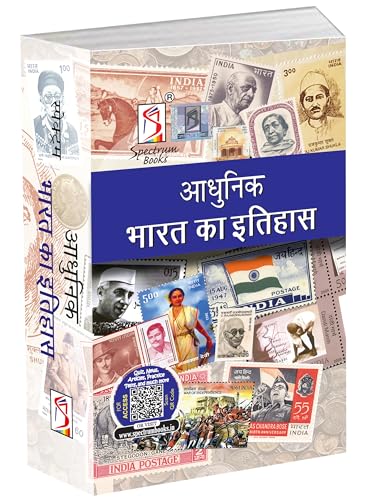
आधुनिक भारत का इतिहास – Spectrum
- इस लिंक की सूची में 2024 संस्करण है
- आधुनिक इतिहास का संदर्भ
- खरीदने से पहले संस्करण और विषय-सूची जाँचें
What to read: the freedom-struggle chapters from 1857 through Partition are non-negotiable; read the sections on the Moderates, Extremists, Gandhian movements, and the revolutionary activities until you can sketch a timeline from memory. What to skip first time: the dense governor-general administrative reforms, useful, but lower-yield, save them for the second pass. If your foundation is shaky, pair Spectrum with the relevant Hindi NCERTs before you start; that sequencing trips up everyone, and it’s covered in the broader UPSC preparation guide.
Spectrum’s A Brief History of Modern India is associated with Rajiv Ahir. Bipan Chandra’s books are separate publications. Choose the exact Hindi title you need rather than treating these authors and publishers as interchangeable.
Economy: Bharatiya Arthvyavastha by Ramesh Singh
Bhartiya Arthvyavastha by Ramesh Singh is the linked eighteenth-edition Hindi economy reference. Use it for concepts such as inflation, banking, fiscal policy and the external sector. Begin with a Hindi NCERT explanation if the vocabulary is unfamiliar.
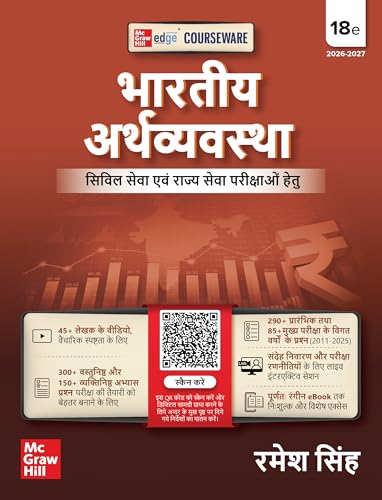
भारतीय अर्थव्यवस्था – रमेश सिंह
- अठारहवें संस्करण की हिंदी सूची
- अर्थव्यवस्था की अवधारणाओं का संदर्भ
- बदलते आँकड़े आधिकारिक स्रोत से जाँचें
Use the relevant current Budget and Economic Survey material and official releases for changing figures. There is no basis here for assuming a fixed translation lag across all Hindi editions. Compare actual edition details and read the chapters you need.
When not to buy it: if economics genuinely overwhelms you, start with the Hindi NCERTs and a slimmer primer, then graduate to this. Buying the full book and abandoning it at chapter four helps no one.
Geography: Bharat Ka Bhugol
Bharat Ka Bhugol, eleventh edition is the linked Hindi Indian-geography reference. The current listing credits Pallavi Saxena and Late Majid Husain. Use it by topic after NCERT, with an atlas for places, rather than treating it as a compulsory cover-to-cover reading.
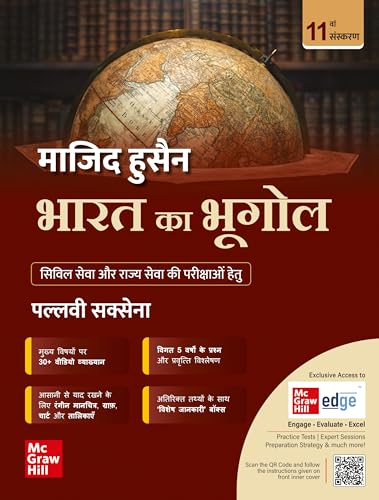
भारत का भूगोल – पल्लवी सक्सेना और दिवंगत माजिद हुसैन
- ग्यारहवें संस्करण की हिंदी सूची
- भारतीय भूगोल का संदर्भ
- NCERT और एटलस के साथ चुनिंदा विषय पढ़ें
What to read: the physical geography of India (the Himalayan and peninsular divisions, river systems, monsoon mechanism) until you can place features on a blank map, plus the chapters on minerals, agriculture, and population. What to skip first: some of the exhaustive regional-planning detail; high effort, low return for prelims. Pair this with the Hindi NCERTs and a good atlas; Husain explains the “why”, the atlas fixes the “where”. The book is a heavy reference, so treat it as a manual you revisit by topic rather than a novel you read straight through.
General Knowledge: Lucent Samanya Gyan
Lucent’s Samanya Gyan is an optional static-GK reference. Use it for a specific factual recall gap, especially if you are also preparing for exams with a broader GK component. It cannot replace conceptual study for UPSC. The Lucent reading guide explains how to use it selectively.
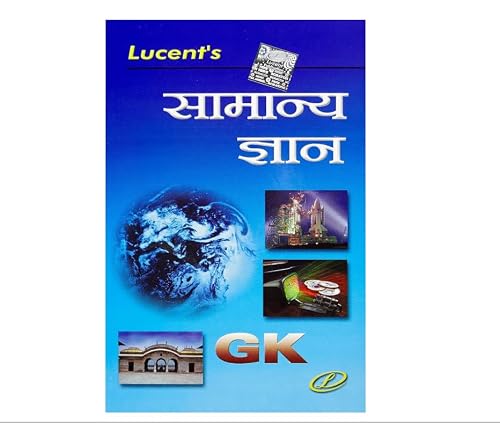
- तथ्य दोहराने के लिए वैकल्पिक पुस्तक
- इसे पूरे UPSC पाठ्यक्रम का विकल्प न मानें
- भाषा और संस्करण देखकर खरीदें
Use Lucent for selected factual checks and recall. Continue learning polity, economy, geography and other subjects from sources that explain them. The usefulness of a compendium depends on the gap it fills, not the number of facts it contains.
The list at a glance
| Hindi Book | Author / Publisher | Use |
|---|---|---|
| Bharat Ki Rajvyavastha | M. Laxmikanth / McGraw Hill | Polity reference; eighth-edition listing |
| Adhunik Bharat Ka Itihas | Rajiv Ahir / Spectrum | Modern history; linked listing specifies 2024 |
| Bhartiya Arthvyavastha | Ramesh Singh / McGraw Hill | Economy concepts; eighteenth-edition listing |
| Bharat Ka Bhugol | Pallavi Saxena and Late Majid Husain / McGraw Hill | Indian geography; eleventh-edition listing |
| Samanya Gyan | Lucent | Optional factual reference; not a complete GS course |
How to use this list: reading order and rhythm
Choose the next subject according to your plan. Read its foundation and reference together when useful, and keep revision and questions running alongside new material.
- Use Hindi NCERT chapters for the foundations you need; check current titles and editions.
- Study one main reference for a subject while revising previously covered topics.
- Read economy concepts with dated official updates rather than relying on an old statistic.
- Use maps alongside geography and comparisons alongside history and polity.
- Attempt questions and write answers in Hindi regularly. Keep Lucent optional, according to your actual recall gaps.
Use recall and questions to decide which parts need another pass. There is no universal requirement for three complete readings. Keep Hindi answer-writing in the routine, because understanding a chapter and expressing its argument under time pressure require different practice.
Choosing Your Next Book
Buy only the next book you will use. Compare the actual Hindi edition, keep a glossary where terminology is difficult and practice explaining ideas in your own words. Add a second source for a known gap, not as a reassurance purchase.
Frequently Asked Questions
Are Hindi editions suitable for UPSC preparation?
Many standard sources have Hindi editions. Check the contents, terminology and publication details, then practice writing answers in the language you will use.
Should I buy exactly five books?
No. Your selection depends on the subjects and gaps in your preparation. A compact list helps only when it covers what you need and leaves time for practice.
Is the linked Spectrum Hindi book the latest edition?
The listing linked here specifies the 2024 edition. Check the seller and publisher for a later edition if you want one; do not infer the publication year from a search label.
Is Spectrum the same as Bipan Chandra?
No. Spectrum’s A Brief History of Modern India is associated with Rajiv Ahir. Bipan Chandra’s history books are separate works.
Do I need to read English books as well?
Not automatically. Use English material when it helps you clarify a term or access a source, but keep your main study and answer practice in a form you understand well.
How should I check current economy data?
Use the relevant official release, Budget or Economic Survey and keep its reference date. An old figure can remain in a textbook regardless of the language.
Tell Google you want more of this.
Add Anantam IAS as a preferred sourceOne tap, and this site shows up more often in your own Top Stories, AI Overviews and AI Mode. Remove it any time.