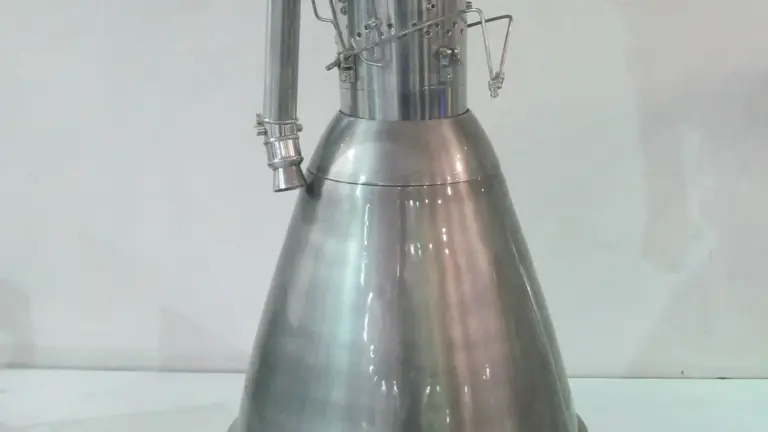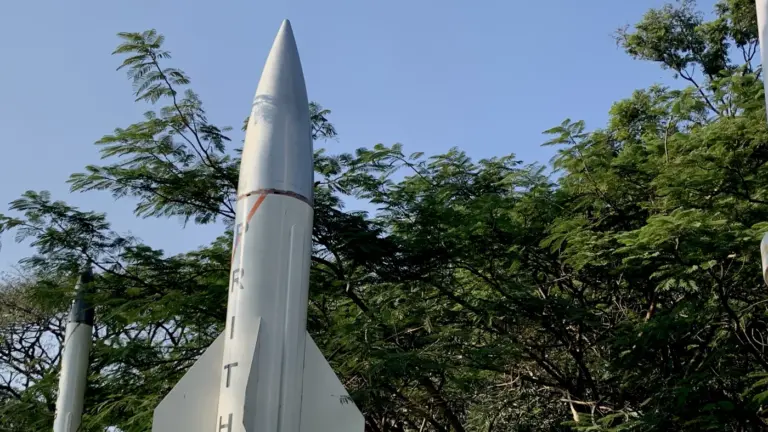
Space technology covers the rockets, satellites, ground stations and data services that let humans sense, communicate and explore beyond Earth’s atmosphere. India is one of only six nations with end-to-end indigenous space capability. For UPSC, space is a recurring GS Paper III topic touching on the economy, defence, internal security, disaster management and international relations.
The three pillars of space technology
| Pillar | Examples |
|---|---|
| Launch vehicles | PSLV, GSLV Mk-II, LVM3, SSLV; re-usable demonstrators |
| Satellites | Communication, earth observation, navigation, scientific |
| Ground & data services | Tracking, downlink, data analytics, positioning |
Major uses of space technology
1. Communication
Geostationary satellites relay TV, phone, broadband and disaster communication. India's GSAT and INSAT fleets support DTH, VSAT banking, telemedicine and tele-education (EduSAT legacy). The NewSpace India Limited (NSIL) leases transponders commercially. Satellite internet (Jio-SES, OneWeb, Starlink pending) will reach remote regions.
2. Navigation
- NavIC (Navigation with Indian Constellation) — seven satellites; regional coverage; now embedded in smartphones under the 2024 DoT mandate for L1 band support.
- Applications: transport, fisheries (ReALCraft for fishermen), defence, vehicle tracking under AIS 140.
3. Earth observation (remote sensing)
- Cartosat series — cartography, urban planning, border monitoring.
- RISAT — radar imaging day/night, cloud penetration.
- Resourcesat, Oceansat — agriculture, forestry, oceans, Potential Fishing Zones.
- INSAT-3D/3DR — weather and cyclone monitoring.
- EOS series — including EOS-08 (2024) for thermal and photogrammetric data.
4. Weather and climate
Satellite data forecasts monsoons, cyclones (amphan, biparjoy, remal), and heatwaves. INSAT-3DR combined with IMD's Doppler radars cut cyclone-related mortality from thousands (1999 Odisha) to dozens today.
5. Disaster management
- Flood inundation maps from RISAT/Sentinel.
- Cyclone track forecasts 3-5 days ahead.
- Landslide and glacial lake monitoring in Himalayas.
- Bhuvan portal — NRSC's geospatial platform for ministries and states.
6. Agriculture
- FASAL — forecasting crop area and yield.
- NADAMS — drought assessment.
- CHAMAN — horticulture atlas.
- PMFBY — crop insurance claim verification via satellite.
- Soil moisture, irrigation advisories and early pest warnings.
7. Defence and national security
- Surveillance, reconnaissance, signals intelligence (RISAT, EMISAT).
- Secure military comms — GSAT-7 (Rukmini) Navy, GSAT-7A Air Force.
- The Defence Space Agency (2019) integrates ASAT, space situational awareness.
- India’s Mission Shakti (2019) ASAT demonstration.
8. Governance and digital services
- DigiLocker, Aadhaar-based geo-tagging of assets.
- PM Gati Shakti integrated infrastructure planning uses ISRO GIS layers.
- SVAMITVA — drone-based land mapping in villages.
- Smart Cities — transport, air quality, solid waste via GIS dashboards.
9. Scientific exploration
- Chandrayaan-1 (2008) — confirmed water on Moon.
- Mangalyaan (2014) — Mars at lowest-ever cost.
- Chandrayaan-2/3 — Moon south-pole soft landing (Chandrayaan-3, Aug 2023).
- Aditya-L1 (2023-24) — India's first dedicated solar observatory at L1.
- XPoSat (2024) — X-ray polarimetry, second such in the world.
10. Commercial space economy
- NewSpace India Ltd (NSIL) — commercial arm of DoS.
- IN-SPACe (2020) — regulator cum promoter for private space activities.
- Space Policy 2023 — private sector allowed end-to-end space activity.
- ~200+ Indian space startups — Skyroot, Agnikul, Pixxel, Digantara, Dhruva Space, Bellatrix, GalaxEye.
- India's space economy: ~USD 8 billion (2024), targeted USD 44 billion by 2033.
ISRO's launch vehicles
| Launcher | Payload to LEO | Use |
|---|---|---|
| SSLV | ~500 kg | Small satellites on demand |
| PSLV | ~1750 kg (SSO) | Workhorse; commercial launches |
| GSLV Mk-II | ~2500 kg (GTO) | Cryogenic upper stage, INSAT class |
| LVM3 / GSLV Mk-III | ~4000 kg (GTO); 8000 kg (LEO) | Chandrayaan, Gaganyaan, OneWeb |
| RLV-TD | Experimental | Reusable launch vehicle demo |
| NGLV (in development) | 10+ tonnes to GTO | Heavy-lift, partially reusable |
India's flagship programmes
- Gaganyaan — India's human spaceflight; crewed orbital mission targeted 2026 after 2025 uncrewed tests.
- Chandrayaan-4 plan — sample return mission, planned ~2027.
- Venus Orbiter Mission (Shukrayaan) — approved 2024, launch ~2028.
- Bharatiya Antariksh Station (BAS) — 2035 target; first module by ~2028.
- Moon landing crew mission — by 2040.
- NISAR (NASA-ISRO) — L/S-band radar earth observation mission, launch 2025.
Challenges
| Challenge | Detail |
|---|---|
| Heavy-lift capability | LVM3 limits bigger GEO missions; NGLV under design |
| Semiconductor supply | Space-grade chips still imported |
| Private sector maturity | Regulatory clarity improving; capital still limited |
| Space debris | 30,000+ trackable objects; India's ISRO System for Safe & Sustainable Space Operations Management (IS4OM) monitors |
| Human rating of LVM3 | Extensive abort and crew safety testing underway |
| Cybersecurity of ground segment | Rising threat vector |
Policy and institutional framework
- Indian Space Policy 2023 — authorisation regime via IN-SPACe; private end-to-end activity.
- Space-based Communication Policy (draft 2024) — satcom spectrum rules.
- FDI 2024 amendment — 100% FDI in satellite manufacture via automatic route; up to 74% automatic in launch vehicles.
- Draft Space Activities Bill pending for legal liability and licensing.
Latest developments (2024-26)
- Chandrayaan-3 success (Aug 2023) — first soft landing near lunar south pole; ISRO Pragyan rover demonstrated.
- Aditya-L1 reached Halo orbit (Jan 2024).
- XPoSat (Jan 2024) — X-ray Polarimeter Satellite.
- SSLV-D3 (Aug 2024) — successful; SSLV declared operational.
- Gaganyaan progress — TV-D1 crew-escape test (Oct 2023); four astronauts announced Feb 2024; uncrewed G1 planned 2025.
- Chandrayaan-4 plan approved (Sept 2024) — sample return mission budgeted Rs 2,104 crore.
- Bharatiya Antariksh Station approved — first module by 2028, full station by 2035.
- Venus Orbiter approved (Sep 2024) — Rs 1,236 crore.
- IN-SPACe authorisations crossed 60 by 2025.
- India-Nepal & India-Bhutan satellites launched for neighbourhood diplomacy.
- DeepTech Policy 2024 and India Semiconductor Mission support space chips.
- AI Action Summit, Paris (Feb 2025) — India pitched space-AI coupling for earth observation.
- National Quantum Mission (2024) — quantum navigation / clocks relevance for space.
UPSC Relevance
GS Paper III — Science & Technology
- Launch vehicles, applications, indigenous capability, ISRO organisational reforms.
GS Paper III — Internal Security & Disaster Management
- Satellite surveillance, disaster early warning.
GS Paper III — Economy
- Space economy size, private sector reforms, PLI and FDI.
GS Paper II — International Relations
- Space diplomacy, Artemis Accords (India 2023), Quad space track.
Prelims pointers — IN-SPACe, NSIL, NavIC, Bhuvan, Chandrayaan-3/4, Aditya-L1, SSLV, LVM3, XPoSat, NISAR, BAS 2035, Artemis Accords.
Interview probes — should India prioritise human spaceflight or science; private sector crowding-in; space debris; dual-use concerns.
From broadcasting Doordarshan to landing on the Moon's south pole, India's space programme has quietly built one of the country's most trusted institutions. Its next decade — commercialisation, human spaceflight, Venus and beyond — will decide whether India becomes a first-tier space power.
Tell Google you want more of this.
Add Anantam IAS as a preferred sourceOne tap, and this site shows up more often in your own Top Stories, AI Overviews and AI Mode. Remove it any time.