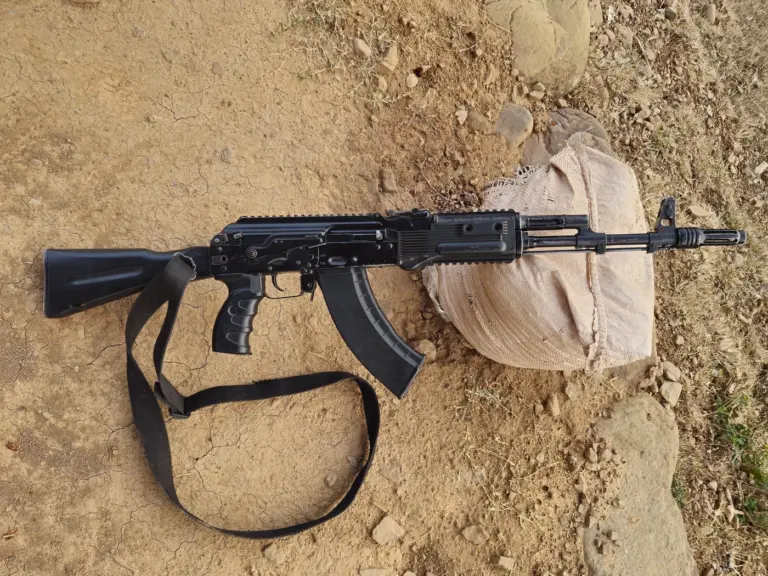
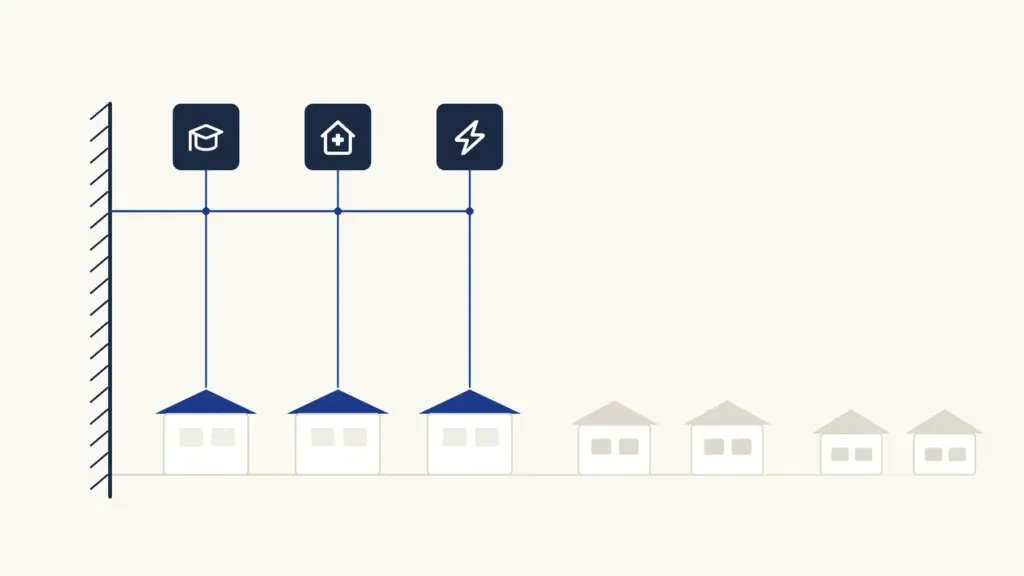
The Border Area Development Programme, or BADP, is a centrally sponsored scheme run by the Ministry of Home Affairs that funds development in villages along India’s international land borders, and it is a security instrument rather than a welfare scheme. Its logic is simple: a populated, connected border village is itself a surveillance asset, and an emptied one is a vacuum. Everything in the programme’s design follows from that.
Origin and Design
- Launched in the Seventh Plan in 1986-87, initially for the western border, later extended to all international land borders.
- Run by the Ministry of Home Affairs as a centrally sponsored scheme, implemented through state governments and union territories.
- Coverage: border blocks across 17 states and union territories.
- Priority band: villages within 0 to 10 km of the international border get first call on funds, with a second band up to 50 km.
- Allocation criteria: length of international border, area of border blocks and population of border blocks.
- Planning is bottom-up, from the village through the block and district to a state-level screening committee.
The stated objectives are to meet the special development needs of remote border villages, to provide local support to security forces, and to check migration away from the frontier.
What BADP Funds
- Connectivity: roads, bridges, culverts and footpaths to border villages.
- Education: schools, hostels and residential facilities, since distance is the main barrier at the frontier.
- Health: primary health centres, sub-centres, anganwadis and mobile medical units.
- Basic services: drinking water, sanitation, and decentralised energy including solar and micro-hydel.
- Livelihood: agriculture, horticulture, animal husbandry, and area-specific activities such as pashmina rearing in Ladakh.
- Community assets: community centres, sports infrastructure and skill development.
- Communications: telecom towers and 4G saturation in high-altitude villages.
Works that create durable community assets are preferred over one-off relief, because the programme is measured on whether people stay.
How Development Becomes Border Management
- Demographic stability. An inhabited border village provides continuous local presence; an abandoned one leaves an unwatched corridor. This is the core rationale.
- Information and cooperation. Local communities report intrusions and provide logistical support to forces, which no amount of technical surveillance replaces.
- Counter-narrative. Visible development denies cross-border propaganda its most usable material, which is neglect.
- Normal citizenship. When schools, health centres and roads reach the last village, residents experience themselves as citizens rather than as a buffer.
- Force logistics. Roads built for civilians also move troops and supplies, which is why connectivity dominates the spending.
The Wider Border Framework
- Vibrant Villages Programme (2023), targeted at northern border villages facing China, with a second phase extended to other border stretches. It is more concentrated and better funded per village than BADP.
- Border Infrastructure and Management scheme for fencing, floodlighting, border outposts and roads.
- Border Roads Organisation projects including the Sela tunnel, the Zojila tunnel and the Nimmu-Padam-Darcha road.
- Army civic action programmes such as Operation Sadbhavana in Jammu, Kashmir and Ladakh, which run schools, medical camps, vocational training and youth exposure tours.
- Autonomous councils, such as the Hill Development Councils in Leh and Kargil, which supply local administrative agency. The demand for Sixth Schedule protection in Ladakh is a continuation of that logic.
Our notes on the Ladakh question and the 2025 quota regulations cover the political dimension that sits alongside the developmental one.
Limits
- Per-village allocation is small relative to construction costs at altitude, where a kilometre of road can cost several times the plains rate.
- The working season is a few months a year in Himalayan districts, so execution is structurally slow.
- Infrastructure has been prioritised over livelihood, so youth out-migration continues even where roads and schools arrive.
- Ecological sensitivity at altitude means every road carries a trade-off that the programme is not designed to assess.
- Convergence is weak. BADP funds sit alongside MGNREGA, PMGSY and state schemes without a single planning window at the village level.
The programme frames border management around people rather than terrain, which is the right frame. Its impact would rise if allocations were indexed to altitude cost and if livelihood carried the weight that infrastructure does.
Frequently Asked Questions
What is the Border Area Development Programme?
A centrally sponsored scheme of the Ministry of Home Affairs, launched in 1986-87, that funds development in villages along India’s international land borders. It aims to meet the special needs of remote border villages, support security forces locally and check migration away from the frontier.
Which ministry implements BADP?
The Ministry of Home Affairs, through state governments and union territories, with planning done bottom-up from the village level through block and district committees to a state-level screening committee.
Which villages get priority under BADP?
Villages within 0 to 10 km of the international border have first call on funds, with a second band extending up to 50 km. Allocations to states are based on border length, area of border blocks and their population.
How does BADP contribute to national security?
A populated, connected border village provides continuous local presence and information that technical surveillance cannot replace, supports force logistics through the roads it builds, and denies cross-border propaganda the material of neglect. An emptied border village leaves an unwatched corridor.
How is the Vibrant Villages Programme different from BADP?
The Vibrant Villages Programme, launched in 2023, is targeted specifically at northern border villages facing China and is more concentrated and better funded per village. BADP is older, broader and covers border blocks across seventeen states and union territories.
What are the main limitations of BADP?
Per-village allocations are small relative to high-altitude construction costs, the working season in Himalayan districts is only a few months, spending has favoured infrastructure over livelihood so out-migration continues, and convergence with other rural schemes at the village level is weak.
Practice Questions
Prelims MCQs
1. The Border Area Development Programme was launched in:
- (a) 1974-75
- (b) 1986-87
- (c) 1991-92
- (d) 2001-02
Answer: (b) 1986-87
2. BADP is implemented by which ministry?
- (a) Ministry of Defence
- (b) Ministry of Rural Development
- (c) Ministry of Home Affairs
- (d) Ministry of External Affairs
Answer: (c) Ministry of Home Affairs
3. Under BADP, first priority in funding is given to villages located within:
- (a) 0 to 5 km of the border
- (b) 0 to 10 km of the border
- (c) 0 to 25 km of the border
- (d) 0 to 50 km of the border
Answer: (b) 0 to 10 km of the border
4. The Vibrant Villages Programme, launched in 2023, was aimed primarily at villages along the border with:
- (a) Pakistan
- (b) China
- (c) Bangladesh
- (d) Myanmar
Answer: (b) China
5. Operation Sadbhavana is a civic action programme run by:
- (a) The Border Security Force
- (b) The Indian Army
- (c) The Indo-Tibetan Border Police
- (d) The Ministry of Home Affairs
Answer: (b) The Indian Army
Mains Questions
- Discuss the Border Area Development Programme and examine how developmental spending functions as an instrument of border management. (15 marks, 250 words)
- “A populated border village is a surveillance asset.” Analyse this proposition with reference to India’s border area schemes. (10 marks, 150 words)
- Compare the Border Area Development Programme with the Vibrant Villages Programme in design and objectives. (10 marks, 150 words)
- Examine the role of Army civic action programmes in winning local support in strategically sensitive border districts. (15 marks, 250 words)
- Discuss the demand for extending Sixth Schedule protection to Ladakh and its implications for border governance. (15 marks, 250 words)
Tell Google you want more of this.
Add Anantam IAS as a preferred sourceOne tap, and this site shows up more often in your own Top Stories, AI Overviews and AI Mode. Remove it any time.