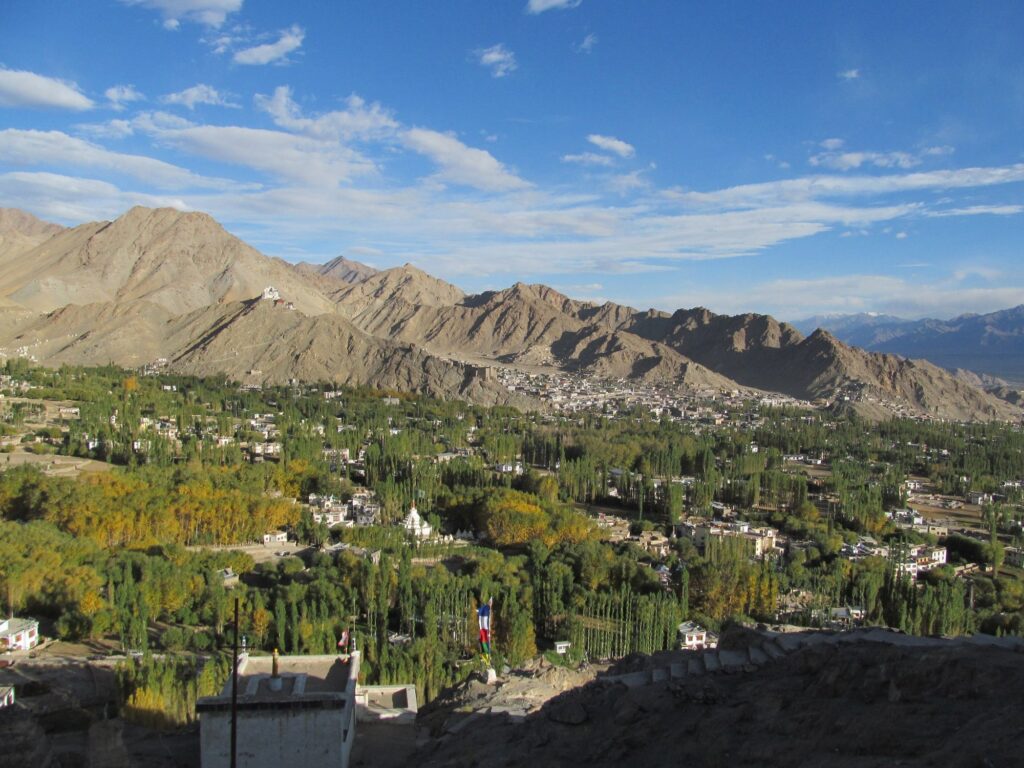
The bifurcation of the erstwhile State of Jammu and Kashmir on 5 August 2019 through the Jammu and Kashmir Reorganisation Act, 2019, created two Union Territories — Jammu & Kashmir (with a legislature) and Ladakh (without a legislature). While much of the national discourse focused on the abrogation of Article 370 and its implications for Kashmir, the people of Ladakh initially welcomed the separation, hoping it would bring targeted development and greater political representation. However, within months, a growing sense of disillusionment set in. The absence of a legislature, the erosion of land and employment protections previously available under Article 35A, and the fear of demographic and ecological disruption triggered a powerful movement demanding constitutional safeguards — primarily through inclusion in the Sixth Schedule of the Constitution or, alternatively, through a special provision under Article 371.
This article provides a comprehensive analysis of Ladakh’s demand for constitutional protection, the instruments available under the Indian Constitution, the political and strategic dimensions that complicate the issue, and the path forward. For UPSC aspirants, this topic sits at the intersection of federalism, tribal governance, border security, and constitutional law — making it a high-value subject for General Studies Papers I, II, and the Essay paper.
Historical Background: Ladakh’s Governance Through the Ages
Pre-1947: The Namgyal Dynasty and Dogra Rule
Ladakh’s political history stretches back to the 10th century when it emerged as an independent kingdom under the Namgyal dynasty. For centuries, Ladakh functioned as a distinct cultural and political entity, serving as a vital node on the Silk Route connecting Central Asia with the Indian subcontinent. The kingdom maintained diplomatic relations with Tibet, China, and the Mughal Empire, and its identity was shaped by Tibetan Buddhism, trade, and a harsh but self-sustaining pastoral economy.
In 1834, the forces of Gulab Singh — a Dogra general under the Sikh Empire — conquered Ladakh and incorporated it into the princely state of Jammu. The Treaty of Amritsar (1846) subsequently transferred the entire territory, including Ladakh, to Dogra rule under British suzerainty. Under the Dogras, Ladakh was administered as a distant frontier district with minimal investment and political representation. The region’s Buddhist majority found itself governed by a Hindu dynasty based in Jammu, creating a layered sense of alienation that persisted well into the 20th century.
Post-Independence: Marginalisation Within J&K
After India’s independence in 1947 and the accession of Jammu & Kashmir to India, Ladakh became part of the state of J&K. However, political power in the state was overwhelmingly concentrated in the Kashmir Valley. Ladakh — despite constituting nearly 70% of the state’s geographical area — received a disproportionately small share of budgetary allocations, development spending, and political attention. The region had minimal representation in the J&K Legislative Assembly, and key decisions regarding land use, resource allocation, and administrative appointments were made in Srinagar or Jammu with little input from Ladakhi stakeholders.
The sense of neglect was compounded by the 1962 Sino-Indian War, during which China occupied the Aksai Chin plateau — a region historically part of Ladakh. The war underscored Ladakh’s strategic vulnerability while doing little to enhance its political agency within the state structure.
The 1989 Agitation and the Birth of LAHDC
By the late 1980s, Ladakhi frustration with governance from Srinagar reached a tipping point. In 1989, a major agitation erupted in Leh, led by the Ladakh Buddhist Association (LBA) and other civil society groups. The movement demanded Union Territory status for Ladakh, separation from Kashmir-centric governance, and greater autonomy in local administration. The agitation included prolonged shutdowns, social boycotts, and mass protests that drew national attention.
The Central Government responded not with UT status but with a compromise: the Ladakh Autonomous Hill Development Council (LAHDC) Act, 1995. This Act created two Hill Development Councils — one for Leh and one for Kargil — with elected members and limited powers over local development. While the LAHDC represented an acknowledgment of Ladakh’s distinct identity, its powers were circumscribed and it remained subordinate to the state government in Srinagar.
2019: Bifurcation and the Creation of Ladakh UT
The Jammu and Kashmir Reorganisation Act, 2019, fulfilled the long-standing demand for separation from J&K. Ladakh was carved out as a Union Territory without a legislature, governed directly by a Lieutenant Governor appointed by the Centre. The initial euphoria, particularly in Leh, was palpable — decades of demand had finally been met. However, the fine print of the reorganisation soon became apparent:
- The protections under Article 35A — which restricted land ownership, government employment, and scholarships to permanent residents of J&K — were abrogated along with Article 370.
- Ladakh, as a UT without a legislature, had no elected body with legislative powers. The LAHDC continued to exist but with advisory functions only.
- Central laws now applied directly to Ladakh, including land acquisition and mining regulations that had previously been moderated by state-level protections.
- Bureaucratic control shifted from Srinagar to New Delhi, replacing one form of distant governance with another.
Understanding Ladakh’s Demographics and Geography
Any constitutional arrangement for Ladakh must account for the region’s unique demographic and geographic characteristics. These factors are not merely background detail — they are central to understanding why standard governance models are inadequate for the region.
Population and Ethnic Composition
Ladakh’s population, as per the 2011 Census, stands at approximately 2.74 lakh (274,000), spread across an area of roughly 59,146 square kilometres — making it one of the most sparsely populated regions in the world. The population is distributed across two districts: Leh (with a Buddhist majority) and Kargil (with a Shia Muslim majority). This religious and ethnic diversity is a critical factor in any governance framework.
The region is home to several distinct ethnic and tribal communities, each with unique cultural practices, languages, and livelihood patterns:
| Community | Region | Key Characteristics |
|---|---|---|
| Ladakhi Buddhists | Leh district | Majority in Leh; Tibetan Buddhist cultural practices; Ladakhi language (Bhoti script); agrarian and pastoral livelihoods |
| Balti | Kargil district (Turtuk, Tyakshi) | Shia Muslim; Balti language (Tibetic family); historically linked to Baltistan (now in Pakistan); became part of India in 1971 |
| Changpa | Changthang plateau (eastern Ladakh) | Nomadic pastoralists; rear Pashmina goats; Scheduled Tribe; extremely vulnerable to land use changes and climate change |
| Brokpa (Drokpa) | Dha-Hanu valley (Leh district) | Dard-Aryan community; practice a syncretic religion; distinct language and customs; one of the smallest tribal groups in India |
| Purigpa | Kargil district | Shia Muslim; Purgi language; majority community in Kargil; agrarian economy |
| Mon | Scattered across Ladakh | Traditional musicians and artisans; historically marginalised; Scheduled Caste category |
Over 97% of Ladakh’s population belongs to Scheduled Tribe categories, making it one of the most tribal-dominated regions in India. This demographic fact is central to the Sixth Schedule demand — the Schedule was designed precisely for tribal-majority areas requiring protection of customary law, land, and identity.
Strategic Geography
Ladakh’s geography is defined by extreme altitude (average elevation exceeding 3,500 metres), arid terrain, harsh winters, and proximity to two contested international borders. The region’s strategic significance cannot be overstated:
- Line of Actual Control (LAC): Ladakh shares a long and disputed border with China, including the Aksai Chin area occupied by China since 1962 and the Depsang Plains, Galwan Valley, and Pangong Tso — all sites of recent military confrontation.
- Siachen Glacier: The world’s highest battlefield, located in northern Ladakh, where Indian and Pakistani forces have been deployed since 1984.
- Karakoram Pass: Located near the tri-junction of India, China, and Pakistan-occupied Kashmir, this pass has immense strategic value.
- Line of Control (LoC): Kargil district borders Pakistan-occupied Kashmir, and was the site of the 1999 Kargil War.
The Indian military maintains a massive presence in Ladakh, and the region has witnessed significant infrastructure development — including the Darbuk-Shyok-DBO road, the Zojila tunnel project, and numerous advanced landing grounds. This security dimension profoundly shapes the Centre’s approach to governance in the region.
What is the Sixth Schedule — A Detailed Explanation
The Sixth Schedule of the Indian Constitution, contained in Articles 244(2) and 275(1), provides for the creation of Autonomous District Councils (ADCs) and Autonomous Regional Councils (ARCs) in certain tribal areas of northeastern India. It was conceived by the Constituent Assembly — drawing heavily on the recommendations of the Bordoloi Committee — as a mechanism to protect the distinct identity, customary law, and land rights of tribal communities while integrating them into the Indian democratic framework.
Constitutional Basis
Article 244(2) provides that the provisions of the Sixth Schedule shall apply to the administration of tribal areas in the states of Assam, Meghalaya, Tripura, and Mizoram. Article 275(1) provides for grants-in-aid from the Consolidated Fund of India for the welfare of Scheduled Tribes and for raising the level of administration of Scheduled Areas, including those under the Sixth Schedule.
Structure and Powers of Autonomous District Councils
The Sixth Schedule empowers ADCs with a combination of legislative, judicial, and executive functions — a significant degree of self-governance rarely available under other constitutional provisions:
| Domain | Powers of the ADC |
|---|---|
| Legislative | Power to make laws on: land allotment, occupation, and use; management of forests (excluding reserved forests); use of canal or watercourse for agriculture; regulation of jhum (shifting cultivation); establishment of village or town committees; appointment and succession of chiefs; inheritance of property; marriage and divorce; social customs |
| Judicial | Constitution of village councils and district council courts for trial of suits and cases between Scheduled Tribe members; powers equivalent to a court of appeal for such cases; jurisdiction over customary law and practices |
| Executive | Establishment, construction, and management of primary schools, dispensaries, markets, ferries, roads, waterways; regulation of money-lending and trading by non-tribals |
| Financial | Power to assess and collect land revenue; impose taxes on professions, trades, and employments; levy tolls on persons residing within the autonomous district; taxes on entry of goods; taxes for maintenance of schools, dispensaries, or roads |
| Regulatory | Power to regulate and restrict transfer of land from tribal to non-tribal persons; control of money-lending to tribals; regulation of allotment of land |
How the Sixth Schedule Works in Practice: Lessons from the Northeast
The Sixth Schedule currently applies to ten autonomous councils across four northeastern states:
| State | Autonomous Councils | Key Observations |
|---|---|---|
| Assam | Bodoland Territorial Council; Karbi Anglong Autonomous Council; Dima Hasao Autonomous Council; North Cachar Hills Autonomous Council | Mixed results; ethnic tensions persist; Bodoland council has significant powers after the 2020 Bodo Accord |
| Meghalaya | Khasi Hills Autonomous District Council; Jaintia Hills Autonomous District Council; Garo Hills Autonomous District Council | Most successful application; councils manage land, forests, and customary law effectively; some tensions between traditional and modern governance |
| Tripura | Tripura Tribal Areas Autonomous District Council | Limited success due to demographic change; tribal population became minority in their own land due to migration from Bangladesh |
| Mizoram | Chakma Autonomous District Council; Lai Autonomous District Council; Mara Autonomous District Council | Functional but resource-constrained; serve minority tribes within Mizoram |
Successes: In Meghalaya, the Khasi Hills ADC has maintained robust control over land transfer, preventing alienation of tribal land to outsiders. Customary courts continue to function effectively, and traditional institutions like the Syiemship (chieftainship) have been integrated into the modern governance framework. The Sixth Schedule has been credited with preserving the matrilineal system of the Khasi community.
Failures and Limitations: The Tripura experience serves as a cautionary tale. Despite having an ADC, the tribal population of Tripura declined from over 50% at independence to about 31% by 2011, largely due to migration from East Pakistan (later Bangladesh). The ADC lacked the power to prevent this demographic transformation. Additionally, ADCs across the Northeast have struggled with financial dependence on state governments, elite capture by local power brokers, and jurisdictional conflicts with state authorities.
Can the Sixth Schedule Apply to Ladakh?
A critical constitutional question is whether the Sixth Schedule — which currently applies only to states — can be extended to a Union Territory. There is no direct precedent for this, and it would require a constitutional amendment. The Bhuria Commission (2002-2004) and several Parliamentary Standing Committees have noted the need for expanding the Sixth Schedule framework beyond the Northeast. The demand from Ladakh has reopened this constitutional debate.
What is Article 371 — Variants and Applications Across India
Article 371 and its variants (371A through 371J) are special provisions for specific states, inserted at various points in India’s constitutional history to address unique political, cultural, or historical circumstances. Unlike the Sixth Schedule, which provides a structured framework of autonomous governance, Article 371 provisions are bespoke — each variant is tailored to the specific state it applies to.
| Article | State | Year of Insertion | Key Provision |
|---|---|---|---|
| 371 | Maharashtra and Gujarat | 1950 (original) | Special responsibility of the Governor to establish separate development boards for Vidarbha, Marathwada, Saurashtra, and Kutch |
| 371A | Nagaland | 1963 | Parliament cannot legislate on Naga religious or social practices, customary law, ownership and transfer of land and resources unless the state assembly so decides |
| 371B | Assam | 1969 | President may provide for a committee of Assembly members from tribal areas |
| 371C | Manipur | 1972 | President may provide for a committee of Assembly members from hill areas and require Governor to report annually on hill administration |
| 371D | Andhra Pradesh (now also Telangana) | 1974 | President may provide equitable opportunities in public employment and education for people of different parts of the state; Administrative Tribunal for service matters |
| 371E | Andhra Pradesh | 1974 | Establishment of a Central University in Andhra Pradesh (became the University of Hyderabad) |
| 371F | Sikkim | 1975 | Seats reserved in Legislative Assembly for different sections of population; protection of old laws; Governor has special responsibility for peace and equitable development |
| 371G | Mizoram | 1986 | Parliament cannot legislate on Mizo customary law, religious and social practices, land ownership, and civil/criminal justice without state assembly consent |
| 371H | Arunachal Pradesh | 1987 | Governor has special responsibility regarding law and order; acts in individual judgement after consulting the Council of Ministers |
| 371I | Goa | 1987 | President may provide for a committee of Assembly members from Daman and Diu area (largely defunct since Daman & Diu remained a separate UT) |
| 371J | Karnataka | 2012 | Special development board for Hyderabad-Karnataka region; reservation in education and employment for people of the region |
Key Observations on Article 371 Provisions
Several patterns emerge from the Article 371 family of provisions that are relevant to the Ladakh debate:
- No uniform template: Each Article 371 variant is distinct. There is no standard set of protections — each was negotiated to address a specific political context.
- Strong protections on land and culture: Articles 371A (Nagaland) and 371G (Mizoram) provide the strongest protections, effectively giving state assemblies a veto over central legislation on land, customary law, and social practices.
- Development-focused provisions: Articles 371, 371D, and 371J focus on equitable development and employment rather than cultural protection.
- Flexibility: Article 371 provisions can be crafted to suit specific needs, which is precisely why the Government has proposed this route for Ladakh rather than the more rigid Sixth Schedule framework.
The Protest Movement: Sonam Wangchuk and the Struggle for Safeguards
The demand for constitutional protection for Ladakh crystallised into a mass movement led by Sonam Wangchuk, a renowned education reformer and engineer whose life inspired the Bollywood film 3 Idiots. Wangchuk’s involvement brought national and international visibility to what had been a regional grievance.
The Climate Fast and March to Delhi
In early 2024, Wangchuk undertook a 21-day “climate fast” at an altitude of over 17,000 feet at Khardung La in sub-zero temperatures, drawing attention to both Ladakh’s ecological vulnerability and its demand for constitutional safeguards. This was followed by a march to Delhi — styled as the “Pashmina March” — in which thousands of Ladakhi citizens participated.
In September-October 2024, Wangchuk and a group of Ladakhi marchers arrived at the borders of Delhi, demanding a meeting with senior government officials to discuss the Sixth Schedule demand. The Delhi Police, invoking prohibitory orders, detained Wangchuk and several other activists at the Delhi border. The detention — which lasted several days and was widely covered by national and international media — drew sharp criticism from civil society groups, opposition parties, and environmental organisations. The spectacle of a Magsaysay Award nominee being detained for demanding democratic rights for a tribal region became a potent symbol of the movement.
“We are not asking for separation. We are not asking for anything unreasonable. We are simply asking that the Constitution of India protect its own tribal citizens in Ladakh — the same way it protects tribals in Meghalaya, Mizoram, and other parts of the Northeast.”
— Sonam Wangchuk, during the 2024 Delhi march
The Apex Body and Ongoing Negotiations
The sustained protests led to negotiations between Ladakhi leaders and the Ministry of Home Affairs (MHA). The apex body representing Ladakh’s demands — comprising political leaders from both Leh and Kargil, religious leaders, and civil society representatives — held multiple rounds of talks with the MHA. The body’s core demands included:
- Inclusion of Ladakh in the Sixth Schedule with an Autonomous District Council possessing real legislative and executive powers
- Statehood for Ladakh, or at minimum, a UT with a legislature
- Protection of land rights, employment reservation for locals, and environmental safeguards
- Separate Lok Sabha seats for Leh and Kargil (currently they share one seat)
- Public Service Commission for Ladakh for recruitment to government positions
By October 2025, the MHA had conducted several rounds of discussions but had not conceded the Sixth Schedule demand. Instead, the government signalled its preference for an Article 371-based framework, which it argued could provide tailored protections without the complexities of amending the Sixth Schedule to apply to a Union Territory.
Political Dimensions: Parties and Postures
The Ladakh issue has acquired a significant political dimension, with various parties taking positions that reflect both ideological commitments and electoral calculations.
The ruling Bharatiya Janata Party (BJP) faces a complex balancing act. The 2019 bifurcation was one of its signature achievements, and the party is keen to demonstrate that the decision has benefited Ladakh. However, conceding the Sixth Schedule demand could be seen as an admission that the 2019 reorganisation was incomplete. The BJP’s preferred approach has been to offer Article 371-type protections and to emphasise the massive infrastructure development underway in the region.
The Indian National Congress and other opposition parties, including the Aam Aadmi Party, have largely supported Ladakh’s demand for Sixth Schedule inclusion. During the Bharat Jodo Yatra (2022-2023), Rahul Gandhi passed through parts of the former J&K and interacted with Ladakhi leaders. The Congress party’s official position has been that the abrogation of Article 370 and 35A removed protections that were essential for regions like Ladakh, and that the Sixth Schedule is the appropriate constitutional remedy. The Bharat Jodo Yatra 2.0, which traversed through border areas, further highlighted the governance deficit in Ladakh and brought the issue to a wider national audience.
Local political formations, including the Ladakh Apex Body, have attempted to maintain a non-partisan stance, engaging with whichever party holds power at the Centre. However, the prolonged delay in resolving the issue has increasingly politicised the movement, with both the Leh and Kargil Hill Development Councils expressing frustration with the pace of negotiations.
LAHDC: Current Powers and Limitations
The Ladakh Autonomous Hill Development Council, established under the LAHDC Act of 1995, was the first institutional attempt to provide Ladakh with a measure of self-governance. Two separate councils exist — LAHDC Leh and LAHDC Kargil — each with 30 members (26 elected, 4 nominated). Understanding the current powers and limitations of the LAHDC is essential to evaluating why the demand for either the Sixth Schedule or Article 371 has arisen.
| Aspect | Current LAHDC Powers | Limitations |
|---|---|---|
| Legislation | No legislative powers; can only frame regulations on specified subjects like allotment/use of land, management of forests (non-reserved), regulation of agriculture | Regulations require approval from the UT administration; no law-making authority independent of the Centre |
| Finance | Can levy some local taxes; receives plan funds routed through the UT administration | No independent revenue base; financially dependent on the UT budget decided by the Centre; no authority over major taxation |
| Land | Limited role in allotment of vacant land for agriculture and grazing | No power to regulate land transfer to outsiders; major land decisions (mining, infrastructure) made by UT administration or Centre |
| Employment | Can recommend reservation for locals in posts under the Council | No control over recruitment to UT-level or Central government posts; no Public Service Commission |
| Development | Plans and executes local development works (roads, schools, dispensaries, water supply) | Major infrastructure projects (highways, tunnels, military installations) are outside its purview; limited engineering capacity |
| Environment | Minimal role in environmental governance | No authority over tourism regulation, mining permissions, or environmental clearances — all controlled by the Centre or UT administration |
In essence, the LAHDC is a development body with advisory influence, not a governance body with constitutional authority. It lacks the legislative teeth, financial autonomy, and regulatory power that an ADC under the Sixth Schedule would possess. This gap between what the LAHDC can do and what Ladakh needs is at the heart of the demand for constitutional protection.
Why Ladakh Seeks Sixth Schedule Inclusion
The demand for Sixth Schedule inclusion is rooted in multiple interconnected concerns — land protection, cultural preservation, democratic representation, and ecological sustainability. Each of these deserves detailed examination.
1. Protection of Tribal Land Rights
With the abrogation of Article 35A, any Indian citizen can now theoretically purchase land in Ladakh. While administrative orders have provided some interim protections, these lack constitutional backing and can be withdrawn at any time. The Sixth Schedule’s land transfer restrictions — which allow ADCs to regulate and restrict sale and transfer of land from tribal to non-tribal persons — would provide a durable constitutional guarantee against land alienation. For a community where over 97% of the population is classified as Scheduled Tribes, land ownership is directly tied to cultural survival and livelihood security.
2. Preservation of Cultural Identity
Ladakh’s cultural heritage — encompassing Tibetan Buddhism in Leh, Shia Islam in Kargil, and the animist-syncretic practices of the Brokpa and Changpa communities — is intimately linked to its governance structures. Traditional dispute resolution, communal land management (such as the churpon system of water distribution), and religious institutions all depend on a governance framework that recognises and protects customary practices. The Sixth Schedule’s provision for ADCs to administer justice according to customary law and to legislate on social customs would provide this recognition.
3. Democratic Deficit
As a UT without a legislature, Ladakh’s citizens have no elected legislative body to represent their interests. They send one Member of Parliament to the Lok Sabha but have no state-level or UT-level legislature. All legislative and executive decisions are made by the Lieutenant Governor and bureaucrats appointed by the Centre. The LAHDC, as discussed, has no legislative powers. This represents a significant democratic deficit for a region of nearly three lakh citizens.
4. Employment and Economic Concerns
Without domicile-based protections, Ladakhis fear that government jobs and economic opportunities in the region will be taken by outsiders from more populous and better-educated parts of India. The Sixth Schedule’s provisions allowing ADCs to regulate employment and trade within the autonomous district would address this concern. Furthermore, the power to levy local taxes and manage local finances would give Ladakh a degree of economic self-determination that is currently absent.
Ecological Concerns: Ladakh’s Fragile Environment Under Threat
Ladakh’s ecology is among the most fragile in the world. Situated in a cold desert at extreme altitudes, the region’s ecosystem is highly sensitive to disturbance and slow to recover. Several threats have intensified since 2019, and the absence of local regulatory authority has left the environment vulnerable.
Unregulated Tourism
Tourist arrivals in Ladakh have surged dramatically — from roughly 50,000 per year in the early 2000s to over 4.5 lakh in the post-pandemic period. This influx has strained water resources, generated solid waste beyond local management capacity, and degraded sensitive ecosystems. The Pangong Tso lake, an iconic high-altitude water body that became a major tourist destination after featuring in the film 3 Idiots, has suffered from vehicular pollution, camping waste, and shoreline degradation. Without regulatory authority, the LAHDC cannot enforce carrying capacity limits or environmental standards on tourism operations.
Mining and Industrial Threats
Ladakh possesses significant mineral resources, including lithium deposits that have attracted industrial interest. In 2023, India’s Geological Survey confirmed a substantial lithium find in the Reasi district (J&K), and exploration interest has extended into Ladakh. Mining in this fragile high-altitude desert could have catastrophic consequences for water systems, pasture lands, and wildlife corridors. Under the current UT framework, mining permissions are granted by the Central Government with no meaningful local consultation mechanism.
Renewable Energy Projects
Ladakh has been identified as a prime location for large-scale solar energy generation, with the Government of India planning a 7,500 MW solar park on the Pang plains along the Leh-Manali highway. While renewable energy is desirable, the scale of this project — covering thousands of hectares of high-altitude pastureland — threatens the grazing lands of the Changpa nomads and could disrupt wildlife migration patterns. Local communities have not been adequately consulted, and the LAHDC lacks the authority to impose conditions on such Central Government projects.
Climate Change
Ladakh is warming at a rate significantly faster than the global average. Glacial retreat is accelerating, threatening the water supply for agriculture and drinking water. Flash floods — such as the devastating 2010 Leh cloudburst — are becoming more frequent. The Changpa nomads report declining pasture quality and shifting snowfall patterns that affect their Pashmina goat herds. An ADC with environmental regulatory powers could develop and enforce locally appropriate climate adaptation strategies.
Strategic and Security Dimensions: Why the Centre is Cautious
The Central Government’s reluctance to grant the Sixth Schedule to Ladakh is not merely a matter of constitutional conservatism. It is rooted in genuine security concerns that must be acknowledged in any honest analysis of this issue.
The China Factor and Galwan 2020
The June 2020 clash at Galwan Valley, in which 20 Indian soldiers were killed in hand-to-hand combat with Chinese PLA troops, was the deadliest India-China military confrontation in over four decades. The incident underscored the active and evolving nature of the threat on Ladakh’s borders. The Indian military has since undertaken a massive buildup in eastern Ladakh, including forward deployment of troops, construction of border infrastructure, and stockpiling of supplies for sustained high-altitude operations.
From the Centre’s perspective, decentralising governance in a region where rapid, centralised decision-making on land acquisition, infrastructure construction, and security deployments is essential could create operational complications. An ADC with the power to regulate land transfer and use might, in theory, delay or obstruct military infrastructure projects — a risk the security establishment is unwilling to accept.
Infrastructure Buildup
India has invested tens of thousands of crores in border infrastructure in Ladakh since 2020. Projects include:
- The Darbuk-Shyok-Daulat Beg Oldi (DSDBO) road, providing all-weather access to the northernmost military post
- The Zojila tunnel, which will provide year-round connectivity between Srinagar and Ladakh
- The Nimmu-Padam-Darcha road, connecting Ladakh to Himachal Pradesh
- Advanced landing grounds and helipads across eastern Ladakh
- Bridge construction and road widening along critical military supply routes
These projects require expedited land acquisition and environmental clearances. The Centre fears that an autonomous governance structure could introduce procedural delays in an area where speed is a strategic necessity.
The Siachen and PoK Dimension
Ladakh borders both Chinese-occupied territory and Pakistan-occupied Kashmir, and the Siachen Glacier — a critical strategic asset — lies within its territory. The Centre’s approach to governance in Ladakh is informed by the broader strategic calculus of maintaining absolute operational control in a region that is effectively a theatre of potential two-front warfare.
The Government’s Position: Article 371 as an Alternative
The MHA’s preferred approach, as communicated during negotiations with the Ladakh Apex Body, is to provide protections through an Article 371-type provision tailored for Ladakh as a Union Territory. The Government’s reasoning includes:
- Constitutional simplicity: The Sixth Schedule currently applies only to states, not UTs. Extending it to Ladakh would require a constitutional amendment to modify the fundamental structure of the Schedule — a complex legislative exercise. An Article 371 provision, while also requiring a constitutional amendment, would be more targeted and contained.
- Flexibility: An Article 371-type provision can be tailored to address Ladakh’s specific concerns — land protection, employment, cultural preservation — without the comprehensive governance framework of the Sixth Schedule, which may conflict with the UT administrative structure.
- Security compatibility: The Government believes that an Article 371 framework can be designed to include carve-outs for defence and strategic infrastructure, ensuring that security operations are not impeded by local governance structures.
- Precedent management: Granting the Sixth Schedule to Ladakh could open demands from other tribal-majority regions — such as those in central India covered by the Fifth Schedule — seeking similar autonomous governance, potentially creating cascading constitutional amendments.
What a Ladakh-Specific Article 371 Could Look Like
Drawing on the precedents of Articles 371A (Nagaland) and 371G (Mizoram), a potential Article 371-type provision for Ladakh could include:
| Protection Area | Possible Provision | Model |
|---|---|---|
| Land ownership | No transfer of land from Ladakhi tribal persons to non-Ladakhis without consent of LAHDC or a designated authority | Articles 371A, 371G |
| Employment | Reservation of specified percentage of government positions for permanent residents of Ladakh; establishment of a Ladakh Public Service Commission | Articles 371D, 371J |
| Cultural protection | Central laws on marriage, inheritance, social customs not to apply in Ladakh unless adopted by the LAHDC | Articles 371A, 371G |
| Environmental governance | LAHDC empowered to regulate tourism carrying capacity, mining, and land use change within specified ecological zones | Novel provision |
| Legislative powers | LAHDC elevated to a legislative body with powers to legislate on specified subjects; or Ladakh upgraded to UT with legislature | Article 371F (Sikkim) |
| Governor/LG responsibility | LG to have special responsibility for equitable development of Leh and Kargil sub-regions | Articles 371, 371H |
Constitutional Dimensions: Sixth Schedule vs Article 371 — A Comprehensive Comparison
| Parameter | Sixth Schedule | Article 371 (Customised) |
|---|---|---|
| Constitutional basis | Articles 244(2) and 275(1); Part X of the Constitution | Part XXI — Temporary, Transitional, and Special Provisions |
| Current applicability | Four NE states only (Assam, Meghalaya, Tripura, Mizoram) | Eleven states (Maharashtra, Gujarat, Nagaland, Assam, Manipur, Andhra Pradesh, Sikkim, Mizoram, Arunachal Pradesh, Goa, Karnataka) |
| Amendment required | Yes — Article 244 must be amended to include UTs; Sixth Schedule must be modified | Yes — new Article (e.g., 371K) must be inserted via constitutional amendment |
| Governance structure | Creates Autonomous District Councils with elected members, legislative powers, judicial functions, and financial autonomy | No new governance body created; works through existing structures (LAHDC, LG) with additional powers and protections |
| Land protection | ADC regulates transfer of land; can prohibit non-tribal land ownership | Can restrict land transfer through a specific clause (as in Nagaland, Mizoram) |
| Legislative power | ADC can make laws on specified subjects (land, forests, water, customs, inheritance, marriage) | Does not grant legislative power directly; protections operate as restrictions on Parliamentary legislation applying to the area |
| Judicial power | ADC constitutes courts for disputes between tribals; customary law applies | No judicial provisions unless specifically drafted |
| Financial autonomy | ADC can levy taxes, collect revenue, receive grants from Consolidated Fund | No inherent financial provisions; depends on specific drafting |
| Security flexibility | No explicit provision for security carve-outs; potential for conflict with military requirements | Can be tailored to exclude defence land, strategic infrastructure, and security corridors from local governance |
| Democratic depth | Deep — elected body with multi-domain authority | Shallow — protections work as external constraints, not as self-governance mechanisms |
| Revocability | Difficult to revoke — entrenched in Schedule | Technically “temporary” provisions, though politically difficult to revoke once granted |
| Suitability for UT | Constitutionally unprecedented for a UT; requires significant amendment | Can be adapted for UT framework more easily |
Critical Analysis: Expert Perspectives and Constitutional Debates
The Ladakh governance debate has attracted attention from constitutional scholars, policy experts, and parliamentary bodies. Several important perspectives deserve consideration.
The Parliamentary Standing Committee Perspective
The Parliamentary Standing Committee on Home Affairs has, in its various reports on the administration of Union Territories, flagged the governance deficit in UTs without legislatures. The Committee has noted that UT status without a legislature concentrates power in the hands of the Lieutenant Governor and the bureaucracy, creating an accountability gap. While the Committee has not specifically recommended the Sixth Schedule for Ladakh, its observations on the need for enhanced democratic participation in UTs support the broader case for governance reform.
The Federalism Argument
Constitutional scholars have argued that the creation of a UT without a legislature for a region with a distinct cultural identity and a population of nearly three lakh represents a step backwards in India’s federal evolution. The trend in Indian constitutional history has been towards greater devolution — from Panchayati Raj (73rd Amendment) to the creation of new states (Uttarakhand, Jharkhand, Chhattisgarh). Denying Ladakh a legislature while giving one to Delhi (population 2 crore) and Puducherry (population 16 lakh) raises questions of proportionality and consistency.
The Tribal Rights Argument
With over 97% of its population classified as Scheduled Tribes, Ladakh presents one of the strongest demographic cases for Sixth Schedule protection of any region in India. The Sixth Schedule was designed for precisely this type of tribal-majority area. Denying it to Ladakh while maintaining it for regions in the Northeast with comparable demographic profiles would require a compelling justification beyond administrative convenience. The principle of equal protection under Article 14 — while not directly applicable to constitutional amendment decisions — provides a normative argument for extending similar protections to similarly situated populations.
The Security Realism Argument
Security analysts have countered that the comparison with northeastern states is misleading. The Northeast, while strategically important, does not face the kind of active, ongoing military confrontation that characterises Ladakh’s borders with China. The Galwan clash, the Depsang standoff, and the Pangong Tso face-off demonstrate that eastern Ladakh is effectively a live theatre of operations. In this context, creating an autonomous governance structure with the power to regulate land use and development could introduce friction in a domain where the Centre needs maximum operational flexibility.
“The question is not whether Ladakh deserves constitutional protection — it clearly does. The question is whether the Sixth Schedule, designed for a very different context in the 1940s, is the right instrument for a strategically vital border UT in the 2020s, or whether a more modern, tailored provision would serve Ladakh better.”
— Constitutional law perspective on the Ladakh governance debate
The Middle Path: Sixth Schedule with Security Carve-Outs
Some scholars have proposed a middle path: extend a modified version of the Sixth Schedule to Ladakh that includes explicit carve-outs for defence and strategic infrastructure. Under this model, the ADC would have full authority over civilian land, cultural matters, and environmental regulation, but areas designated as strategic zones would remain under direct Central control. This approach would address both the democratic and security concerns, though it would require careful constitutional drafting to prevent jurisdictional ambiguity.
Way Forward: Policy Recommendations and Constitutional Feasibility
Resolving the Ladakh governance question requires moving beyond the binary of Sixth Schedule versus Article 371 and towards a comprehensive, phased approach that addresses all stakeholder concerns. The following recommendations, grounded in constitutional feasibility, offer a path forward:
1. Immediate: Strengthen the LAHDC
Without waiting for a constitutional amendment, the Central Government can significantly enhance the LAHDC’s powers through executive orders and amendments to the LAHDC Act. Specific measures include:
- Delegating regulatory authority over tourism (carrying capacity, licensing, waste management) to the LAHDC
- Mandating that the LAHDC’s consent be obtained before any mining licence is issued in the UT
- Expanding the LAHDC’s financial powers to include retention of a specified share of GST collected within Ladakh
- Establishing a Ladakh Public Service Commission for recruitment to UT-level posts
2. Short-Term: Enact Land and Employment Protections
A statutory framework (not merely an executive order) should be enacted to restrict land transfer to non-Ladakhis and to reserve a specified percentage of government and private-sector employment for permanent residents. This can be done through a Central law applicable to the UT of Ladakh, analogous to the domicile-based provisions that have been enacted for J&K.
3. Medium-Term: Insert an Article 371-Type Provision with Sixth Schedule Features
Rather than choosing between the Sixth Schedule and Article 371, the Government should consider a hybrid provision — a new Article (e.g., 371K) that incorporates the most valuable features of both frameworks:
- From the Sixth Schedule: Empower the LAHDC (or a reconstituted body) with legislative authority on land, forests, water, customs, and cultural matters; grant judicial powers for disputes involving customary law; provide financial autonomy including the right to levy local taxes
- From Article 371: Include security carve-outs for defence infrastructure and strategic corridors; provide for the LG’s special responsibility for border security; ensure Central Government overriding powers on matters of national security
- Novel provisions: Environmental governance authority for the local body, including regulation of tourism, mining, and large-scale land use change; mandatory environmental impact assessments with local participation for all projects above a specified threshold
4. Long-Term: Consider Statehood or UT with Legislature
The ultimate expression of democratic self-governance for Ladakh would be statehood or, at minimum, UT status with a legislature. While population constraints make this politically difficult in the near term, it should remain on the table as a long-term aspiration. The precedent of Sikkim — which transitioned from a protectorate to a state with special protections under Article 371F — offers a relevant model.
5. Institutional: Establish a Ladakh Environment Commission
Given the ecological sensitivity of the region, a dedicated Ladakh Environment Commission — with representation from local communities, scientific experts, and the military — should be established to oversee all development activities with potential environmental impact. This body should have binding authority on matters such as tourism carrying capacity, mining permissions, and large-scale construction.
6. Political: Build Cross-Party Consensus
Any constitutional amendment requires a two-thirds majority in Parliament. The Ladakh issue has the potential to attract cross-party support, given that it involves tribal rights, environmental protection, and border security — issues that resonate across the political spectrum. The Government should convene an all-party meeting to discuss the governance framework for Ladakh and build the consensus needed for a constitutional amendment.
UPSC Relevance: How This Topic Can Appear in the Examination
The Ladakh governance question is a multidimensional topic with high relevance across multiple papers of the UPSC Civil Services Examination. Aspirants should prepare it holistically, connecting constitutional provisions with ground realities.
| Paper | Relevance | Potential Questions |
|---|---|---|
| GS Paper I (Indian Society) | Tribal communities and their issues; diversity of India; effects of globalisation on tribal life | “Discuss the challenges faced by tribal communities in Ladakh in the context of rapid modernisation and tourism growth.” / “Examine the demographic and cultural diversity of Ladakh and its implications for governance.” |
| GS Paper II (Governance & Constitution) | Sixth Schedule and Fifth Schedule; federalism; special provisions for states; UT governance; centre-state relations | “Critically examine the demand for inclusion of Ladakh in the Sixth Schedule of the Indian Constitution.” / “Compare the Sixth Schedule and Article 371 as instruments for protecting tribal autonomy.” / “Evaluate the governance deficit in Union Territories without legislatures, with specific reference to Ladakh.” |
| GS Paper II (International Relations) | India-China border dispute; strategic dimensions of governance decisions in border areas | “How do security considerations in border regions affect the design of governance frameworks? Discuss with reference to Ladakh.” |
| GS Paper III (Environment) | Ecological fragility; impact of tourism and development; climate change in high-altitude regions | “Analyse the environmental challenges facing Ladakh and suggest a governance framework to address them.” |
| Essay Paper | Federalism vs security; tribal rights and national integration; governance innovation | “The challenge of democracy in strategically sensitive regions” / “Can tribal autonomy and national security coexist?” / “Governance innovation for India’s unique geographies” |
| Prelims | Sixth Schedule provisions; Article 371 variants; LAHDC; ADC powers; constitutional amendments | Factual questions on which states have Article 371 provisions, powers of ADCs, applicability of Sixth Schedule, etc. |
Key Points for Answer Writing
- Always connect the constitutional provision (Sixth Schedule/Article 371) with the specific problem it is meant to address (land alienation, cultural erosion, democratic deficit)
- Acknowledge the security dimension — ignoring it in an answer about Ladakh will appear uninformed
- Use comparative analysis — Sixth Schedule states (Meghalaya, Tripura) and Article 371 states (Nagaland, Mizoram, Sikkim) provide rich material for comparison
- Propose nuanced solutions — a hybrid approach (Article 371 with Sixth Schedule features and security carve-outs) demonstrates analytical sophistication
- Reference specific communities (Changpa, Brokpa) and specific issues (Pashmina economy, Pangong Tso environment) to demonstrate depth of knowledge
Conclusion
The question of constitutional protection for Ladakh is not a simple binary choice between the Sixth Schedule and Article 371. It is a complex governance challenge that requires balancing tribal rights with national security, environmental protection with economic development, and democratic aspirations with administrative efficiency. The people of Ladakh have a legitimate and constitutionally grounded demand for greater autonomy and protection — a demand that has only grown stronger since the 2019 bifurcation stripped away the protections they had under Article 35A without replacing them with an adequate alternative.
The way forward lies not in rigid adherence to existing constitutional templates but in creative constitutional engineering — a bespoke provision that draws on the strengths of both the Sixth Schedule and Article 371, while accommodating the unique strategic realities of a region that borders two hostile neighbours. India’s constitutional history is rich with examples of such innovation — from Article 370 itself (whatever one’s view of its abrogation) to the creation of the National Capital Territory to the various Article 371 provisions. The same constitutional creativity can and should be applied to Ladakh.
What is clear is that the status quo — a UT without a legislature, governed by appointed bureaucrats, with a hill council that has no real power — is untenable for a region with a proud history, a distinct identity, a fragile ecology, and a population that is overwhelmingly tribal. The longer the resolution is delayed, the greater the risk of alienation and instability in one of India’s most strategically sensitive regions. The time for a comprehensive constitutional settlement for Ladakh is now.
Tell Google you want more of this.
Add Anantam IAS as a preferred sourceOne tap, and this site shows up more often in your own Top Stories, AI Overviews and AI Mode. Remove it any time.