A Bose-Einstein condensate (BEC) is a state of matter in which particles cooled to temperatures near absolute zero collapse into the same quantum ground state, behaving collectively as a single quantum entity. Predicted in 1924-25 by Satyendra Nath Bose and Albert Einstein following Bose’s seminal paper on quantum statistics of photons, BECs were first experimentally created in 1995 — work that won the 2001 Physics Nobel. For UPSC GS Paper III, BECs are a window into quantum technology, frontier physics and India’s scientific heritage.
What Is a Bose-Einstein Condensate?
Ordinarily, particles in a system occupy many quantum states, producing classical disorder. As a boson gas is cooled to temperatures close to absolute zero (typically a few billionths of a kelvin), quantum effects overwhelm thermal agitation. The particles condense into the lowest energy level, all sharing the same quantum state. The system transitions from chaos to order — analogous to how individual musicians in a concert become one acoustic whole.
BECs join solids, liquids, gases and plasma as the fifth state of matter. Unlike the first four, which exist at ordinary conditions, BECs exist only in exotic laboratory or space-based cold atom experiments.
The Science Behind BECs
Bose-Einstein Statistics
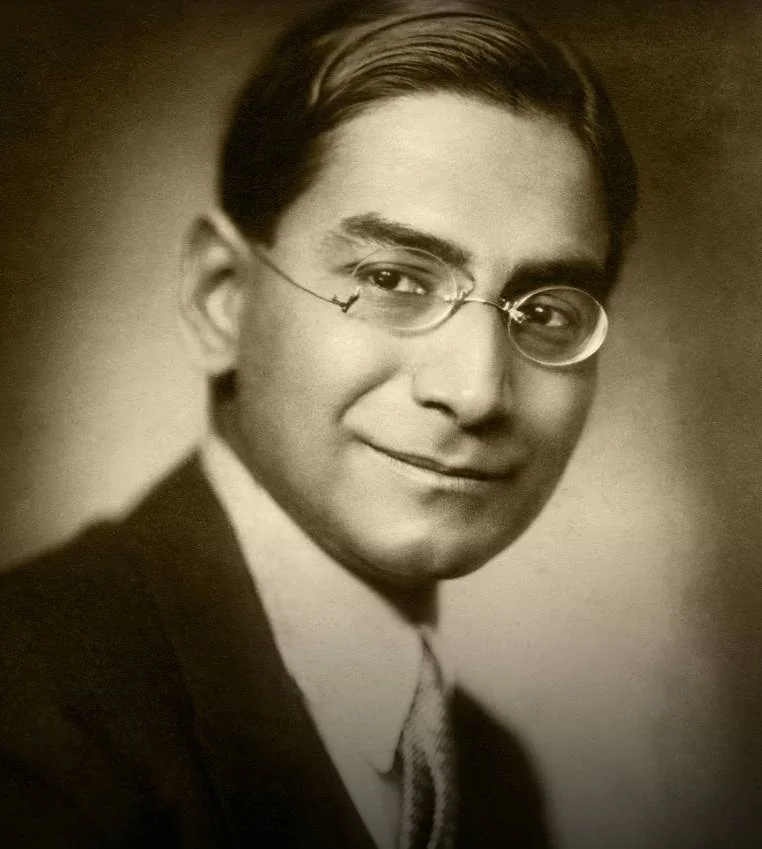
In 1924, the Dhaka-based physicist Satyendra Nath Bose derived Planck's black-body radiation law using a novel statistical approach for photons. He sent his paper to Einstein, who extended it to massive particles and predicted the condensation phenomenon. Particles obeying these statistics — bosons — can occupy the same quantum state without restriction, unlike fermions, which obey the Pauli exclusion principle.
Creating a BEC
- Confine a gas of bosonic atoms (commonly rubidium-87, sodium-23 or lithium-7) in a magneto-optical trap.
- Laser cool to millikelvin temperatures.
- Apply evaporative cooling by selectively removing the hottest atoms, dropping the temperature into the nanokelvin regime.
- Below the critical temperature, a macroscopic fraction of atoms occupies the ground state, forming a BEC.
Remarkable Properties
- BECs can slow light dramatically — from about 3 x 10^8 metres per second in vacuum to about 17 metres per second.
- In 2001, physicists froze light in a rubidium vapour for a fraction of a second.
- BECs exhibit superfluidity — flow without viscosity — and display quantised vortices.
- They are a laboratory test-bed for macroscopic quantum mechanics.
Applications of BECs
Fundamental Physics
- Tests of general relativity — studying how light and matter behave under extreme precision.
- Searches for dark matter, dark energy and gravitational waves — atomic interferometry with BECs is exquisitely sensitive.
Quantum Technologies
- Quantum computing — BECs can host qubits that potentially operate stably at near-room temperatures for certain classes of experiments.
- Quantum sensing — ultra-precise measurement of gravity, magnetic and electric fields.
Space and Navigation
- Spacecraft navigation using atom interferometer clocks and gravimeters.
- Subsurface mineral prospecting on the Moon, Mars and planetary bodies.
- Microgravity environments (such as the International Space Station) extend coherence times, enabling cleaner BEC experiments.
Technology Spin-offs
- Superfluidity and superconductivity understanding.
- Sensitive detectors for precision measurement and metrology.
Landmark Experiments
- 1995 — Eric Cornell, Carl Wieman and Wolfgang Ketterle independently produced BECs in rubidium and sodium atoms, winning the 2001 Nobel Prize.
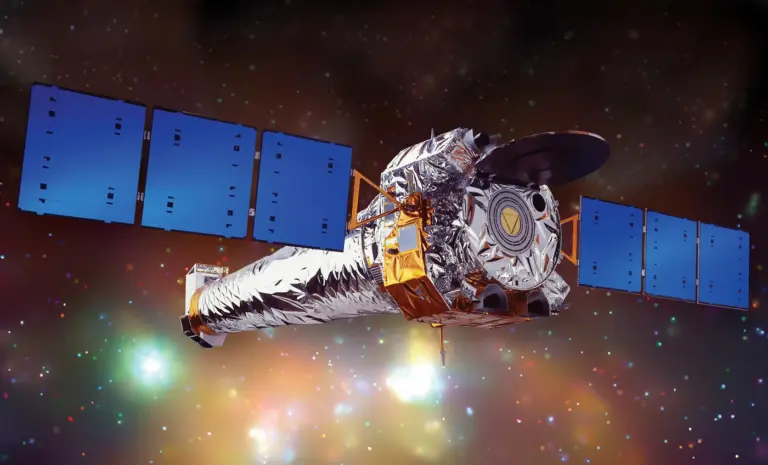
- 2018 — NASA's Cold Atom Lab (CAL) aboard the International Space Station produced BECs in microgravity, confirming that space-based BECs last longer and behave differently than on Earth.
- 2020 — Scientists observed the fifth state of matter in space for the first time aboard the ISS.
- 2023-24 — CAL and the German-led Bose-Einstein Condensate and Cold Atom Laboratory (BECCAL) module on ISS advanced microgravity BEC science.
India's Position
India has a strong heritage in BEC research through:
- Raman Research Institute (RRI), Bengaluru.
- Tata Institute of Fundamental Research (TIFR), Mumbai.
- Physical Research Laboratory (PRL), Ahmedabad.
- Indian Institute of Science (IISc), Bengaluru.
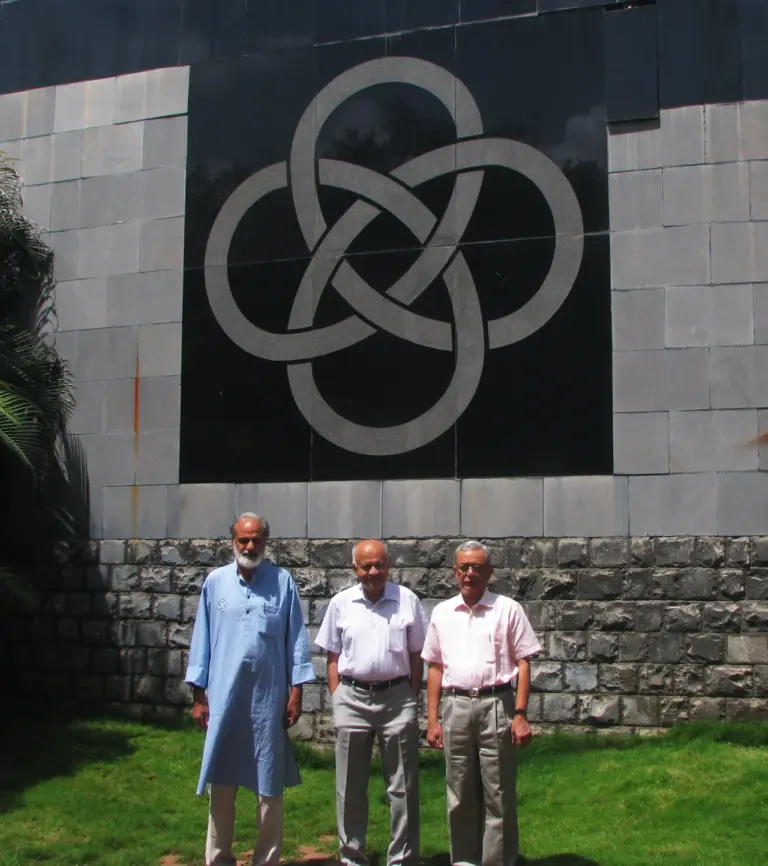
- S.N. Bose National Centre for Basic Sciences, Kolkata — named after the eponymous scientist.
Indian groups have reported BECs in rubidium and sodium, alongside theoretical contributions on ultra-cold atomic gases, polariton condensates and Bose-Einstein condensation of magnons. The National Quantum Mission indirectly supports BEC-adjacent research via the quantum sensing and metrology hub.
Ethical and Policy Considerations
- Dual-use risk of precision quantum sensing (for navigation and defence).
- Equitable access to cold-atom infrastructure for Indian researchers.
- Global collaboration — cold atom science is inherently collaborative, requiring openness in a rising techno-nationalist era.
- Preserving scientific temper and paying tribute to the contributions of scientists such as S.N. Bose, who did not receive the Nobel despite his foundational work.
Why BECs Matter
BECs bridge the microscopic quantum world and macroscopic observation. They anchor next-generation:
- Atomic clocks and time-keeping standards.
- Quantum simulators of complex many-body physics.
- Inertial navigation systems that do not rely on GPS.
- Fundamental tests of physics beyond the standard model.
Latest Developments (2024-26)
- AI Action Summit, Paris (February 2025) — AI for control of cold-atom experiments discussed as part of quantum science acceleration.
- India Semiconductor Mission — enables indigenous manufacture of laser and vacuum components needed for BEC experiments.
- Chandrayaan-4 and Gaganyaan — will eventually host microgravity cold-atom experiments in Bharatiya Antariksh Station.
- National Quantum Mission — quantum sensing and metrology thematic hub progressing with BEC-adjacent research in Indian institutes.
- DPDP Act has limited direct impact on BEC research but governs personnel data.
- BECCAL and CAL on ISS continue producing new cold-atom data through 2024-25.
- S.N. Bose commemoration — centenary of his 1924 statistics paper celebrated by the Indian Physics Association in 2024.
UPSC Relevance
For Prelims, remember that BEC is the fifth state of matter, predicted by Bose and Einstein (1924-25), first created in 1995, and observed in space via the Cold Atom Lab (2018-20). For GS III Mains, BECs exemplify quantum science, international cooperation and the link between fundamental research and applied quantum technologies. For Ethics and Essay, the Bose story offers reflections on scientific recognition, international collaboration and the enduring power of Indian science.
Tell Google you want more of this.
Add Anantam IAS as a preferred sourceOne tap, and this site shows up more often in your own Top Stories, AI Overviews and AI Mode. Remove it any time.