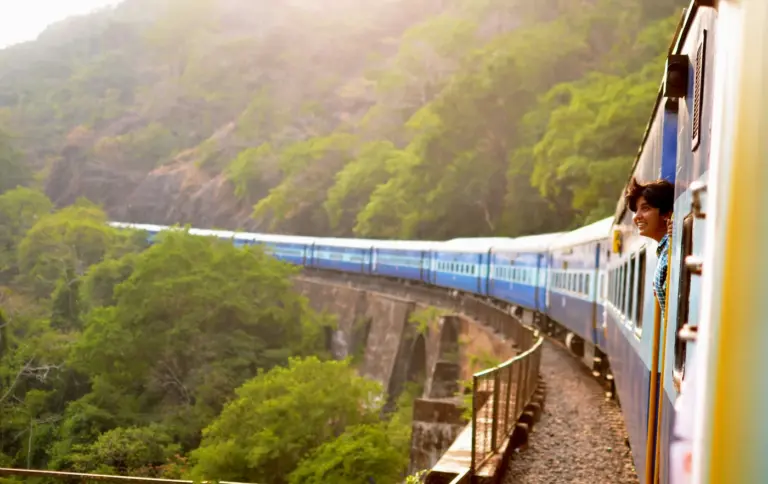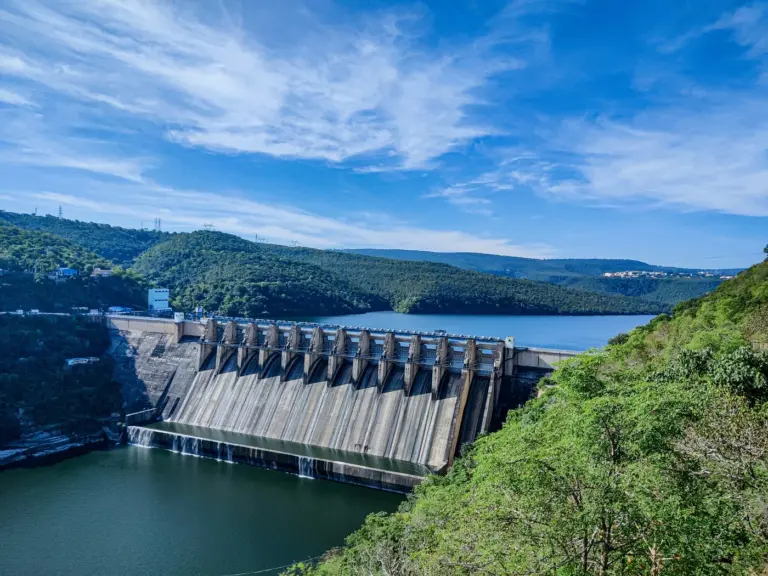

A cold desert is a dry region where low precipitation combines with extremely cold winters, typically on high plateaus or in the rain-shadow of mighty mountain ranges. Unlike hot deserts such as the Sahara or Thar, cold deserts record sub-zero winter temperatures, short growing seasons, and thin, rocky soils. Major global examples include the Gobi, Patagonia, Takla Makan, and the Great Basin, while India's cold desert stretches across Ladakh, Lahaul-Spiti, and adjoining tracts. For UPSC, cold deserts bridge physical geography, biodiversity, tribal livelihoods, and climate change discussions.
What is a Cold Desert?
A cold desert is defined by two interlinked climatic conditions:
- Low annual precipitation, usually less than 25 cm, often falling as snow.
- Low mean temperatures, with winter minima plunging well below freezing.
In the Koppen climate classification, cold deserts correspond to the BWk category, where:
- B denotes arid climates.
- W indicates desert conditions.
- k stands for "kalt" (cold), separating them from the hot BWh category.
The key geographic drivers are:
- High altitude, which lowers temperature and limits moisture-holding capacity.
- Rain-shadow effects behind major mountain ranges (Himalayas, Rockies, Andes).
- Continentality, which sharpens seasonal extremes away from maritime influence.
Global Examples of Cold Deserts
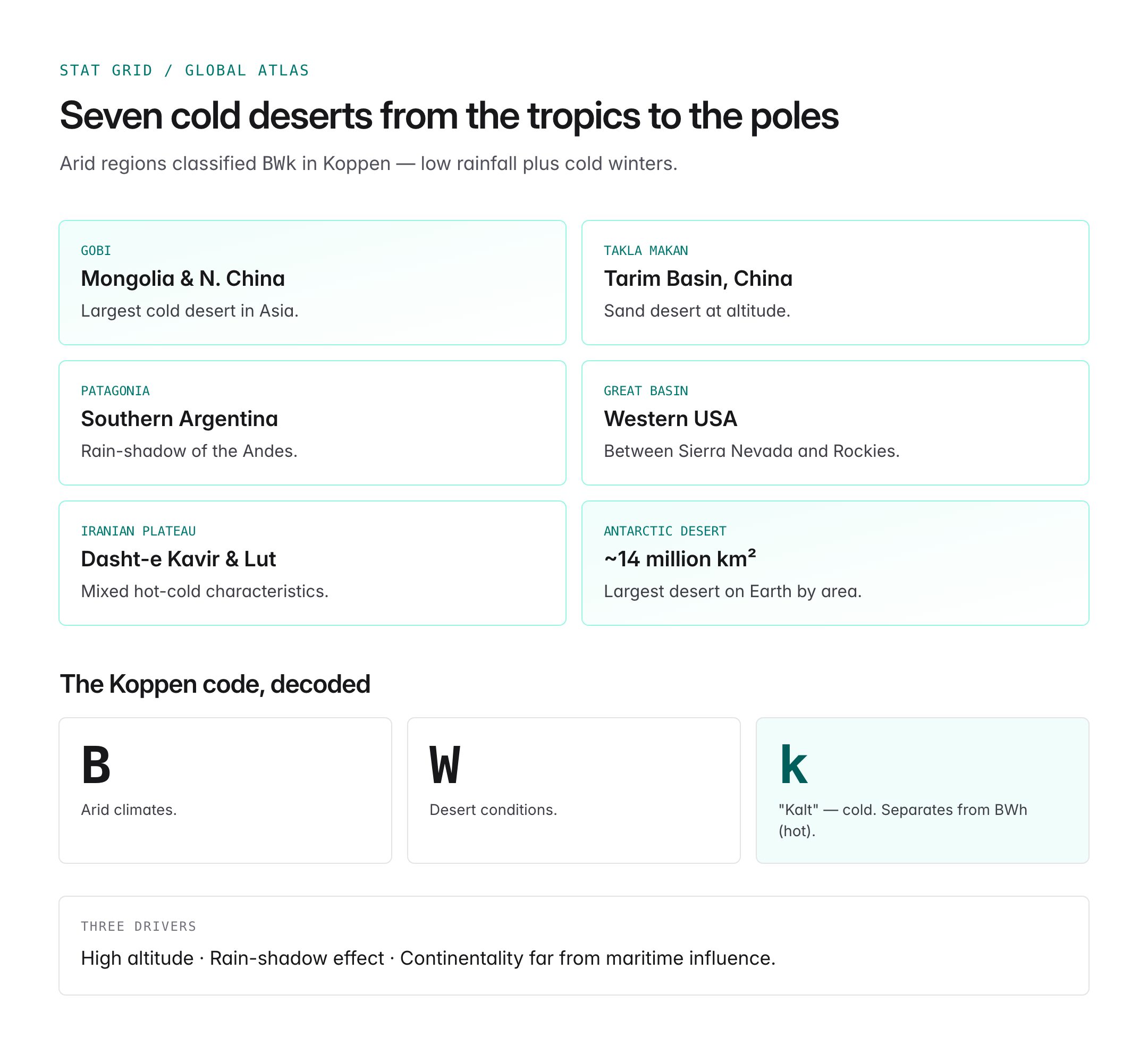
| Cold Desert | Location | Key Feature |
|---|---|---|
| Gobi | Mongolia & northern China | Largest cold desert in Asia |
| Takla Makan | Tarim Basin, China | Sand desert at altitude |
| Patagonia | Southern Argentina | Rain shadow of Andes |
| Great Basin | Western USA | Between Sierra Nevada and Rockies |
| Iranian Plateau (Dasht-e Kavir, Dasht-e Lut) | Iran | Mixed hot-cold characteristics |
| Antarctic Desert | Antarctica | Largest desert on Earth by area |
| Arctic tundra | Circumpolar North | Extreme polar cold desert |
The Antarctic Desert, at around 14 million sq km, is technically the largest desert in the world by area, followed by the Arctic. Both are cold polar deserts.
The Indian Cold Desert
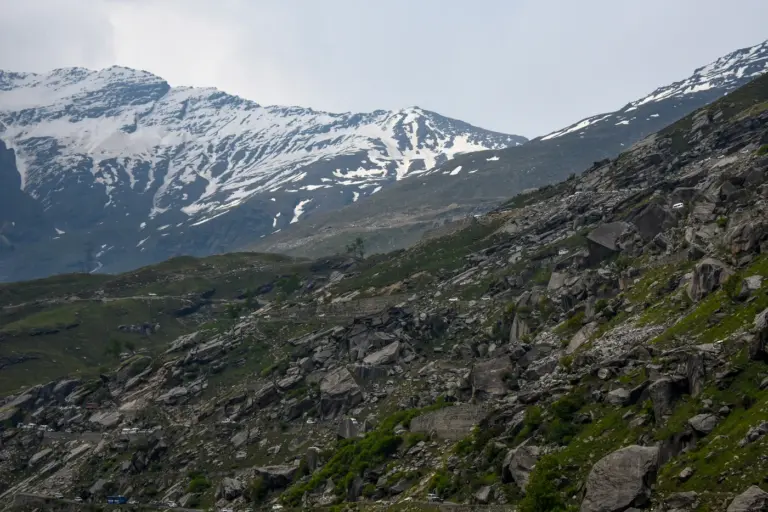
India's cold desert zone lies in the trans-Himalayan region, in the rain shadow of the Greater Himalayas.
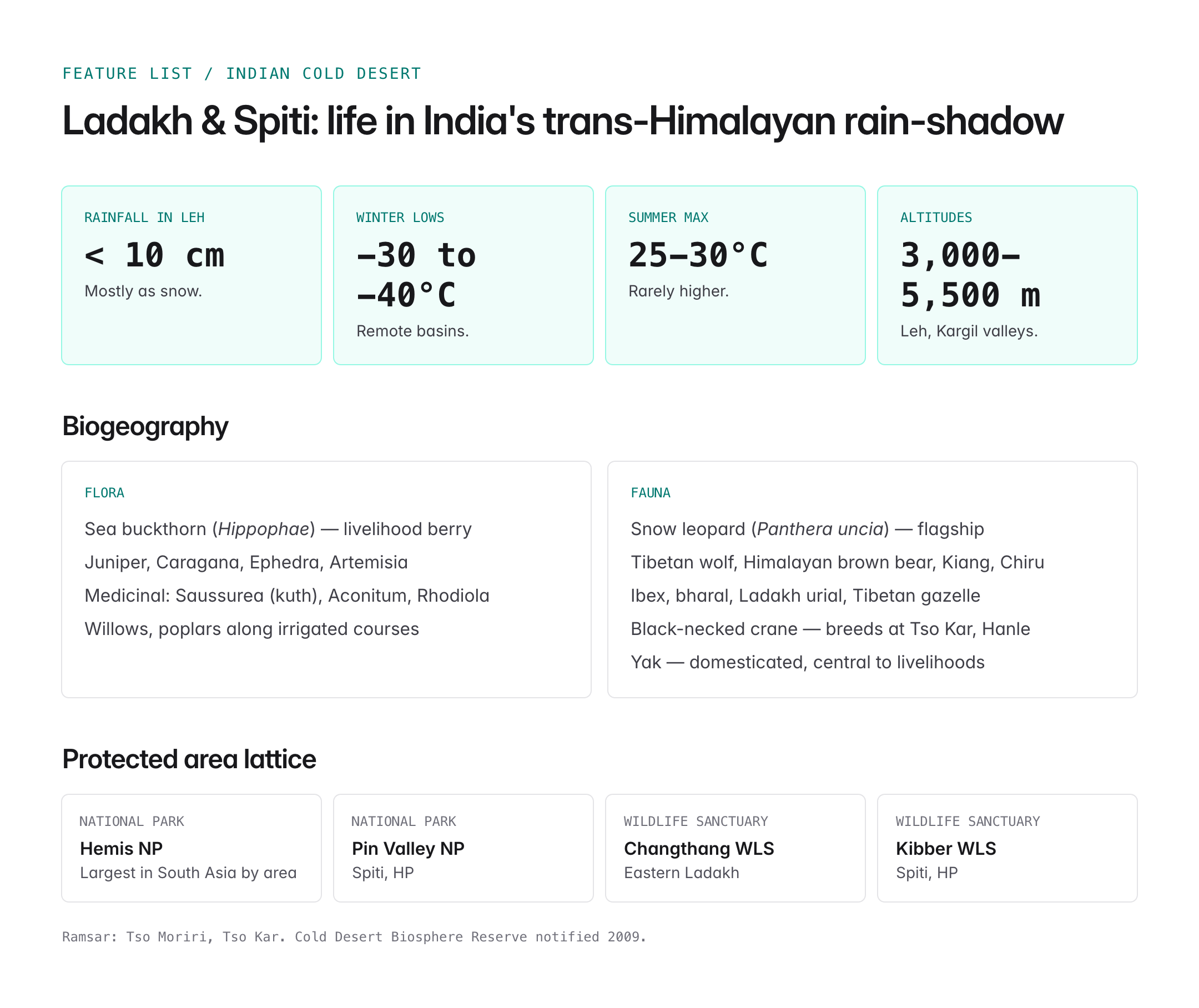
- Ladakh: Encompassing Leh and Kargil, with altitudes typically 3,000-5,500 metres. Home to the Nubra, Indus, and Zanskar valleys.
- Lahaul and Spiti (Himachal Pradesh): A high-altitude valley between the Pir Panjal and the Zanskar ranges.
- Upper Kinnaur (Himachal) and parts of Uttarakhand's Niti and Mana valleys share cold desert traits.
Climatic profile:
- Annual precipitation: often less than 10 cm in Leh, with most in the form of snow.
- Winter temperatures: can drop to -30 to -40°C in remote basins.
- Summer temperatures: pleasant, rarely exceeding 25-30°C.
- Thin air, intense solar radiation, and strong winds characterise the plateau.
The Cold Desert Biosphere Reserve, notified in 2009 in Himachal Pradesh, covers Pin Valley National Park, the Chandratal and Sarchu areas, and Kibber Wildlife Sanctuary.
Flora and Fauna
Cold deserts support a sparse but specialised biodiversity.
Flora
- Sea buckthorn (Hippophae): A hardy shrub with nutritionally rich berries, promoted as a livelihood crop.
- Juniper, Caragana, Ephedra, Artemisia: Shrubs adapted to aridity and cold.
- Medicinal herbs: Including Saussurea (kuth), Aconitum, and Rhodiola.
- Willows and poplars: Along river courses where irrigation is possible.
Fauna
- Snow leopard (Panthera uncia): Flagship species of high-altitude cold deserts.
- Tibetan wolf, Himalayan brown bear, Tibetan wild ass (Kiang), Chiru (Tibetan antelope).
- Ibex, bharal (blue sheep), Ladakh urial, Tibetan gazelle.
- Yak: A domesticated high-altitude bovid, central to local livelihoods.
- Black-necked crane: Breeds in Ladakh's wetlands such as Tso Kar and Hanle, both Ramsar sites.
- Migratory waterfowl use wetlands like Pangong Tso and Tso Moriri.
Protected areas include Hemis National Park (the largest national park in South Asia by area), Changthang Wildlife Sanctuary, Pin Valley National Park, and Kibber Wildlife Sanctuary.
Human Adaptation and Livelihoods
Communities living in cold deserts have developed distinctive adaptations.
- Settlements concentrate in river valleys with glacier-fed streams for irrigation.
- Traditional agriculture relies on barley, wheat, peas, and buckwheat, typically a single short summer crop.
- Pastoralism: Changpa nomads of Changthang herd yaks, sheep, and pashmina goats, the source of Pashmina wool.
- Architecture: Thick mud-brick or stone walls, small windows, and flat roofs insulate homes.
- Clothing: Layered woollens, fur caps, and locally produced textiles.
- Water management: Zing (small water storage tanks), kuhls (channels), and in recent decades ice stupas pioneered by Sonam Wangchuk to address water shortages during sowing.
Key livelihood products:
- Pashmina shawls woven from Changthangi goat fleece.
- Sea buckthorn juice, jams, and herbal products.
- Apricots, apples, and walnuts from lower cold desert belts.
Contemporary Challenges
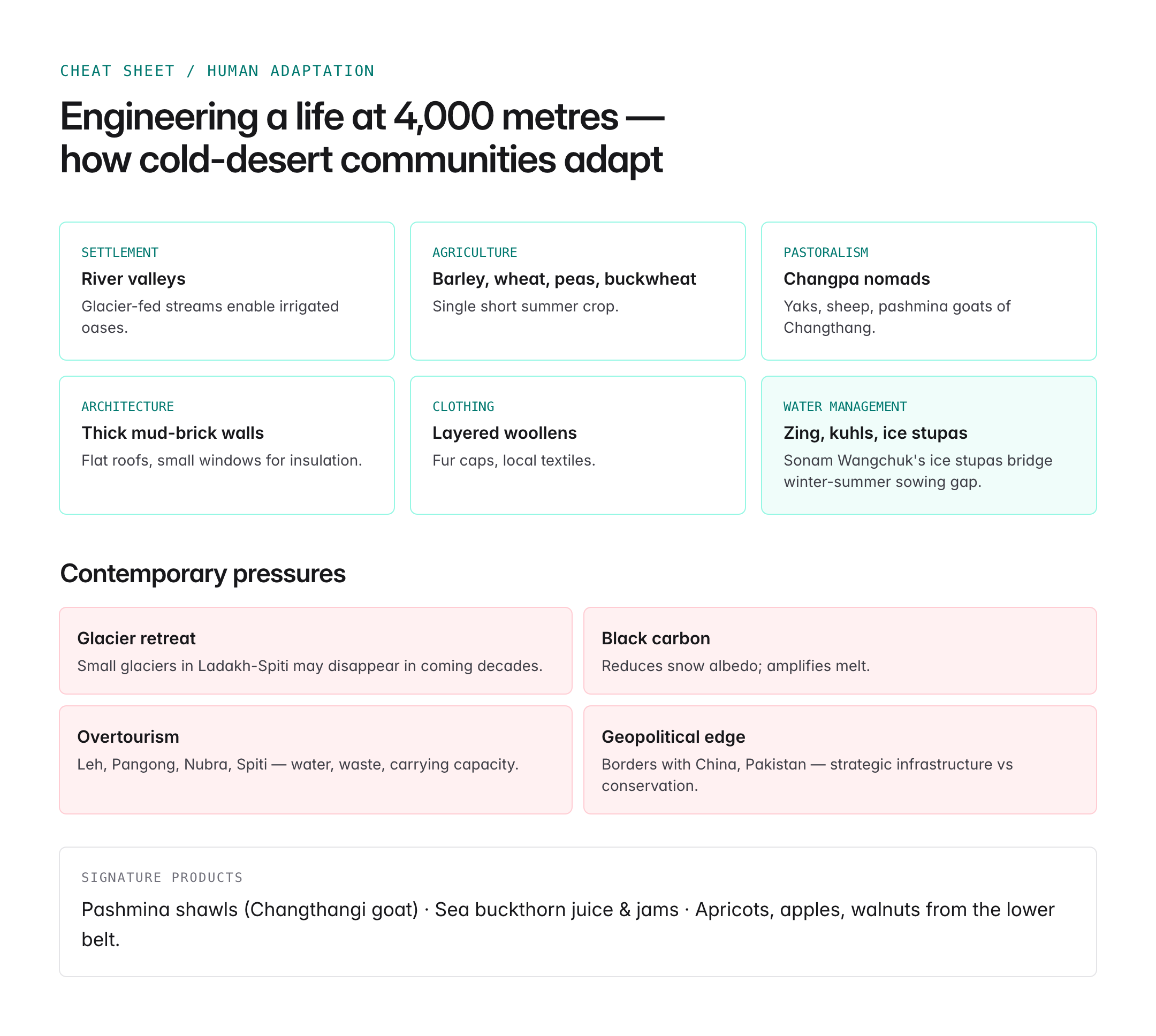
Cold deserts are on the frontline of environmental and geopolitical stress.
- Climate change: Accelerated glacier retreat in Ladakh and Spiti threatens streamflow. Studies suggest many small glaciers may disappear in coming decades.
- Black carbon deposition: Reduces albedo of snow and glaciers, amplifying melt.
- Tourism pressure: Overtourism in Leh, Pangong, Nubra, and Spiti strains water, waste, and ecological carrying capacity.
- Geopolitical sensitivity: Ladakh borders China and Pakistan, raising strategic infrastructure needs alongside conservation.
- Livelihood transitions: Younger populations move to towns, weakening traditional pastoral economies.
Policy responses include the Cold Desert Biosphere Reserve, the National Mission for Sustaining the Himalayan Ecosystem under NAPCC, Ramsar designations (Tso Moriri, Tso Kar), and UT-level sustainable tourism and carrying-capacity studies.
UPSC Relevance
Prelims focus:
- Definition and features of cold deserts; BWk in Koppen classification.
- Global examples: Gobi, Patagonia, Takla Makan, Great Basin, Antarctic Desert.
- Indian cold desert zones: Ladakh, Lahaul-Spiti, upper Kinnaur.
- Cold Desert Biosphere Reserve and protected areas (Hemis, Pin Valley, Changthang).
- Flora (sea buckthorn, juniper), fauna (snow leopard, black-necked crane, Tibetan wild ass).
- Pashmina wool and Changpa pastoralism; Chiru and Shahtoosh debate.
- Ramsar sites: Tso Moriri, Tso Kar.
Mains GS-I and GS-III angles:
- Physical geography of high-altitude deserts; rain-shadow and Koppen mechanisms.
- Impact of climate change and black carbon on Himalayan cryosphere.
- Balancing tourism, military infrastructure, and biodiversity in ecologically fragile zones.
- Traditional knowledge and innovations like ice stupas for sustainable water use.
Sample PYQ angle: "How does the cryosphere affect global climate?" or "What are the major reasons for declining rice and wheat yield in the cropping system?" A cold desert lens brings in Himalayan glaciers, high-altitude agriculture, and pastoral livelihoods, adding depth to geography and environment answers.
Tell Google you want more of this.
Add Anantam IAS as a preferred sourceOne tap, and this site shows up more often in your own Top Stories, AI Overviews and AI Mode. Remove it any time.