Opens in a new tab
Join Anantam IAS Channel on Telegram

Daily Digest · Wednesday

11 November 2026 Current Affairs for UPSC

4 current affairs published on Wednesday, 11 November 2026

11 November 2026 Current Affairs for UPSC — every Why-in-News article AnantamIAS published on Wednesday, 11 November 2026, broken down with Why in News?, the exact GS paper it feeds, sub-topic mapping, MCQ-ready facts and a UPSC-style practice question. 4 articles in total, covering Polity, Economy, Environment, S&T, IR, Geography, History, Society and Internal Security — the same Why-in-News + GS-paper-mapping + practice-question format the Compass uses across every daily digest on the site.

Daily current affairs for UPSC is where new material enters your prep stream. Read this 11 November 2026 digest end-to-end in 25–35 minutes, attempt the practice question at the foot of each article (it's MCQ for some, 10/15-marker for others), then bookmark the entries that fall inside your active revision window. Everything stays cross-linked: tap any subject pill to jump to that subject's hub, or use the table of contents above to skip straight to a specific story.

Use this page three ways. Read sequentially for a one-sitting scan of everything that mattered on 11 November 2026. Download the 11 November 2026 PDF below for offline study or print revision. Or use the November 2026 Current Affairs compilation to see this day in the month's full context. For the previous day's reading, see 10 November 2026 Current Affairs; the next day's is 12 November 2026 Current Affairs.

Why we publish daily current affairs separately from the monthly compilation: daily is learning, monthly is revision. Use the daily page to add fresh material to your notes the day it breaks; come back to the November 2026 compilation 60 days before Prelims when the noise has settled and only the lasting takeaway is worth re-reading.

INS Betwa: What Re-Powering Means in a Naval Refit

Open article →Download PDF

Why in News?

On 11 November, the Ministry of Defence signed a contract with Cochin Shipyard Limited to refit INS Betwa and replace its steam propulsion system with a diesel-engine system.

  • The Brahmaputra-class frigate will retain its identity as an existing Indian Navy ship throughout the refit.
  • The contract is worth ₹498.58 crore and covers a wider package of modernisation as well as re-powering.
  • The ministry expects more than 50 MSMEs to participate in the project.
  • A ship can remain structurally useful even when its machinery comes due for replacement.
  • Domestic shipyards build industrial capability through repair and maintenance as well as new construction.

UPSC Relevance

Prelims Relevance

  • INS Betwa is a Brahmaputra-class frigate.
  • Cochin Shipyard Limited is the contracted shipyard.
  • A prime mover supplies mechanical power to drive a machine.
  • Re-powering replaces propulsion machinery on an existing vessel.

Mains Relevance

GS Paper 3

  • Compare refit and replacement over the remaining life of a public asset.
  • Examine the role of integration and maintenance skills in domestic industry.

Essay

  • Maintenance decisions influence how long earlier public investment continues to provide a service.

Background and Context

What Changes When a Ship Is Re-Powered?

The hull gives a ship its structure. Its propulsion plant supplies the power needed to move that structure through water.

  • In a steam propulsion system, heat produces steam. Steam does work as it expands in the machinery that supplies mechanical power. The word steam describes the working fluid in this conversion.
  • A diesel engine burns fuel inside its cylinders. Expanding gases move pistons and turn a crankshaft, supplying mechanical power through a different chain of energy conversion.
  • The propeller performs a separate job. It turns shaft power into thrust in water. A change in the machine supplying that power tells us little, by itself, about the ship’s final speed.
  • For Betwa, re-powering describes the replacement of the existing steam-based arrangement with a diesel-engine-based one. The ministry locates this work within a broader programme of refit on the same frigate.
  • A familiar comparison is an engine replacement on a ferry. The vessel keeps its hull and identity even though engineers have changed the machinery that moves it.

How Does a Refit Affect the Replacement Decision?

An owner weighing a refit against a new ship must first estimate how much useful service the existing hull can still provide.

  • The remaining life of the structure sets a practical limit on the value of new machinery. Long-lived equipment brings less benefit if the surrounding asset will soon need replacement.
  • Time in the shipyard has an economic cost. A vessel undergoing extensive work cannot provide its usual service during that period, even when the expenditure remains within the contract price.
  • A fair life-cycle comparison includes future maintenance and operating costs alongside the initial bill. The published value covers the contracted package and cannot establish the savings from the engine change alone.
  • The contract signature establishes that the parties have agreed to the work. Completion, acceptance and return to service require subsequent evidence, each answering a different question about progress.
  • Claims about fuel savings would need comparable operating data for the two arrangements under similar conditions. A propulsion category and a contract value provide insufficient evidence for a numerical estimate.

What Industrial Capability Does Ship Repair Develop?

A repair yard must fit new equipment into a structure that already exists, with space and supporting services inherited from earlier design decisions.

  • Integration is the yard’s distinct contribution. It must bring the replacement equipment and retained parts together as a functioning asset, taking responsibility for the performance of the completed work.
  • The ministry expects MSME participation across the project. That expectation describes an opportunity for suppliers. Actual orders and accepted deliveries would establish what work particular firms secured.
  • Maintenance capacity has value beyond the initial contract. A workforce familiar with the renewed machinery can support later servicing, while records of the changes help future maintainers identify the equipment installed.
  • Domestic ship repair develops the ability to sustain assets already in service. The location of the yard alone cannot establish the country of origin of every component it uses.

Way Forward

Assess the completed refit

  • Track contract milestones through completion and formal acceptance.
  • Compare operating costs over similar periods and duties before estimating savings.
  • Assess supplier participation from delivered work and support capability.

Conclusion

  • Use INS Betwa to illustrate investment across an asset’s life. Replacing machinery can preserve the value embodied in a serviceable hull, subject to the cost and time needed for the refit.
  • For an industrial policy answer, connect shipyard capability to integration, supplier work and future maintenance. Judge the contract’s results when evidence of the completed work becomes available.

UPSC Practice Questions

Prelims MCQ 1

With reference to the refit of INS Betwa, consider the following statements.

  1. The contracted work includes replacement of steam-based propulsion with diesel-engine-based propulsion.
  2. The contract establishes that the completed ship has returned to service.
  3. The project involves construction of a new hull as the defining feature of re-powering.

How many of the above statements are correct?

(a) Only one (b) Only two (c) All three (d) None

Answer: (a) Only one

Explanation:

Only the first statement is correct. The ministry announced a contract for future work on an existing frigate. Completion and acceptance follow later.

Prelims MCQ 2

Which evidence best supports an assessment of savings from re-powering a vessel?

(a) Number of firms expressing interest (b) Date of the contract signing (c) Name of the replacement engine’s manufacturer (d) Comparable operating and maintenance costs over the remaining service life

Answer: (d) Comparable operating and maintenance costs over the remaining service life

Explanation:

A life-cycle assessment compares costs over a common period and accounts for the time the vessel spends out of service.

UPSC Mains Questions

  1. Examine the considerations that determine whether a public authority should refit an existing vessel or procure a replacement.
  2. How can complex ship repair contribute to domestic industrial capability? Discuss the evidence needed to assess this contribution.

Source: Press Information Bureau, Ministry of Defence.

Frequently Asked Questions

What work has the ministry contracted for INS Betwa?

Cochin Shipyard Limited will undertake a normal refit and replace the ship’s steam-based propulsion with diesel-engine-based propulsion. The ministry announced the signing of the contract on 11 November.

What is the difference between a prime mover and a propeller?

The prime mover supplies mechanical power. The propeller uses the power delivered to its shaft to develop thrust in water. The two terms describe different parts of a propulsion system.

Why does hull condition matter in a re-powering decision?

The owner expects the existing structure to carry the renewed machinery over its remaining service life. A short remaining life reduces the period over which the investment can yield benefits.

How can the role of smaller firms be assessed?

The ministry expects smaller firms to take part in the project. Records of orders, deliveries and subsequent maintenance work can show how much of that opportunity turns into lasting capability.

Early Warning Systems: Why National Coverage Can Miss Local Communities

Open article →Download PDF

Why in News?

On November 11, the World Meteorological Organization and the UN Office for Disaster Risk Reduction reported that 136 countries had some capacity to issue multi-hazard early warnings.

  • The 2026 report puts country coverage at 70%. Its headline count rose by 17 countries from March 2025.
  • Small island developing States had the lowest reported coverage among the groups examined.
  • Least Developed Countries had the lowest overall comprehensiveness scores despite making the greatest progress from their initial scores.
  • A government can report a national capability while remote settlements still lack a reliable way to receive and understand a warning.
  • The report associates more comprehensive systems with lower disaster losses. Preparedness decisions also need evidence from individual communities.

UPSC Relevance

Prelims Relevance

  • WMO and UNDRR jointly produced the global status report.
  • Country coverage uses countries as the unit of comparison.
  • Comprehensiveness describes the extent of early warning capabilities.
  • Anticipatory action uses advance information to act before the expected impact.

Mains Relevance

GS Paper 3

  • Assess how a district can connect hazard information to timely protective action.
  • Choose evidence of warning receipt, comprehension and response among exposed groups.

Essay

  • Public infrastructure earns trust when the people facing danger can use it in time.

Background and Context

What Does Country Coverage Measure?

Start with the unit being counted. Each country enters the headline figure when it reports some multi-hazard early warning capability.

  • A country count gives the same weight to a small island state and a populous continental country. Converting that count into a share of the world population would require separate population data.
  • The measure identifies where a national capability exists. A country with alerts in several major cities can still face delivery gaps in dispersed settlements, including places where telecommunications fail during a storm.
  • A multi-hazard system deals with more than one kind of threat. For a district facing coastal flooding and high winds, the warning should identify which hazard threatens which location.
  • The comprehensiveness score asks how far a system has developed. The report can record a country as covered while its authorities are still improving forecasting, dissemination or arrangements for acting on alerts.
  • Read the two country-group findings separately. The island states finding concerns reported coverage. The least developed countries finding concerns the depth of capability and the change from their starting point.

How Does a Forecast Reach a Household?

Consider a coastal village expecting a storm surge. The forecaster, district official and household each need different information before the water arrives.

  • The forecaster estimates the hazard. Local authorities combine that information with exposure, such as the location of homes on low ground, to identify the settlements that may need to move.
  • A technical forecast becomes an actionable warning when people can identify their locality, the expected timing and the protective action. A general announcement of rough weather leaves residents to guess whether to evacuate.
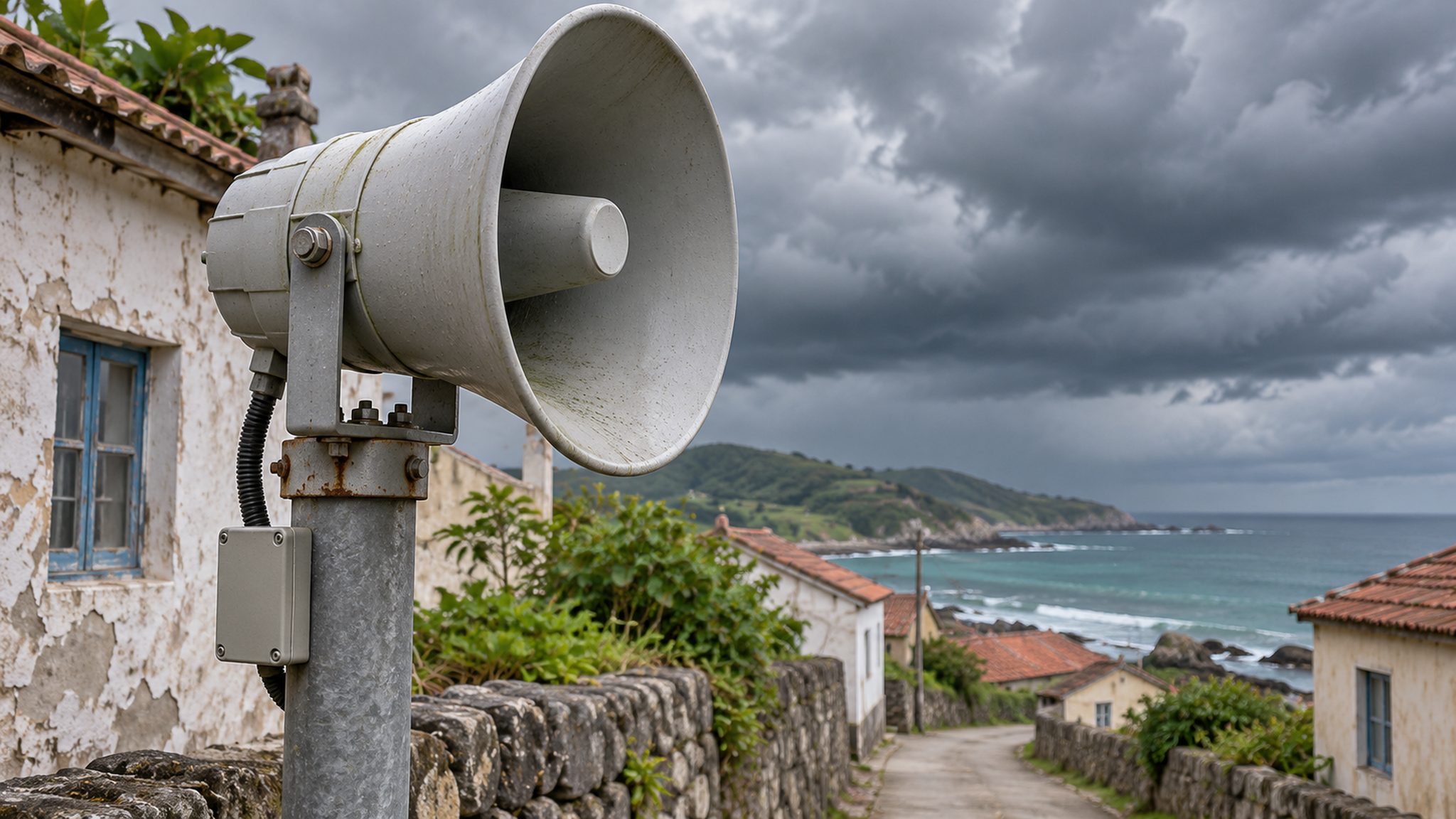
  • A pole-mounted loudspeaker can carry an instruction to residents outdoors. The district should check whether households beyond earshot, people with hearing impairments and residents away from home receive an accessible message.
  • Lead time has practical value only if the trip to safety fits within it. A family caring for someone with limited mobility may need help with transport well before the hazard peaks.

What Evidence Shows That a Warning Worked?

A district can trace a recent alert from the issuing office to the people who faced the hazard. Each check answers a different question.

  • A dispatch record establishes when an authority sent the message and which areas it targeted. Delivery failures or interrupted power can still leave individual settlements outside the communication chain.
  • Interviews after a drill can establish receipt and understanding. Ask residents what danger they expected, when they first heard the warning and what action they believed the message advised.
  • Compare those answers with observed action. If residents understood the evacuation advice but could not reach a shelter, better transport or a nearer safe site addresses the obstacle more directly than another announcement.
  • The international report finds an association between stronger systems and lower disaster impacts. Local exposure, housing and the severity of the event also influence losses when comparing outcomes across countries.

Way Forward

Test the Last Mile in a District Drill

  • Select settlements with different communication conditions and record which residents receive an alert first and last.
  • Ask participants to repeat the protective instruction in their own words and identify a safe destination.
  • Use the results to assign responsibility for specific gaps, such as a missing accessible message, a broken relay or transport for residents who need assistance.

Conclusion

  • Use the global coverage figure to describe the spread of national capability. Use comprehensiveness to assess the development of the systems countries report.
  • For a district case study, follow one local warning through receipt, understanding and action. The first point where residents lose time identifies a practical place to intervene.

UPSC Practice Questions

Prelims MCQ 1

With reference to the 2026 global early warning report, consider the following statements.

  1. The headline coverage percentage measures the share of the world population that received a warning.
  2. Small island developing States had the lowest reported coverage.
  3. Least Developed Countries had the lowest overall comprehensiveness scores.

How many of the above statements are correct?

(a) Only one (b) Only two (c) All three (d) None

Answer: (b) Only two

Explanation:

Statements two and three describe different measures. The headline coverage figure counts countries reporting some capability.

Prelims MCQ 2

Which evidence best shows that a warning led to timely protective action?

(a) A ministry issued an advisory (b) A district purchased a loudspeaker (c) A forecast correctly identified a hazard (d) Residents received the warning and reached a safe place before impact

Answer: (d) Residents received the warning and reached a safe place before impact

Explanation:

Timely movement to safety links an alert with a protective response. The other observations document individual inputs or stages.

UPSC Mains Questions

  1. Explain how reported national early warning capability can coexist with substantial local protection gaps.
  2. Design a district-level review that distinguishes a failure of warning dissemination from a failure of preparedness.

Source: World Meteorological Organization and United Nations Office for Disaster Risk Reduction.

Frequently Asked Questions

What does the 70% coverage figure mean?

It describes the share of countries reporting some multi-hazard early warning system capability. To estimate the share of people reached, analysts would need separate local or population-level evidence.

How did the findings differ for island states and least developed countries?

Small island developing States had the lowest reported coverage. Least Developed Countries had the lowest overall comprehensiveness scores, although they had improved most from their initial position.

What is last-mile warning delivery?

It is the step that brings a usable warning to people facing a particular hazard. A local review should establish when people received the message and whether they understood its instruction.

How can a district assess preparedness after an alert?

Officials can compare reported receipt with the action people took. Residents who understood the alert may still have faced transport difficulties or lacked access to a suitable shelter.

Rural Mobile Coverage: What Sanctioned and Commissioned Sites Measure

Open article →Download PDF

Why in News?

On 11 November, the Department of Telecommunications reported that the government had sanctioned 26,000 additional mobile network sites to extend service to areas with remaining coverage gaps.

  • The 4G Saturation Project targets rural and remote villages that previously lacked fourth-generation mobile connectivity.
  • The ministry separately reported that 18,291 BSNL sites commissioned under the existing rollout carried traffic in October.
  • The department credited both the public project and private operator expansion for progress in extending coverage.
  • Scattered settlements raise the cost of serving each potential subscriber where many households live far apart.
  • Village coverage describes the geographic reach of service. Affordability and actual use require evidence from households.

UPSC Relevance

Prelims Relevance

  • The Department of Telecommunications oversees the saturation project.
  • BSNL operates sites under the public rollout.
  • Commissioning marks entry into service.
  • Backhaul carries traffic between a local site and the wider network.

Mains Relevance

GS Paper 3

  • Explain how dispersed demand affects the economics of extending telecom infrastructure.
  • Choose indicators that distinguish investment approval from reliable service.

GS Paper 2

  • Assess whether rural households can use digital public services once mobile coverage reaches their settlement.

Essay

  • Infrastructure can widen opportunity when households can afford to use the service it delivers.

Background and Context

What Changes When a Site Is Commissioned?

A sanction authorises expansion. An operating site must connect a handset to the wider network before a subscriber can place a call or use mobile data.

  • A sanctioned site belongs to the approved programme of work. Operators still have to identify a workable location, provide power, install equipment and connect that location to their network.
  • The tower raises the antennas above nearby obstacles. The radio equipment exchanges signals with phones within reach, while the power supply keeps that equipment available to subscribers.
  • The backhaul connection carries calls and data onward. A photograph of an erected mast can establish that construction progressed, while a successful connection tests whether the installed equipment can deliver service.
  • When a site is commissioned, it enters service. Traffic recorded there supplies further evidence that subscribers connected during the reporting period. A site could still experience interruptions on other days.
  • For a remote hill settlement, maintenance access matters alongside installation. A long journey to replace a failed power component can leave residents without service even after the site enters the commissioned inventory.

How Do Sites Relate to Village Coverage?

The unit changes from a network location to a settlement when the department measures geographic coverage. The two counts answer different questions.

  • One radio site may reach homes in neighbouring villages. Counting each installation as one newly connected village would overlook settlements that share a site and villages served by several installations.
  • Within a village, terrain can change reception over short distances. A handset on an open road may connect readily while a hamlet behind a ridge receives a weaker signal from the same site.
  • An assessment of geographic reach should identify where measurements were taken. A village-centre reading gives limited information about a distant habitation whose residents follow another route to the market or clinic.
  • The ministry reports progress by both BSNL and private providers. To attribute a newly covered settlement to the public project, an evaluator needs its earlier coverage status and the operator that extended service.

What Does Traffic Tell Us About Household Access?

A connection that carries data has served a user. Traffic totals alone cannot show how many households can afford a handset or a recurring recharge.

  • A maximum daily user count identifies the busiest day in the reporting period. It cannot establish how many distinct users connected across the month because many people return on successive days.
  • A monthly data total adds the volume transferred by users. Identical totals could result from a few heavy users or from many light users, with different implications for access across a community.
  • For affordability, ask whether a household can buy a suitable device and maintain a data plan. A household survey can record these barriers even where network measurements show a working signal.
  • For service quality, test whether a user can complete a task at the time and place it matters. Submitting an application from home requires a stable connection throughout the transaction.

Way Forward

Measure Delivery at Each Stage

  • Publish commissioning dates alongside approvals and report how long sites remain available.
  • Check signal reach in outlying habitations as well as village centres, recording the location and time of each observation.
  • Pair traffic figures with household evidence on device access, recharge costs and tasks residents can complete.

Conclusion

  • Follow the evidence from approval to a working site, then ask which settlements it reaches and which households use it. Each step requires an observation matched to that question.
  • For an answer on inclusive growth, combine the ministry’s rollout figures with an example of a household facing a weak signal or an unaffordable recharge. Specify the remedy for that particular barrier.

UPSC Practice Questions

Prelims MCQ 1

With reference to rural mobile connectivity, consider the following statements.

  1. A sanctioned site has already begun carrying user traffic.
  2. A single commissioned site can serve more than one village.
  3. The maximum daily user count gives the number of distinct users over a month.

How many of the above statements are correct?

(a) Only one (b) Only two (c) All three (d) None

Answer: (a) Only one

Explanation:

Only statement 2 is correct. Sanction precedes commissioning. A peak daily count covers one day and cannot identify all distinct users over the month.

Prelims MCQ 2

Which observation most directly measures an affordability barrier in a village with working 4G coverage?

(a) The height of the nearest mast (b) The number of sites approved in the district (c) The volume of traffic carried on the busiest day (d) Households reporting they cannot afford a handset or regular recharge

Answer: (d) Households reporting they cannot afford a handset or regular recharge

Explanation:

Household responses directly identify a cost barrier. Site approvals, mast height and traffic totals describe other aspects of infrastructure or use.

UPSC Mains Questions

  1. How should a district evaluate the contribution of a rural mobile infrastructure project to digital inclusion?
  2. Explain how terrain and dispersed settlement patterns affect the delivery of reliable mobile broadband.

Source: PIB, Ministry of Communications.

Frequently Asked Questions

What did the government sanction?

The government sanctioned 26,000 additional mobile network sites for the next phase of expansion. The department reported the decision alongside operating figures from BSNL sites commissioned under the existing 4G rollout.

Why can a tower count differ from a village count?

An antenna can reach multiple nearby settlements. Terrain can also divide a village into areas with different signal strengths, so a village may require more than one site.

What does a peak daily user count measure?

It measures the highest number of active users recorded on a single day in the reporting period. Calculating distinct monthly users requires identifying repeat connections across different days.

How can officials check whether coverage improves access?

They can test connections across habitations and ask households about handset ownership, recharge costs and reliability. Together these observations connect network availability to people’s ability to use the service.

Sea Vigil: How India Coordinates Coastal Security Institutions

Open article →Download PDF

Why in News?

The Indian Navy began coordinating the fifth Sea Vigil coastal defence exercise on November 11, opening with a nationwide readiness evaluation.

  • The first phase is the Coastal Defence and Security Readiness Evaluation, scheduled for November 11–17.
  • The ministry scheduled the sea phase for November 18–19. Its opening announcement describes the plan for that phase.
  • The exercise includes coastal states and Union Territories, central maritime agencies and coastal communities.
  • A national exercise gives different levels of government a shared occasion to review how their respective duties fit together.
  • The exercise grew from coastal security measures introduced after the 2008 Mumbai attacks.

UPSC Relevance

Prelims Relevance

  • Indian Navy leads coordination of Sea Vigil.
  • CDSRE expands to Coastal Defence and Security Readiness Evaluation.
  • Indian Coast Guard, Coastal Security Police and Customs are participating agencies.
  • TROPEX is the Navy’s biennial Theatre Level Readiness Operational Exercise.

Mains Relevance

GS Paper 3

  • Explain why coastal security involves civilian institutions alongside maritime forces.
  • Distinguish participation in an exercise from evidence of improved preparedness.

GS Paper 2

  • Use Centre–state coordination to illustrate how different public authorities can work toward a shared objective.

Essay

  • Institutional cooperation depends on understanding who is responsible for each public function.

Background and Context

Who Coordinates Sea Vigil?

The Ministry of Defence names the Indian Navy as lead agency and identifies the public authorities and communities taking part.

  • The lead agency brings the participants into a common exercise. Its coordinating role explains who connects their work for Sea Vigil while the participating institutions retain their regular responsibilities.
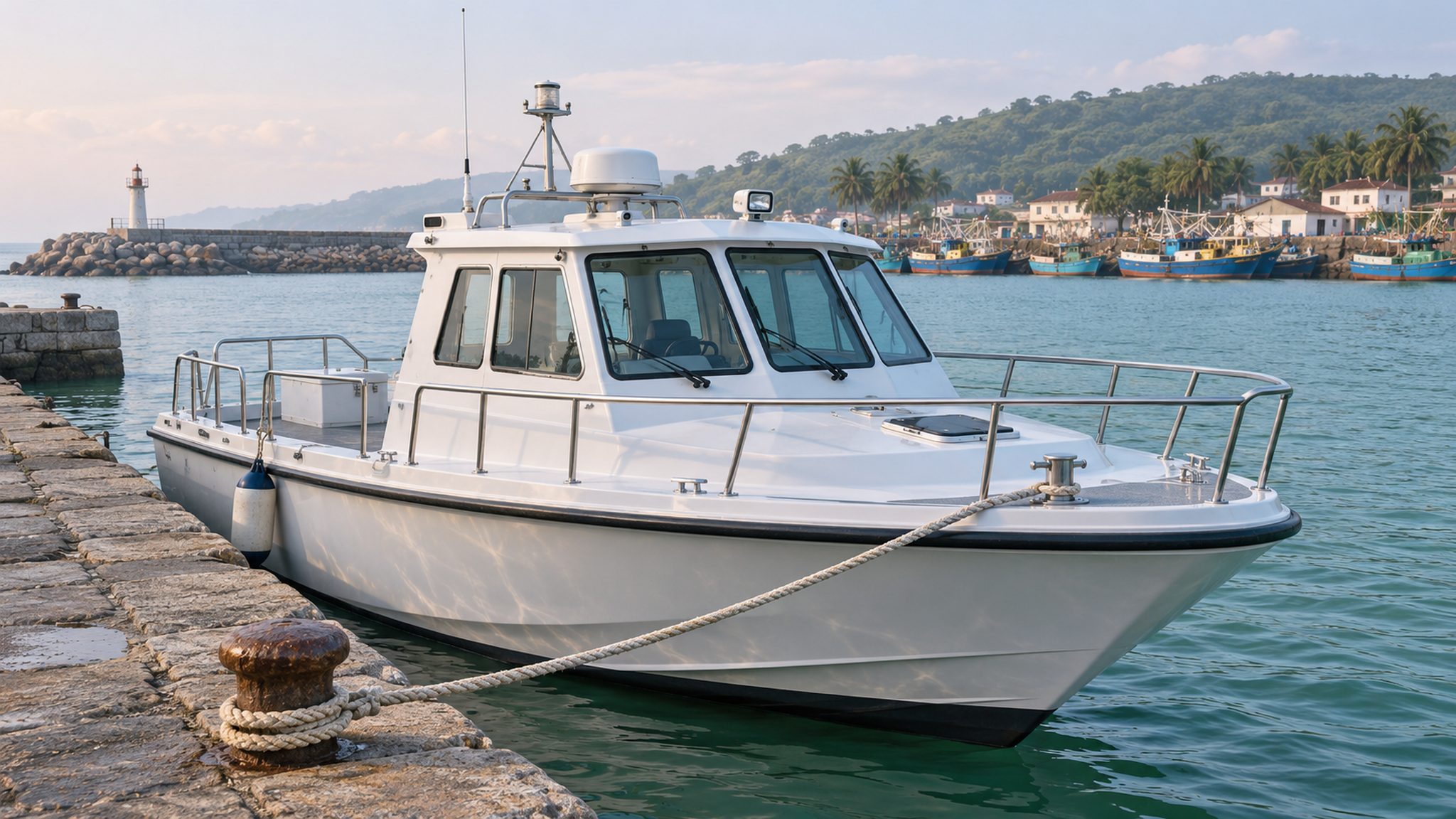
  • The Indian Coast Guard and Coastal Security Police participate alongside the Navy. A patrol launch at a harbour illustrates the kind of maritime asset that civil authorities can contribute to a shared exercise.
  • Customs adds another civil function to the exercise. Goods cross national borders through ports, so a discussion of security at the coast also involves officials who oversee the movement of goods.
  • Coastal states and Union Territories connect the national exercise to local administration. The announcement also includes fishing and coastal communities, whose daily work gives them experience of the shoreline.
  • The participating Union ministries reflect different uses of the coast. Ports support trade, fisheries sustain livelihoods, and petroleum facilities serve energy supply. These uses bring several departments into a coastal preparedness review.

What Do the Two Phases Establish?

The November 11 announcement sets out a sequence. The date matters when assessing what the government could report about the exercise.

  • The first phase is a readiness evaluation. Its purpose is to examine preparedness across institutions. The title tells the reader what authorities intend to assess, while findings require evidence from the assessment itself.
  • The sea phase follows the evaluation. On the opening day its dates were in the future, so the official release supports a statement about scheduled participation and the sequence of activities.
  • The announced geographic scope covers India’s coastline and Exclusive Economic Zone. Geographic reach describes the area relevant to the exercise. It cannot by itself tell an evaluator how effectively different agencies worked together.
  • Consider the difference between a participant list and an assessment result. A list can establish that state police and a central agency were included. A result needs evidence about their work during the exercise.

How Does Sea Vigil Fit the Wider Maritime Framework?

The history and purpose of the exercise explain why both coastal communities and national maritime institutions appear in the same announcement.

  • India conceived Sea Vigil in 2018 to assess measures introduced after the Mumbai attacks. Its recurring purpose is to review preparedness across an institutional system whose responsibilities extend from the shore into surrounding waters.
  • The Ministry of Defence describes Sea Vigil as a build-up to TROPEX. The relationship links a nationwide assessment centred on the coast with the Navy’s wider theatre-level readiness exercise.
  • For an internal security answer, begin with the public function under discussion. Policing, customs administration and management of ports involve different authorities even where they share an interest in the same stretch of coast.
  • For a federalism answer, explain why the design includes states and Union Territories. A national coordinator can convene the exercise, while local agencies and communities contribute knowledge of the places where they work.

Way Forward

Assess Coordination Against Its Purpose

  • Identify the participating authority and its ordinary function before drawing conclusions about how the exercise was organised.
  • Read subsequent assessment findings alongside the announced objectives when judging the exercise’s results.
  • Include the perspectives of coastal communities when discussing how public administration engages with people who use the coast.

Conclusion

  • Sea Vigil gives the Centre, coastal administrations and maritime institutions a shared setting for assessing preparedness. The Navy coordinates the exercise, and the participant list reflects the range of public functions involved.
  • An answer written from the November 11 release can establish the opening of the evaluation, the planned sea phase and the institutions involved. Claims about effectiveness require findings from the exercise.

UPSC Practice Questions

Prelims MCQ 1

With reference to Sea Vigil-26, consider the following statements.

  1. The Indian Navy coordinates the exercise.
  2. The Coastal Defence and Security Readiness Evaluation precedes the sea phase.
  3. Coastal states and Union Territories are among the participants.

How many of the above statements are correct?

(a) Only one (b) Only two (c) All three (d) None

Answer: (c) All three

Explanation:

The ministry identified the Navy as the coordinator, announced the evaluation as the first phase and included all coastal states and Union Territories.

Prelims MCQ 2

Which conclusion follows directly from the November 11 announcement?

(a) The sea phase had already produced a final assessment (b) The Navy would coordinate several institutions in a national exercise (c) TROPEX had replaced Sea Vigil (d) Participation was limited to central armed forces

Answer: (b) The Navy would coordinate several institutions in a national exercise

Explanation:

The announcement describes the roles and schedule. It includes state and civilian participants and places the sea phase later in November.

UPSC Mains Questions

  1. Explain how Sea Vigil illustrates Centre–state cooperation in coastal security.
  2. What evidence would help distinguish the scale of a coastal preparedness exercise from the quality of inter-agency coordination?

Source: Press Information Bureau, Ministry of Defence.

Frequently Asked Questions

Who leads Sea Vigil?

The Indian Navy coordinates the national exercise. The Ministry of Defence lists the Coast Guard, Coastal Security Police, Customs and other maritime stakeholders among the participants.

What began on November 11?

The Coastal Defence and Security Readiness Evaluation began as the first phase. The ministry scheduled the subsequent sea phase for November 18 and 19 in its opening announcement.

Why are coastal communities included?

Fishing and coastal communities use the shoreline regularly. Their inclusion connects a national exercise with people whose livelihoods depend on coastal activity and who have first-hand knowledge of local conditions.

How is Sea Vigil related to TROPEX?

The Ministry of Defence describes Sea Vigil as a build-up to the Navy’s biennial Theatre Level Readiness Operational Exercise. The two exercises together cover coastal defence and the wider maritime setting.