Opens in a new tab
Join Anantam IAS Channel on Telegram

Daily Digest · Wednesday

25 March 2026 Current Affairs for UPSC

3 current affairs published on Wednesday, 25 March 2026

25 March 2026 Current Affairs for UPSC — every Why-in-News article AnantamIAS published on Wednesday, 25 March 2026, broken down with Why in News?, the exact GS paper it feeds, sub-topic mapping, MCQ-ready facts and a UPSC-style practice question. 3 articles in total, covering Polity, Economy, Environment, S&T, IR, Geography, History, Society and Internal Security — the same Why-in-News + GS-paper-mapping + practice-question format the Compass uses across every daily digest on the site.

Daily current affairs for UPSC is where new material enters your prep stream. Read this 25 March 2026 digest end-to-end in 25–35 minutes, attempt the practice question at the foot of each article (it's MCQ for some, 10/15-marker for others), then bookmark the entries that fall inside your active revision window. Everything stays cross-linked: tap any subject pill to jump to that subject's hub, or use the table of contents above to skip straight to a specific story.

Use this page three ways. Read sequentially for a one-sitting scan of everything that mattered on 25 March 2026. Download the 25 March 2026 PDF below for offline study or print revision. Or use the March 2026 Current Affairs compilation to see this day in the month's full context. For the previous day's reading, see 24 March 2026 Current Affairs; the next day's is 26 March 2026 Current Affairs.

Why we publish daily current affairs separately from the monthly compilation: daily is learning, monthly is revision. Use the daily page to add fresh material to your notes the day it breaks; come back to the March 2026 compilation 60 days before Prelims when the noise has settled and only the lasting takeaway is worth re-reading.

Tuberculosis: Road Towards TB-Free India

Open article →Download PDF

Why in News?

World Tuberculosis (TB) Day falls on March 24. As per the WHO’s World TB Report 2025, India remains among the countries with the highest rates of TB, with 25% of the total TB patients in the world. India has missed the target to eliminate TB by 2025, five years before the global target of 2030. In 2026, India still has the highest number of new cases of Tuberculosis (TB) globally. 

UPSC Relevance: (GS-2 Social Justice/ GS-3 Science & Technology)

Prelims: Tuberculosis; National TB Elimination Programme; PM TB Mukt Bharat Abhiyan; NAAT (molecular diagnostic tests)

Mains: TB control- challenges associated and way ahead.

What is Tuberculosis?

  • Airborne communicable disease caused by bacteria Mycobacterium tuberculosis. 
  • Can cause:
    • Pulmonary TB (Infection in the lungs): Typically, the bacteria grow in the body where oxygen and blood are in high amounts. As a result, 80% of TB cases are pulmonary. 
    • Extra-pulmonary TB: 20% of cases are extra-pulmonary, which can infect the brain, uterus, stomach, mouth, kidneys and bones.
  • High-risk groups: People with weak immunity, like those infected with HIV, under-nutrition, diabetes, smoking and alcohol consumption.
  • Prevention: BCG vaccine for children. Currently, there is no effective vaccine for adults. 
  • Treatment: DOTS strategy (Directly Observed Treatment Short Course) is a WHO-recommended cost-effective strategy. 
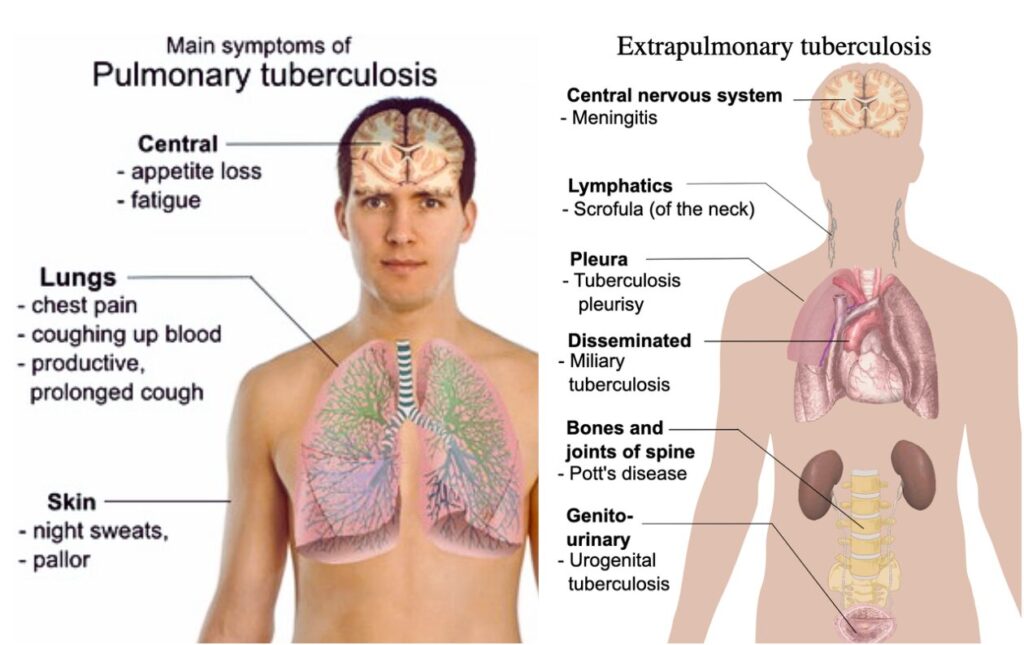
image 1 1

What is drug-resistant Tuberculosis?

  • Various forms of TB where the bacteria have developed resistance to at least one of the anti-TB drugs. This makes the infection harder to treat.
  • Two main categories of Drug-Resistant TB:
    • Multidrug-Resistant Tuberculosis (MDR-TB): Resistant to the two most powerful first-line drugs (isoniazid and rifampicin). Treatment becomes longer, more expensive, and carries a greater risk of side effects.
    • Extensively Drug-Resistant Tuberculosis (XDR-TB): A severe form of MDR-TB. Extremely difficult to treat and has a high mortality rate.   

What are the issues impairing TB eradication efforts?

  • Lack of widespread awareness about the disease and lack of access to quality care. Excessive focus on affected patients only while ignoring the ‘potential’ patient who might be in contact with the patients. 
  • Non-compliance with the follow-up period: Premature cessation of treatment fosters the development of drug-resistant strains (MDR-TB and XDR-TB). 
  • India has long relied on sputum smear microscopy as the primary test for diagnosing TB, despite its low sensitivity and inability to identify drug resistance. Diagnosing TB in children remains challenging (Children cannot produce sputum as they often have low bacillary levels).
  • Challenge in diagnosing extra-pulmonary TB (which is almost a quarter of India’s TB burden). The diagnosis is often inaccessible and very expensive. Misdiagnosis and delayed diagnosis contribute to both catastrophic costs for families and poor health outcomes for individuals.
  • Social stigma and Gendered issue: TB remains one of the most stigmatised illnesses in both urban and rural India. Significant difference in how males, females and transgender individuals receive TB healthcare services. 
  • Undernutrition is the most common cause of poor immunity & raising TB cases. It is closely related to poverty, food insecurity and a predominantly cereal-based diet with deficient protein intake.

What are the efforts towards TB eradication?

Global Efforts:

  • End TB Strategy: WHO declared TB a global epidemic in 1993. End TB Strategy is a global strategy by WHO to reduce TB deaths by 90% and cut new cases by 80% by 2030. It includes five pillars: integrated patient-centred care and prevention, bold policies and supportive systems, intensified research and innovation, universal health coverage, and social and economic interventions.
  • Stop TB Partnership: Global partnership of organisations, governments, and individuals to eliminate TB. It supports TB research, advocates for political commitment and funding for TB control, and provides technical assistance to countries to implement effective TB programs.

Initiatives by the Indian government: 

  • National TB Elimination Programme (NTEP) was adopted in 1997 (previously known as the RNTCP or Revised National Tuberculosis Control Programme).
    • DOTS strategy: Focus on Early Diagnosis and Treatment in accordance with the DOTS strategy. Over 4 lakh DOTS centres have been established. Patients are supported with high-quality free diagnostics, treatment and medicines.
    • Nikshay Portal (Ni-Kshay: End TB) is a web-enabled patient management system for tracking of notified TB cases and TB control under the NTEP. 
    • Nikshay Poshan Yojana for nutritional support to TB patients. Implemented from 2018, wherein 500 rupees per month (now increased to 1000 rupees per month) is being provided to all TB patients towards nutritional support for the duration of their treatment.
    • Integration with Ayushman Bharat Health & Wellness Centres to decentralise screening and treatment services closer to the community.
    • Intensified IEC campaigns to reduce stigma, raise community awareness and improve health-seeking behaviour.
  • National Strategic Plan for TB Elimination 2017-2025: Adopted in 2018 in line with WHO’s TB Elimination Strategy. It had set the ambitious target to reduce TB incidence, prevalence and mortality rates in India by 2025.
    • Includes 4 strategic pillars: Detect – Treat – Prevent – Build
    • Specific targets include:
      • 80% reduction in TB incidence 
      • 90% reduction in TB mortality 
      • 0% patients with catastrophic expenditure due to TB. 
  • Pradhan Mantri TB Mukt Bharat Abhiyan campaign: Launched in 2022, where the community is encouraged to adopt TB patients and support them via nutritional support, nutritional supplements, additional investigations, and vocational support for a minimum period of 6 months or a maximum period of up to 3 years.
Data-Driven Research to Eradicate TB Initiative (Dare2eraD TB program): 

India’s flagship TB genome sequencing initiative launched in 2022. 

Target: To sequence over 32,000 samples of the TB bacterium (Mycobacterium tuberculosis) to identify drug resistance mutations and improve treatment outcomes. (India has sequenced 10,000 samples till March 2025)

Outcome: The genomic dataset developed has the potential to revolutionise TB diagnostics and drug resistance prediction:
1. Improve diagnostic accuracy
2. Enable faster resistance profiling
3. Develop advanced tests and reduce the time taken to confirm TB from weeks to mere hours or days.
4. Tailor treatment regimens to individual patient needs.

What is the Way Forward?

  • Improve diagnostics and TB testing infrastructure:
    • Decentralised access to molecular testing and affordable diagnostic tests:
      • Scaling Point-of-Care Tests (POCTs) (such as test kits for COVID-19), which allow decentralised, low-cost diagnostics with results within minutes. 
      • Use of new near point-of-care (nPOC) molecular tests for diagnosing TB. E.g., Nucleic Acid Amplification Test (nPOC-NAAT). 
      • Use of tongue-swab samples for TB testing and sputum pooling strategies to potentially improve testing efficiency at scale. 
    • Artificial intelligence (AI) solutions for TB screening:
      • Installing AI algorithms in digital X-ray machines to swiftly identify suspicious lesions (whether for TB or other respiratory disorders) and help to reduce diagnostic delay.
      • Expanding use of portable chest X-ray (CXR) machines (with AI-based software) for TB screening. Under the National Tuberculosis Elimination Programme (NTEP) hundreds of portable CXR machines are being utilised for the PM TB Mukt Bharat Abhiyaan for active TB screening in the community.
  • Research and Innovation: 
    • Expedite the development of an adult TB vaccine and prioritise TB vaccine trials. Currently, the only vaccine for TB is BCG, which is delivered at birth and is useful particularly for children.
    • Investment in drug discovery, introduction and development of new therapeutic molecules/regimens that are effective in short-term periods. 
    • Need to develop more cost-effective and easy-to-use biomarkers that can identify and predict those at high risk for disease progression.
  • Address socio-economic determinants of TB with a multi-sectoral approach (poverty alleviation, improvement in nutritional status, well-ventilated housing and better air quality). RATIONS Trial  (Reducing Activation of Tuberculosis by Improvement Of Nutritional Status) has been conducted in Jharkhand with support from ICMR and is the first such trial of a food-based intervention to improve treatment outcomes.

TB elimination in India requires a multisectoral approach: combining person-centred care, addressing social determinants of health, accessible diagnostics and incentivising innovation. 
High-Pressure Quenching & Superconductivity

Open article →Download PDF

Why in News?

In a recent study, scientists used a new technique called ‘high-pressure quenching’ to achieve superconductivity at a higher temperature than usual. 

UPSC Relevance: (GS-3 Science and Technology: New Emerging Technology)

Prelims: Potential applications of Superconductors; High-Pressure Quenching

What are Superconductors?

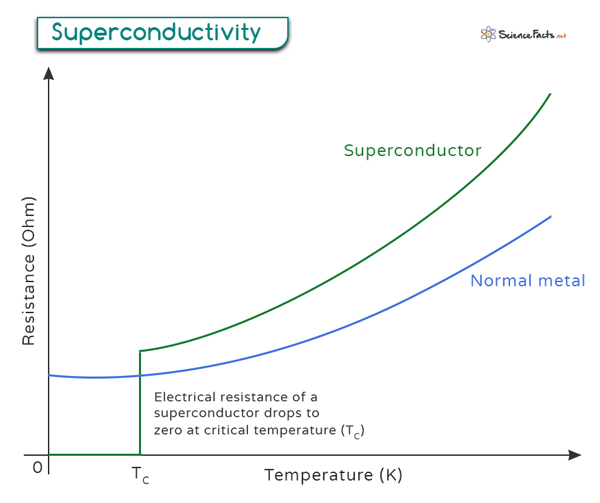
  • Superconductors are materials that have zero resistance (do not resist the flow of current) when cooled to temperatures ranging near absolute zero (0 degrees Kelvin/ -273 degrees Celsius).  
  • Critical temperature (Tc) is the temperature at which the electrical resistance of a given material becomes zero. This temperature is characteristic of the material. 
  • Examples of Superconductors: Mercury, Lead, Aluminium, Niobium, Magnesium Diboride, Yttrium Barium Copper Oxide etc.

What is the significance of Superconductors?

  • Superconductors exhibit zero electrical resistance when cooled below a specific critical temperature (Tc). Since the resistance is zero, no electrical energy is lost as heat (no Joule heating). Therefore, an electric current, once initiated in a superconducting loop, can continue to flow indefinitely without additional power input. 
  • Potential Applications of Superconductors:
    • Longer-lasting batteries and more-efficient power grids
    • Efficient electric motors
    • Faster MRI machines
    • Better transportation systems E.g., Magnetic levitation trains
    • Magnetic-energy storage systems
    • Superconducting magnetic refrigerators
    • Cheaper renewable energy infrastructure
    • Quantum Computing (superconductors can exhibit quantum phenomena).
image 1

What are the challenges associated with Superconductors?

  • High-pressure requirement: Superconductors require extraordinarily high pressures (millions of Pascals) and very low temperatures. E.g., Aluminium becomes superconducting at a temperature of (minus) -250° C. 
  • Maintaining low temperature: To exhibit superconductivity, the material needs to be cooled to temperatures which normally range near absolute zero. This is done by using liquid helium or liquid nitrogen, which makes superconductivity expensive to maintain. 

As a result, manufacturing and deploying superconducting materials at an industrial scale remain challenging to date. Scientists are looking for materials/techniques that can be utilised to achieve superconductivity at room temperature.

Until recently, the highest temperature at which a material (Mercury-based superconductor: Hg1223) became superconducting at room pressure was -140 °C. Some other materials become superconducting close to room temperature, but only under extraordinary pressure (pressure equivalent to near the Earth’s core). 

Breakthrough in Superconductivity: High-Pressure Quenching: 

  • Scientists have recently developed a new technique called high-pressure quenching to improve the performance of a superconductor material, Hg1223. The researchers were able to increase the superconducting temperature of the material from about -140°C to around -122°C.
  • High-pressure quenching is a technique in which:
    • A material is subjected to extremely high pressure to change the arrangement of its atoms.
    • The material is then rapidly cooled (quenched) while still under pressure.
    • Finally, the pressure is removed, but the atoms remain locked (frozen) in their high-performance arrangement. This allows the material to retain enhanced properties, such as superconductivity, even at normal atmospheric pressure.

This is a record high temperature to attain superconductivity at ambient pressure, and a notable advance toward practical superconducting systems. Still, scientists are a long way from achieving superconductivity at room temperature under normal atmospheric pressure. 

Practice MCQs:

Q1. Which of the following are potential applications of superconductors?

1. Magnetic levitation trains

2. MRI machines

3. Lossless power transmission

4. Quantum computing

Select the correct answer using the code below:

(a) 1 and 2 only

(b) 1, 2 and 3 only

(c) 2, 3 and 4 only

(d) 1, 2, 3 and 4

Answer: (d)

Q2. Which of the following factors limits the widespread use of superconductors?

1. Requirement of extremely low temperature

2. Need for very high pressure in some materials

3. High cost of cooling systems

4. Inability to conduct electricity efficiently

Select the correct answer using the code below:

(a) 1 and 4 only

(b) 1, 2 and 3 only

(c) 2 and 3 only

(d) 1, 2, 3 and 4 

Answer: (b)

India’s Strategic Petroleum Reserves

Open article →Download PDF

Why in News?

India’s Strategic Petroleum Reserves are in focus due to the raging war in West Asia, which has disrupted energy flows. One-third of India’s strategic petroleum reserves are empty. 

UPSC Relevance: GS-3 Economy

Prelims: Energy; Strategic Petroleum Reserves (Location & Significance).

What are Strategic Petroleum Reserves?

  • Strategic Petroleum Reserves (SPRs) are an emergency stockpile of crude oil held by the government of a country in government facilities. Meant to act as a buffer for short-term supply-chain disruption, like wars and economic crises. 
  • The concept of dedicated SPRs was first mooted in 1973, after the first OPEC oil crisis.
  • SPRs are stored in underground rock caverns, which are safer, secure, and suited for long-term preservation.

India’s Strategic Petroleum Reserves: 

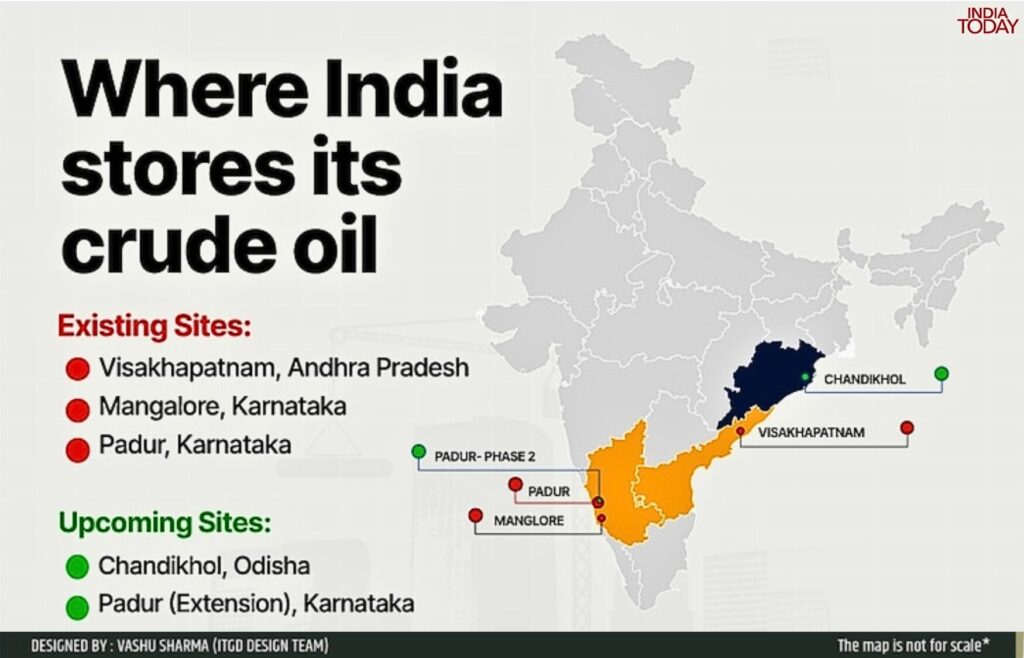
  • Existing Infrastructure: India has a capacity to store 5.33 million tonnes of crude oil in three SPRs. At full capacity, the SPRs cover around 9.5 days of India’s crude oil supplies.
    • 1. Visakhapatnam, Andhra Pradesh (1.33 million tonnes)
    • 2. Mangaluru, Karnataka (1.5 million tonnes)
    • 3. Padur, Karnataka (2.5 million tonnes)
  • Proposed Infrastructure:
    • In 2021, the government had approved the establishment of two more commercial-cum-strategic petroleum reserves in:
      • Chandikhol, Odisha (6.5 million tonnes to 4 million tonnes)
      • Padur, Karnataka (2.5 million tonnes). 
  • ISPRL (Indian Indian Strategic Petroleum Reserve) is a special purpose vehicle, wholly-owned subsidiary of the Oil Industry Development Board, for building and managing strategic crude storage in India. 
image 2 1

India’s Total Oil and Fuel Stockpile:

  • India is the world’s third-largest consumer of crude oil and depends on imports to meet over 88% of its requirement. 
  • The IEA recommends that countries hold oil stocks equivalent to at least 90 days of their net oil imports. IEA members are obligated to maintain these levels of reserves. This 90-day reserve holding can include strategic reserves, as well as commercial inventories.
    • India is not a full member of IEA but an associate member.

India’s Three-Pronged Oil Security Framework: 

India follows a three-pillar framework to ensure oil security:

  • Commercial Oil Stocks (OMCs): Maintained by public and private Oil Marketing Companies (OMCs) such as IOCL, BPCL, HPCL. These stocks form the first line of supply for operational and market needs.
  • Strategic Petroleum Reserves (SPR): Managed by ISPRL, a PSU under the Ministry of Petroleum and Natural Gas.
  • Equity Oil Abroad: India acquires stakes in oil fields overseas through companies like ONGC Videsh Ltd. to ensure long-term supply diversification.

What are the Concerns?

  • Thin Buffer: India’s strategic petroleum reserves (SPRs) currently hold 3.37 million tonnes of oil, or just about two-thirds of their total storage capacity.
  • Capacity below IEA benchmark: India’s current total national capacity for storage of crude oil and petroleum products is 74 days (including commercial stocks with refiners and strategic petroleum reserves). It is far below the 90-day benchmark recommended for International Energy Agency (IEA) members.
  • Delay in expanding SPR Infrastructure: The development of the proposed SPR Infrastructure is stalled due to bureaucratic hurdles, particularly regarding land acquisition in Odisha. 

Expanding the country’s dedicated strategic reserves is something that is long overdue, given India’s high dependency on imported oil and its massive consumption levels.

Significance of expanding the SPR capacity of India:

  • Energy Security in the case of short-term supply-chain disruption. 
  • Market leverage: Extended crude oil storage capacity can offer ISPRL leverage in the international oil markets, with the option of releasing inventory when prices surge and recharging reservoirs whenever the crude is on a downcycle. 
  • Leasing reserves to foreign refiners: With extended capacity, ISPRL can lease the SPR infrastructure to West Asian refiners (as it reduces their freight costs into Southeast Asian markets). E.g., In 2021, the government approved the commercialisation of Phase-I SPRs under which an agreement was signed between Abu Dhabi National Oil Company (ADNOC) UAE and ISPRL, permitting ADNOC to use 750,000 tonnes capacity at the Mangaluru SPR.

The West Asia crisis has underscored the need to build more oil stocks and reserves for dealing with extended supply disruptions.