4 current affairs published on Wednesday, 27 August 2025
27 August 2025 Current Affairs for UPSC — every
Why-in-News article AnantamIAS published on Wednesday, 27 August 2025, broken down with
Why in News?, the exact GS paper it feeds, sub-topic mapping, MCQ-ready facts and a
UPSC-style practice question. 4 articles in total, covering Polity, Economy, Environment, S&T, IR, Geography, History, Society and Internal
Security — the same Why-in-News + GS-paper-mapping + practice-question format the Compass uses across
every daily digest on the site.
Daily current affairs for UPSC is where new material enters your prep stream. Read this
27 August 2025 digest end-to-end in 25–35 minutes, attempt the practice question
at the foot of each article (it's MCQ for some, 10/15-marker for others), then bookmark the entries
that fall inside your active revision window. Everything stays cross-linked: tap any subject pill to jump
to that subject's hub, or use the table of contents above to skip straight to a specific story.
Use this page three ways. Read sequentially for a one-sitting scan of everything that
mattered on 27 August 2025. Download the
27 August 2025 PDF below for offline study or print revision. Or use
the August 2025 Current Affairs compilation
to see this day in the month's full context. For the previous day's reading, see
26 August 2025 Current Affairs;
the next day's is 28 August 2025 Current Affairs.
Why we publish daily current affairs separately from the monthly compilation: daily is learning,
monthly is revision. Use the daily page to add fresh material to your notes the day it breaks;
come back to the August 2025 compilation 60 days before Prelims when the
noise has settled and only the lasting takeaway is worth re-reading.
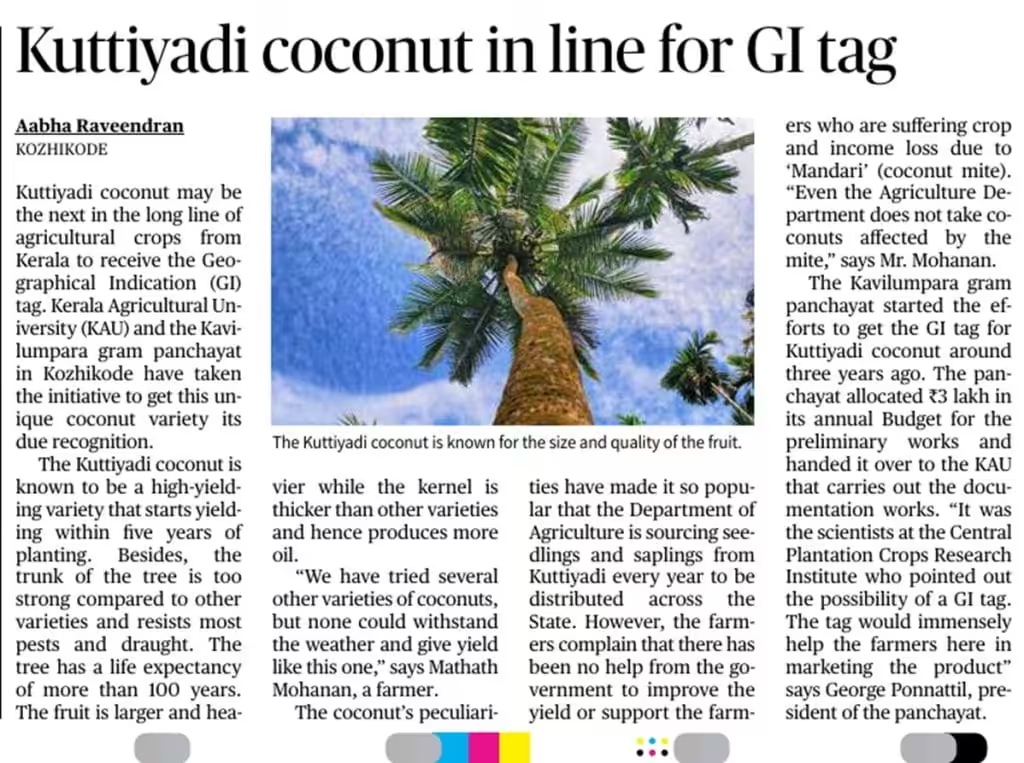
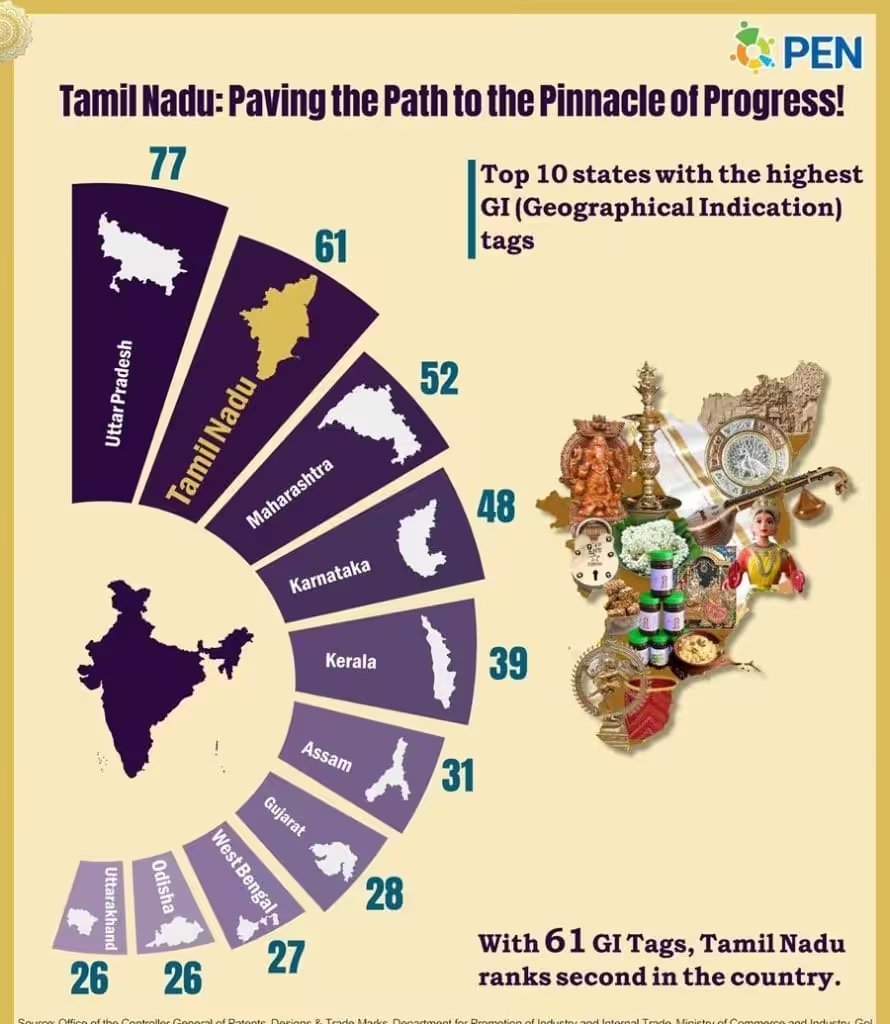
Kuttiyadi coconut may be the next in the long line of agricultural crops from Kerala to receive the Geographical Indication (GI) tag. Kerala Agricultural University (KAU) and the Kavilumpara gram panchayat in Kozhikode have taken the initiative to get this unique coconut variety its due recognition.
UPSC PYQ (2015):
Q. Which of the following has/have been accorded ‘Geographical Indication’ status?
Banaras Brocades and Sarees
Rajasthani Daal-Bati-Churma
Tirupathi Laddu
Select the correct answer using the code given below:
(a) 1 only (b) 2 and 3 only (c) 1 and 3 only (d) 1, 2 and 3
About GI Tag:
GI tag identifies goods originating from a specific location and having distinct nature, quality, and characteristics linked to that location.
GI tags are issued per the Geographical Indications of Goods (Registration and Protection) Act, 1999 (GI Act).
qIn India, Geographical Indications registration is administered by the Geographical Indications of Goods (Registration and Protection) Act, 1999 which came into force with effect from 15th September 2003.
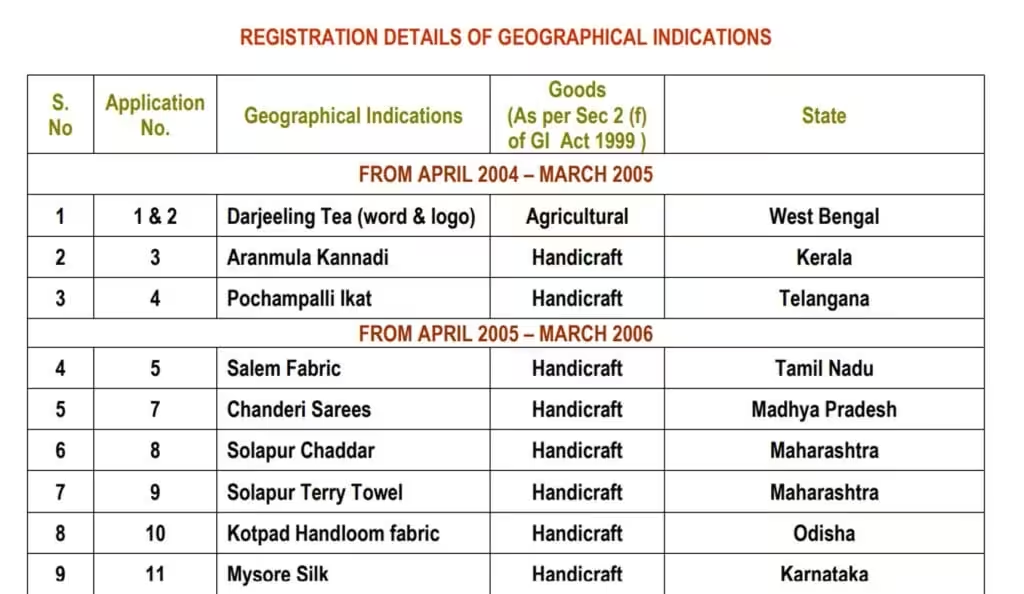
The first product in India to be accorded with GI tag was Darjeeling tea in the year 2004-05.
GI is governed by the World Trade Organisation’s (WTO’s) Agreement on Trade-Related Aspects of Intellectual Property Rights (TRIPS).
A registered GI is valid for 10 years.
GI registration is overseen by the Department for Promotion of Industry and Internal Trade under the Ministry of Commerce and Industry.
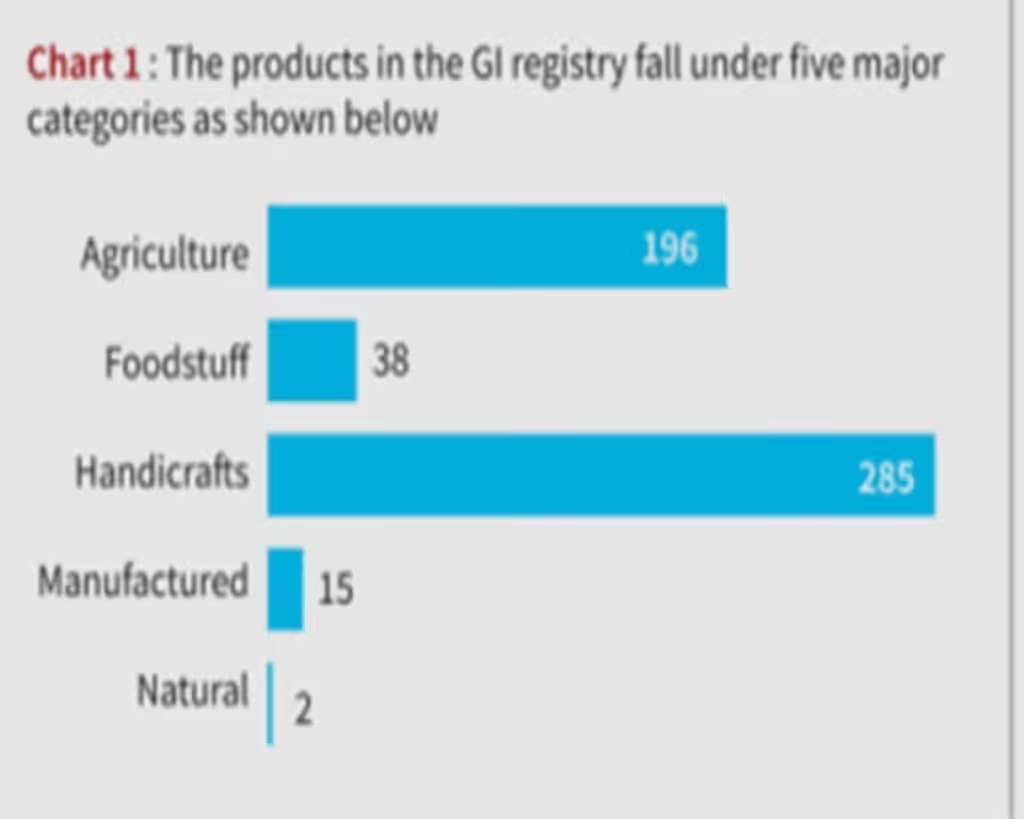
Categories of GI tag:
Total Five Categories:
Some GI tag’s List:
State wise GI tags:
Significance of GI goods in Indian tradition, economy, and sustainability:
Conserves biodiversity
Boosts rural development
Empowers local communities
Creates local employment
Preserves traditional knowledge and traditional cultural expressions
Leading Export Destinations:
Leading export destinations for GI products of India include the United Kingdom, Italy, UAE, Bahrain, Qatar, the USA and South Korea.
In the wake of declining production, the Central government has withdrawn the 11% import duty on cotton which was introduced in February 2021
UPSC Relevance
Important for Prelims as questions are generally asked about agricultural crops and production trends related to them.
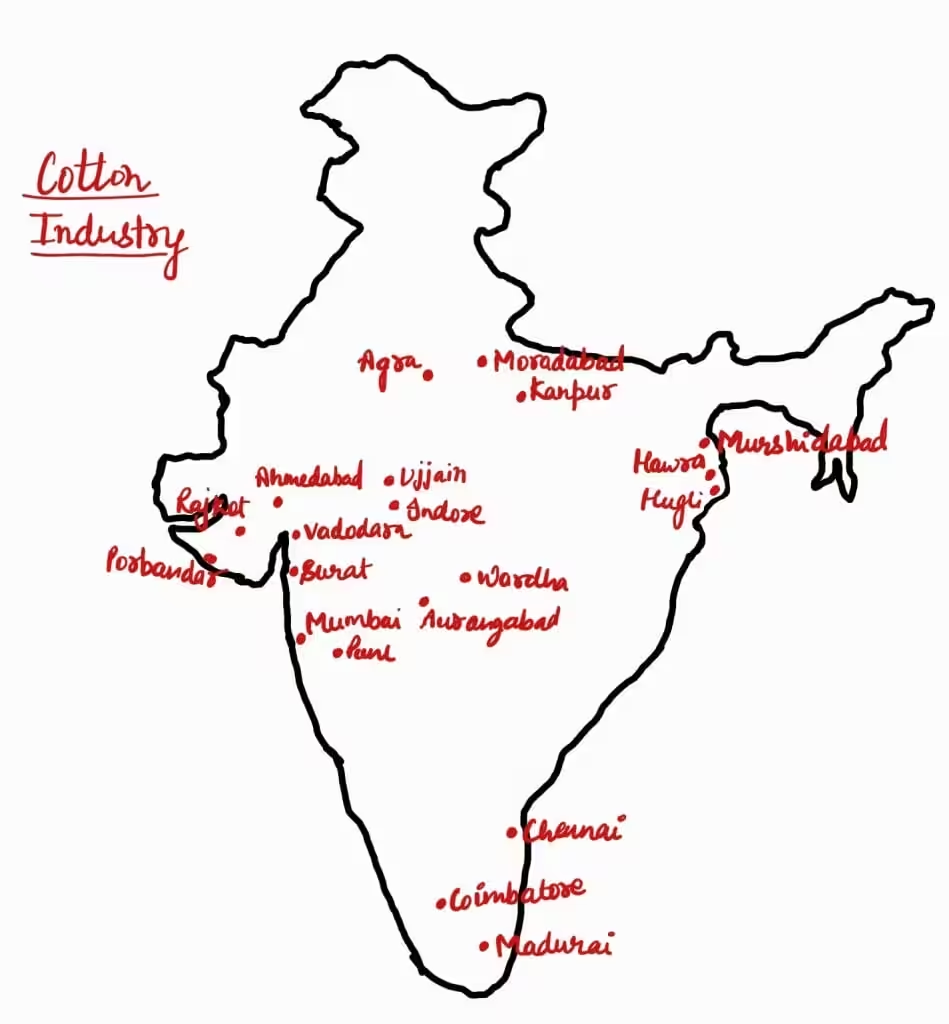
From GS1 perspective, Cotton and Textile Industry also becomes important as syllabus clearly mentions : Factors responsible for the location of primary, secondary, and tertiary sector industries in various parts of the world (including India).
PYQ
2021 Prelims
Consider the following statements:
Moringa (drumstick tree) is a leguminous evergreen tree.
The Tamarind tree is endemic to South Asia.
In India, most of the tamarind is collected as minor forest produce.
India exports tamarind and seeds of moringa.
Seeds of moringa and tamarind can be used in the production of biofuels.
Which of the statements given above are correct?
(a) 1, 2, 4 and 5
(b) 3, 4 and 5
(c) 1, 3 and 4
(d) 1, 2, 3 and 5
2024 Prelims
Consider the following statements:
Statement I: India does not import apples from the United States of America.
Statement-II: In India, the law prohibits the import of Genetically Modified food without the approval of the competent authority.
Which one of the following is correct in respect of the above statements?
Both Statement-I and Statement-II are correct and Statement-II explains Statement-I.
Both Statement-I and Statement-II are correct, but Statement-II does not explain Statement-I.
Statement I is correct, but Statement II is incorrect.
Statement I is incorrect, but Statement II is correct.
2013 – Analyze the factors for highly decentralized cotton textile industry in India.
Cotton import duties are a key policy tool used by the Indian government to manage the domestic cotton market, balancing the needs of farmers and the textile industry. The recent changes reflect a response to fluctuating domestic production and global market conditions.
Cotton Import Duties Trends
The government has repeatedly adjusted the cotton import duty to address different market dynamics.
February 2021: A 11% import duty was introduced. The goal was to protect domestic cotton farmers since India’s cotton production (350 lakh bales) exceeded its domestic requirement (335 lakh bales). Despite the duty, imports still occurred.
April 14, 2022: The import duty was completely withdrawn to address a raw material shortage in the textile industry. Domestic cotton production had declined significantly. This exemption was initially set to end on September 30, 2022, but was extended to October 31, 2022.
August 18, 2025: The government once again withdrew the import duty until September 30, 2025, in response to a continued decline in domestic cotton production. The intent was to ease the burden of high raw material costs on the textile industry.
The Current Situation: Low Production and High Imports
LowDomestic Production: Estimated at just 294 lakh bales, this is the lowest production in the last 15 years and is significantly below the domestic requirement of 318 lakh bales.
Imports: To compensate for the domestic shortfall, cotton imports are projected to reach a record high of 40 lakh bales. Major suppliers include Australia, the U.S., Brazil, and Egypt.
Government Intervention: The Cotton Corporation of India has purchased nearly 100 lakh bales at the Minimum Support Price (MSP) to support farmers, spending ₹37,500 crore. For the upcoming season, the MSP has been hiked by 8%.
Implications of the Withdrawal
The recent withdrawal of the import duty has different implications for various stakeholders.
For the Textile Industry: The move provides a level playing field for garment exporters who compete in the international market. Without the duty, their raw material costs are lower, making them more competitive. However, the immediate benefit is limited, as only a small quantity of cotton currently in transit (about two lakh bales) will arrive before the exemption expires.
For Cotton Farmers: Many farmers and their representatives argue that the withdrawal of the duty discourages domestic cultivation. They feel it undercuts the prices of their produce, especially when they don’t receive other forms of government support. They believe this policy favors the textile industry at their expense.
Long-Term Solutions
The industry is advocating for a more stable and predictable policy framework to avoid recurring crises.
Stable Policy: The textile industry wants the government to implement a consistent policyrather than making ad-hoc decisions.
A suggestion is to suspend the import duty annuallyduring thenon-peak season (April to September). This period is after farmers have sold most of their produce, so it would not significantly impact their prices. This stability would help the industry plan its raw material procurement.
Interest Subvention: The industry also proposes a 5% interest subventionfor working capital for textile mills, particularly MSME units. This would enable mills to purchase more cotton during the peak season when prices are lower, reducing the need for government intervention through MSP operations.
Growing Conditions for Cotton
Climate: Cotton thrives in a warm, dry climate with a long, frost-free period (at least 200 days). The ideal temperature for growth is between 21 and 37°C (70-100°F).
Rainfall: The crop needs moderate rainfall, typically between 50 to 100 cm (20 to 40 inches) of evenly distributed rain. However, a significant portion of modern cotton farming relies on irrigation, especially in arid and semi-arid regions.
Sunlight: Cotton is a photoperiod-sensitive crop that requires ample sunlight, ideally 12-14 hours per day, to promote photosynthesis and boll development.
Soil: Cotton can grow in various soil types, from heavy black clay to light sandy soils, but it requires good drainage. Soils rich in organic matter and well-balanced nutrients are considered ideal.
Types of Cotton grown in India
India is unique in the world for being the only country that cultivates all four commercially grown species of cotton on a large scale. This diversity allows it to produce a wide range of cotton varieties, each with different fiber lengths and characteristics.
Gossypium hirsutum(American Upland Cotton): This is the most dominant species, accounting for over 90% of India’s total cotton production. It is a New World cotton species and is widely grown across the country, particularly in states like Gujarat, Maharashtra, and Andhra Pradesh. All of the current Bt cotton hybrids in India are from this species. It has medium to long staple.
Gossypium arboreum(Tree Cotton): This is one of the indigenous “desi” or old-world cotton varieties. It is known for being hardy and drought-resistant, making it well-suited for rainfed areas. It is short staple cotton. Mainly found in India and Pakistan.
Gossypium herbaceum(Levant Cotton): Also an old-world “desi” variety, this species is known for its short to medium staple fibers and is often grown in semi-arid regions.
Gossypium barbadense(Egyptian or Pima Cotton): This is a New World cotton species known for its extra-long staple, fine, and lustrous fibers. While not as widely grown as G. hirsutum, it is cultivated in limited areas, such as parts of Tamil Nadu and Gujarat, to produce high-quality, luxurious textiles.
In addition to these species, a significant portion of Indian cotton production, over 95%, is made up of Bt cotton hybrids. These are genetically modified varieties of Gossypium hirsutum that contain a gene from the bacterium Bacillus thuringiensis (Bt), which makes the plant resistant to certain insect pests like the bollworm.
Cotton producing states
Largest producers in 2024-25
Maharashtra
Gujarat
Telangana
Karnataka
Global Production as per US Dept. of Agri.
Mission for Cotton Productivity (2025-2030)
This is a five-year initiative announced in the Union Budget 2025-26, with a primary goal of significantly enhancing cotton production and quality in India to meet both domestic and international demand.
This is a follow-up to the highly successful Technology Mission on Cotton (TMC) which ran from 2000 to 2013 often referred to as the Silver Fibre Revolution.
The mission, with a budget of ₹2,500 crores over five years, is aligned with the government’s “5F vision” (Farm to Fibre, Fibre to Fabric, Fabric to Fashion, Fashion to Foreign).
It will have three mini-missions led by different agencies, including the Central Institute for Cotton Research (CICR) and the Cotton Corporation of India (CCI), to cover research, production, and processing aspects of the cotton value chain.
Objectives:
Increase Productivity: The mission aims to address stagnant productivity by adopting advanced scientific methods, including developing climate-smart, pest-resistant, and high-yielding varieties of cotton, especially Extra-Long Staple (ELS) cotton.
Improve Fibre Quality: It will use advanced breeding techniques and biotechnology tools to improve the quality of cotton fibers, making them suitable for high-end textiles and enhancing export competitiveness. The mission supports the branding of Indian cotton as “Kasturi Cotton Bharat” to promote its premium quality and sustainability in global markets.
Enhance Farmer Income: By providing farmers with cutting-edge technology and modern farming practices, the mission seeks to increase yields and reduce input costs, thereby boosting their incomes.
Reduce Import Dependence: The mission aims to reduce India’s reliance on imported cotton, especially high-quality ELS varieties, by boosting domestic production. This will stabilize the raw material supply for the textile industry.
Modernize Ginning and Pressing Units: A key focus is on modernizing infrastructure. A mini-mission, led by the Cotton Corporation of India, will work to modernize 1,000 ginning and pressing units to reduce contamination and improve the quality of processed cotton.
Promote Sustainability: The mission advocates for sustainable practices such as micro-irrigation, organic farming, precision nutrient management, and Integrated Pest Management (IPM) to make cotton cultivation more environmentally friendly.
Defence Minister Rajnath Singh commissioned two of the Indian Navy’s advanced Project 17A multi-mission stealth frigates, INS Udaygiri and INS Him-giri, at the Eastern Naval Command base.
UPSC Relevance
UPSC frequently asks questions about latest developments in defence technology.
PYQ
2022
Which one of the following statements best reflects the idea behind the “Fractional Orbital Bombardment System” often talked about in the media?
(a) A hypersonic missile is launched into space to counter the asteroid approaching the Earth and explode it in space.
(b) A spacecraft lands on another planet after making several orbital motions.
(c) A missile is put into a stable orbit around the Earth and deorbits over a target on the Earth.
(d) A spacecraft moves along a comet with the same speed and places a probe on its surface.
INS Udaygiri
Part of Project 17A: INS Udaygiri is the second of seven stealth frigates being built under Project 17A, also known as the Nilgiri-class. This project is a follow-on to the earlier Shivalik-class (Project 17) frigates, with significant improvements in design, stealth, and technology.
Built in India: The frigate was constructed by Mazagon Dock Shipbuilders Limited (MDL) in Mumbai, showcasing India’s growing shipbuilding prowess. It holds the distinction of being the fastest ship in its class to be delivered post-launch, thanks to modular construction techniques.
Indigenous Design: A major milestone, INS Udaygiri is the 100th warship designed by the Indian Navy’s in-house Warship Design Bureau. This highlights decades of experience and a commitment to self-reliance in warship design and construction.
Advanced Features: The ship incorporates a range of modern technologies, including a Combined Diesel or Gas (CODOG) propulsion system for high performance, an Integrated Platform Management System, and a suite of advanced weapons and sensors, many of which are indigenously developed. It is designed for multi-mission roles, including anti-surface, anti-air, and anti-submarine warfare.
Enhanced Stealth: The frigate features a sleeker hull form and a reduced radar cross-section, making it harder to detect by enemy radar. It is designed to operate in a “blue water” environment, capable of handling both conventional and non-conventional threats.
Twin Commissioning: INS Udaygiri was commissioned on August 26, 2025, alongside its sister ship, INS Himgiri. This was a historic first for the Indian Navy, as it marked the simultaneous commissioning of two major warships from two different shipyards (MDL and Garden Reach Shipbuilders & Engineers).
Legacy Name: The name “Udaygiri” revives the legacy of an earlier INS Udaygiri (F35), a Nilgiri-class frigate that served the Indian Navy for over three decades from 1976 to 2007.
Indigenous Content: With about 75% indigenous content, the project aligns with the Indian government’s “Aatmanirbhar Bharat” (Self-Reliant India) vision for defense manufacturing. The construction involved over 200 domestic MSMEs, creating thousands of jobs.
Armament: The frigate is equipped with a powerful arsenal, including BrahMos supersonic cruise missiles, Barak-8 surface-to-air missiles, a 76mm naval gun, and various close-in weapon systems. It also has the capacity to carry two helicopters.
In this article the author has highlighted that the looming U.S. tariff shock is a critical wake-up call for India to address its internal economic vulnerabilities, particularly the underutilization of its female workforce. Empowering women is presented as a strategic necessity for India to achieve sustainable and inclusive growth.
UPSC Relevance
GS3, Indian Economy and issues relating to Planning, Mobilization of Resources, Growth, Development and Employment.
Inclusive Growth and issues arising from it.
PYQ
2023 – Distinguish between ‘care economy’ and ‘monetized economy’. How can the care economy be brought into a monetized economy through women empowerment?
India’s Economic Prospects
India’s economy has reached a valuation of $4.19 trillion, positioning it as a key player in the global growth scenario and on track to become theworld’s third-largest economy.
However, this progress is facing a significant threat from a proposed 50% tariff by the United States on $40 billion worth of Indian exports. This could have a substantial impact, potentially reducing India’s GDP by nearly 1%.
While China has been able to absorb U.S. tariffs due to its scale and diversified exports, India is more vulnerable. The U.S. accounts for 18% of India’s exports, and increased tariffs could result in a 30-35% cost disadvantage for Indian goods against competitors like Vietnam.
Challenges Ahead and the Women Link – highlighted by author
Vulnerable Sectors: The tariffs would primarily target labor-intensive industries such as textiles, gems, and leather and footwear, which majorly employ women. These sectors, which employ nearly 50 million people, could see a projected export decline of up to 50%.
A Strategic Liability: The article argues that India’s failure to economically empower its female population is not just a social issue but a strategic liability. The low female labor force participation rate (FLFPR), which has hovered between 37% and 41.7%, is far below the global average and China’s 60%. The International Monetary Fund suggests that closing this gender gap could boost India’s GDP by 27%.
Rural vs. Urban FLFPR: While labor participation by rural women has slightly increased, it is mostly in low-productivity, unpaid family work.
In urban areas, female workforce participation has stagnated due to issues such as safety concerns, poor public transport, and the burden of unpaid care work.
India is nearing the peak of its demographic dividend [a critical period where the working-age population is at its highest relative to dependents].
This window is projected to close by 2045. The article emphasizes that to sustain prosperity, India must fully integrate women into the workforce, especially as other major economies that once benefited from this dividend are now past their prime.
Lessons from Southern Europe: India risks following the path of economies like Italy and Greece, where low FLFPR has created a long-term drag on growth. The article stresses that this is a “now-or-never” moment for India to capitalize on its demographic advantage.
Present Female Labour Force Participation Rate in India
Based on the PLFS annual report for July 2023 – June 2024, the FLFPR for women aged 15 years and above in India was 41.7%. This represents a notable jump from 37.0% in the previous year (July 2022 – June 2023) and a substantial increase from 23.3% in 2017-18.
This positive trend is largely driven by a significant rise in rural areas, where the FLFPR has nearly doubled in the last seven years.
While urban areas have also seen an increase, the growth has been more modest.
The data indicates a positive shift, with more women entering the workforce, a trend that is considered crucial for India’s economic growth and for maximizing its demographic dividend.
Reports indicate that the employability of female graduates has also increased from 42% in 2013 to 47.53% in 2024.
The employment rate (WPR) among women with postgraduate education and above has risen from 34.5% in 2017-18 to 40% in 2023-24.
Additionally, EPFO payroll data further highlights the increasing participation of women in the formal sector. Over the past seven years, 1.56 crore women have joined the formal workforce.
Meanwhile, e-Shram as of August has recorded over 16.69 crore women unorganized workers’ registration, providing them access to various social welfare schemes of the Government of India.
However, FLFPR is still low as compared to other key economies.
Country
Female Labor Force Participation Rate (%)
Vietnam
69.13%
China
59.56%
South Korea
56.02%
Germany
55.64%
Japan
55.30%
United States
57.10%
India
41.7%
Factors Responsible for Low FLFPR
Socio-cultural Factors
Patriarchal Norms and Gender Roles: Deep-rooted societal expectations and traditional gender roles often confine women to domestic duties and caregiving. The perception of the male as the primary breadwinner, even in low-income households where women’s income is crucial, adversely affects women’s education and training.
Unpaid Domestic and Care Work: Women bear a disproportionate burden of unpaid work, including childcare, eldercare, and household chores. This leaves them with little time for paid employment, skill development, or education. A study found that married women in India spend over 7 hours per day on unpaid work, compared to less than 3 hours for men.
Safety Concerns: Concerns about safety, including sexual harassment at the workplace and during commuting, act as a significant deterrent for women seeking employment, especially in urban areas or jobs that require long travel or late hours.
Marriage and Motherhood: Marriage and the presence of children, particularly those under 14, significantly reduce a woman’s participation in the workforce. This effect is more pronounced in urban areas, where formal employment often requires structured hours and commuting, making it difficult to balance family responsibilities.
Economic Factors
Mismatch of Labor Demand and Supply: While more women are becoming educated, there is a lack of suitable job opportunities, particularly for those with mid-level education (secondary school). The decline of traditional rural industries and the mechanization of agriculture have reduced employment for women, who are overrepresented in the agricultural sector.
Structural Shifts in the Economy: The shift of the Indian economy from the primary (agriculture) to the tertiary (services) sector has not created enough jobs for women. The lack of well-paid, white-collar jobs, combined with the low job security and long hours in many available positions, narrows down the options for educated women.
Increased Household Income: The “income effect” suggests that as household incomes rise, some women may choose to withdraw from the labor force. This is often linked to the perception that domestic non-market work holds a higher social status than paid market work.
Informal and Low-Quality Employment: A large proportion of women are employed in the informal sector, where they are often subject to exploitation, low wages, and a lack of social security benefits. Despite laws like the Equal Remuneration Act, a significant gender wage gap persists, with women earning a smaller percentage of what men earn for the same work.
Legal Factors
Poor implementation of POSH Act 2013 : Many organizations, particularly small and medium-sized enterprises (SMEs) and those in the informal sector, either don’t have an ICC or their committees are not properly constituted or trained. Lack of awareness, coupled with the fear of social stigma, victim-blaming, and retaliation, leads to significant underreporting of cases.
Discriminatory Labor Laws: Outdated labor laws have historically placed restrictions on women’s employment, such as prohibiting them from working at night or in certain “hazardous” industries . Many states have such restrictions like Assam, Haryana, Maharashtra etc.
Post-COVID-19 Impact
The COVID-19 pandemic further exacerbated the challenges. While job losses were a global phenomenon, the burden of increased unpaid care work due to school and business closures fell disproportionately on women.
However, some studies also noted an “added-worker effect,” where women entered the labor force as a survival strategy to supplement family income after other household members lost their jobs.
Way Ahead – Solutions from Abroad and Examples at Home
The article highlights strategies from other countries to increase female labor force participation and offers examples of successful initiatives within India.
Global Roadmaps:
U.S. (WWII Era): Leveraged women’s labor with equal pay and childcare.
China (Post-1978): Drove FLFPR to 60% through state-backed care and education.
Japan: Raised FLFPR from 63% to 70%, boosting GDP per capita by 4%.
Netherlands: Implemented a successful part-time work model with equal benefits, which could be suitable for India.
Targeted Reforms in India:
Karnataka’s Shakti Scheme: The free public bus travel for women, launched in 2023, has led to a 40% surge in female ridership, enhancing mobility for work and education.
Gig Economy and Social Protections: Platforms like Urban Company have onboarded over 15,000 women service providers who earn ₹18,000-25,000 per month with benefits like accident insurance and maternity leave. This shows how formalizing gig work can empower semi-skilled urban women.
Rajasthan’s Indira Gandhi Urban Employment Guarantee Scheme: This program has created over 40 million person-days of work, with nearly 65% of jobs going to women, particularly in flexible, neighborhood-based roles.
Other Measures
Legislative and Policy Interventions
Enhancing the Care Ecosystem: The burden of unpaid domestic and care work is a significant barrier. Expanding and subsidizing childcare and crèche facilities is critical.
Example: The Maternity Benefit (Amendment) Act, 2017, mandated crèche facilities in establishments with 50 or more employees. However, the threshold is often too high, leaving many women in smaller workplaces or the informal sector without support. The government can lower this threshold and provide incentives for companies to comply.
Promoting Flexible and Safe Work Environments: Creating a work culture that accommodates women’s needs is essential for both retention and recruitment.
Example: The promotion of flexible work arrangements like work-from-home or hybrid models, especially in the IT and service sectors, can help women balance professional and personal responsibilities.
The government can also strengthen the enforcement of the Sexual Harassment of Women at Workplace (Prevention, Prohibition and Redressal) Act, 2013 (POSH Act), by improving the training and functioning of Internal Complaints Committees (ICCs) and Local Committees (LCs).
The labour laws may be amended to allow women to work till late hours with adequate safety measures in place.
Economic and Skill Development Strategies
Investing in Women’s Education and Skilling: While education levels have risen, a mismatch exists between women’s qualifications and available jobs. Focusing on vocational training and skill development in high-growth sectors can bridge this gap.
Example: Schemes like the Pradhan Mantri Kaushal Vikas Yojana (PMKVY) can be specifically tailored to train women in new, non-traditional sectors like digital services, drone technology, and sustainable agriculture. The ‘Namo Drone Didi’ initiative is a recent example of skilling women in emerging fields.
Encouraging Female Entrepreneurship: Providing financial support and mentorship can empower women to become self-employed and create their own jobs.
Example: The MUDRA Yojana and Stand-Up India scheme offer collateral-free loans to women entrepreneurs. Increasing awareness and simplifying the application process for these schemes would significantly benefit women, particularly in rural and semi-urban areas.
Social and Cultural Reforms
Challenging Gender Stereotypes: Tackling deep-rooted social norms is a long-term but vital strategy. Public awareness campaigns and educational reforms can help change perceptions about women’s roles.
Example:In April 2025, the MenEngage Alliance in India launched a powerful campaign focused on engaging men and boys in advancing gender justice..
Improving Public Safety and Infrastructure: The fear of harassment and assault, especially during commuting, is a significant deterrent.
Example:Improving public transportation with dedicated security personnel and better lighting, as well as creating safer public spaces, will increase women’s mobility and confidence to seek employment outside their homes.