Why in News?
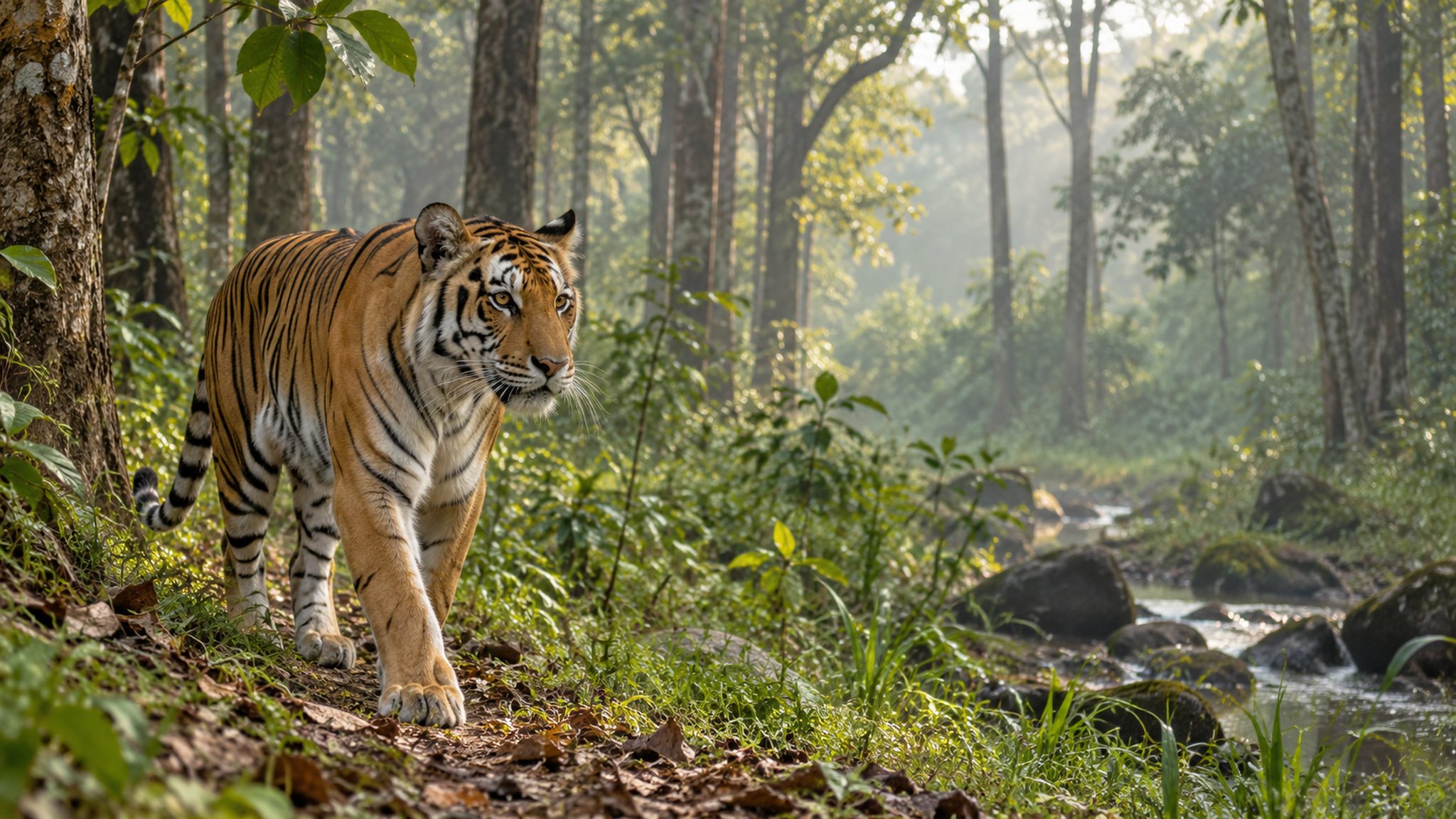
On 2 October 2026, a tigress from Valmiki Tiger Reserve in Bihar was released in West Bengal’s Buxa Tiger Reserve, beginning a phased tiger reintroduction programme, according to PIB.
- First phase: The release begins an adaptive recovery programme; it does not establish that a viable breeding population has already returned.
- Preparation: Habitat improvement, prey augmentation and protection preceded the translocation, with support from the National Tiger Conservation Authority and Wildlife Institute of India.
- Follow-up: Telemetry, camera traps and field monitoring will assess the animal’s movement, adaptation, health and behaviour.
- Ecological readiness determines whether moving a large predator can translate into lasting recovery rather than a short-lived release milestone.
- Community participation matters because sustained recovery also requires conflict mitigation, local dialogue and conservation-linked benefits.
UPSC Relevance
Prelims Relevance
- Buxa: Tiger reserve in West Bengal’s North Bengal landscape.
- Valmiki: The source tiger reserve, located in Bihar.
- Translocation: Deliberate movement of an animal between locations for a conservation purpose.
- Telemetry: Remote tracking used alongside camera traps and field observations.
- Recovery objective: A free-ranging, viable and self-sustaining tiger population.
Mains Relevance
GS Paper 3
- Evaluate habitat and prey readiness before species reintroduction.
- Use monitoring outcomes and community participation to assess conservation success.
Essay
- Restoring an ecosystem requires more than returning its most visible species.
Background and Context
What the Buxa release actually changes
The programme adds a carefully selected animal to a recovering habitat; its larger population objective remains to be demonstrated over time.
- Buxa’s problem was a prolonged absence of a stable resident tiger population. Habitat degradation, fragmentation, land-use changes and reduced prey availability weakened the ecological conditions needed for tigers to remain and reproduce.
- Natural recovery and deliberate augmentation are complementary here. Earlier camera-trap records showed tiger movement through the landscape, but the presence of an individual cannot by itself establish a resident, breeding population with long-term viability.
- Translocation moves an animal; population recovery requires establishment, breeding and persistence. This distinction prevents a release ceremony or an isolated sighting from being treated as evidence that the conservation problem has been solved.
- Source and destination matter for different reasons: Valmiki supplied the tigress, while Buxa must support her survival and adaptation. The release followed assessment of ecological, veterinary and management parameters under established protocols.
- Landscape movement provides useful context, but today’s decision concerns readiness at the release site. The earlier Manas conservation note explains the wider connectivity issue; it cannot substitute for evaluating Buxa’s conditions.
Why habitat and prey must come first
A predator release needs a functioning food base and secure habitat, rather than an assumption that protection on paper guarantees ecological suitability.
- Habitat improvement addresses the conditions supporting prey and predator survival. Buxa’s preparatory work included grassland restoration and prey augmentation, showing why recovery planning must consider the wider ecosystem before increasing the predator population.
- Prey availability is a readiness criterion, not merely a count of animals introduced. The official release reports a positive trend in monitored prey abundance; that finding supports preparation without proving future tiger population viability.
- Protection preparedness must accompany habitat work. Additional tigers require secure conditions and management capacity, so the official programme links future augmentation to habitat, prey, protection and population assessments rather than a fixed release tally.
- Institutional support brings scientific assessment into the state’s recovery programme. The National Tiger Conservation Authority and Wildlife Institute of India support work spanning habitat, prey, monitoring and capacity building, rather than only transporting animals.
- Outcome assessment must separate management activity from ecological results. The tiger reserve evaluation note covers that broader distinction; for Buxa, the immediate test is whether preparatory work supports the released animal’s adaptation.
How monitoring should guide the next decision
Post-release evidence should determine whether to continue, modify or delay further augmentation; phased management makes room for learning instead of assuming success.
- Telemetry helps managers follow the released animal’s movement. Its value lies in informing responses to changing conditions, rather than producing a map that is treated as sufficient evidence of successful ecological recovery.
- Camera traps and field monitoring complement telemetry in the announced programme. Using these together supports assessment of movement, adaptation, health and behaviour; no single observation should carry the full burden of judging success.
- Adaptive management connects observation to action. Further augmentation is conditional on monitoring outcomes, habitat and prey availability, protection preparedness, population viability and expert advice, rather than automatic expansion after the first tigress is released.
- Community engagement includes dialogue, livelihood opportunities and conflict mitigation through local committees. These are practical conditions for coexistence as tiger recovery progresses, not evidence that every conflict risk has already been resolved.
- Success means a healthy, free-ranging and self-sustaining population over time. The official announcement sets this objective but does not report that breeding, recruitment and durable population recovery have already occurred.
Way Forward
Make each release conditional on evidence
- Review monitoring together: Use telemetry, camera-trap and field findings before deciding the next phase of augmentation.
- Check ecological readiness: Reassess prey availability, habitat condition and protection preparedness as recovery progresses.
- Support coexistence: Link community dialogue to practical conflict response and locally meaningful conservation benefits.
Conclusion
- Buxa’s first release is the start of a recovery intervention, not proof of a recovered population. Keep translocation, individual adaptation and long-term population viability separate when interpreting the announcement.
- For a Mains answer, explain the sequence from habitat and prey preparation to release, monitoring and evidence-based adjustment. Judge conservation by sustained ecological outcomes and coexistence, rather than the number of animals moved.
UPSC Practice Questions
Prelims MCQ 1
With reference to the Buxa tiger reintroduction programme, consider the following statements:
- Buxa Tiger Reserve is located in West Bengal.
- The released tigress was translocated from Valmiki Tiger Reserve in Bihar.
- The first release establishes that Buxa already has a self-sustaining breeding tiger population.
How many of the above statements are correct?
(a) Only one (b) Only two (c) All three (d) None
Answer: (b) Only two
Explanation:
The locations and translocation route are stated in the official release. A self-sustaining population is the programme’s objective, not an outcome established by the first release.
Prelims MCQ 2
Which approach best represents adaptive management in a tiger reintroduction programme?
(a) Fixing further releases regardless of monitoring results (b) Treating a single sighting as proof of population recovery (c) Using post-release evidence and habitat assessments to guide further augmentation (d) Replacing field monitoring entirely with the release count
Answer: (c) Using post-release evidence and habitat assessments to guide further augmentation
Explanation:
Adaptive management uses observed outcomes to adjust subsequent decisions. Buxa’s further augmentation is conditional on ecological readiness, monitoring, population viability and expert advice.
UPSC Mains Questions
- Why is successful animal translocation not equivalent to species recovery? Explain with reference to Buxa’s tiger reintroduction programme.
- Discuss how post-release monitoring and community participation can improve the design of phased wildlife reintroduction programmes.
Source: PIB, Ministry of Environment, Forest and Climate Change.
Frequently Asked Questions
What happened at Buxa Tiger Reserve?
A tigress from Valmiki Tiger Reserve in Bihar was released at Buxa in West Bengal on 2 October 2026. This began a phased programme intended to restore a viable, self-sustaining tiger population.
Does the release mean Buxa’s tiger population has recovered?
No. The first release marks the start of a phased intervention. Establishment, breeding and sustained population viability remain outcomes to be demonstrated through monitoring, secure habitat and adequate prey over time.
Why was prey preparation necessary?
Prey availability is part of the ecological foundation needed to sustain tigers. Buxa’s preparatory programme combined prey augmentation with habitat improvement, protection and scientific assessment before beginning the present reintroduction phase.
How will the released tigress be monitored?
The announced approach combines telemetry, camera traps and field-based monitoring to assess movement, adaptation, health and behaviour. These findings will help guide decisions about further augmentation alongside ecological assessments and expert advice.
Tell Google you want more of this.
Add Anantam IAS as a preferred sourceOne tap, and this site shows up more often in your own Top Stories, AI Overviews and AI Mode. Remove it any time.