Why in news:
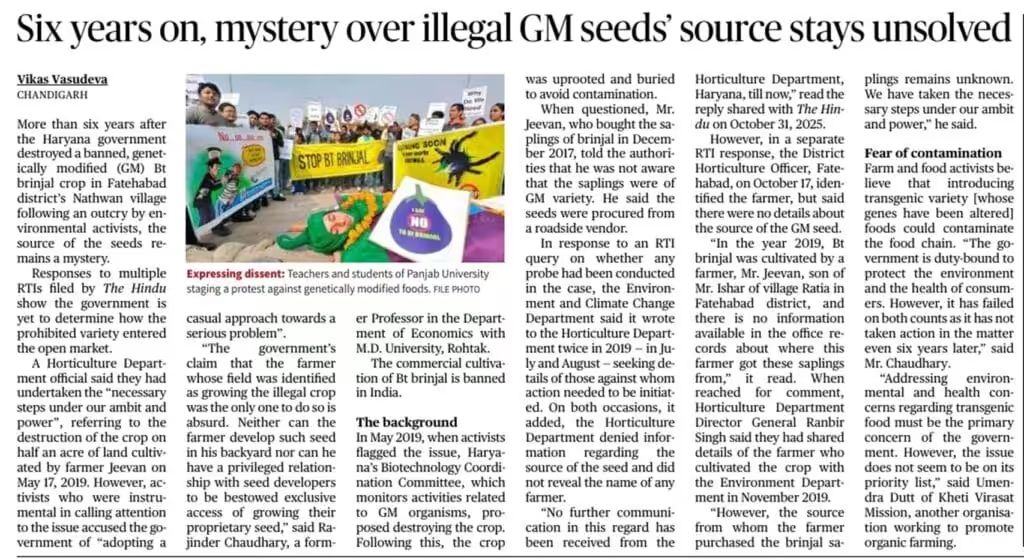
Six years after the Haryana government destroyed a banned genetically modified (GM) Bt brinjal crop in Fatehabad district (Nathwan village), the source of the illegal GM seeds remains unidentified.
UPSC Relevance:
Environment and S&T
UPSC PYQ:
Q1. Other than resistance to pests, what are the prospects for which genetically engineered plants have been created? (2012)
- To enable them to withstand drought
- To increase the nutritive value of the produce
- To enable them to grow and do photosynthesis in spaceships and space stations
- To increase their shelf life
Select the correct answer using the codes given below:
(a) 1 and 2 only
(b) 3 and 4 only
(c) 1, 2 and 4 only
(d) 1, 2, 3 and 4
Mains PYQ:
Q. How can biotechnology help to improve the living standards of farmers? (2019)
About GM Crop:
GM is a technology that involves inserting DNA into the genome of an organism. To produce a GM plant, new DNA is transferred into plant cells. Usually, the cells are then grown in tissue culture where they develop into plants. The seeds produced by these plants will inherit the new DNA.
GM Crops in India:
- Bt Cotton: The only GM crop approved for commercial cultivation in India (since 2002). It is resistant to cotton bollworm.
- GM Mustard Crop (DMH-11): Developed by Centre for Genetic Manipulation of Crop Plants (Delhi University). Mustard has not been released for commercial cultivation yet.
- Bt Brinjal: Bt brinjal (genetically modified eggplant) is banned for commercial cultivation in India since 2010 due to biosafety concerns.
How GM Crops are developed?
- Gene Gun Approach: In this method, DNA-coated metal particles are shot into plant cells at high speed so that the DNA can enter the cell.
- Agrobacterium Approach: This technique uses the bacterium Agrobacterium tumefaciens, which naturally transfers the desired gene into plant cells.
- Electroporation: Used when the plant tissue does not have cell walls. Electric pulses are applied to create tiny pores in the plant cell membrane through which the DNA enters.
- Microinjection: In this method, foreign DNA is directly injected into the plant cell using a very fine needle.
Benefits?
1. Agricultural Productivity
- Higher crop yields
- Resistance to drought, salinity & other abiotic stresses
- Better growth in challenging environments
2. Pest & Disease Resistance
- Reduced pesticide use (e.g., Bt cotton)
- Lower crop losses due to pests and pathogens
3. Nutritional Enhancement
- Bio-fortification (e.g., Golden Rice – Vitamin A)
- Higher oil, protein, or micronutrient content (e.g., GM soybeans)
- Better food quality for consumers
4. Environmental Benefits
- Lower carbon footprint due to reduced pesticide spraying
- Better adaptability to climate change
- Soil conservation through reduced chemical load
5. Other Benefits
- Stable supply even under climate stress
- Enhanced food security
- Reduction in post-harvest losses
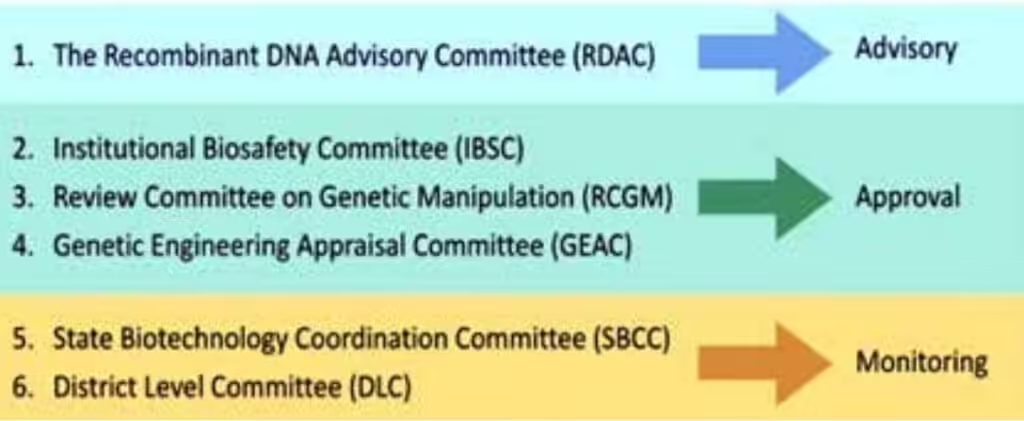
Regulation?
Key Issues:
- Regulatory Failure:
- It exposes loopholes in:
- seed certification,
- market surveillance,
- GM crop monitoring.
- Government agencies passed responsibility between departments.
- It exposes loopholes in:
- Lack of Traceability:
- Farmer claims seeds came from an informal market.
- No tracking mechanism exists for illegal GM seeds
- Biosafety Risks
- Activists warn Bt brinjal can contaminate:
- indigenous varieties,
- organic farms,
- the food chain
- Activists warn Bt brinjal can contaminate:
- Weak Enforcement of GM Crop Ban
- Despite 6 years, no accountability has been established.
- No probe into GM seed developers or black-market distributors.
Concerns of Environmentalists & Scientists:
- Failure to protect consumers despite repeated warnings.
- Risk to biodiversity due to gene flow from GM varieties to local brinjal species.
- Public health concerns: transgenic food risks remain debated.
- Regulatory apathy: activists accuse the government of a “casual approach”.
Way Forward:
Regulatory Reforms
- Enhance transparency and safety protocols within the GEAC.
- Include Members of Parliament in district-level biotechnology monitoring committees.
- Make independent environmental and socio-economic impact assessments mandatory, instead of relying solely on data submitted by the applicant company.
Strengthened Scientific Evaluation
- Conduct rigorous, controlled field trials before granting approvals.
- Evaluate real-world yield performance (e.g., learning from yield stagnation in Bt cotton).
- Assess long-term impacts on pesticide use, soil quality, water resources, and biodiversity.
Mandatory GM Food Labelling
- Implement clear, compulsory labeling of all GM foods sold in India to ensure consumer choice and awareness.
Animal Health Impact Studies
- The Department of Animal Husbandry should carry out long-term feeding trials on livestock and fish to examine the effects of GM crops on animal health and productivity.
National Policy Framework
- Formulate a comprehensive national policy governing the research, cultivation, commercialization, import, and trade of GM crops in India.
Tell Google you want more of this.
Add Anantam IAS as a preferred sourceOne tap, and this site shows up more often in your own Top Stories, AI Overviews and AI Mode. Remove it any time.