Why in News?
India’s first dedicated Human Metabolic Chamber Facility, established jointly by TIFR and CMC Vellore, was inaugurated at CMC Vellore on November 23, 2026.
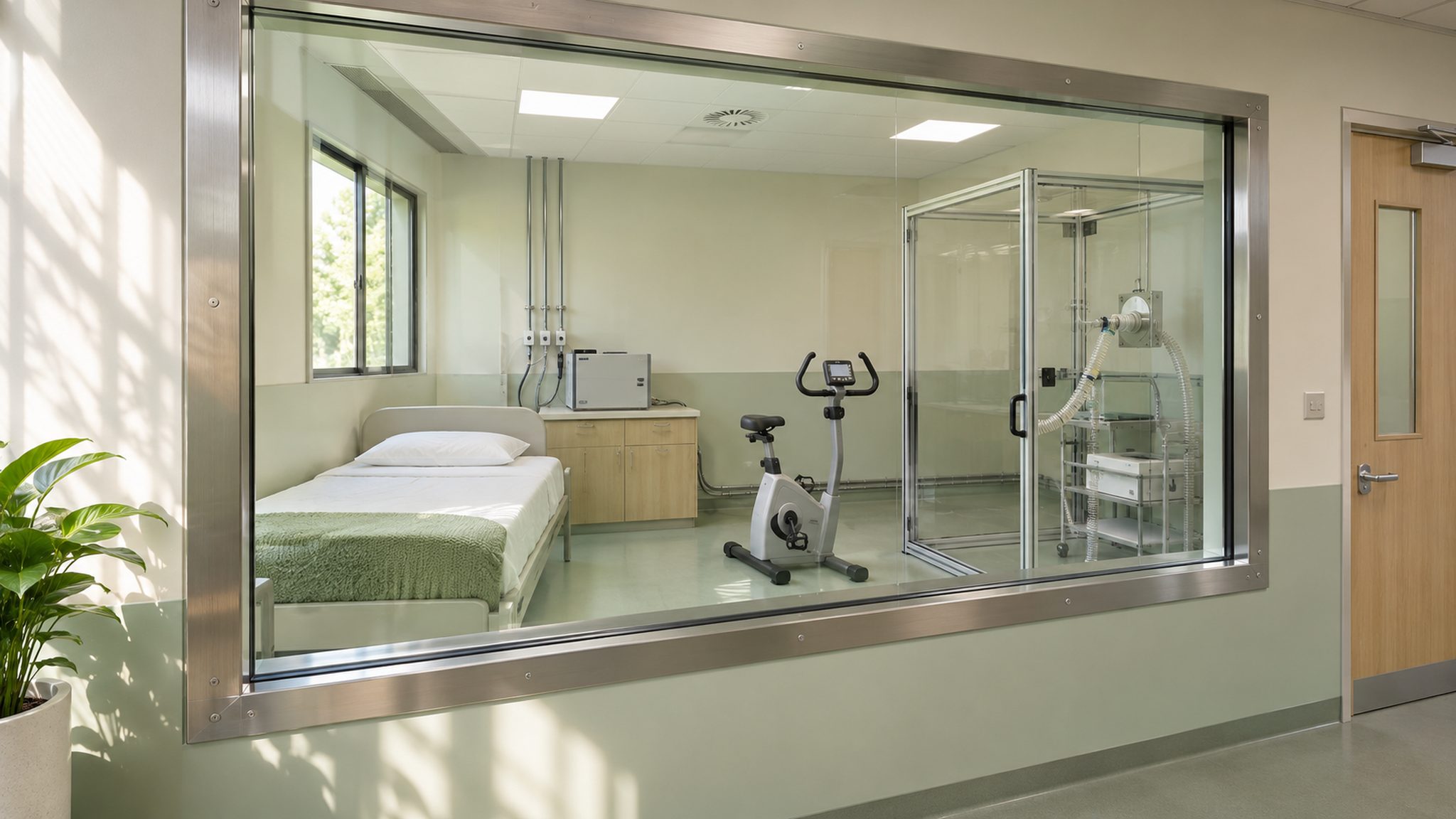
- The room-sized calorimeter measures oxygen consumption and carbon dioxide production while a volunteer eats, sleeps and carries out activities inside for 24 hours or longer.
- The measurements help researchers estimate total energy expenditure and examine how the body uses fat and carbohydrates during different parts of the day.
- The facility brings together basic metabolism research and clinical expertise in diabetes, obesity and other metabolic conditions, with support from the Department of Atomic Energy.
- Population differences matter when interpreting nutrition research because findings from other countries may not capture the diversity of metabolic risks within India.
- The facility can connect molecular and biochemical measurements with whole-body energy use, helping researchers examine relationships that isolated laboratory measurements cannot fully describe.
UPSC Relevance
Prelims Relevance
- Calorimetry concerns measurement of heat or estimation of energy expenditure.
- Indirect calorimetry uses respiratory gas exchange to estimate energy use.
- Oxygen consumption and carbon dioxide production are the chamber measurements described in the release.
- TIFR and CMC Vellore jointly established the facility.
Mains Relevance
GS Paper 3
- Research infrastructure for nutrition and metabolic science.
- Scientific measurement, experimental conditions and limits of inference.
GS Paper 2
- Using population-relevant evidence to inform preventive healthcare.
Background and Context
What the Chamber Adds to Metabolic Research
A whole-room study follows energy use through several ordinary activities within a monitored research setting.
- Metabolism includes the chemical processes through which the body uses nutrients and sustains its functions. Measuring whole-body energy expenditure helps connect these processes with observable activity and physiological state.
- A longer observation period lets researchers examine meals, activity and sleep within the same study. A single measurement taken at one moment cannot describe that entire sequence of energy use.
- The collaboration combines TIFR research expertise with CMC clinical experience. The release identifies earlier work on insulin sensitivity and energy expenditure among people with histories of undernutrition and low birth weight.
- The chamber complements an existing analytical facility for nutrition and metabolism. Researchers can compare biochemical findings with whole-body measurements while keeping the study question and participant characteristics clearly defined.
- This is an addition to research capacity. Evidence generated through specific studies can inform later questions about prevention, but the inauguration alone establishes no tested treatment benefit or population-wide dietary recommendation.
How Breathing Gases Indicate Energy Use
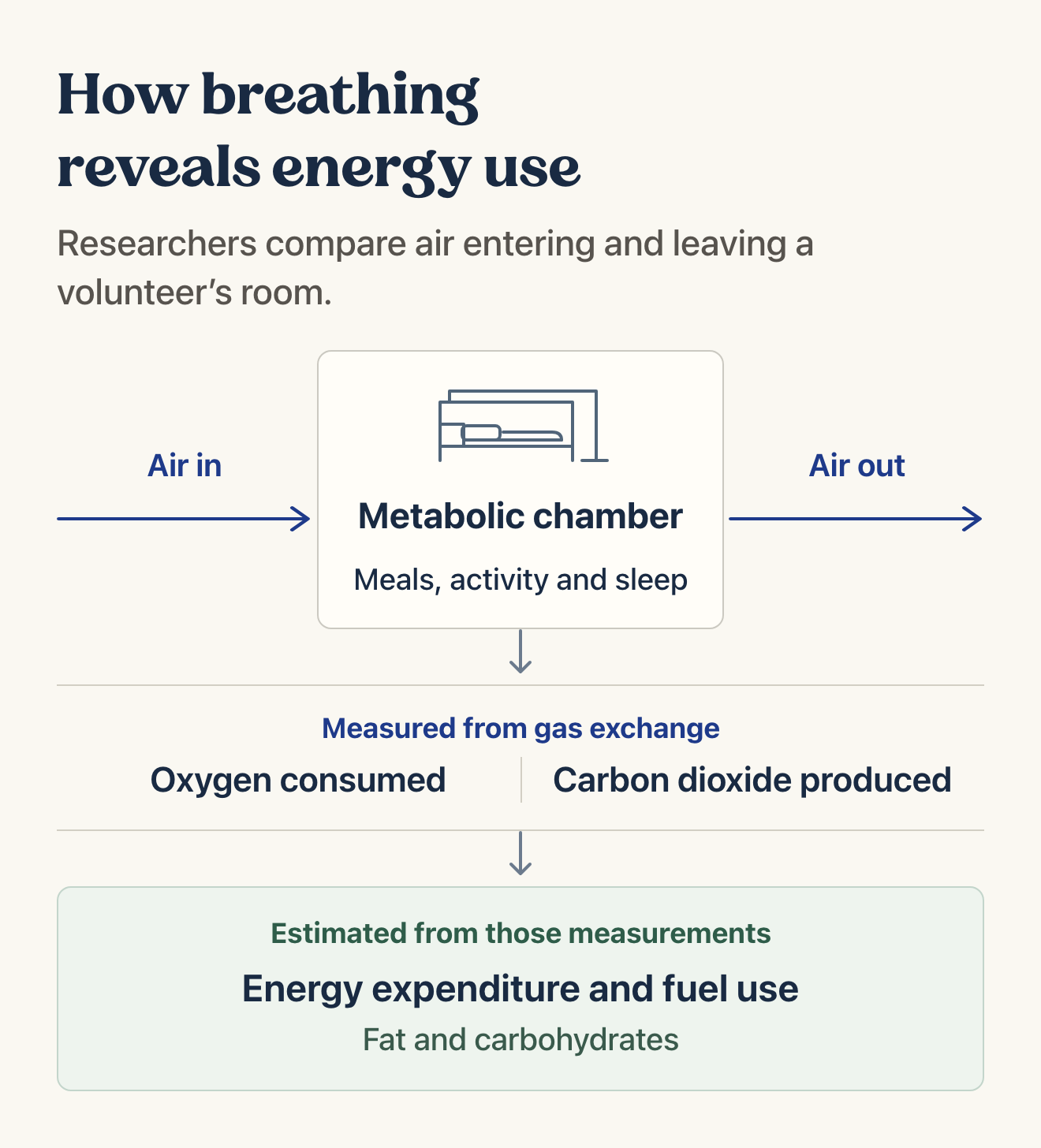
Indirect calorimetry connects measured respiratory exchange with the energy released as the body uses nutrients.
- The body consumes oxygen and produces carbon dioxide during oxidative metabolism. The chamber records these exchanges while the volunteer remains inside, providing measurements that can be related to energy expenditure.
- Indirect calorimetry estimates energy use from gas exchange. Direct calorimetry measures heat output. The distinction concerns the measurement route, and both require suitable instruments and controlled observations.
- The relative pattern of oxygen consumption and carbon dioxide production helps assess the use of fat and carbohydrates. Interpretation depends on the study conditions and the physiological processes being examined.
- Meals, movement and sleep provide different observation periods. Researchers can compare their gas-exchange measurements within a study instead of treating a whole day as one uniform physiological state.
- Energy expenditure describes energy used by the body. Food intake records describe energy consumed. Studying their relationship requires both kinds of information, alongside the duration and conditions of observation.
What the Findings Can Support
The value of a precise measurement depends on the research design and the population to which it is applied.
- A controlled chamber helps document study conditions, but living inside a research room can differ from daily life. Investigators must explain that limitation when relating observations to habitual activity.
- Participant selection affects interpretation. A result from one group cannot automatically represent people with different ages, nutritional histories or metabolic conditions, making population-relevant research design essential.
- A relationship between a biochemical marker and energy expenditure requires careful interpretation. Demonstrating that a preventive intervention improves health needs an appropriate study of the intervention and its outcomes.
- The distinction between measurement and useful health conclusions also appears in discussions of brain-health wearables, where a recorded signal needs evidence supporting its claimed meaning.
- Preventive healthcare needs an evidence-to-service pathway. Research can inform later practice, while screening and continuity of care require separate evidence on access, follow-up and delivery.
Way Forward
Build Studies Around Clear Public-Health Questions
- Define the question before collecting data, including which population, activity or metabolic condition the study is intended to explain.
- Report study conditions and measurement limitations so other researchers can assess whether findings apply beyond the chamber.
- Connect research teams with clinical and public-health institutions to investigate prevention questions grounded in Indian population diversity.
- Evaluate applications through appropriate studies before converting an experimental finding into broad dietary or treatment advice.
Conclusion
- A human metabolic chamber connects respiratory gas measurements with whole-body energy use across meals, activity and sleep. Its contribution depends on the quality of the research questions and study design.
- For a public-health answer, connect measurement, interpretation and application. Population-relevant evidence and clear limits determine how research infrastructure can inform prevention.
UPSC Practice Questions
Prelims MCQ 1
With reference to a human metabolic chamber, consider the following statements.
- It can measure oxygen consumption and carbon dioxide production.
- Indirect calorimetry estimates energy expenditure through respiratory gas exchange.
- Its inauguration establishes the effectiveness of a new obesity treatment.
How many of the above statements are correct?
(a) Only one (b) Only two (c) All three (d) None
Answer: (b) Only two
Explanation:
The first two statements describe the measurement method. A new research facility does not itself establish the effectiveness of a treatment.
Prelims MCQ 2
Which of the following best distinguishes direct calorimetry from indirect calorimetry?
(a) Direct calorimetry measures heat output, while indirect calorimetry estimates energy expenditure through gas exchange. (b) Direct calorimetry measures only food intake, while indirect calorimetry measures only body weight. (c) Direct calorimetry studies populations, while indirect calorimetry studies institutions. (d) Direct calorimetry requires no measurements, while indirect calorimetry uses questionnaires alone.
Answer: (a) Direct calorimetry measures heat output, while indirect calorimetry estimates energy expenditure through gas exchange.
Explanation:
The difference is the measurement route. Heat output is measured in direct calorimetry, while respiratory gas exchange supports energy estimates in indirect calorimetry.
UPSC Mains Questions
- How can human metabolic research inform preventive healthcare in India? Discuss the importance of population diversity and study design.
- Explain indirect calorimetry and examine the limitations of applying controlled laboratory findings to everyday health outcomes.
Sources: PIB, Ministry of Health and Family Welfare and NIDDK, Metabolic Testing.
Frequently Asked Questions
What is a human metabolic chamber?
It is a room-sized research facility that measures oxygen consumption and carbon dioxide production while a volunteer eats, sleeps and performs activities. These measurements help estimate energy expenditure and nutrient use.
Where was the new facility established?
The facility was established at Christian Medical College, Vellore, through a collaboration with the Tata Institute of Fundamental Research. The Ministry of Health and Family Welfare announced its inauguration on November 23, 2026.
What does indirect calorimetry measure?
Indirect calorimetry uses oxygen consumption and carbon dioxide production to estimate energy expenditure. The respiratory exchange also helps researchers examine how the body uses fuels such as fat and carbohydrates.
Can one chamber study determine a diet for everyone?
A study must be interpreted according to its participants and conditions. Applying findings broadly requires further evidence that accounts for population diversity, nutritional history, metabolic conditions and differences between research settings and daily life.
Tell Google you want more of this.
Add Anantam IAS as a preferred sourceOne tap, and this site shows up more often in your own Top Stories, AI Overviews and AI Mode. Remove it any time.