Context:
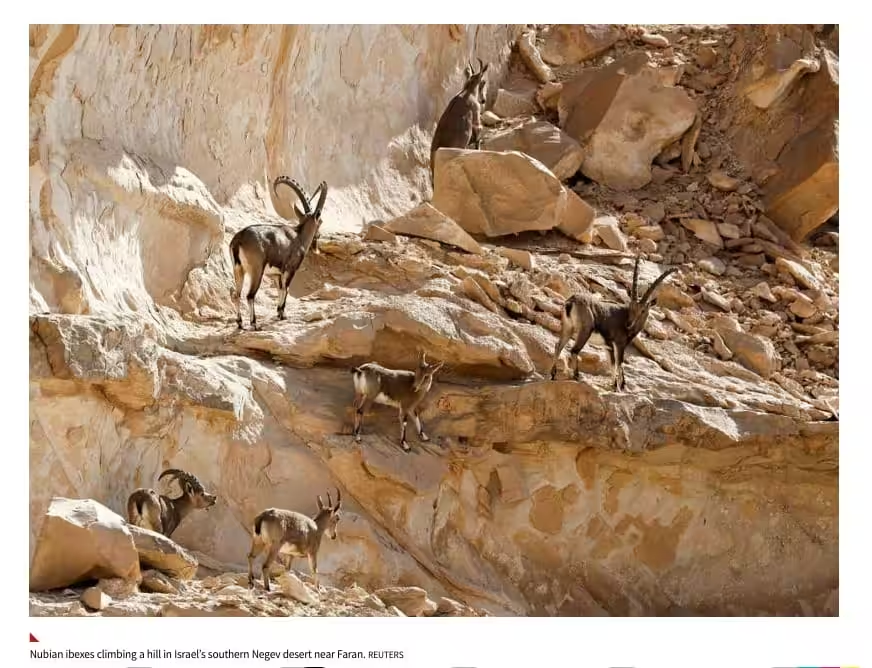
Nubian ibexes climbing a hill in Israel southern Negev Desert.
UPSC Relevance:
Species in news
UPSC PYQ:
Q. Consider the following fauna: (2023)
- Lion-tailed Macaque
- Malabar Civet
- Sambar Deer
How many of the above are generally nocturnal or most active after sunset?
(a) Only one
(b) Only two
(c) All three
(d) None
All About Ibexes:
Asian ibex (Siberian), Alphine ibex, Iberian ibex, Nubian ibex, Ethiopian ibex (Walia) and West Asian ibex.
Himalayan Ibex:
- The Himalayan Ibex (Capra sibirica) is one of the most iconic wild mountain goats found in the high-altitude regions of the Great Himalayan National Park (GHNP).
- The Himalayan Ibex male is easily told apart from other caprids by his characteristic horn and beard. Female are grey brown in colour with less distinct white underpants, have thin parallel horns and dark markings on their legs. Both sexes have a dark dorsal stripe down the length of their back and short dark furry tails.
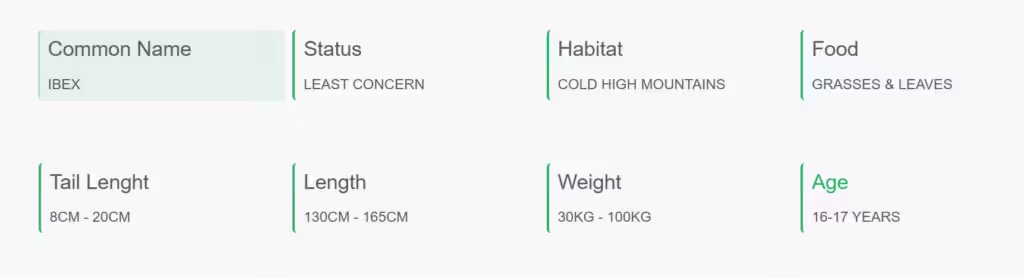
- The Himalyan Ibex is distributed mainly in the trans-Himalayan ranges of the Union Territories of Ladakh and Jammu and Kashmir and Himachal Pradesh.
- They are usually found in small herds, sometimes around 50 together.
Nubian Ibex:
- The Nubian ibex (Capra nubiana) is a vulnerable desert-dwelling wild goat species found in isolated populations across Northeast Africa and the Middle East.
- Nubian ibex, is the only ibex species adapted to life in hot, arid regions of the world.
- Nubian ibex inhabit mountainous regions including gorges, outcrops, and scree areas in arid regions with sparse vegetation. They occur at varying elevations, from sea level to 3,000 meters. Generally, Nubian ibex inhabit the most remote, highest, and steepest cliffs.
- Males and females come together for the rutting season around October. The rutting season may continue into December. The mating system is polygynous, with only a few males siring many of the young.
- Gestation lasts 150 to 165 days, after which the young (usually one, but occasionally two) are born between May and June.
Tell Google you want more of this.
Add Anantam IAS as a preferred sourceOne tap, and this site shows up more often in your own Top Stories, AI Overviews and AI Mode. Remove it any time.