Why in News?
India has announced a ₹15,000-crore development assistance package to Nepal during the first official visit of Nepalese Prime Minister Balendra Shah to India. The package aims to support post-flood reconstruction, infrastructure development and long-term economic cooperation.
The two countries also agreed to advance connectivity, energy cooperation, trade facilitation and resolution of outstanding boundary issues.
| UPSC Relevance: GS-2 International Relations: Bilateral Relations, India and Neighbourhood Mains: India-Nepal Bilateral Relations |
Key Highlights of the Bilateral Visit:
The two nations issued a joint vision statement titled ‘Viksit Bharat and Samunnat Nepal: Re-imagining the Partnership’, anchoring future cooperation across multiple pillars:
- Financial & Disaster Assistance: India has announced a ₹15,000 crore developmental package following the devastating August floods in the Bhotekoshi River. ₹11,500 crore as a rupee-denominated concessional Line of Credit (LoC) exclusively for energy projects, and ₹3,500 crore as direct grants for post-disaster infrastructure reconstruction.
- Connectivity & Trade Infrastructure:
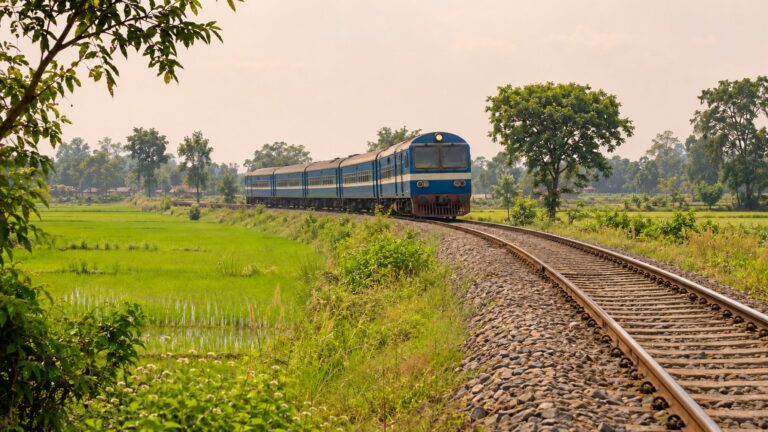
- Railways: Launch of the Sarayu-Kamala Express connecting Ayodhya (India) and Janakpur (Nepal), boosting the Ramayana Circuit and religious tourism.
- Road & Border: Inauguration of the Dharchula road bridge (Uttarakhand-Nepal) and foundation stone for a new Integrated Check Post (ICP) at Banbasa.
- Maritime Transit: Nepal granted access for its third-country transit cargo at Deendayal Port (Kandla, Gujarat) and Paradip Port (Odisha), reducing its historical over-reliance on Kolkata/Haldia ports.
- Energy & Petroleum Cooperation:
- Foundation stone laid for the 669 MW Lower Arun Hydroelectric Project (being developed by India’s SJVN).
- Foundation stone laid for the Jhapa petroleum terminal under the planned Siliguri-Jhapa petroleum pipeline.
- Education & People-to-People Ties: Announcement of an offshore IIT campus in Nepal (expanding India’s educational diplomacy following IIT Madras in Zanzibar and IIT Delhi in Abu Dhabi). Push for spiritual tourism linking Ayodhya, Pashupatinath, and Muktinath.
- Boundary Resolution: Both Prime Ministers mandated their respective Foreign Secretaries to adopt a “forward-looking” approach to resolve outstanding boundary disputes.
Strategic Importance of Nepal for India:
- Geostrategic location: Nepal lies between India and China, making it important for India’s Himalayan security, border management and broader China policy.
- Open border: The 1751-km border, shared across Uttarakhand, Uttar Pradesh, Bihar, West Bengal and Sikkim, facilitates people-to-people movement but also has security implications.
- Civilisational links: Shared Hindu and Buddhist heritage, including Pashupatinath, Janakpur, Muktinath and Lumbini, strengthens India’s cultural diplomacy.
- Energy security: Nepal’s hydropower potential offers opportunities for electricity imports, renewable energy cooperation and regional power trade.
- Neighbourhood First Policy: Nepal is central to India’s regional engagement, subregional connectivity and cooperation under the BBIN framework (Bangladesh, Bhutan, India and Nepal).
- Water and ecological security: Cooperation over shared Himalayan rivers is important for flood management, irrigation, hydropower and disaster resilience.
Key Areas of Cooperation between India and Nepal:
India and Nepal share deep historical, cultural, economic and strategic ties.
- Political and Diplomatic Cooperation:
- Neighbourhood First Policy: Nepal is a key pillar of India’s regional diplomacy and Himalayan neighbourhood policy.
- 1950 Treaty of Peace and Friendship: Provides for mutual recognition of sovereignty and territorial integrity, close security cooperation and reciprocal privileges relating to residence, property, trade and movement.
- Defence Cooperation: Includes military training, equipment assistance, intelligence sharing and joint exercises such as Exercise Surya Kiran.
- Trade, Transit and Investment:
- India is Nepal’s largest trading partner and largest source of foreign investment.
- Bilateral merchandise trade reached approximately US$9.39 billion in FY 2025-26, accounting for over 60% of Nepal’s external goods trade.
- India provides transit facilities for Nepal’s third-country trade, given its landlocked geography.
- Connectivity and Infrastructure: India supports Nepal’s access to markets and international trade through:
- Road connectivity: Terai Roads Project and cross-border bridges.
- Rail connectivity: Jaynagar-Bardibas and Jogbani-Biratnagar rail links; Raxaul-Kathmandu railway remains a proposed project.
- Integrated Check Posts (ICPs): Birgunj, Biratnagar and Nepalgunj are operational, facilitating cross-border trade and movement.
- Energy and Hydropower Cooperation:
- The Long-Term Power Trade Agreement (2024) provides for Nepal to export up to 10,000 MW of electricity to India over ten years.
- Major hydropower projects include: Arun-III (900 MW), Lower Arun, Upper Karnali, Arun-4, West Seti and Phukot-Karnali.
- Nepal has also begun exporting electricity to Bangladesh through India’s transmission network, creating opportunities for a regional power market.
- The Motihari-Amlekhgunj petroleum products pipeline, inaugurated in 2019, was South Asia’s first cross-border petroleum products pipeline. It has reduced transportation costs, pilferage and supply delays for Nepal.
- Water Resources: Shared rivers such as the Kosi, Gandak and Mahakali provide opportunities for cooperation in irrigation, hydropower and flood management. Important bilateral frameworks include: Kosi Agreement (1954; revised in 1966); Gandak Agreement (1959); Mahakali Treaty (1996).
- Disaster Management: India provided a US$1 billion reconstruction package after Nepal’s 2015 earthquake, comprising grants and concessional credit. India also provided relief and reconstruction assistance following the 2023 Jajarkot earthquake.
- Cultural and People-to-People Cooperation: Shared Hindu and Buddhist heritage provides a strong foundation for civilisational diplomacy. The Ramayana Circuit, Buddhist Circuit and Ayodhya-Janakpur links promote religious tourism and cultural exchanges. The open border facilitates employment, education, healthcare, pilgrimage and family ties.
Major Challenges in India-Nepal Relations:
- Political Trust Deficit: Nepal’s domestic political transitions, perceptions of Indian interference and concerns about the ‘big brother’ approach periodically strain bilateral relations.
- 1950 Treaty Debate: Sections of Nepal’s political establishment consider the treaty outdated and unequal and seek its revision to reflect contemporary realities and sovereignty concerns.
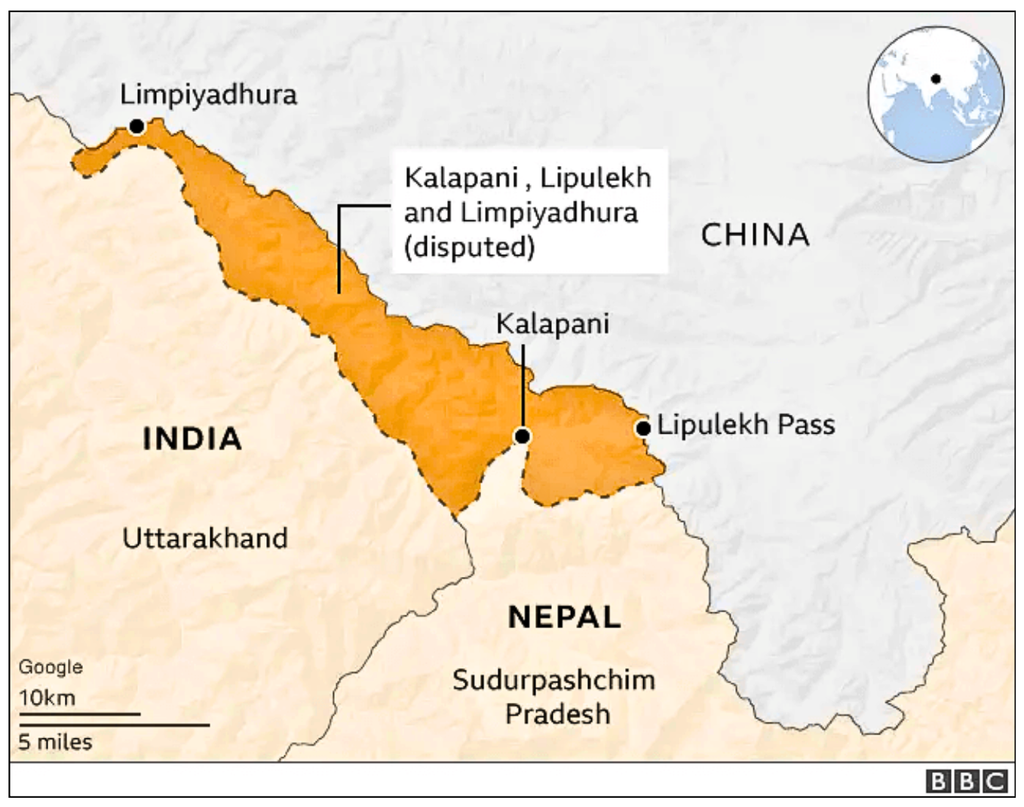
- Unresolved Boundary Disputes: Differences over Kalapani-Lipulekh-Limpiyadhura in the western sector and Susta in the southern border region periodically generate diplomatic tensions. Nepal’s 2020 revised political map intensified the dispute.
- Open-Border Vulnerabilities: The 1,751-km open border, while facilitating people-to-people ties, can be exploited for trafficking, smuggling, counterfeit currency and transnational criminal activities.
- Expanding Chinese Footprint: Nepal’s engagement with China under the Belt and Road Initiative (BRI), including the 2024 Framework for Belt and Road Cooperation, and proposed trans-Himalayan connectivity create strategic concerns for India.
- Economic Asymmetry: Nepal’s dependence on India for trade, transit, petroleum supplies and market access coexists with a persistent trade deficit and its desire to diversify economic partnerships.
- Implementation Deficit: Delays in hydropower, railway, transmission and infrastructure projects weaken confidence in development cooperation.
- Agnipath and Gorkha Recruitment: Nepal’s reservations regarding recruitment under the Agnipath scheme, particularly its four-year service structure and associated employment and pension concerns, have stalled fresh recruitment of Nepali Gorkhas under the scheme since 2022.
- Water and Flood Management Issues: Differences over embankments, inundation, benefit-sharing and delays in projects such as the Pancheshwar Multipurpose Project constrain cooperation.
Way Forward:
- Modernise Bilateral Frameworks: Review the 1950 Treaty through mutual consultation to address Nepal’s sovereignty and equality concerns while preserving the benefits of the open-border relationship.
- Resolve Boundary Disputes: Use joint technical mechanisms, historical documents, maps and diplomatic dialogue to resolve Kalapani-Lipulekh-Limpiyadhura and Susta disputes peacefully.
- Strengthen Border Management: Introduce better surveillance, intelligence sharing, joint patrolling and modern border infrastructure without restricting legitimate cross-border movement.
- Accelerate Development Projects: Ensure time-bound implementation of railway, road, ICP, hydropower, transmission and petroleum pipeline projects to strengthen India’s developmental credibility.
- Deepen Energy Cooperation: Expand hydropower investment and cross-border electricity trade, developing a regional power market involving India, Nepal, Bangladesh and Bhutan.
- Institutionalise Disaster Cooperation: Strengthen joint flood forecasting, early-warning systems, river-basin management and climate-resilient infrastructure.
- Respect Strategic Autonomy: Recognise Nepal’s sovereign right to diversify its international partnerships while addressing India’s legitimate security concerns through dialogue.
- Adopt People-Centric Diplomacy: Engage provincial governments, youth, civil society, businesses, Madhesi communities and border populations. Avoid paternalistic diplomacy and focus on mutually beneficial, demand-driven development.
The future of India-Nepal relations lies in a modern, equal and people-centric partnership based on mutual trust, sovereign equality and shared prosperity.
Practice Mains Question:
Q. “India-Nepal relations are marked by deep civilisational intimacy but recurring political distrust.” Discuss with reference to recent boundary-related developments.
Tell Google you want more of this.
Add Anantam IAS as a preferred sourceOne tap, and this site shows up more often in your own Top Stories, AI Overviews and AI Mode. Remove it any time.