Why in News?
Renewed scholarly and conservation attention has gathered around the megalithic standing stones of Jharkhand — notably Punkri Burwadih near Hazaribagh and the Pancha Pandav site — where rows of upright menhirs appear deliberately aligned to mark the equinox sunrise, suggesting a prehistoric form of archaeoastronomy practised by early tribal communities.
These sites matter because they fuse three durable syllabus threads in one landscape: India’s megalithic culture of the Iron Age and proto-history, the science of archaeoastronomy, and the living memorial traditions of Adivasi communities who still raise commemorative stones.
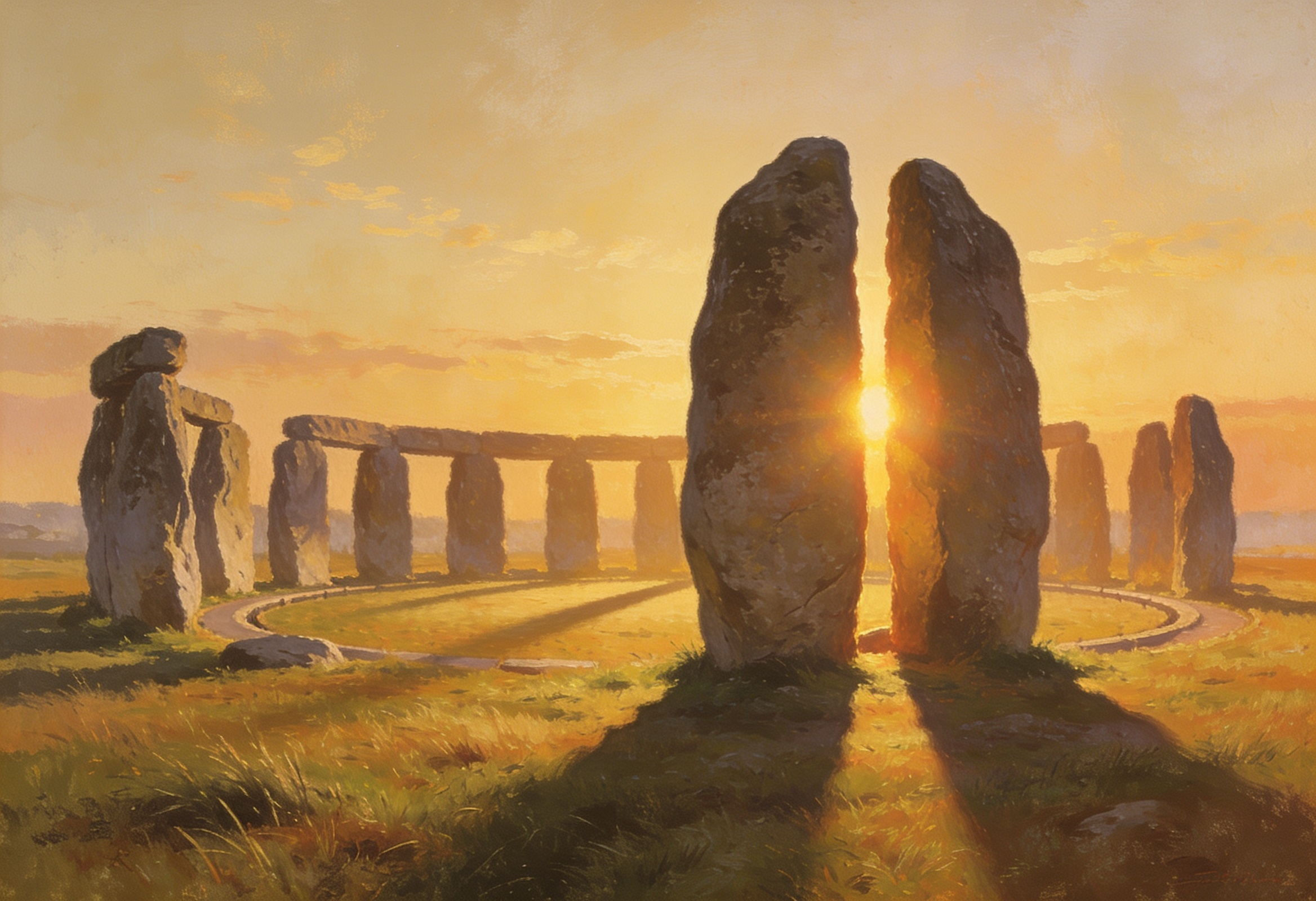
- At Punkri Burwadih, near Hazaribagh, a cluster of tall standing stones is reported to frame the rising Sun on the equinoxes (around 21 March and 23 September), when day and night are roughly equal.
- Such alignments imply that the builders observed and tracked the Sun’s annual movement — an early astronomical calendar etched into the landscape.
- Megaliths across the region also served as burial and memorial markers, raised over or beside the dead, linking the living to ancestors.
- Researchers associated with local heritage groups in the Hazaribagh belt have documented these alignments, while the Archaeological Survey of India studies and protects megalithic remains nationally.
- Living menhir-raising customs survive among tribal groups in Jharkhand and the North-East, making these not merely dead ruins but part of a continuing cultural practice.
The development matters in the context of:
- The sites sit at the meeting point of prehistoric archaeology, the history of science and astronomy in India, and tribal cultural heritage — a combination that turns up across GS Paper 1 themes.
- They challenge the idea that systematic sky-watching in India began only with classical texts, pushing the story back to non-literate, proto-historic communities.
UPSC Relevance
Prelims Relevance
- Megalith — a monument built of large stones; types include menhir, dolmen, cist, cairn, stone circle
- Menhir — a single tall upright standing stone; dolmen — a chamber of upright slabs with a capstone
- Cairn circle and stone alignment — clustered burial/commemorative forms
- Archaeoastronomy — the study of how past peoples observed and used the sky
- Equinox — around 21 March and 23 September, when day and night are nearly equal
- Iron Age / proto-history — the broad period of much South Indian and central-Indian megalith building
- Punkri Burwadih and Hazaribagh — Jharkhand megalith locations
- Archaeological Survey of India (ASI) — under the Ministry of Culture; protects monuments and remains
Mains Relevance
GS Paper 1
- Salient aspects of India’s megalithic culture and what burials and standing stones reveal about proto-historic society.
- Evidence for early astronomical knowledge in non-literate communities and what archaeoastronomy adds to the history of Indian science.
GS Paper 1
- Tribal (Adivasi) cultural heritage as a living tradition, and the conservation challenges of protecting open-air prehistoric sites.
Essay
- What the stones remember: heritage, ancestry and the long memory of the land.
- Science before writing — how early societies read the sky.
Background and Context
What a megalith is and the main types
Megalith simply means a monument made of large stones, and India has a rich vocabulary of forms.
- A menhir is a single tall upright stone, planted vertically in the ground — the form most visible at the Jharkhand sites.
- A dolmen is a chamber made of upright slabs roofed by a flat capstone; a cist is a stone-lined box-grave, often below ground.
- A cairn is a mound of stones, frequently ringed by a cairn circle or stone circle; an alignment is a deliberate row or pattern of stones.
- Most Indian megaliths are linked to burial and commemoration of the dead, though some are pure memorials with no body beneath them.
When and where India's megaliths belong
Megalith-building in India spans late prehistory into the early historic era, with strong concentrations in the peninsula and pockets across the centre and east.
- Much megalithic activity falls in the Iron Age and proto-history, broadly the first millennium BCE, though dates vary widely by region.
- The classic megalith zone is peninsular and South India — sites such as Brahmagiri in Karnataka and clusters across the Deccan.
- Eastern and central India, including the Chota Nagpur plateau of Jharkhand, has its own megalithic landscapes tied to tribal communities.
- Because many sites are open-air and undated by inscriptions, dating leans on associated pottery, iron tools and radiocarbon evidence rather than written records.
Punkri Burwadih and the equinox alignment
The standout feature of the Hazaribagh megaliths is that some stones appear placed to track the Sun.
- At Punkri Burwadih, a notch or gap between standing stones is reported to frame the rising Sun on the equinoxes, when it rises due east.
- Marking the equinox lets a community fix two stable points in the year — useful for an agricultural and ritual calendar.
- The Pancha Pandav standing stones, locally tied to Mahabharata legend, belong to the same menhir tradition of the Hazaribagh belt.
- Such solar alignments are read as evidence of deliberate sky-observation, not chance — a recurring theme wherever standing stones cluster, from Carnac to the Deccan.
Archaeoastronomy — reading the sky in stone
Archaeoastronomy is the discipline that asks how past peoples watched and used the heavens, and the Jharkhand stones are a textbook Indian case.
- Archaeoastronomy studies orientations of monuments toward the Sun, Moon and stars at significant moments such as solstices and equinoxes.
- Sunrise and sunset alignments are the most testable, because the Sun’s rising point shifts predictably along the horizon through the year.
- Evidence here suggests proto-historic communities had practical astronomical knowledge long before classical Sanskrit astronomy was written down.
- It reframes the history of Indian science to include non-literate, community-built observatories alongside later texts and instruments.
Megaliths as memory and ancestor-worship
Beyond astronomy, these stones are first of all about the dead and about remembering them.
- Standing stones often mark a grave or honour an ancestor, anchoring lineage and land to a visible monument.
- The act of raising a heavy stone is a collective social event, signalling status, kinship and continuity for the community.
- This memorial logic connects megaliths to wider ancestor-veneration still central to many Adivasi belief systems.
- It is comparable in spirit to the commemorative and funerary practices visible in other early Indian cultures studied through archaeological findings.
A living tradition — Jharkhand and the North-East
Unlike most prehistoric monuments, menhir-raising in India is not wholly extinct.
- Several tribal communities in Jharkhand and the North-East still erect memorial stones for the dead, keeping the practice alive.
- Among groups such as the Khasi of Meghalaya, megalithic monoliths are raised within living memory, blurring the line between archaeology and ethnography.
- These customs sit alongside the region’s wider tribal art and ritual culture, including Jharkhand’s Sohrai painting.
- The continuity makes the stones a bridge between a prehistoric past and present-day Adivasi identity, not a closed chapter.
Conservation, study and the threats
Open-air megalithic sites are fragile and easily lost, which makes documentation urgent.
- The Archaeological Survey of India, under the Ministry of Culture, studies and protects megalithic remains, but many minor sites lie outside formal protection.
- Threats include quarrying, mining, encroachment and farming, especially across the mineral-rich Chota Nagpur belt.
- Standing stones can be displaced or removed, destroying the precise alignments that carry their astronomical meaning.
- Careful surveying, community involvement and tying sites to heritage tourism are the practical levers for keeping them intact.
Way Forward
Document before it is lost
- Survey and map Jharkhand’s standing stones with precise orientations, so alignments are recorded even if a site is later disturbed.
- Use modern dating and archaeoastronomical survey to test which alignments are intentional rather than coincidental.
Protect with the community
- Bring minor open-air megaliths under stronger ASI or state protection, and shield clusters from quarrying and encroachment.
- Involve local Adivasi communities, for whom the stones remain meaningful, as custodians rather than bystanders.
Position the megalith landscapes within heritage-tourism and education circuits — pairing the stones with regional tribal art and history so that conservation funds the community and the science of archaeoastronomy reaches a wider public.
Conclusion
Jharkhand’s standing stones do three things at once — they bury and remember the dead, they track the Sun across the year, and they carry a tribal tradition still practised today. Read together, Punkri Burwadih and its kin push India’s story of sky-watching back into proto-history and root it in the lives of Adivasi communities.
For the UPSC aspirant the durable takeaways outlast any single discovery — the vocabulary of megalithic culture, the method of archaeoastronomy, and the idea that heritage can be both ancient and living. The stones are a reminder that science, memory and identity were once raised in the same monument.
UPSC Practice Questions
Prelims MCQ 1
With reference to megalithic monuments in India, consider the following statements:
- A menhir is a single tall upright standing stone.
- Megaliths in India are associated only with the medieval period.
- Some megalithic standing stones are oriented to mark the equinox sunrise.
How many of the above statements are correct?
(a) Only one (b) Only two (c) All three (d) None
Answer: (b) Only two
Explanation:
Statements 1 and 3 are correct — a menhir is a single upright stone, and sites such as Punkri Burwadih show equinox-sunrise alignment. Statement 2 is wrong: Indian megaliths belong chiefly to the Iron Age and proto-history, not the medieval period.
Prelims MCQ 2
Archaeoastronomy is best described as the study of which of the following?
(a) The chemical dating of ancient pottery and metals (b) How past peoples observed and used the Sun, Moon and stars (c) The classification of fossils in sedimentary rock layers (d) The decipherment of ancient scripts and inscriptions
Answer: (b) How past peoples observed and used the Sun, Moon and stars
Explanation:
Archaeoastronomy examines how earlier societies tracked celestial bodies — for example, aligning standing stones to the equinox or solstice sunrise. Dating of materials, palaeontology and epigraphy are separate fields.
UPSC Mains Questions
- India’s megalithic monuments are usually read as burials, but sites such as those in Jharkhand suggest more. Examine what standing-stone alignments reveal about astronomical knowledge in proto-historic communities.
- Distinguish the main types of Indian megaliths and discuss why open-air prehistoric sites pose distinctive conservation challenges, with reference to the Chota Nagpur region.
- Megalith-raising survives as a living tradition among some tribal communities. Discuss how this continuity reshapes the way we study Adivasi cultural heritage and the history of Indian science.
Sources: Archaeological Survey of India, Ministry of Culture and The Hindu.
Frequently Asked Questions
What are the Jharkhand megaliths?
They are prehistoric monuments built of large stones in Jharkhand, especially tall upright menhirs at sites like Punkri Burwadih near Hazaribagh and the Pancha Pandav stones. They served as burial and memorial markers, and some appear deliberately aligned to track the Sun across the year.
Why are the Punkri Burwadih stones special?
At Punkri Burwadih a gap between standing stones is reported to frame the rising Sun on the equinoxes, around 21 March and 23 September. This suggests the builders observed the Sun’s annual movement, making the site an early example of archaeoastronomy in India.
What is the difference between a menhir and a dolmen?
A menhir is a single tall stone set upright in the ground, like the standing stones in Jharkhand. A dolmen is a chamber made of upright slabs roofed by a flat capstone, usually linked to burial. Both are types of megalith, meaning a monument of large stones.
What is archaeoastronomy?
Archaeoastronomy studies how past peoples observed and used the sky. It looks at how monuments are oriented toward the Sun, Moon or stars at key moments such as equinoxes and solstices. The Jharkhand equinox alignments are a classic Indian case of this approach.
Are megaliths still being built in India?
Yes, in places. Several tribal communities in Jharkhand and the North-East, such as the Khasi of Meghalaya, still raise memorial standing stones for the dead. This makes megalith-building a living tradition rather than a purely prehistoric one.
Who protects megalithic sites in India?
The Archaeological Survey of India, under the Ministry of Culture, studies and protects megalithic remains, with state archaeology departments also involved. Many minor open-air sites lie outside formal protection and face threats from quarrying, mining and encroachment.
Tell Google you want more of this.
Add Anantam IAS as a preferred sourceOne tap, and this site shows up more often in your own Top Stories, AI Overviews and AI Mode. Remove it any time.