Why in News?
On November 11, the Union Cabinet approved Nutrient Based Subsidy rates for phosphatic and potassic fertilisers for the 2026-27 rabi season.
- The seasonal rates cover October 1, 2026, through March 31, 2027. The period of coverage began before the Cabinet announced its decision.
- The decision covers eligible phosphatic and potassic (P&K) grades, including diammonium phosphate (DAP) and compound fertilisers containing a combination of nitrogen, phosphorus, potassium and sulphur.
- The Cabinet cited changes in international fertiliser and input prices. Its decision authorises subsidy for companies supplying eligible grades during the season.
- A farmer buys a finished fertiliser by the bag. The government calculates the subsidy by the nutrients contained in the eligible grade.
- Farmers need fertilisers in time for sowing. Affordability and local availability are separate outcomes that depend partly on how suppliers respond to seasonal rates.
UPSC Relevance
Prelims Relevance
- NBS applies to notified P&K grades.
- N, P, K and S are the four nutrients used in the subsidy calculation.
- A fertiliser grade specifies its nutrient composition.
- Urea has a separate subsidy and pricing arrangement.
Mains Relevance
GS Paper 3
- How input subsidies affect the price signals farmers face when choosing fertilisers.
- How international fertiliser prices influence the cost of sustaining domestic supply.
Background and Context
How Nutrient Content Determines the Subsidy
The Department of Fertilizers uses the composition of each eligible grade to translate the nutrient rates into a product subsidy.
- A grade describes the nutrient content of a fertiliser. Two bags of the same weight can supply different quantities of nutrients, so bag weight alone cannot tell a farmer how much plant nutrition each supplies.
- The government fixes a rate per kilogram of nutrient for nitrogen, phosphorus, potassium and sulphur. Each rate applies to the relevant nutrient content of an eligible product.
- To calculate support for a tonne of a grade, multiply each eligible nutrient quantity in the tonne by its applicable rate. Add these contributions to obtain the grade subsidy.
- Consider DAP, which supplies nitrogen and phosphate. Both count towards its subsidy. A grade containing several nutrients can receive a different amount even when the same seasonal rates apply to both products.
How the Benefit Reaches the Farmer
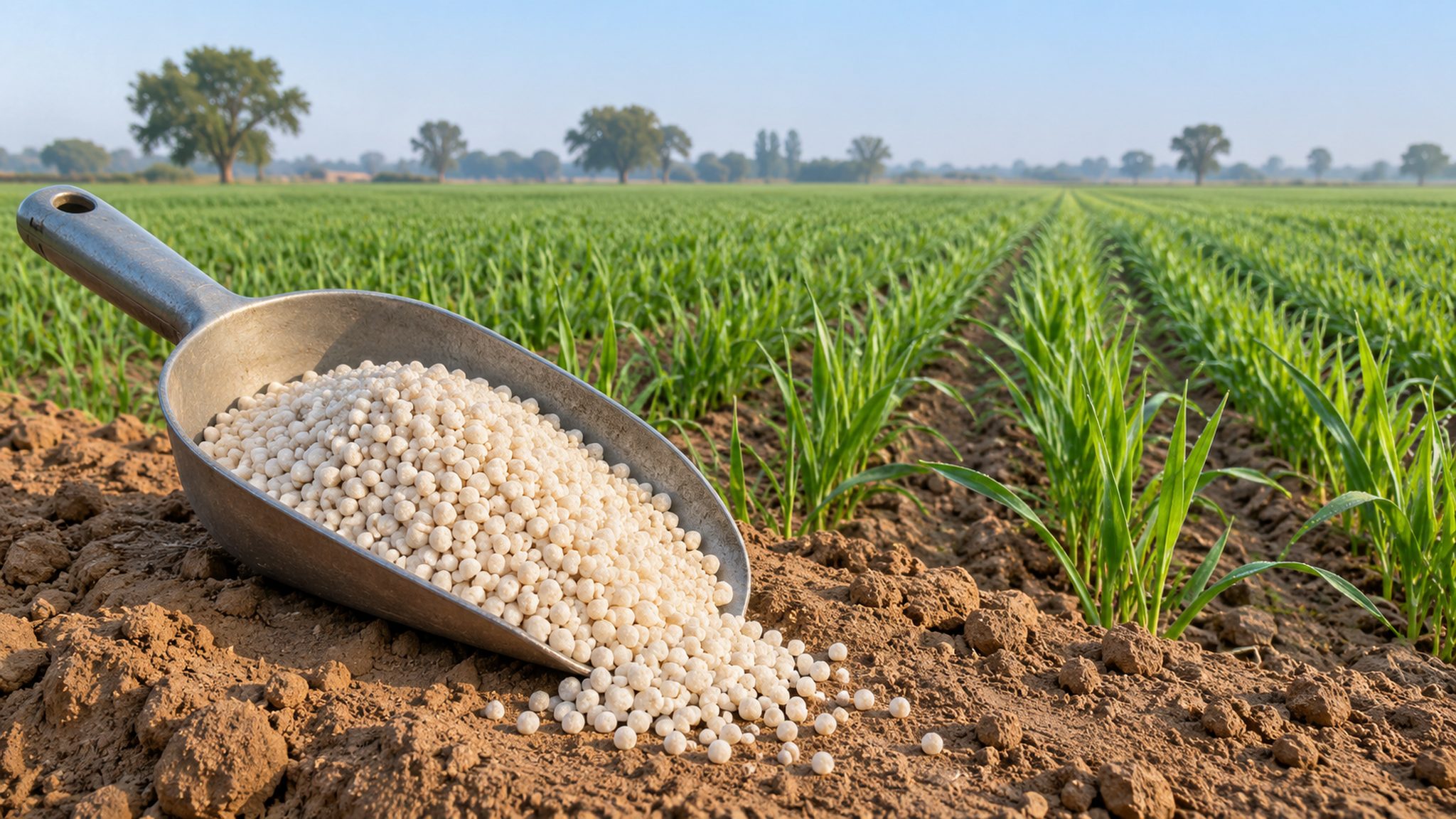
The scheme links a payment to the supplying company with the price at which farmers can obtain the finished product.
- The government provides subsidy to fertiliser manufacturers or importers at the notified rates. The farmer obtains the benefit through access to the product at a subsidised price when buying it.
- Companies set maximum retail prices for P&K fertilisers subject to government oversight of reasonableness. The subsidy calculation supplies one input into the price decision. It does not specify the final amount printed on every bag.
- An importer buying a finished fertiliser faces the international price of that grade. A domestic producer importing raw materials can also face higher costs when international input prices rise.
- A higher budgetary requirement can help absorb cost pressure. On its own, the estimate cannot show that every farmer will pay less for a bag or that every district will receive adequate stocks.
Why Urea Requires a Separate Answer
The word nitrogen can appear in a question about either scheme. Identify the finished fertiliser before deciding which price rule applies.
- Urea is a nitrogenous fertiliser sold at a government-controlled price under a separate subsidy arrangement. Applying the nutrient rates for P&K grades to a bag of urea would give the wrong policy answer.
- Nitrogen in a covered compound fertiliser can still contribute to its NBS calculation. Eligibility attaches to the notified grade, so the presence of nitrogen does not by itself decide the subsidy route.
- The Cabinet mentioned urea prices when discussing international input trends. That reference explains the market background to the decision. The operative approval concerns eligible P&K fertilisers.
- Balanced nutrient use depends on the crop and soil. A grade that attracts a larger subsidy per tonne need not supply the combination a particular plot requires.
Way Forward
Track Supply Where Farmers Buy
- Compare retail availability across districts during sowing to identify local shortages behind a comfortable aggregate stock figure.
- Check prices paid alongside grade-specific subsidies when assessing whether the seasonal revision protected affordability.
- Use soil-test advice to help farmers compare suitable grades before choosing the lowest-priced bag.
Conclusion
- The nutrient rate and the grade composition explain how support is calculated. The manufacturer or importer receives the subsidy, while the farmer encounters its effect in the market for the finished product.
- For a Mains answer, judge seasonal support against availability at sowing, retail affordability and the incentive to choose nutrients suited to the field. Each requires evidence beyond the approved budget.
UPSC Practice Questions
Prelims MCQ 1
With reference to Nutrient Based Subsidy, consider the following statements:
- The nutrient composition of a notified grade helps determine its subsidy.
- The scheme pays each farmer a fixed cash amount per hectare.
- Nitrogen in an eligible compound grade can contribute to its subsidy.
How many of the above statements are correct?
(a) Only one (b) Only two (c) All three (d) None
Answer: (b) Only two
Explanation:
Statements one and three are correct. Companies receive the subsidy to supply eligible fertilisers at affordable prices. A fixed area-based cash payment is a different instrument.
Prelims MCQ 2
Why can two P&K grades receive different subsidies per tonne during the same season?
(a) Each farm receives a different nutrient schedule (b) The retail dealer selects the nutrient rates (c) The grades contain different amounts of eligible nutrients (d) Each district sets its own export price
Answer: (c) The grades contain different amounts of eligible nutrients
Explanation:
Applying common nutrient rates to different quantities of each nutrient yields different per-tonne amounts.
UPSC Mains Questions
- Explain how the design of Nutrient Based Subsidy connects international fertiliser markets to the prices farmers face.
- What evidence would help assess whether seasonal P&K subsidy revisions support affordable and balanced fertiliser use?
Sources: PIB, Union Cabinet and Department of Fertilizers, Annual Report.
Frequently Asked Questions
Which season does the Cabinet decision cover?
The rates apply to eligible phosphatic and potassic fertilisers from October 1, 2026, through March 31, 2027. The Cabinet announced its approval on November 11.
Who receives the subsidy payment?
Manufacturers or importers receive support on eligible fertilisers according to notified rates. Farmers benefit through the price and availability of the fertiliser they buy for their fields.
How does the grade affect support?
The grade determines how much of each eligible nutrient the product contains. Applying the seasonal nutrient rates to those amounts gives the subsidy for that grade.
Does the rabi decision cover urea?
Urea follows a separate pricing and subsidy arrangement. The Cabinet discussed international urea prices as market context, while its operative approval applied to eligible P&K fertilisers.
Tell Google you want more of this.
Add Anantam IAS as a preferred sourceOne tap, and this site shows up more often in your own Top Stories, AI Overviews and AI Mode. Remove it any time.