Why in News?
BPCL’s November 28 exchange filing announced board approval for a proposed integrated refinery and petrochemical complex at Ramayapatnam, reported by The New Indian Express on November 29.
- The proposed configuration includes a 9 MMTPA crude refinery and a 1.5 MMTPA mixed-feed ethylene cracker with downstream petrochemical units.
- The filing describes 10.5 MMTPA combined throughput for the complex. The crude-refining component remains separately identified at 9 MMTPA.
- The project would be developed through a wholly owned subsidiary, subject to applicable government, statutory and regulatory approvals.
- BPCL identifies transportation-fuel requirements and petrochemical supply gaps as its rationale. These are expected objectives of the proposed investment.
- Integration connects fuel production and chemical manufacturing, making the choice of product streams important to industrial strategy.
- A coastal industrial location requires coordination between marine logistics, land infrastructure and environmental safeguards.
UPSC Relevance
Prelims Relevance
- MMTPA measures million metric tonnes per annum.
- Greenfield describes a proposed new industrial installation.
- Ethylene is a basic petrochemical used in downstream chemical and polymer production.
- Ramayapatnam is in Andhra Pradesh.
- Wholly owned subsidiary indicates complete ownership by the parent company.
Mains Relevance
GS Paper 3
- Refinery-petrochemical integration and domestic industrial value chains.
- Coastal infrastructure, environmental management and implementation of large industrial projects.
GS Paper 1
- Factors influencing industrial location, including transport access, utilities and links to markets.
Background and Context
Connecting Refining with Petrochemical Production
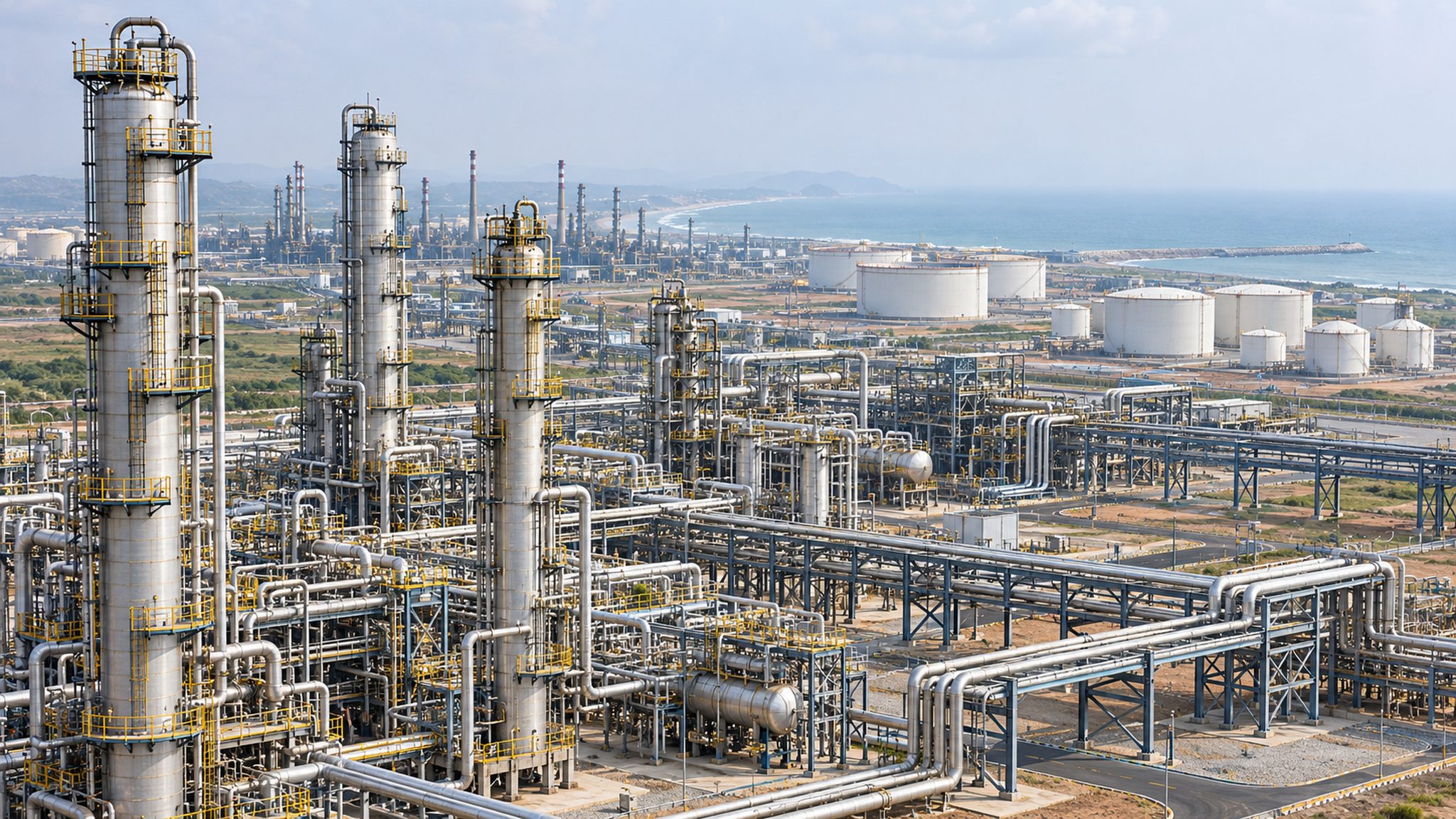
An integrated complex connects petroleum processing with chemical manufacturing, allowing different parts of a hydrocarbon stream to serve different markets.
- A refinery separates crude oil into fractions and further processes them into fuels and other products. Some streams can supply chemical manufacturing, creating a link between transport fuels and petrochemical feedstocks.
- An ethylene cracker converts suitable hydrocarbon feedstocks into smaller molecules used by downstream chemical industries. BPCL specifies a mixed-feed unit, indicating a design that can process more than one feedstock type.
- Integration allows refinery and petrochemical operations to be planned together. Feedstock transfer, storage and supporting services can be coordinated within the complex, although the actual benefits depend on its engineering configuration and operation.
- The filing associates the project with key polymers and downstream industries. Producing chemical building blocks can support further manufacturing, while the eventual product mix depends on the units constructed and the markets served.
- The refining process includes separation, conversion and treatment. A plant’s configuration determines which streams become fuels and which can feed chemical production, making installed equipment central to its industrial role.
Reading Capacity and Locational Requirements
Capacity figures describe particular processes, while location determines how raw materials, utilities and finished products can move through the industrial system.
- The 9 MMTPA figure identifies the proposed crude-processing component. The cracker has its own specified capacity, and the filing also reports combined throughput. Keeping each label attached prevents confusion between distinct processing stages.
- Nameplate capacity describes a facility’s rated processing capability. Actual annual throughput depends on commissioning, maintenance, feedstock availability and operational performance, so a proposed capacity figure alone establishes no present production.
- Coastal access can support movement of bulk raw materials and products by sea. Its usefulness depends on suitable terminals, storage and connections between the port interface and the industrial site.
- Road, rail and pipeline links affect distribution beyond the plant. The viability of an industrial cluster depends on how these connections serve suppliers and customers, including manufacturers that use its chemical outputs.
- Water, power and effluent management belong in site planning alongside logistics. A coastal setting also requires attention to local ecosystems and communities, with detailed obligations determined through the applicable appraisal and approval processes.
From Board Decision to Operating Capacity
The exchange filing records a corporate decision and describes further dependencies that must be resolved before the proposed complex can operate.
- Board approval authorises the company to pursue the proposal within its governance framework. The filing explicitly retains the need for applicable government, statutory and regulatory approvals, keeping those subsequent decisions central to implementation.
- The proposed subsidiary structure provides the vehicle for developing the complex. BPCL also makes its equity-infusion proposal subject to Cabinet Committee on Economic Affairs approval and other applicable permissions.
- The filing envisages equity and debt financing, with arrangements under finalisation with lenders. Funding commitments, construction schedules and approval conditions must be coordinated as the proposal moves through its development stages.
- Import substitution is an expected policy and commercial benefit identified by BPCL. Assessing that outcome later would require evidence of actual output, domestic demand and the products supplied to downstream users.
- The exchange disclosure gives the project’s current decision stage. Tracking approvals, financing and commissioning separately helps explain how an announced industrial proposal progresses towards usable capacity.
Way Forward
Coordinate Project Dependencies
- Align terminal and transport connections with the construction sequence so completed units can receive inputs and dispatch products.
- Resolve water, effluent and environmental conditions through the relevant appraisal process and disclose implementation responsibilities.
- Track financing, approvals and commissioning as separate milestones, with clear explanations when scope or schedules change.
Conclusion
- Refinery-petrochemical integration links fuel supply with chemical value chains, while the configuration of individual units determines the products that can be made.
- The Ramayapatnam proposal illustrates how industrial capacity, coastal logistics and approvals must come together before projected benefits can be assessed through actual production.
UPSC Practice Questions
Prelims MCQ 1
With reference to BPCL’s Ramayapatnam proposal, consider the following statements:
- The proposed crude-refining component is identified as 9 MMTPA.
- The proposal includes a mixed-feed ethylene cracker.
- The board approval establishes that all applicable statutory approvals have been received.
How many of the above statements are correct?
(a) Only one (b) Only two (c) All three (d) None
Answer: (b) Only two
Explanation:
The first two statements match the filing. BPCL expressly makes the proposal subject to applicable government, statutory and regulatory approvals.
Prelims MCQ 2
Which description best explains refinery-petrochemical integration?
(a) Removing the need for terminals and utility systems (b) Coordinating petroleum-processing streams with chemical production and downstream manufacturing (c) Measuring all industrial units only by their crude-distillation capacity (d) Replacing every transport fuel with a single polymer
Answer: (b) Coordinating petroleum-processing streams with chemical production and downstream manufacturing
Explanation:
Integration connects feedstock and processing decisions across fuel and chemical production. It still requires suitable infrastructure and operating arrangements.
UPSC Mains Questions
- Explain how refinery-petrochemical integration can strengthen industrial value chains. Discuss the conditions required to realise its expected benefits.
- Assess the infrastructure and environmental considerations that influence the location and implementation of a coastal industrial complex.
Sources: BPCL exchange filing and The New Indian Express, November 29.
Frequently Asked Questions
What did BPCL approve?
BPCL’s board approved a proposed greenfield refinery and petrochemical complex at Ramayapatnam through a wholly owned subsidiary. The filing retains the requirement for applicable government, statutory and regulatory approvals.
What does 10.5 MMTPA mean in the filing?
BPCL describes 10.5 MMTPA as combined throughput for the complex. It separately identifies a 9 MMTPA crude refinery and a 1.5 MMTPA mixed-feed ethylene cracker.
Why combine a refinery with petrochemical units?
Integration connects petroleum-processing streams with chemical production. It can support downstream manufacturing and coordination of feedstocks and services, with benefits depending on design, operations and demand.
Is the proposed complex already operating?
The filing announces board approval for a proposed project. Financing, applicable approvals and subsequent construction and commissioning remain relevant stages before it can contribute operating capacity.
Tell Google you want more of this.
Add Anantam IAS as a preferred sourceOne tap, and this site shows up more often in your own Top Stories, AI Overviews and AI Mode. Remove it any time.