Why in News?
The Semi-Conductor Laboratory (SCL), Mohali, launched its indigenous Device Manufacturing Integrated System (DMIS) for wafer-fabrication management at the concluding session of SEMICON India on 19 September 2026.
- DMIS is a manufacturing execution system, according to the Ministry of Electronics and IT announcement.
- Its modular, plug-and-play architecture supports management from order booking through wafer fabrication to final packaging.
- The stated purpose is stronger shop-floor control and manufacturing efficiency; the release provides no measured performance improvement.
- Semiconductor production needs both physical fabrication capability and reliable coordination of work inside the factory.
- The relevant policy question is how manufacturing software supports operations, without confusing its launch with new chip-production capacity.
UPSC Relevance
Prelims Relevance
- SCL: an autonomous body under MeitY, located in Mohali.
- DMIS: Device Manufacturing Integrated System.
- MES: manufacturing execution system linking production management with factory operations.
- Wafer fabrication: manufacture of semiconductor structures on wafers.
- Packaging: a distinct stage within the device-manufacturing chain.
Mains Relevance
GS Paper 3
- Role of indigenous production-management software in semiconductor manufacturing.
- Distinguishing announced capabilities from demonstrated industrial performance.
Background and Context
What the DMIS announcement establishes
The announcement concerns the management of production work inside a semiconductor facility, rather than a new chip design or fabrication process.
- DMIS expands to Device Manufacturing Integrated System. PIB identifies it as an indigenous manufacturing execution system launched by SCL, placing it within factory operations rather than the design of a processor architecture.
- The verified coverage runs from order booking through wafer fabrication to final packaging. These are connected management stages; the release does not describe the detailed sequence of physical operations performed on a wafer.
- Modular, plug-and-play architecture is the architectural description provided. It indicates a system organised around connectable modules, but does not establish that every existing fabrication machine can connect without engineering work or configuration.
- The launch identifies shop-floor control and manufacturing efficiency as its purposes. No baseline, comparison period or independently measured result is supplied, so a numerical productivity improvement cannot be inferred from the announcement alone.
- The official release does not specify the deployment footprint, connected equipment or customer installations. Launch is the established development; universal adoption across Indian fabs is not a supported conclusion.
How a manufacturing execution system fits into production
The general MES concept explains why production software matters, but its usual functions must not be presented as a verified DMIS feature list.
- A manufacturing execution system helps managers direct and follow production activity. NIST describes this role as guiding and reporting manufacturing operations, connecting an order with the work needed to fulfil it.
- An enterprise planning system considers requirements such as orders, materials and resources across the business. An MES focuses more closely on executing production; this distinction helps separate business planning from factory-level operational coordination.
- In general MES models, work instructions and schedules move toward production while results move back toward management. This information exchange helps connect what a factory intended to make with what its operations actually produced.
- A production lot groups material for scheduling, dispatching or tracking. NIST manufacturing models use this concept to organise work; it explains production coordination without proving that DMIS has any particular lot-tracking module.
- Consider a delayed production order: management needs to distinguish work awaiting processing from completed work. An MES can support such operational visibility in principle; this example illustrates the software category, not a demonstrated DMIS result.
Why software management is not physical fabrication capacity
A production-management system and a semiconductor factory perform different jobs, even when the software covers the factory from start to finish.
- SCL describes its work as spanning design, fabrication, assembly, packaging and testing. This institutional context explains why coordination across stages matters; those physical capabilities should not be attributed to DMIS software itself.
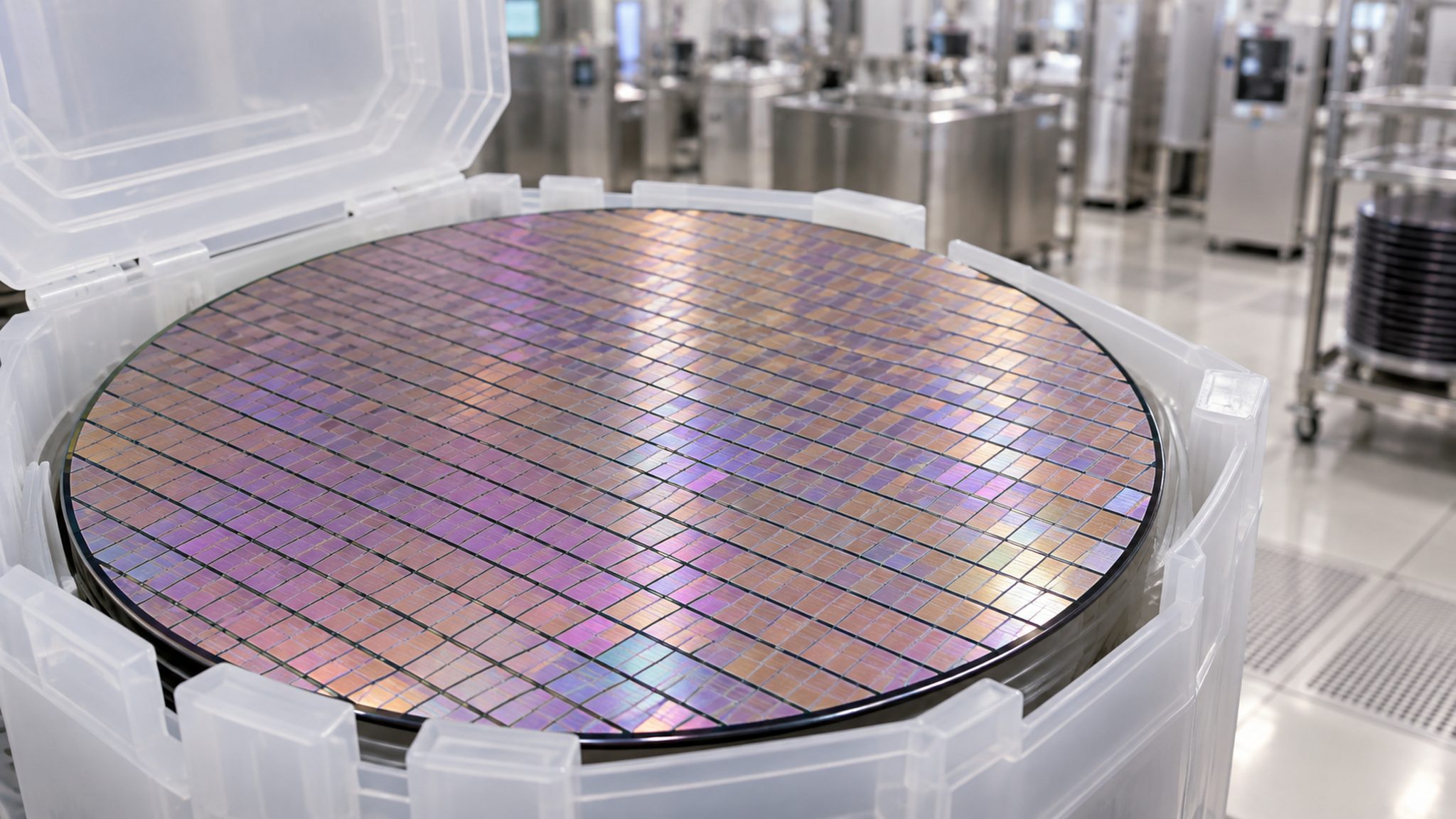
- Wafer fabrication produces semiconductor structures using a physical manufacturing process. Software can help organise production activity, but it does not replace fabrication equipment, materials, trained operators or the controlled conditions required to make devices.
- Packaging is a distinct activity in SCL’s end-to-end device-manufacturing chain. Including it within a management system’s coverage means coordinating work across stages, rather than claiming that order-management software physically packages a semiconductor device.
- Indigenous software can offer a route to domestic knowledge of production-management systems. Its practical value still depends on reliable operation, maintainability and integration; domestic origin alone does not demonstrate successful implementation at every facility.
- For evaluation, distinguish announced scope from demonstrated outcomes. Evidence about operational use, integration and performance would strengthen later assessments; neither a new process node nor additional wafer-production capacity follows from this software launch.
Way Forward
Evaluate operational performance
- Establish clear operational baselines before claiming efficiency gains, then compare production performance using consistent definitions.
- Document interfaces and maintenance responsibilities so integration decisions reflect actual equipment and workflow requirements.
- Publish verified deployment and performance evidence, while protecting sensitive manufacturing information and separating planned functions from operational ones.
Conclusion
- DMIS brings attention to the software that coordinates semiconductor production. Its announced order-to-packaging scope is significant, but must remain distinct from claims about physical capacity or measured efficiency gains.
- For an answer on industrial self-reliance, explain the operational layer: equipment makes production possible, while production-management software helps organise the work. Judge results through evidence of implementation and performance.
UPSC Practice Questions
Prelims MCQ 1
With reference to SCL’s Device Manufacturing Integrated System, consider the following statements:
- It was announced as an indigenous manufacturing execution system.
- Its announced management coverage extends from order booking to final packaging.
- Its launch establishes the commissioning of a new semiconductor process node.
How many of the above statements are correct?
(a) Only one (b) Only two (c) All three (d) None
Answer: (b) Only two
Explanation:
The announcement confirms the first two statements. A manufacturing execution system is production-management software; its launch does not establish a new fabrication process node.
Prelims MCQ 2
Which best describes the general role of a manufacturing execution system?
(a) Designing the instruction set of a processor (b) Coordinating and reporting production activity within manufacturing operations (c) Replacing all physical fabrication equipment (d) Determining monetary policy for industrial lending
Answer: (b) Coordinating and reporting production activity within manufacturing operations
Explanation:
An MES connects production management with factory operations. It is distinct from processor design, physical fabrication machinery and financial policy.
UPSC Mains Questions
- Explain the role of manufacturing execution systems in semiconductor production. How are they distinct from enterprise planning and physical fabrication equipment? (150 words)
- An indigenous production-management platform must be assessed through operational evidence. Discuss with reference to the launch of SCL’s DMIS. (250 words)
Sources: PIB, Ministry of Electronics and IT and Semi-Conductor Laboratory.
Frequently Asked Questions
What is SCL DMIS?
Device Manufacturing Integrated System is an indigenous manufacturing execution system launched by the Semi-Conductor Laboratory. Its announced scope covers management from order booking through wafer fabrication to final packaging.
Does DMIS manufacture chips by itself?
No. DMIS is production-management software. Physical fabrication and packaging still require equipment, materials and skilled operations. The announcement does not establish a new process node or additional wafer-production capacity.
What does a manufacturing execution system generally do?
An MES helps coordinate and report production activities. It connects production management with factory operations, supporting the execution of manufacturing orders. General MES capabilities should not automatically be attributed to DMIS.
Has the announcement established measurable efficiency gains?
No measured gain is provided in the release. Manufacturing efficiency is a stated purpose, but assessing actual improvement would require operational evidence, a baseline and a consistent comparison of production performance.
Tell Google you want more of this.
Add Anantam IAS as a preferred sourceOne tap, and this site shows up more often in your own Top Stories, AI Overviews and AI Mode. Remove it any time.