Why in News?
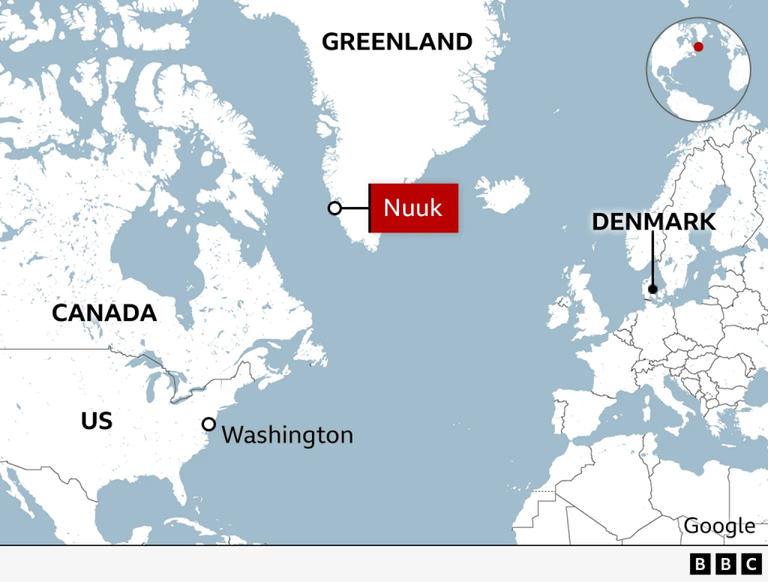
At the ongoing UN General Assembly session, France renewed its call for permanent members of the UN Security Council to voluntarily refrain from using the veto in situations involving mass atrocities.
The French-Mexican initiative, presented in 2015, now has the support of 128 states. The United Kingdom has joined the declaration, becoming its second permanent-member supporter after France.
| UPSC Relevance: GS-2 International Relations: International Institutions Prelims: United Nations, United Nations Security Council Mains: United Nations Security Council: Relevance & Challenges |
What is the UNSC?
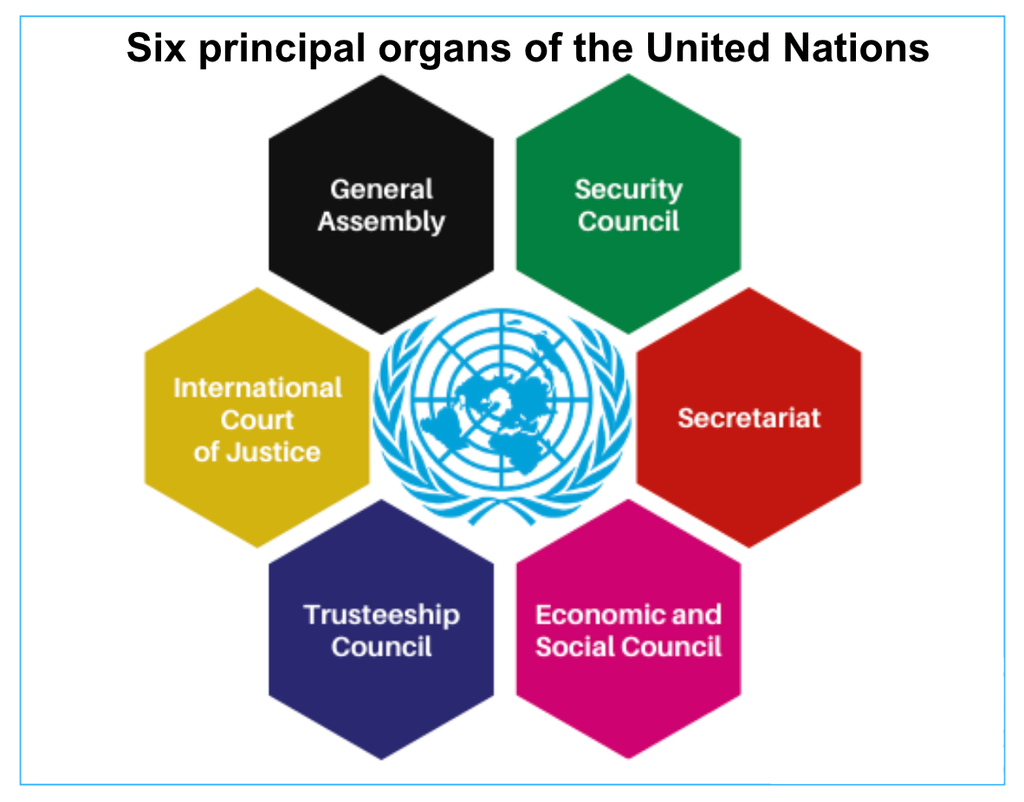
The United Nations Security Council (UNSC) is one of the UN’s six principal organs, entrusted with primary responsibility for maintaining international peace and security.
- Composition: Fifteen members: five permanent and ten elected members.
- Permanent Five (P5): China, France, Russia, the United Kingdom and the United States.
- Ten non-permanent members: Elected by the UNGA for two-year terms; retiring members cannot be immediately re-elected.
- Presidency: Rotates monthly in English alphabetical order.
- Principal functions: Peaceful settlement of disputes, sanctions, authorisation of military action and establishment of peacekeeping operations.
- Other responsibilities: Recommends admission of new UN members and appointment of the Secretary-General to the General Assembly.
How does voting work?
- Procedural matters: Require at least nine affirmative votes; the veto does not apply.
- Substantive matters: Require at least nine affirmative votes and no negative vote by a permanent member.
- Abstention by a permanent member is not a veto, including on recommendations for admission of new members.
Veto power has its legal basis in Article 27 of the UN Charter. Veto power enables a permanent member to block substantive decisions. Reform may therefore address membership, voting privileges or both.
Arguments for abolishing UNSC Permanent Membership and Veto Powers:
- Democratic Deficit & Unequal Privileges: Permanent seats institutionalise a structural hierarchy that directly violates the UN Charter’s core tenet of sovereign equality. While elected members must routinely secure democratic mandates, the P5 operate with absolute, permanent immunity from electoral accountability.
- Outdated Anachronism (1945 vs. Present): The current composition freezes the global power architecture of 1945. It entirely excludes Africa and Latin America from permanent representation, while marginalising contemporary economic and demographic giants.
- Humanitarian Paralysis: A single veto can unilaterally obstruct critical global interventions. Strategic rivalries routinely weaponise this power, paralysing the Council during mass atrocities, war crimes, and humanitarian emergencies where consensus is urgently needed.
- Selective Accountability & Double Standards: The veto serves as a geopolitical shield, allowing permanent members to protect themselves or their allies from international sanctions. This creates a system of victor’s justice and severely weakens the credibility of international law.
- The Pocket Veto Effect: The mere threat of a veto exerts an invisible, chilling effect on global diplomacy. It stifles proposals, dilutes resolution text, and derails negotiations long before an official vote even occurs.
- Erosion of Collective Security: Chronic institutional deadlock forces states to bypass the UN entirely. This fuels unilateral military actions, minilateral coalitions, and regional alliances, fundamentally undermining the legitimacy of global collective security.
Existing approaches to Veto Reform:
(i) French-Mexican Initiative (Restraint Before a Veto)
- Calls on the P5 to voluntarily refrain from vetoing action concerning genocide, crimes against humanity and large-scale war crimes.
- Seeks behavioural change without Charter amendment.
- Its main limitation is its voluntary character: political commitments cannot ensure compliance when major interests are involved.
(ii) Liechtenstein Initiative (Accountability After a Veto)
UNGA Resolution 76/262, adopted in 2022, provides for:
- A General Assembly debate within ten working days of a veto, unless an emergency special session is already meeting on the same situation.
- Priority in the speakers’ list for the veto-casting permanent member.
- An invitation to the Security Council to submit a special report before the debate.
It increases public scrutiny, but neither reverses the veto nor legally compels a satisfactory explanation.
(iii) ACT Code of Conduct (Responsibility of All Council Members)
- The Accountability, Coherence and Transparency (ACT) Code of Conduct seeks commitments from current and prospective Council members to support credible action against genocide, crimes against humanity and war crimes.
- Unlike the French-Mexican initiative’s focus on the P5, it also addresses the voting conduct of elected members. Its force is political and moral.
(iv) Uniting for Peace (Wider UN Response)
- Under UNGA Resolution 377 A(V), 1950, the General Assembly can consider situations where permanent-member disagreement prevents the Council from discharging its responsibilities and recommend collective measures.
Way Forward:
- Expand Representative Membership: Democratise the Council by correcting the systemic underrepresentation of the Global South (particularly Africa, Latin America, and small island developing states) to align the body with modern demographic and economic realities.
- Institutionalise Voluntary Veto Restraint: Formalise initiatives (like the French-Mexican proposal) demanding that permanent members pledge to forfeit their veto power during verified mass atrocities, genocide, and war crimes, guided by independent UN fact-finding missions.
- Leverage General Assembly Accountability: Fully operationalise the UNGA “Veto Initiative” (Resolution 76/262) by using mandatory debates to aggressively scrutinise the legal, moral, and humanitarian consequences of any cast veto, shifting the political cost back to the obstructing state.
- Enforce Existing Charter Safeguards: Revitalise and strictly enforce Article 27(3) of the UN Charter, which legally requires any Council member to abstain from voting when they are a direct party to a dispute under Chapter VI, dismantling the conflict of interest.
- Democratise Internal Working Methods: Break the P5’s monopoly on Council mechanics by giving elected members (E10) leadership over drafting resolutions, chairing key committees, and setting the peace and security agenda.
- Pursue Dual-Track Reform: Employ a simultaneous strategy that uses immediate, incremental measures (like voluntary restraint) to mitigate ongoing humanitarian crises, while aggressively lobbying for long-term structural amendments to the UN Charter.
The structural paralysis of the UNSC is no longer just a diplomatic flaw; it is a systemic threat to global stability. Only by dismantling this outdated hierarchy and aligning the Council with the founding principle of sovereign equality can the United Nations restore its institutional legitimacy and fulfill its fundamental promise to maintain international peace and security.
Practice Prelims MCQ:
Q. Consider the following statements:
- A permanent member’s abstention necessarily prevents the adoption of a substantive UNSC resolution.
- Veto power has its legal basis in Article 27 of the UN Charter.
- UNGA Resolution 76/262 empowers the General Assembly to reverse a Security Council veto.
Which of the statements given above is/are correct?
(a) 2 only
(b) 1 and 2 only
(c) 2 and 3 only
(d) 1, 2 and 3
Answer: (a) Abstention is not a veto. Resolution 76/262 provides for debate and scrutiny, not reversal.
Mains Practice Question:
Q. “Reforming the UN Security Council requires addressing both unequal representation and the misuse of veto power.” Critically examine, with reference to recent veto-restraint and accountability initiatives.
Tell Google you want more of this.
Add Anantam IAS as a preferred sourceOne tap, and this site shows up more often in your own Top Stories, AI Overviews and AI Mode. Remove it any time.