Context:
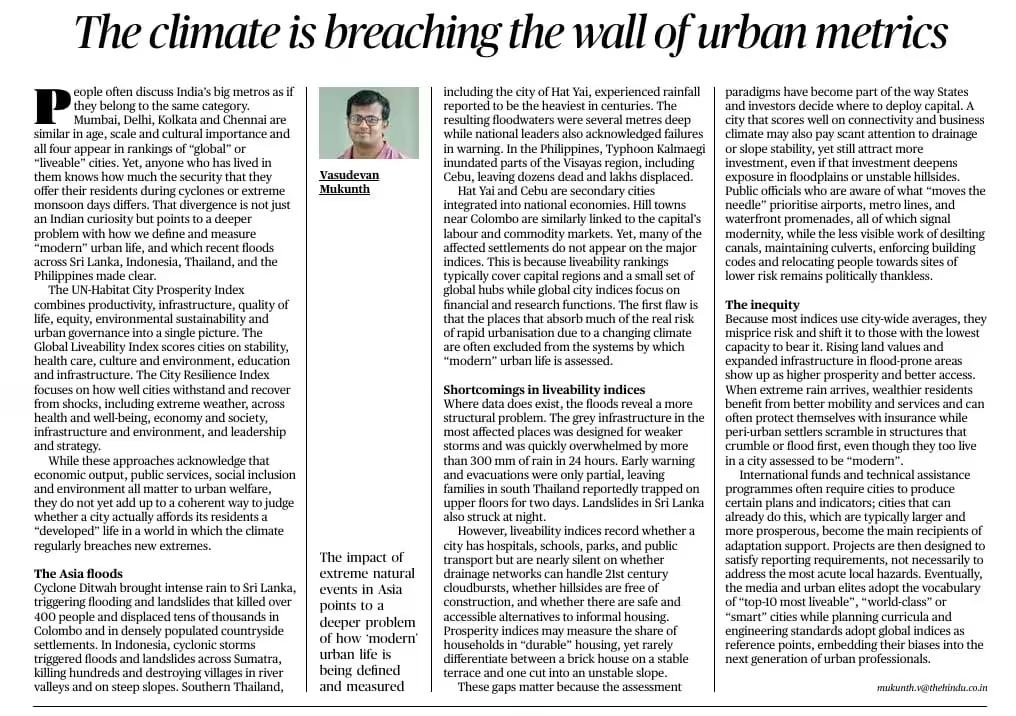
Climate change is exposing a fundamental weakness in how “modern urban life” is measured, classified, and planned. Current urban indices and livability metrics fail to capture climate vulnerability, especially for small, fast-growing towns and informal urban areas.
UPSC Relevance:
Urbanisation and Env.
How Urban “Modernity” is Currently Measured:
Cities are commonly ranked using composite indices such as:
- City Resilience Index:- The City Resilience Index was released by Arup with support from The Rockefeller Foundation. It is a tool designed to help cities understand and measure their resilience to various shocks and stresses.
- UN-Habitat City Prosperity Index:- The UN-Habitat City Prosperity Index (CPI) is released by the United Nations Human Settlements Programme (UN-Habitat). It was created in 2012 as a tool to measure the sustainability of cities and is now a global initiative used by cities to identify opportunities and formulate policies for development.
- Global Livability Index:- The Global Liveability Index is released by the Economist Intelligence Unit (EIU), a research and analysis division of The Economist Group. The annual index ranks cities worldwide based on factors like stability, healthcare, culture and environment, education, and infrastructure.
Climate Disasters Breaking the “Urban Illusion”:
- Sri Lanka (Cyclone Ditwah): Flooding, landslides, mass displacement
- Indonesia: Countryside floods across Sumatra
- Thailand (Hat Yai): Heaviest rainfall in centuries
- Philippines: Typhoon-induced displacement
- Sri Lanka hills: Landslides from excessive rainfall
For Reference:
Tell Google you want more of this.
Add Anantam IAS as a preferred sourceOne tap, and this site shows up more often in your own Top Stories, AI Overviews and AI Mode. Remove it any time.