Why in News?
In its 6 November order, uploaded on 8 November, the Supreme Court sought detailed accounts of how Delhi and neighbouring states enforce vehicle emission requirements across the National Capital Region (NCR).
- The Court gave states two weeks to explain steps taken, respond to suggestions and submit their own proposals.
- It asked Delhi authorities and three neighbouring states for vehicle-specific responses before the next hearing.
- The Registry was directed to list the vehicular emissions case on 23 November.
- An interstate journey can bring a vehicle registered elsewhere into Delhi several times. Registration figures for Delhi alone miss those movements.
- Inspection returns help establish what agencies did. A claim about how much cleaner the air became requires different evidence.
UPSC Relevance
Prelims Relevance
- Amici curiae assist the court in examining issues before it.
- PUC stands for Pollution Under Control.
- The authorities named include the Municipal Corporation of Delhi and Delhi Police’s Traffic Department.
- The hearing on vehicular emissions was scheduled separately from the hearing on construction and industrial pollution.
Mains Relevance
GS Paper 2
- Examine how judicial oversight can assign reporting duties across multiple jurisdictions.
- Distinguish an agency’s proposal from a measure it has implemented.
GS Paper 3
- Assess the limits of using vehicle inspection totals to judge citywide air quality.
Background and Context
What Prompted the Reporting Direction?
The bench heard two accounts of enforcement. One described government action, while the other raised questions about the record available to the Court.
- The Additional Solicitor General, appearing for the Union and the Commission for Air Quality Management (CAQM), described restrictions on vehicle emissions and efforts to curb the burning of crop residue.
- The amici curiae, lawyers assisting the bench, said compliance with earlier orders from January and February had yet to be properly reported. That observation concerned what officials had placed before the Court.
- The amici presented GRAP compliance data for 21 October to 3 November. The bench noted fewer reported stubble-burning incidents alongside a rise in reported issues associated with vehicle emissions over that period.
- Those observations involve different measures. Counting fires and recording enforcement problems cannot establish the fraction of particulate pollution that vehicles contributed on a particular day. That calculation requires evidence about pollutant sources.
- The Court gave states two weeks to set out what they had done, answer the suggestions of the CAQM and the amici, and identify further steps they independently proposed.
What Must an Enforcement Return Show?
A vehicle approaching Delhi raises separate questions about entry, permission to operate and compliance with emission requirements. The bench asked the authorities to account for each.
- For entry and operation, each authority must explain the rules already in force for commercial and private vehicles, including those arriving from neighbouring states, and how officials enforce those rules in practice.
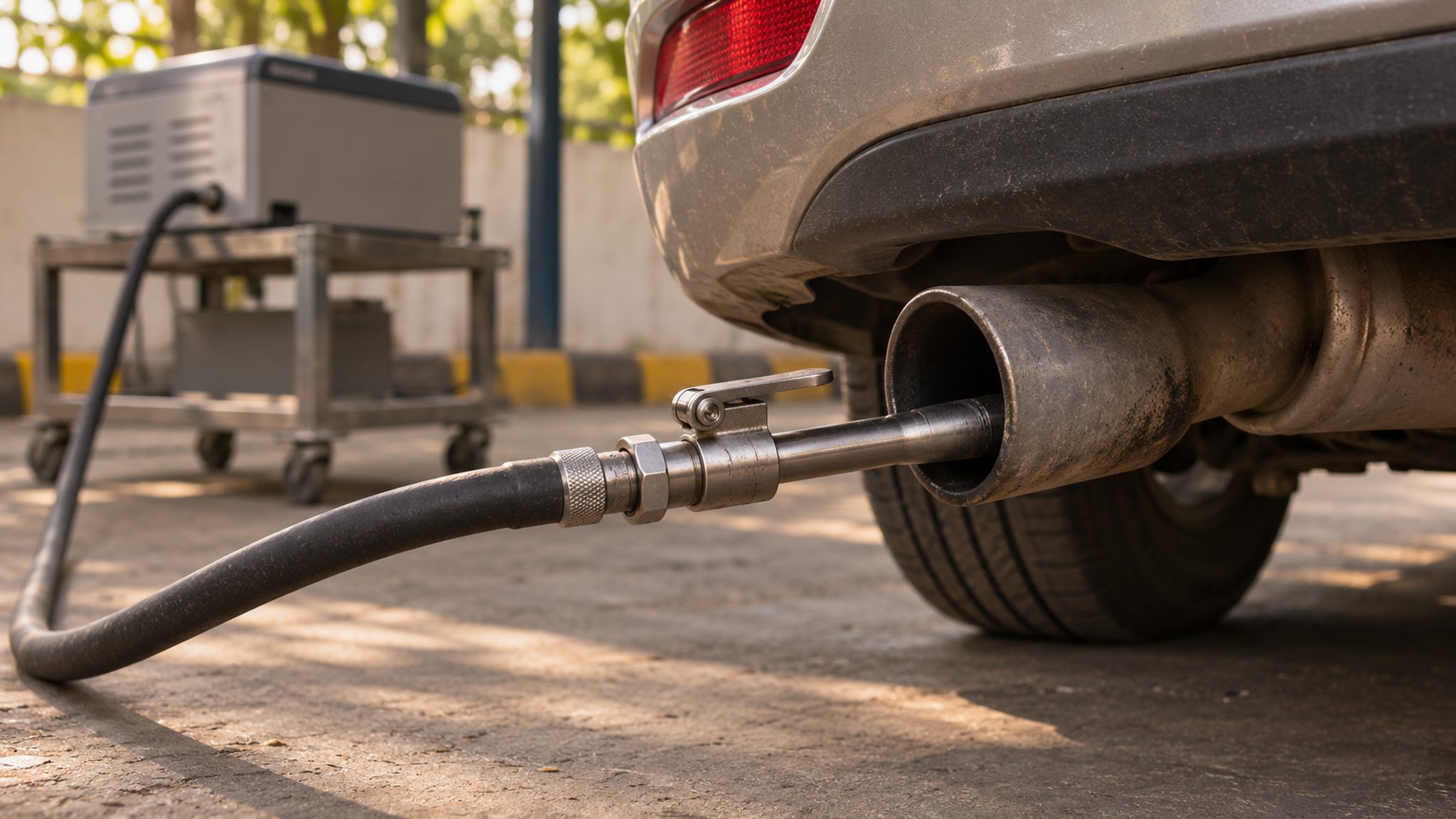
- For emission compliance, the Court sought details of how agencies identify and monitor vehicles that breach prescribed standards. It specifically asked how authorities enforce the requirement for a Pollution Under Control certificate.
- For over-age and end-of-life vehicles, the question concerns measures taken to prevent entry or continued operation. An account confined to certificate inspections would leave this part of the direction unanswered.
- For enforcement action, authorities must give counts for the relevant period, including vehicles inspected, challaned or denied entry. Inspection records show checks conducted, while a challan records an enforcement action for a violation.
- A single vehicle may feature in more than one count. An officer might inspect it and then deny it entry. Adding those figures would count two actions involving the same vehicle.
Who Must Coordinate Across State Borders?
The bench identified traffic entering Delhi from neighbouring states as part of the region’s cumulative vehicle load. Its directions assign reporting duties on both sides.
- On the Delhi side, the municipal corporation, Delhi government and traffic police must give their respective responses. The Court also named Haryana, Rajasthan and Uttar Pradesh in the same direction.
- The bench asked about interstate coordination. A response should explain how agencies regulate movement across a boundary and ensure that a vehicle entering from another state meets the applicable emission requirements.
- Authorities must distinguish current practice from planned changes. For proposed improvements, the Court sought both short-term and long-term measures and a timetable for strengthening enforcement, allowing later scrutiny of progress against those commitments.
- An earlier judgment had divided the wider air-pollution proceedings into separate issues. The Registry was to list the lead matter alongside each, giving vehicle emissions a hearing separate from construction pollution.
Way Forward
Make Enforcement Returns Comparable
- Identify the reporting period and vehicle category alongside each inspection total.
- Show how many inspected vehicles faced each enforcement outcome and identify overlapping counts.
- Assign a responsible agency and date to each proposed improvement so subsequent submissions can track implementation.
Conclusion
- The 6 November order asks each authority to connect its existing rules to checks and recorded outcomes. It leaves the substantive examination of vehicular emissions for the scheduled hearing.
- For an assessment of regional air governance, follow a vehicle across the border. Identify who checks it, what that check establishes and how the receiving authority records the outcome.
UPSC Practice Questions
Prelims MCQ 1
With reference to the Supreme Court’s November order on NCR air pollution, consider the following statements:
- The Court sought details of enforcement of Pollution Under Control certification.
- The directions covered only commercial vehicles.
- The Court asked for details of coordination across state boundaries.
How many of the above statements are correct?
(a) Only one (b) Only two (c) All three (d) None
Answer: (b) Only two
Explanation:
Statements 1 and 3 are correct. The Court expressly included commercial and non-commercial vehicles.
Prelims MCQ 2
Which observation would directly answer the Court’s question about action against violations?
(a) The number of people who commute into Delhi (b) The number of vehicle manufacturers in NCR (c) The number of vehicles denied entry during the reporting period (d) The share of land used for parking
Answer: (c) The number of vehicles denied entry during the reporting period
Explanation:
Denial of entry was one of the enforcement outcomes the bench specifically asked authorities to quantify.
UPSC Mains Questions
- How can a court assess implementation of regional emission controls when enforcement responsibilities cross administrative boundaries?
- What can vehicle inspection and challan records reveal about air-quality governance, and what further evidence would establish environmental outcomes?
Source: Supreme Court of India.
Frequently Asked Questions
When was the vehicular emissions hearing scheduled?
The order dated 6 November directed the Registry to list vehicular emissions and pollution on 23 November 2026. The lead air-quality matter was to be listed alongside it.
Did the order introduce a new driving ban?
The bench sought details of restrictions already in force, action against violations and measures the authorities proposed. Its operative directions required responses and a timetable for strengthening enforcement.
Why did the Court ask neighbouring states to respond?
Commercial and private vehicles enter Delhi from surrounding states. Their journeys span jurisdictions, so the Court sought accounts of how authorities coordinate checks and enforce emission requirements across state boundaries.
What does a challan count establish?
It records instances in which an authority issued a challan during the reporting period. To assess inspection coverage or changes in air quality, an analyst would need additional evidence.
Tell Google you want more of this.
Add Anantam IAS as a preferred sourceOne tap, and this site shows up more often in your own Top Stories, AI Overviews and AI Mode. Remove it any time.