Why in News?
On November 16, 2026, the Commerce and Industry Ministry released October WPI, Output Producer Price Index and trial Input Producer Price Index estimates.
- WPI inflation was 12.29% year-on-year in October, compared with 11.39% in September, according to the ministry.
- The October Output PPI for all commodities stood at 113.3; the trial Input PPI for manufacturing stood at 108.2.
- These October estimates are provisional, use base year 2022-23, and measure different baskets; their index levels are not directly comparable costs and revenues.
- Producer prices help locate pressure along a supply chain before examining whether consumers face higher prices.
- The useful question is where prices change, not whether one aggregate index exceeds another; the latter cannot establish business profitability.
UPSC Relevance
Prelims Relevance
- Output PPI: prices received by producers for output.
- Input PPI: prices paid for production inputs.
- Trial IPPI: experimental manufacturing-sector series.
- Basic price versus purchaser’s price: different valuation concepts.
- Index level versus inflation: relative price level versus its rate of change.
Mains Relevance
GS Paper 3
- Inflation transmission: identifying input pressures and limits to pass-through.
- Economic statistics: matching coverage, weights and valuation before drawing policy conclusions.
Essay
- Measurement and judgment: more data improve decisions only when the comparisons are valid.
Background and Context
Follow the purchase and the sale
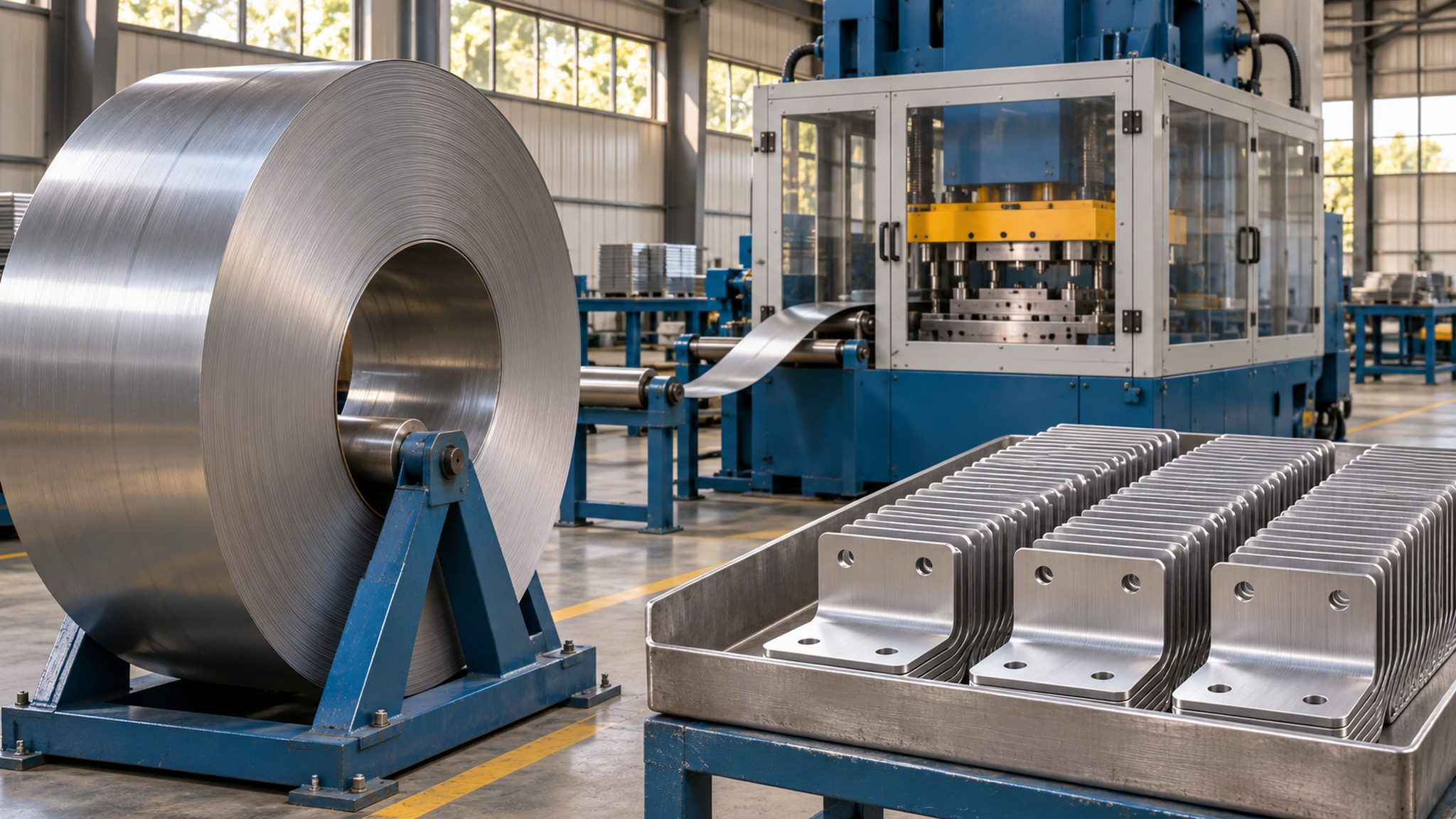
Input and output prices describe opposite sides of production; a metalworking factory makes the distinction concrete.
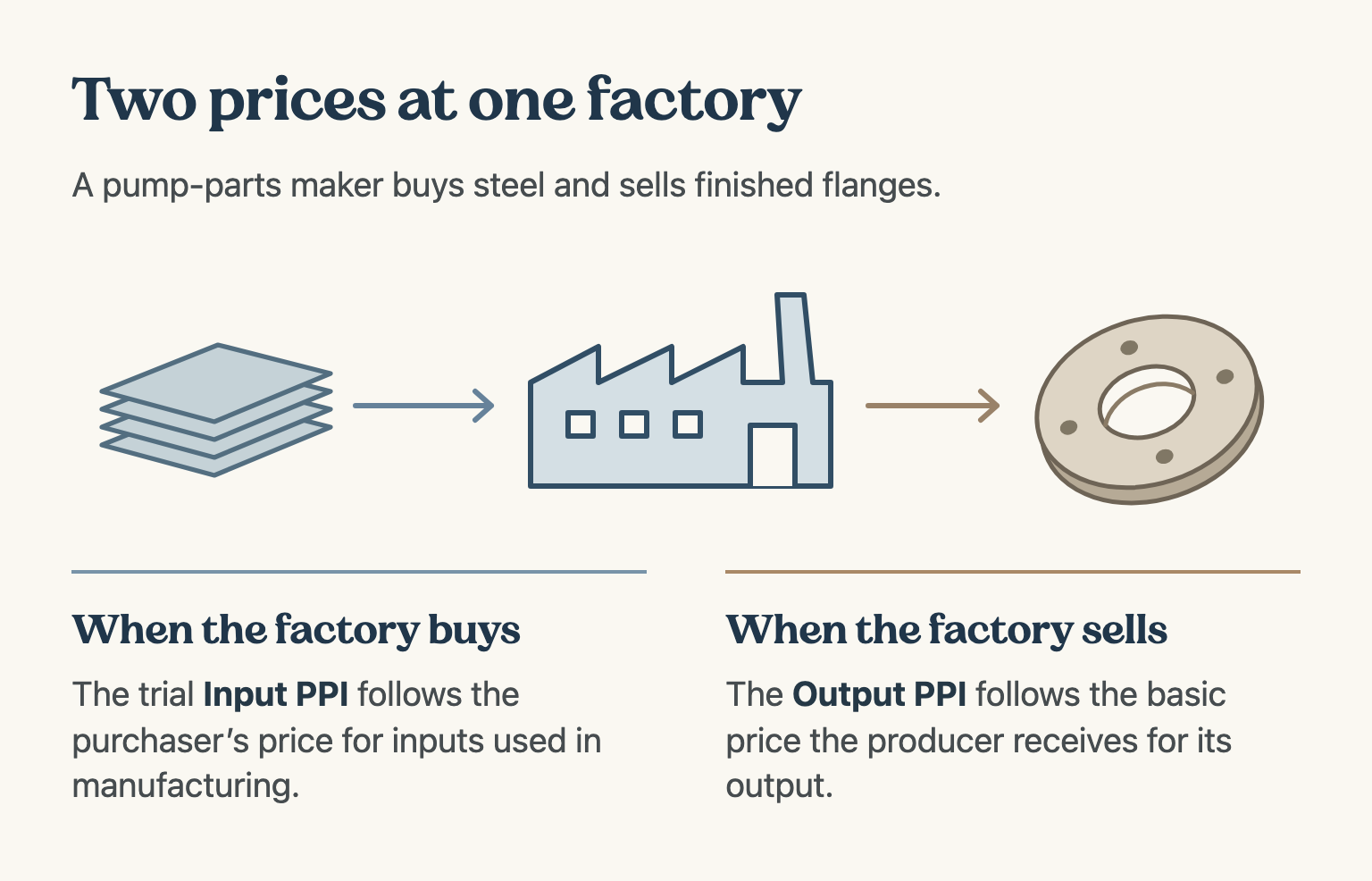
- Input PPI tracks changes in prices producers pay for inputs. For a factory making steel components, purchased steel is an input; its purchase price matters before the finished component is sold.
- Output PPI tracks changes in prices producers receive for their output. The component sold by that factory is its output, even when another business buys it for further processing.
- The same product can be output for one producer and input for another. Steel sold by a steelmaker becomes an input for a component maker; the transaction’s role depends on perspective.
- India’s trial Input PPI covers manufacturing and is experimental. Publication allows data-quality assessment and user feedback; it does not mean a comprehensive measure of every business expense is already available.
- An index level measures prices relative to a reference period. Inflation measures change between periods, so an index reading must not be reported as the current annual inflation rate.
Why WPI and PPI are not interchangeable
Coverage, classification, weights and valuation determine what a price index can tell us.
- WPI organizes goods into primary articles, fuel and power, and manufactured products. The Wholesale Price Index is a broad commodity-price measure, not a household shopping-basket measure or a manufacturer’s complete cost account.
- Output PPI groups this release by agriculture, forestry and fishing; mining and quarrying; manufacturing; and electricity. An all-commodities output measure has wider sector coverage than manufacturing-only trial Input PPI.
- The official methodology values WPI and Output PPI at basic prices, excluding net product taxes and trade and transport margins. Avoid assuming that the new WPI simply records delivered wholesale invoices.
- Trial Input PPI uses purchasers’ prices, reflecting the buying side. Comparing it with basic-price output measures requires attention to valuation differences, not just whether both series share a base year.
- Output weights come from the Supply Table; input weights come from the Use Table of national accounts. A common reference year does not make differently weighted baskets economically identical.
Read price pressure without inventing profit margins
These indices support questions about cost transmission, but a firm’s profit needs evidence beyond aggregate prices.
- Subtracting index levels cannot yield a profit margin: they are normalized price measures, not money earned and money spent. Their difference does not describe a representative factory’s operating surplus.
- Even manufacturing input and output indices represent different purchases and sales. Their weights need not match any particular business, so an aggregate gap can conceal sharply different experiences across industries.
- Profitability also depends on quantities sold, input use, productivity, wages, financing and other expenses. Price indices alone cannot reveal whether a firm increased output, reduced waste or changed its product mix.
- Pass-through can be delayed or incomplete. For example, existing supply contracts may postpone a selling-price increase after materials become dearer; this is an explanatory possibility, not an October finding.
- For inflation analysis, distinguish producer pressure from household prices. Retail pricing and consumption baskets differ; this release alone cannot establish how much consumers paid or what caused every price movement.
Way Forward
Compare like with like
- Match industry and period before comparing input and output movements; document differences in weights and price valuation.
- Retain trial and provisional labels when citing the data; revisit conclusions when revised estimates arrive.
- Test margin claims against firm accounts, quantities and input-use evidence; use consumer-price data separately when assessing household inflation.
Conclusion
- Prices paid and prices received answer different questions. Use Input PPI to study input-price pressure and Output PPI to study output-price movement, while retaining each series’ coverage and valuation limits.
- The defensible inference is about price movement, not proven profitability. In an answer, identify the basket and transaction stage before explaining a possible transmission channel or proposing a policy response.
UPSC Practice Questions
Prelims MCQ 1
With reference to India’s producer price series, consider the following statements:
- Trial Input PPI in this release covers manufacturing.
- Output PPI and trial Input PPI necessarily use identical expenditure weights.
- Trial Input PPI uses purchasers’ prices.
How many of the above statements are correct?
(a) Only one (b) Only two (c) All three (d) None
Answer: (b) Only two
Explanation:
Statements 1 and 3 are correct. Output weights derive from the Supply Table and input weights from the Use Table; identical weights cannot be assumed.
Prelims MCQ 2
Which evidence is needed before attributing a change in factory profit margins to input and output price movements?
(a) Matched price evidence alongside quantities, input use and other costs (b) A common base year alone (c) The difference between the two aggregate index levels alone (d) WPI inflation alone
Answer: (a) Matched price evidence alongside quantities, input use and other costs
Explanation:
Margins concern revenues and costs. Aggregate price indices do not establish quantities, productivity, cost structure or firm-level receipts and expenses.
UPSC Mains Questions
- Distinguish WPI, Output PPI and trial Input PPI. Explain why their coverage and valuation matter for interpreting inflation. (150 words)
- Input and output price indices can illuminate cost transmission without directly measuring profit margins. Discuss with an illustrative production example. (250 words)
Sources: PIB, Ministry of Commerce and Industry and PIB, new WPI and PPI series methodology.
Frequently Asked Questions
What does Output PPI measure?
Output PPI measures changes in prices received by producers for output. The October release covers agriculture, forestry and fishing, mining and quarrying, manufacturing, and electricity, rather than manufacturing alone.
Why is Input PPI called a trial series?
The manufacturing Input PPI is published experimentally so the department can assess data quality and receive user feedback. Its trial status concerns the series, while provisional status concerns estimates awaiting revision.
Can the difference between Input PPI and Output PPI show profits?
No. The indices measure differently weighted price baskets, not matched revenues and costs. Profitability also depends on output quantities, input use, wages, productivity and other expenses that the index difference cannot establish.
Do WPI and Output PPI use the same valuation basis?
Under the new methodology, both use basic prices, excluding net product taxes and trade and transport margins. Trial Input PPI uses purchasers’ prices; shared valuation alone does not make WPI and Output PPI identical.
Tell Google you want more of this.
Add Anantam IAS as a preferred sourceOne tap, and this site shows up more often in your own Top Stories, AI Overviews and AI Mode. Remove it any time.