5 current affairs published on Monday, 1 December 2025
1 December 2025 Current Affairs for UPSC — every
Why-in-News article AnantamIAS published on Monday, 1 December 2025, broken down with
Why in News?, the exact GS paper it feeds, sub-topic mapping, MCQ-ready facts and a
UPSC-style practice question. 5 articles in total, covering Polity, Economy, Environment, S&T, IR, Geography, History, Society and Internal
Security — the same Why-in-News + GS-paper-mapping + practice-question format the Compass uses across
every daily digest on the site.
Daily current affairs for UPSC is where new material enters your prep stream. Read this
1 December 2025 digest end-to-end in 25–35 minutes, attempt the practice question
at the foot of each article (it's MCQ for some, 10/15-marker for others), then bookmark the entries
that fall inside your active revision window. Everything stays cross-linked: tap any subject pill to jump
to that subject's hub, or use the table of contents above to skip straight to a specific story.
Why we publish daily current affairs separately from the monthly compilation: daily is learning,
monthly is revision. Use the daily page to add fresh material to your notes the day it breaks;
come back to the December 2025 compilation 60 days before Prelims when the
noise has settled and only the lasting takeaway is worth re-reading.
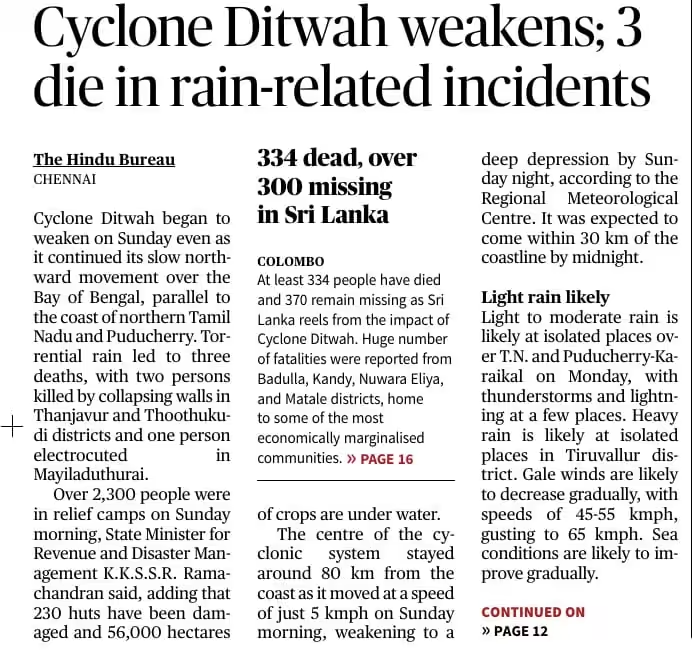
Cyclone Ditwah weakened on Sunday while moving northward over the Bay of Bengal, parallel to Tamil Nadu and Puducherry coasts.
UPSC Relevance:
Geography
UPSC PYQ:
1. Consider the following statements:
Jet streams occur in the Northern Hemisphere only.
Only some cyclones develop an eye.
The temperature inside the eye of a cyclone is nearly 10°C lesser than that of the surroundings.
Which of the statements given above is/are correct?
(a) 1 only
(b) 2 and 3 only
(c) 2 only
(d) 1 and 3 only
Q: Tropical cyclones are largely confined to South China Sea, Bay of Bengal and Gulf of Mexico. Why?
About Cyclone:
Cyclones are rapid inward air circulation around a low-pressure area. The air circulates in an anticlockwise direction in the Northern hemisphere and clockwise in the Southern hemisphere.
The word Cyclone is derived from the Greek word Cyclos meaning the coils of a snake. It was coined by Henry Peddington because the tropical storms in the Bay of Bengal and the Arabian Sea appear like coiled serpents of the sea.
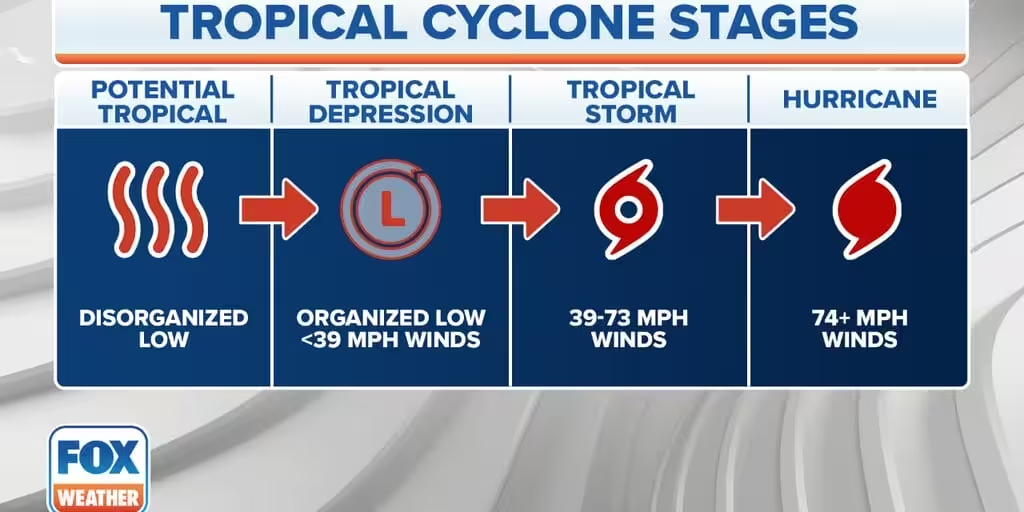
Type of Disturbances
Wind Speed in Km/h
Wind Speed in Knots
Low Pressure
Less than 31
Less than 17
Depression
31-49
17-27
Deep Depression
49-61
27-33
Cyclonic Storm
61-88
33-47
Severe Cyclonic Storm
88-117
47-63
Super Cyclone
More than 221
More than 120
Several favorable environmental conditions:
Low values (less than about 23 mph / 37 km/h) of vertical wind shear between the surface and the upper troposphere. Vertical wind shear is the change in wind speed with height.
Warm ocean waters (at least 80°F / 27°C) throughout a depth of about 150 ft. (46 m).
An atmosphere which cools fast enough with height such that it is potentially unstable to moist convection.
Relatively moist air near the mid-level of the troposphere (16,000 ft. / 4,900 m).
Generally, a minimum distance of at least 300 miles (480 km) from the equator.
A pre-existing near-surface disturbance.
Stages of Formation:
Formation and Initial Development Stage
Cyclone formation depends on the transfer of water vapour and heat from the warm ocean to the atmosphere.
Strong evaporation from the sea surface adds moisture and heat to the overlying air.
Warm, moist air rises due to convection, forming large cumulus clouds.
As the rising air cools, condensation occurs, releasing latent heat, which further fuels the system.
This continuous heat release deepens the low-pressure zone, leading to the early structure of a developing cyclonic storm.
Mature Stage
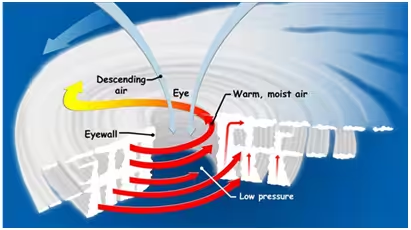
As the tropical storm intensifies, air rises violently in deep convective thunderstorms.
At the tropopause level, the rising air spreads outward horizontally.
This outward spreading of air creates a positive pressure (high pressure) at upper levels.
The upper-level high pressure forces air to descend in the centre → Subsidence.
Descending air warms by compression, forming the warm Eye (low-pressure centre).
A mature cyclone displays a concentric pattern of giant, turbulent cumulonimbus cloud bands spiralling around the eye.
Wind speeds are at their highest, and the cyclone reaches its maximum intensity.
Modification and Decay Stage
A tropical cyclone begins to weaken when its main energy source — warm, moist air — is reduced or cut off.
This happens when:
The cyclone makes landfall, where moisture availability is low, or
It travels over cold ocean waters, where evaporation is minimal.
As a result:
The central low pressure rises,
The internal heat decreases,
The wind speeds gradually reduce.
Eventually, the cyclone dissipates into a low-pressure area or depression.
Cyclone Ditwah:
Sri Lanka Impact — Very High Casualties:
334 dead, 370 missing due to heavy rain, landslides, and floods.
Most affected districts:
Badulla, Kandy, Nuwara Eliya, Matale
These are hilly districts → vulnerable to landslides.
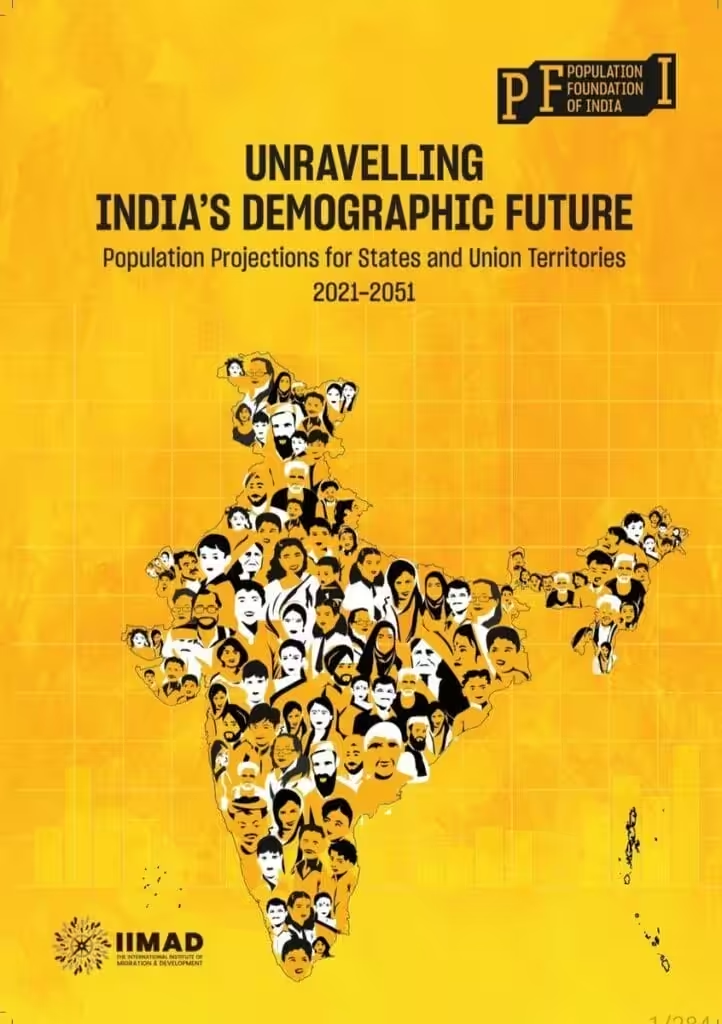
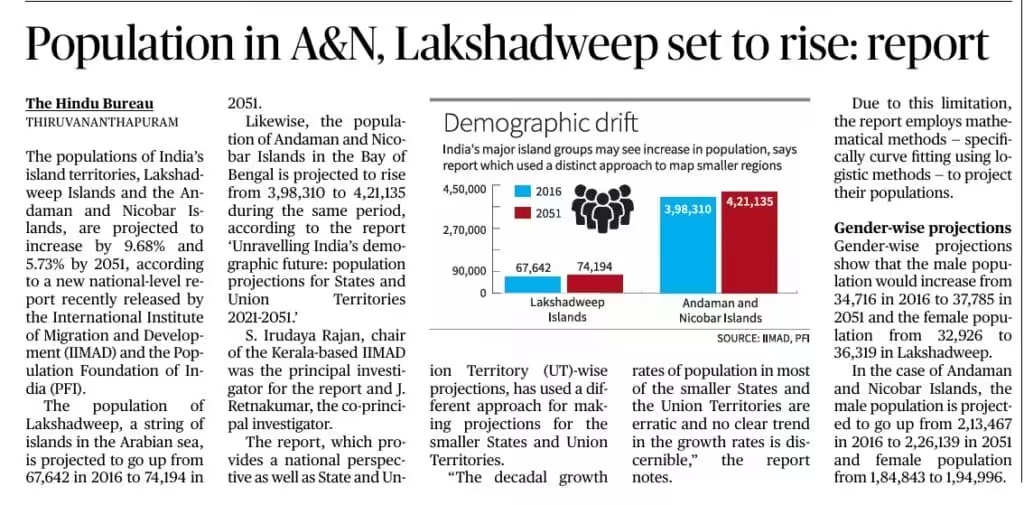
A national-level report by IIMAD (International Institute of Migration and Development) and Population Foundation of India (PFI) gives medium-variant population projections through 2051. These are projections, not a new Census count; the source report and its Appendix Table 8.1 provide the underlying totals:
Lakshadweep
Population projected to rise from 67,642 (2016) → 74,194 (2051)
Growth: ~9.68%
Andaman & Nicobar Islands
Population projected to rise from 3,98,310 (2016) → 4,21,135 (2051)
Growth: ~5.73%
Overall: Moderate growth, but significant because these are ecosystem-sensitive, small island territories.
Gender-wise Projections
Lakshadweep
Male population: 34,716 → 37,785
Female population: 32,926 → 36,319
Andaman & Nicobar
Females: 1,84,843 → 1,94,996
Males: 2,13,467 → 2,26,139
Why Population Growth in Islands Matters?
Ecological Fragility
Lakshadweep = coral atolls → very low carrying capacity
Tamil Nadu’s public health model, which succeeded against HIV/AIDS in the 1990s, is now being replicated for TB elimination.
UPSC Relevance:
Science and Tech.
UPSC PYQ:
Q. Which of the following diseases can be transmitted from one person to another through tattooing? (2013)
Chikungunya
Hepatitis B
HIV-AIDS
Select the correct answer using the codes given below:
(a) 1 only (b) 2 and 3 only (c) 1 and 3 only (d) 1, 2 and 3
About HIV?
HIV stands for Human Immunodeficiency Virus, which is a virus that attacks the immune system in the human body.
It primarily targets and damages CD4 immune cells, which are essential for the body’s ability to fight infections and diseases.
What is AIDS?
AIDS is the final and most serious stage of an HIV infection. People with AIDS have very low counts of certain white blood cells and severely damaged immune systems.
What does HIV do to a person?
HIV infects white blood cells of your immune system called CD4 cells, or helper T cells. It destroys CD4 cells, causing your white blood cell count to drop. This leaves you with an immune system that can’t fight off infections, even those that wouldn’t normally make you sick.
HIV initially makes you feel sick with flu-like symptoms.
When your T-cells get very low or you begin to get certain illnesses that people with healthy immune systems don’t get, HIV has progressed to AIDS.
How does HIV spread?
You can get HIV through the blood, semen, vaginal fluids, breast milk and rectal fluids of an infected person. People of all sexes and sexual orientations can get infected with and spread HIV.
The virus can enter your body through your mouth, anus, penis, vagina or broken skin. It can’t get through your skin unless you have a cut or wound. If you’re pregnant and have HIV, you can also pass the virus to the fetus.
Having sex without a condom and sharing needles to take drugs are the most common ways that HIV spreads. Even if you feel fine, you can still give HIV to others.
What tests diagnose HIV?
There are three types of HIV tests: antigen/antibody tests, antibody tests and nucleic acid tests (NATs):
How is HIV treated?
There is currently no cure for HIV, but there are many treatment options that can slow the progression of HIV significantly.
HIV is treated with a combination of medicines (pills) taken by mouth every day. This combination of pills is called antiretroviral therapy (ART).
Tamil Nadu’s Model- A Case Study
State-level autonomy:
1994: Tamil Nadu converted its AIDS Cell into a Registered Society — TNSACS (Tamil Nadu State AIDS Control Society).
This allowed direct flow of funds, faster implementation, and freedom from bureaucratic delays.
Aggressive awareness & behaviour-change campaigns
Targeted messaging helped reduce stigma and risky behaviours.
Strong surveillance & reporting systems
Partnership model
Government + NGOs + World Bank support.
Outcome
Tamil Nadu’s HIV prevalence fell from 0.54% (2000) to 0.22% (now).
The Government of India later mandated the Tamil Nadu model for all states in NACP-II (1997–2002).
👉 Tamil Nadu became a national leader in HIV control.
TB Crisis in India:
According to WHO:
India also has 25% of the world’s MDR-TB cases.
25% of all global TB cases (36 million people) are in India.
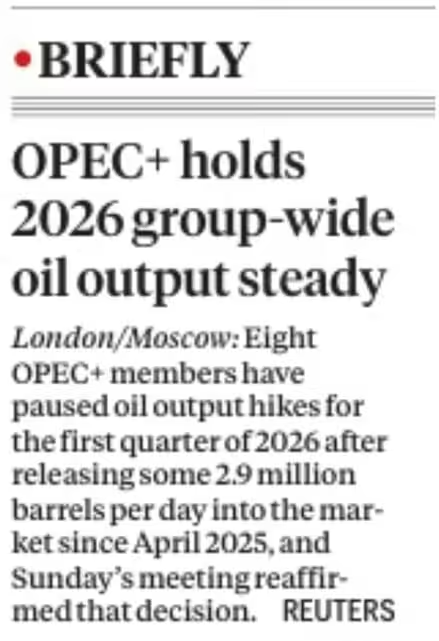
The recent pause in oil output by OPEC+ members have brought into news the leverage that this organisation holds in deciding the global oil prices.
UPSC Relevance:
Important organisations.
PYQ:
Other than Venezuela, which one among the following from South America is a member of OPEC?
(a) Argentina (b) Bolivia (c) Ecuador (d) Brazil
About OPEC:
The Organisation of the Petroleum Exporting Countries is a permanent, intergovernmental organization established at the Baghdad Conference in 1960.
Founding members: Iran, Iraq, Kuwait, Saudi Arabia, and Venezuela.
Member countries: Algeria, Congo, Gabon, Equatorial Guinea, Iraq, Iran, Kuwait, Libya, Nigeria, Saudi Arabia, UAE, and Venezuela. Gabon rejoined the group in 2016.
Secretariat: Vienna, Austria.
Objective: To secure fair and stable prices for petroleum producers; an efficient, economic, and regular supply of petroleum to consuming nations; and a fair return on capital to those investing in the industry.
It operates on the principle of unanimity, and one member, one vote.
Significance: 80% of the world’s proven crude oil reserves are located in the grouping Member Countries.
India sources about 70% of crude oil, 60% of its Liquefied Petroleum Gas (LPG), and 30% of its liquefied natural gas (LNG), and 45% of petroleum products demand from OPEC.
Its Publication: World Oil Outlook
The OPEC Fund for International Development is a multilateral development finance institution established in 1976. It is the only globally mandated development institution that provides financing from member countries to non-member countries exclusively.
About OPEC+:
Also known as the Vienna Group, it was created in 2016.
It is a coalition of OPEC and 10 non-OPEC countries that export crude oil.
Non-OPEC countries: Azerbaijan, Bahrain, Brunei, Kazakhstan, Malaysia, Mexico, Oman, Russia, South Sudan and Sudan.
It pumps around 40% of the world’s crude oil.
These countries signed a Declaration of Cooperation undertaking a production adjustment to achieve lasting stability in the oil market in the interest of oil producers and consumers.
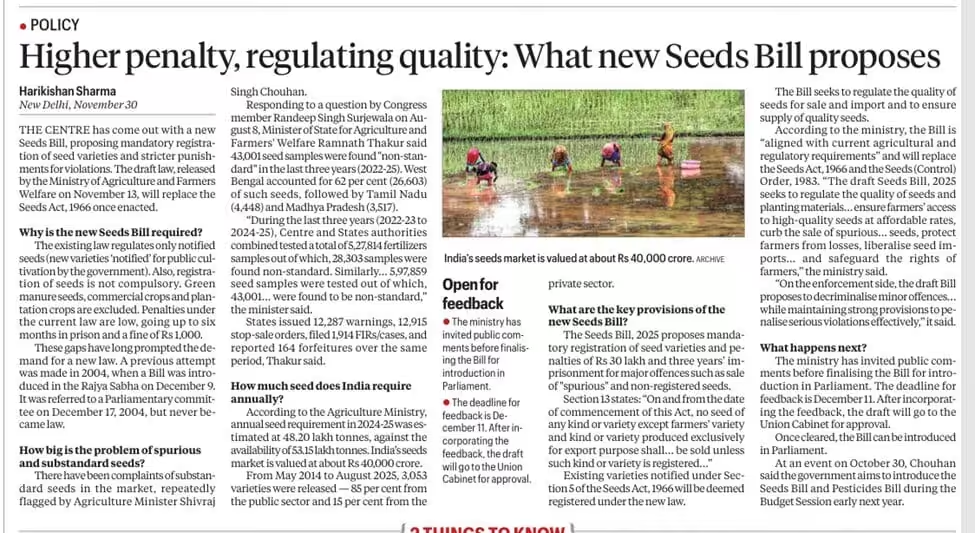
The Union Agriculture Ministry has released the Draft Seeds Bill 2025 and the government is inviting public comments and seeking public feedback.
The new Seeds Bill (2025), proposed by the Indian government, aims to improve the quality of seeds used in agriculture, regulate seed sales more strictly, and punish violations more severely.
Why is the new Seeds Bill needed?
The existing Seeds Act of 1966 and the Seeds (Control) Order 1983 are outdated and doesn’t cover all seed varieties. Right now, it only regulates seeds that are officially “notified” by the government, meaning only those varieties that are approved for public cultivation.
However, there are gaps:
Not all seeds are regulated: Green manure seeds, commercial crops, and plantation crops are not covered.
Registration is voluntary: Seed varieties do not have to be registered, which can lead to poor-quality seeds being sold.
Low penalties: The penalties for selling bad seeds are very weak (e.g., fines of just 1,000 rupees or a 6-month prison sentence).
Over the years, there have been numerous complaints about spurious (fake) and substandard seeds in the market. This has caused significant problems for farmers, leading to poor crop yields and financial losses. The new Seeds Bill is designed to address these issues.
What’s the problem with seeds right now?
There are serious issues with the quality of seeds in the market:
Substandard seeds: Over the last three years, a large number of seed samples were found to be of poor quality. For example, 43,001 out of 5,97,859 seed samples tested between 2022 and 2025 were non-standard (not meeting the required quality).
The problem is particularly bad in states like West Bengal, where 62% of the substandard seeds were found.
The government has tried to address this by issuing warnings, stop-sale orders, and filing cases, but the issue persists.
What does the new Seeds Bill propose?
The new bill proposes several important changes to improve seed quality and protect farmers:
Mandatory registration of seed varieties:
Under the new bill, all seed varieties (except for farmer-produced seeds or those meant only for export) must be registered before they can be sold. This means that only officially approved seeds will be available in the market.
Existing varieties that are already notified under the old Seeds Act will automatically be registered under this new law.
Stricter penalties for violations:
The bill proposes much harsher penalties for selling bad seeds. If someone is caught selling fake or non-registered seeds, they could face:
A fine of up to 30 lakh rupees
Up to 3 years in prison
This is a major step up from the previous law, which only imposed a maximum fine of 1,000 and six months in jail.
Focus on regulating seed imports and sales:
The new bill will also regulate seed imports to ensure that only high-quality seeds are coming into India from other countries.
The idea is to make sure that farmers have access to quality seeds at reasonable prices.
Balancing enforcement:
For minor violations, the bill suggests decriminalizing them, meaning smaller offences wouldn’t lead to criminal charges but would still have penalties.
However, serious violations (like selling fake seeds) will face severe punishments.
Protection of farmers:
By ensuring the availability of high-quality seeds, the government hopes to protect farmers from losses caused by poor seeds. This also helps increase overall productivity in agriculture.
Encouraging private sector involvement:
The bill allows greater freedom for the private sector to sell seeds, which could encourage innovation and the introduction of better seed varieties. However, this will be regulated to ensure that the quality of seeds remains high.
Regulation of Seed Quality:
The Bill aims to create a more robust regulatory system for seed production, distribution, and sales, ensuring better quality seeds for farmers. It does not restrict farmers’ rights to grow, use, save, or exchange seeds but limits commercial sales under brand names to registered companies. This ensures farmers can still save and reuse seeds, but any commercial sale of seeds must follow specific regulations.
Farmer and Industry Definitions:
The Bill defines key players in the seed industry, including farmers, dealers, distributors, and producers, each with clear roles. This is intended to ensure accountability at every stage of the seed supply chain.
Creation of Central and State Committees:
The Bill establishes Central and State Seed Committees to oversee seed standards. The Central Committee will recommend standards for germination rates, genetic purity, seed health, and other essential qualities. The State Committees will handle the registration of seed producers, dealers, and seed processing units.
Mandatory Registration for Seed Processing Units:
All seed processing units will need to be registered with state governments. This is a step toward ensuring that seeds processed in India meet quality standards.
National Register for Seed Varieties:
The Bill proposes creating a National Register of seed varieties under the Central Seed Committee, which will track and regulate the seeds available in the market. This will make it easier to ensure the availability of quality seeds and prevent fraud.
Seed Testing Laboratories:
Both Central and State seed testing laboratories will be set up to carry out tests on seed quality, ensuring that all seeds meet prescribed standards.
Powers of Seed Inspectors:
The Bill grants seed inspectors the power to conduct inspections, search premises, and seize substandard seeds. This aims to enforce the regulations strictly.
What is India’s seed market like?
India needs a lot of seeds every year to support its agricultural activities. The annual seed requirement for the 2024-25 period was estimated at 48.20 lakh tonnes, while the country has a total seed production capacity of 53.15 lakh tonnes.
Public vs. private sector:
Around 85% of the seed varieties released in India come from the public sector, while 15% come from the private sector.
India’s seed market is valued at about 40,000 crore Rupees (about $5 billion).
What happens next?
The draft of the Seeds Bill has been released, and the government is seeking public feedback. After considering the feedback, the government will send the bill for approval by the Union Cabinet, and once that happens, the bill will be introduced in Parliament.
The government aims to pass this bill during the Budget Session of Parliament, which takes place in early 2025.
Concerns Raised by Farmers
While the government claims the new Bill will benefit farmers, many farmer groups have raised concerns:
Impact on Small Farmers:
The All India Kisan Sabha fears the Bill will increase the cost of cultivation by making it easier for corporates to dominate the seed market. They believe large companies could engage in predatory pricing, making seeds too expensive for small farmers.
There is concern that the Bill could lead to a centralized and corporatized regulatory system that weakens protections for farmers, especially small-scale and traditional farmers.
Seed Sovereignty:
Some farmers believe that the Bill could threaten India’s seed sovereignty, as it may give multinational companies too much control over the seed market. They fear it could undermine India’s ability to control its own agricultural resources.
Compatibility with Existing Laws:
Farmers argue that the Bill should complement existing laws like the Protection of Plant Varieties and Farmers’ Rights Act, which safeguards farmers’ rights over indigenous seeds. They worry the new Bill might conflict with these laws and undermine biodiversity protections.
Corporatization of Seed Industry:
The Bill introduces a more corporate-friendly regulatory framework, which farmer groups fear could lead to the dominance of a few large companies over the seed market, leaving small farmers vulnerable to exploitation.
The Federation of Seed Industry of India has welcomed the Bill, calling it a timely and necessary step to modernize seed regulations. However, the Samyukt Kisan Morcha, which represents farmers, has expressed concerns, fearing the Bill could hurt farmers’ interests, especially small farmers.
Conclusion
The draft Seeds Bill is an attempt to modernize India’s seed regulations, ensuring higher quality seeds, improving the business environment, and streamlining the process for seed businesses. However, it has sparked concerns, especially among farmer organizations. While it aims to make seed production and distribution more efficient, critics fear that it may harm small farmers, reduce seed sovereignty, and increase the corporatization of the seed industry.