
“South-Asian societies are woven not around the state, but around their plural cultures and plural identities” appeared as Topic 5 of Section B in the UPSC Civil Services Mains Essay paper held on 20 September 2019. Six lines on a question paper. One hundred and twenty-five marks if you handle it well. A wasted hour if you do not. This guide breaks the topic down the way it should be tackled in the hall — first the meaning, then the angles, then the time map, then the paragraph-by-paragraph plan, and finally a complete 1,200-word model essay you can study, dissect and adapt.
When this was asked and what UPSC is really testing
The topic was set in UPSC CSE Mains 2019, Essay paper, Section B. Three hours, two essays, one from each section, roughly 1,000 to 1,200 words each, 125 marks per essay. The 2019 paper leaned political-philosophical — alongside this, candidates faced “wisdom finds truth”, “values are not what humanity has but what humanity is”, and “biased media is a real threat to Indian democracy”. This particular topic asks you to think about the relationship between state and society in a civilisational space, not just in India.
UPSC is checking four things at once. One, do you understand that the modern nation-state is a recent arrival on a much older social landscape. Two, can you marshal evidence from across South Asia — not only India — without sounding like a tourist. Three, can you handle a thesis that flatters plurality without lapsing into either sentimentality or separatism. Four, can you stage a real counter-argument and resolve it. The aspirant who handles all four scores in the 130s. The aspirant who writes 1,400 words of “unity in diversity” with no spine scores in the 90s.
Five angles that unlock “South-Asian societies are woven around plural cultures and plural identities”
The trap with this topic is to write a love letter to diversity for 1,100 words. The mark-pulling answer instead identifies several lenses, names them clearly, and weaves them. Here are the five most defensible readings of the proposition. You do not need all five in your essay — three, treated well, is the sweet spot. But you should know all five so your choice is conscious.
- Historical sequence — the literal reading. South Asian societies existed for two thousand years before the Westphalian nation-state was imposed on them in 1947. Language, religion, caste, kinship and region were the load-bearing identities; the state was a thin overlay. Used well, this opens up pre-colonial polities, the durbar, the village republic, and the sub-continental jati system.
- Civilisational density — the sheer scale. The Indian Union alone holds 22 scheduled languages, eight religions of significance, more than 4,000 caste and jati groups, and over 700 Scheduled Tribes. Add Pakistan’s provinces, Sri Lanka’s Tamil-Sinhala-Muslim weave, Bangladesh’s Bengali Muslim majority with adivasi minorities, Nepal’s Madhesi-Pahadi divide, and Bhutan’s Drukpa-Lhotshampa story. The number is not the point; the lived reality is.
- Constitutional response — the Indian Republic did not try to flatten plurality; it tried to house it. The Eighth Schedule, Articles 29 and 30 for minorities, Article 25 for religion, the Fifth and Sixth Schedules for tribal autonomy, linguistic reorganisation of states in 1956 — each is a recognition that the state is the latecomer and must accommodate the older fabric.
- Comparative South Asia — what happens when the state forgets. Sri Lanka’s 1956 Sinhala-Only Act and the long civil war that followed. East Pakistan’s 1952 language movement that became Bangladesh in 1971. Nepal’s struggle with federalism after 2008. Bhutan’s citizenship policies of the 1990s. Each is a case study in what happens when the state tries to weave the cloth its own way.
- Counter — interdependence — the most honest angle. Plural cultures without a constitutional state can fragment into Lebanon, Yugoslavia, or pre-1947 Punjab. Society needs the state to hold the ring; the state needs society’s plurality for its own legitimacy. The proposition is not a celebration of weak states. It is a warning against homogenising ones.
A strong essay picks angles 1, 3 and 5 as its backbone (history, constitution, interdependence), uses 2 as the evidential anchor and 4 as a cautionary comparative passage. That gives the essay rhythm — description, complication, resolution — instead of a single straight line of praise.
A time map for the 1,500-second window
One essay deserves about 75 to 90 minutes inside the three-hour paper. Spending more on Essay 1 starves Essay 2. The single biggest source of below-100 essay scores is poor time discipline — beautiful introductions, panicked conclusions. Use a rough breakdown like this:
| Minutes | Activity | What it earns you |
|---|---|---|
| 0 — 10 | Decode the topic. Write the thesis in one line. List 4 to 5 angles. Pick 3. | Direction. The single most important investment of the 90 minutes. |
| 10 — 18 | Brainstorm examples — South Asian neighbours, constitutional articles, anchor thinkers, dates. | The substance the body paragraphs will run on. |
| 18 — 22 | Draft a paragraph-level outline — 12 to 15 bullets, in sequence. | Prevents the mid-essay drift that kills 60% of attempts. |
| 22 — 80 | Write the essay — opening, body, conclusion — without re-planning. | The actual marks come from this window. Protect it. |
| 80 — 85 | Read the conclusion. Tighten the last two sentences. Fix factual errors. | Conclusions are over-weighted by examiners. A clean ending saves 5 marks. |
Notice what is not on the list: rewriting the introduction halfway, hunting for the perfect quote, fancy diagrams, decorative underlining. None of that earns marks. Discipline does.
What to add — and what to avoid at all costs
The essay paper rewards what most aspirants under-do and punishes what most aspirants over-do. Memorise this list before you walk into the hall.
Add liberally
- One precise thesis, stated by the end of paragraph two and not abandoned. “South Asian societies are older than their states, denser than their constitutions, and survive because plural identities are accommodated rather than dissolved.”
- Concrete examples across the sub-continent — at least one each from India, Sri Lanka, Bangladesh, Nepal and Bhutan. An India-only essay misses the prompt’s South Asian framing.
- Two or three short, named anchor thinkers — Rabindranath Tagore on the trap of narrow nationalism, B. R. Ambedkar on social democracy preceding political democracy, M. K. Gandhi on the village republic. One per major section is enough.
- Specific constitutional articles and schedules — Article 29, Article 30, Article 25, the Eighth Schedule, the Fifth and Sixth Schedules, the States Reorganisation Act 1956. Naming them shows precision.
- Counter-arguments handled briefly. “Without a strong state, plurality can curdle into conflict…” — then resolve in two lines. Acknowledging the other side earns more marks than ignoring it.
- A clean conclusion that returns to the opening image — not a fresh argument, not a new example.
Avoid — even when tempted
- Restating the topic in the first sentence. “South Asia is a land of great diversity…” — this signals that you have nothing to add. Open with an image or a paradox.
- Treating the topic as an India-only essay. The prompt says South Asian. A response that mentions only India ignores half the marks.
- Unsourced statistics. “India has 1,652 languages” — if you cannot name the census or the survey, do not write the number. Examiners cross-mark this.
- Hot-button political examples or living politicians. The Essay paper is graded by humans across the ideological spectrum. Naming current parties, leaders or recent judgments by name introduces avoidable risk. Use the institution, not the personality.
- Romanticising pluralism. Partition, the 1971 war, Sri Lanka’s civil war, and Bhutan’s Lhotshampa expulsions all happened. An essay that pretends South Asia is one big harmonious quilt is intellectually thin.
- Moralising. “We must all respect each other’s cultures” reads like a school speech. The essay paper rewards examination, not exhortation.
A paragraph-by-paragraph blueprint
Twelve paragraphs at roughly 95 words each gets you to 1,140. Thirteen at 90 each gets you to 1,170. Either works. What follows is a 13-paragraph plan that maps cleanly onto the model essay below. Each line is what that paragraph is doing, not what it is saying.
- Opening image — a single bazaar, a village fair, or a temple-mosque-gurudwara street that physically embodies plural cultures. No mention of the topic yet.
- The pivot to thesis — name the topic, then state the thesis in one sentence.
- Define the terms — what is meant by “state” (the modern Westphalian nation-state) and what is meant by “plural cultures and identities” (language, religion, caste, region, kinship).
- Angle 1 — Historical sequence — the sub-continental society existed long before the 1947 nation-state. Pre-colonial polities, village republics, syncretic court culture.
- Civilisational density — the actual numbers: Eighth Schedule languages, Scheduled Tribes, religious communities, sub-regional identities across the sub-continent.
- The Indian anchor — Tagore’s warning against narrow nationalism; Ambedkar on the social pre-condition for political democracy.
- The constitutional architecture — Article 29, 30, 25, the Eighth Schedule, V and VI Schedules, linguistic reorganisation. The state weaving itself around the cloth.
- The South Asian neighbours — Sri Lanka, Bangladesh’s 1952 language movement, Nepal’s federal struggle, Bhutan’s plural fault lines.
- What happens when the state forgets — Sinhala-Only Act, Bengali language martyrs of 1952, Lhotshampa expulsions, the LTTE war.
- Counter-argument handled — plurality without a strong state can fragment (Lebanon, Yugoslavia, pre-1947 Punjab). The proposition is not anti-state.
- Way forward — institutional — linguistic federalism, three-language formula, FRA implementation, decentralisation through panchayats and municipalities.
- Way forward — cultural — civic education that teaches the sub-continent’s plural inheritance, not a single flattened story.
- Closing image — return to the opening bazaar or street, close with one resonant line.
How to make an examiner stop and read
An essay examiner reads several hundred scripts in a sitting. The first paragraph decides whether they read the second with attention or with autopilot. Four small habits separate the essays that get attention from the ones that get skimmed.
- Open with a scene, not a statement. A bazaar in Old Delhi, a fish market in Dhaka, a tea-stall in Kandy, a courtyard in Kathmandu. Concrete images cost no marks and earn attention.
- Use the topic phrase itself two or three times across the essay. Once in the thesis, once at the turn, once at the close. It signals discipline and prevents drift.
- Vary sentence length. A short sentence after three long ones lands. Examiners feel rhythm before they parse meaning.
- End paragraphs with the takeaway, not with examples. Place the example mid-paragraph. Let the last sentence be the thought, so the reader carries it into the next paragraph.
The complete essay — “South-Asian societies are woven not around the state, but around their plural cultures and plural identities”
What follows is a 1,200-word model essay built on the blueprint above. Read it twice — once for the argument, once for the moves. The moves are what you can carry into your own essay; the argument is one of many you could make.
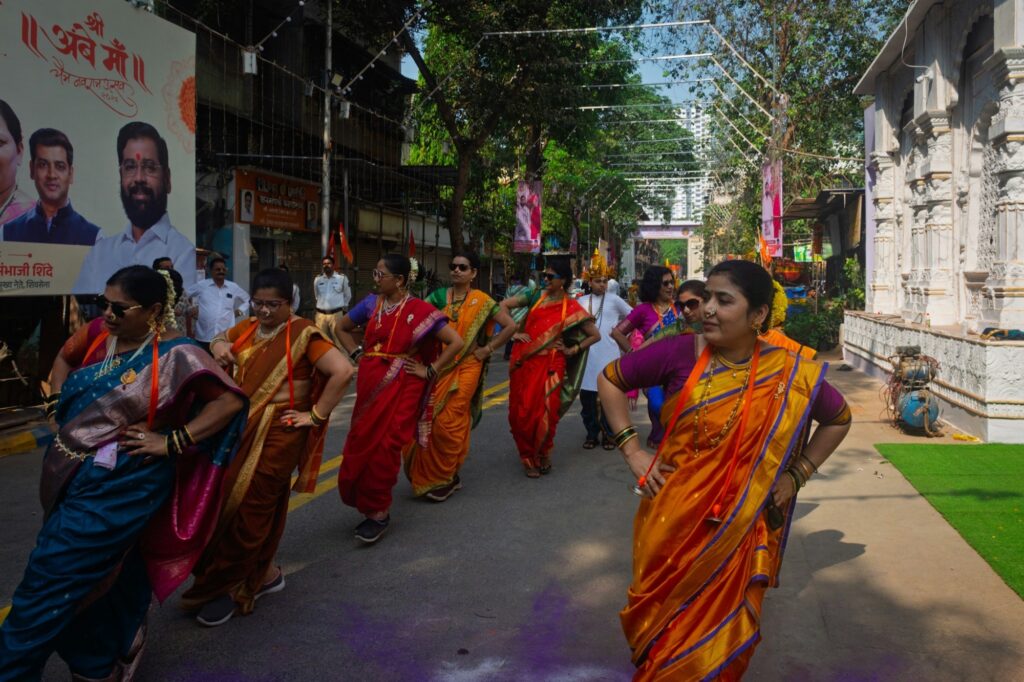
Walk into the lanes around Jama Masjid on a Friday afternoon and you will hear five languages within fifty metres — Urdu and Hindi, the Punjabi of a kebab-seller, the Bhojpuri of a rickshaw-puller, the Bengali of a tailor newly arrived from Murshidabad. A few streets away, the Sunday choir of a colonial-era church practises its hymns. A little further, a Jain temple closes its doors at sunset, and a Sikh gurudwara serves langar to anyone who walks in. No one issued a circular asking these neighbourhoods to behave this way. The state did not weave them. They were already woven when the state arrived.
That is the heart of the proposition: South-Asian societies are woven not around the state, but around their plural cultures and plural identities. The modern nation-state in this sub-continent is barely eighty years old. The societies it governs are several thousand. Language, religion, caste, jati, kinship and region had organised collective life long before the Westphalian template arrived with the post-colonial Constitutions. The thesis of this essay is simple: the state in South Asia is a recent and necessary overlay, not the underlying fabric — and the more wisely it treats the fabric, the better it holds.
The terms are worth a moment. By “state” we mean the post-1947 nation-state with its territorial borders, single sovereignty, codified citizenship and unified law. By “plural cultures and plural identities” we mean the older grid of language, faith, caste, sub-region and kinship that ordinary South Asians actually live within. The proposition is not that the state is unimportant. It is that the state did not create the social weave and cannot pretend to be its sole loom.
The historical record makes the point. Pre-colonial South Asia was a patchwork of empires, kingdoms, princely states, sultanates and self-governing village confederations, interleaved with trans-regional networks of pilgrimage, trade and learning. Mahatma Gandhi, looking at this older fabric, argued that Indian civilisation had been built on “village republics” long before any modern parliament. The colonial state imposed an administrative grid; the post-colonial state inherited that grid and tried to make it a nation. But beneath both lay an older, denser organisation of life — one that did not need either viceroy or president to function.
The density of that older organisation is striking even now. India’s Eighth Schedule lists 22 languages; the 2011 Census recorded more than 120 with sizeable speaker bases. Eight major religious traditions, more than 4,000 caste and jati groups, and over 700 Scheduled Tribes share the same passport. Pakistan houses Punjabis, Sindhis, Pashtuns, Baloch and Mohajirs within one flag. Bangladesh is overwhelmingly Bengali Muslim but holds Hindu, Buddhist, Christian and Chakma minorities. Sri Lanka weaves Sinhala Buddhists with Tamil Hindus and Muslims. Nepal sits between Madhesi plains and Pahadi hills. Bhutan, smallest of all, still holds Drukpa and Lhotshampa communities. The pattern is not Indian exceptionalism; it is sub-continental geology.
Two Indian thinkers saw this earlier than most. Rabindranath Tagore, in his 1917 lectures on nationalism, warned that the Western model of the nation-state — a single language, a single race, a single creed — would suffocate the South Asian inheritance of plural living. B. R. Ambedkar, drafting the Constitution three decades later, insisted that political democracy without social democracy was a “palace built on dung”. Both were saying, in different idioms, that the state could not invent the social glue; it could only respect or violate what was already there.
The Indian Constitution, on its better days, listened. The Eighth Schedule recognised the country’s principal languages. Article 29 protected the right of any section of citizens to conserve its distinct language, script or culture. Article 30 secured the right of religious and linguistic minorities to establish their own educational institutions. Article 25 guaranteed freedom of religion. The Fifth and Sixth Schedules carved out protected autonomy for tribal areas. The States Reorganisation Act of 1956 redrew internal borders along linguistic lines — a radical admission that the state must adjust to society, not the other way around. The Indian republic, at its best, has treated the social fabric as the warp and the constitutional state as the weft.
The neighbourhood shows what happens when the state forgets that order. Sri Lanka’s Sinhala-Only Act of 1956 attempted to dissolve a plural language order into a single official tongue. The result was three decades of civil war whose final cost is still being counted. East Pakistan’s language movement of 1952, when students were killed in Dhaka for demanding Bengali equality with Urdu, became — within a generation — the birth of Bangladesh in 1971. Bhutan in the early 1990s expelled tens of thousands of Lhotshampa under a “one nation, one people” policy whose costs are still felt in the refugee camps of Nepal. Each case is the same warning, written in different scripts: when the state tries to weave the cloth its own way, the cloth tears.
It is fair to ask whether the proposition flatters plurality too much. Without a strong state to hold the ring, plural identities have fragmented elsewhere into civil war — Lebanon’s confessional politics, the unravelling of Yugoslavia, the partition of pre-1947 Punjab. The honest answer is that the proposition is not anti-state. It is anti-homogeneity. The state in South Asia is needed precisely because plurality is real; the state’s job is not to flatten the fabric but to weave a constitutional weft that lets the fabric hold. Society and state are interdependent, not opposed. The maxim is a warning against the wrong kind of state, not against the state as such.
What does the right kind of state look like? Linguistic federalism strengthened rather than diluted. The three-language formula respected in spirit. Genuine implementation of the Forest Rights Act 2006 in Schedule V and VI areas. Real fiscal and functional devolution to panchayats and municipalities under the 73rd and 74th Amendments. None of these are exotic. All are constitutional commitments still half-kept.
Cultural policy carries an equal load. Civic education that teaches children the sub-continent’s plural inheritance — the Bhakti and Sufi movements, the Sikh gurus, the Sangam poets, the syncretic courts of Vijayanagara and the Mughals — produces citizens who can live with neighbours unlike themselves. Public broadcasting in many languages, and the protection of minor scripts, are not luxuries. They are how a state earns the right to govern a plural society.
Return for a moment to the lanes around Jama Masjid. The kebab-seller, the rickshaw-puller, the tailor, the choir, the Jain temple, the gurudwara — none of them are there because a state planned them. They are there because South-Asian societies are woven not around the state, but around their plural cultures and plural identities. The republic’s task is more modest, and more difficult: to be the loom that lets the older threads hold, in a century that will keep tugging at them. Civilisations rise to the degree that they keep that loom honest. They fall to the degree that they confuse the loom with the cloth.
Word count: approximately 1,200.
How to use this model essay
Do not memorise it. Memorised essays read like memorised essays, and examiners spot them in two paragraphs. Use the model the way a chess student uses a master game: study the opening image, the pivot to thesis, the placement of Tagore and Ambedkar, the comparative South Asian passage, the way the counter-argument is brought up and then closed, and the return to the opening scene at the end. Then take a different 2019 essay topic — try “Wisdom finds truth” or “Values are not what humanity has but what humanity is” — and write your own essay using the same blueprint. Repeat that exercise eight to ten times and the structure becomes muscle memory. On the day of the exam, the only thing you should have to think about is the topic itself.
Tell Google you want more of this.
Add Anantam IAS as a preferred sourceOne tap, and this site shows up more often in your own Top Stories, AI Overviews and AI Mode. Remove it any time.