

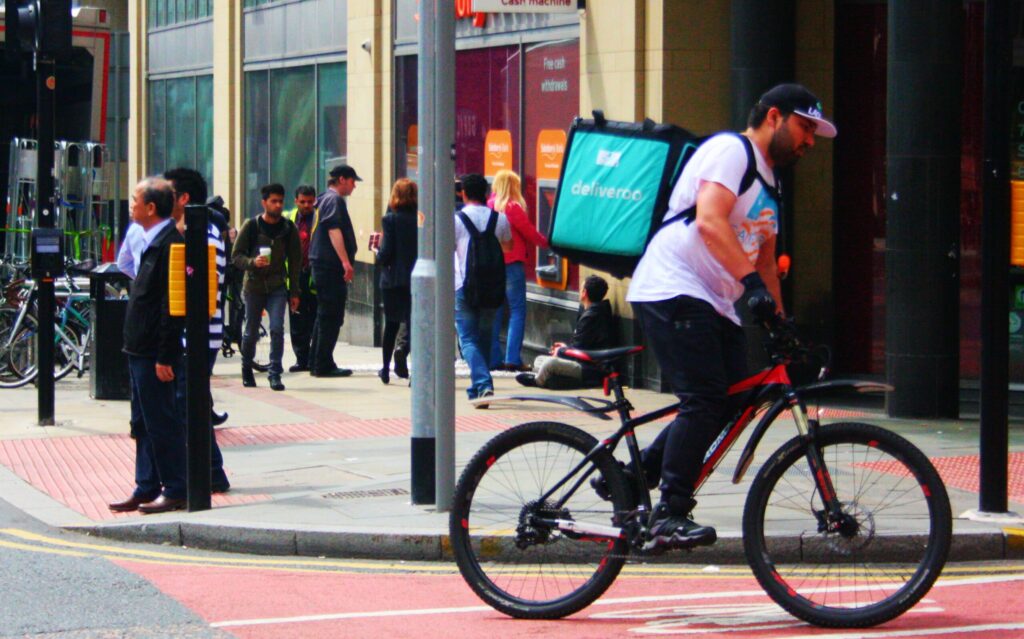
Gig workers — often called platform workers — are individuals who earn income through short-term, task-based, or project-based work rather than through traditional permanent employment. They include Ola/Uber drivers, Swiggy/Zomato delivery partners, Amazon/Flipkart delivery personnel, UrbanClap professionals, freelance consultants, and many others. India’s gig economy has grown rapidly — with an estimated 7.7 million gig workers in 2020-21 projected to reach 23.5 million by 2029-30 according to NITI Aayog.
For UPSC, gig workers are a significant contemporary Economy and Governance topic — covering labour market evolution, social security, and regulatory responses.
What Is a Gig Worker?
Definition
The Code on Social Security, 2020 defines a gig worker as:
"A person who performs work or participates in a work arrangement and earns from such activities outside of traditional employer-employee relationship."
And a platform worker as:
"A person engaged in or undertaking platform work."
Where platform work is defined as:
"Work arrangement outside of traditional employer-employee relationship in which organisations or individuals use an online platform to access other organisations or individuals to solve specific problems or to provide specific services in exchange for payment."
Types of Gig Work
1. Platform Workers
- Work through app-based platforms
- Examples: Ola, Uber, Swiggy, Zomato, UrbanClap, Amazon Mechanical Turk
- Connected to customers through digital platforms
2. Traditional Gig Workers
- Freelancers, contractors, consultants
- Examples: Photographers, writers, designers, private tutors
- Do not necessarily use apps
3. Hybrid Workers
- Combination of gig + traditional employment
- Often "moonlighters" — have primary jobs and gig income
Distinguishing Gig Work from Traditional Employment
| Traditional Employment | Gig Work |
|---|---|
| Single employer | Multiple "clients" or platforms |
| Fixed monthly salary | Task-based payment |
| Benefits (PF, ESI, insurance) | No employer-provided benefits |
| Job security | No security |
| Fixed working hours | Flexible hours |
| Collective bargaining | Limited collective voice |
| Clear employer-employee relationship | Independent contractor status |
| Social security coverage | Limited/no coverage |
Gig Workers in India: Data and Scale
NITI Aayog Report (2022)
India's think tank NITI Aayog released "India's Booming Gig and Platform Economy" (June 2022) with key estimates:
| Parameter | Estimate |
|---|---|
| Gig workers (2020-21) | 7.7 million |
| Gig workers (2029-30 projected) | 23.5 million |
| Share of workforce (2020-21) | 2.6% of non-agricultural workforce |
| Share of workforce (2029-30) | 6.7% |
| Expected growth rate | 250%+ over the decade |
Sector Distribution (Approximate)
| Sector | Approximate % of Gig Workers |
|---|---|
| Transportation and ride-hailing | 25-30% |
| E-commerce delivery | 20-25% |
| Food delivery | 15-20% |
| Home services (plumbers, electricians) | 15-20% |
| Freelance professional services | 10-15% |
| Others | 5-10% |
Demographics
- Predominantly male (~80-85% in platform work)
- Young — majority aged 20-35
- Urban concentration — Bangalore, Delhi, Mumbai, Chennai, Hyderabad lead
- Migrant workers heavily represented
- Mostly semi-skilled — though varies by segment
Challenges Faced by Gig Workers
Economic Challenges
Income instability:
- Variable daily earnings
- No guaranteed minimum wage
- Platform commission rates can change
- Peak/off-peak demand variations
- Fuel price inflation (for drivers)
Platform commission rates:
- Ride-hailing: 20-30% commission on fare
- Food delivery: Varies based on platform
- These commissions are unilaterally set by platforms
Lack of career growth:
- No clear path for advancement
- Skills may be under-utilised
- Limited training opportunities
Legal/Social Security Challenges
Limited social security:
- No Provident Fund (PF)
- No Employees' State Insurance (ESI)
- No gratuity
- Limited health insurance
- No pension provisions (except voluntary)
Limited workers' rights:
- Not entitled to paid leave
- No minimum wage guarantee
- No working hours regulation
- No job security
- No notice requirement for deactivation
Vulnerability:
- Deactivation by platforms without notice or hearing
- Algorithmic management can be arbitrary
- Rating systems affect livelihood
Health and Safety Challenges
- Long working hours (often 10-14 hours)
- Traffic and road accidents for delivery workers
- Mental health issues (stress, anxiety)
- Occupational hazards (cooking injuries in food delivery, road accidents)
- Inadequate safety training
Regulatory Gray Area
The gig economy exists in a regulatory gray zone:
- Not clearly employees under most laws
- Not self-employed in the traditional sense
- Platforms treat them as independent contractors
- But exercise significant control (prices, rules, monitoring)
Code on Social Security, 2020
Background
India's labour law reforms (2020) consolidated 29 existing laws into four Labour Codes:
- Code on Wages (2019)
- Industrial Relations Code (2020)
- Code on Social Security (2020) ← Key for gig workers
- Occupational Safety, Health and Working Conditions Code (2020)
The Code on Social Security explicitly recognises gig workers and platform workers.
Key Provisions for Gig/Platform Workers
Section 45: Social Security for Platform and Gig Workers
Definitions added:
- Gig worker definition
- Platform worker definition
- Platform work definition
Social Security Provisions:
- Central Government can frame schemes for:
- Life and disability insurance
- Accident insurance
- Health and maternity benefits
- Old age pension/protection
- Educational support
- Skill development
Aggregator Funds
Section 114 introduces the concept of Aggregator Funds:
- Aggregators (platforms like Ola, Uber, Swiggy) will contribute between 1-2% of turnover (max 2%) to a National Gig Workers' Welfare Fund
- This fund will finance social security schemes for gig workers
- Contributions cannot be deducted from worker earnings
Rules and Implementation
The Code was passed in September 2020 but the Rules under the Code have been notified only gradually. Implementation has been slow:
- Some states (particularly Rajasthan, Karnataka) have started state-level schemes for gig workers
- Central implementation is still being phased in
- eSHRAM portal (launched 2021) — registers unorganised workers including gig workers
State-Level Initiatives
Rajasthan (First Indian state to enact specific gig worker law)
Rajasthan Platform-Based Gig Workers (Registration and Welfare) Act, 2023:
- Mandatory registration of all gig workers in the state
- 1-2% welfare cess on platform earnings
- Gig Workers Welfare Board established
- Hearing rights before deactivation
- Collective bargaining facilitation
This was a landmark law — the first dedicated gig worker legislation in India.
Karnataka
Karnataka has proposed similar legislation and has created specific welfare schemes for gig workers.
Other States
Several states (Telangana, Kerala, Tamil Nadu) are considering similar legislation.
International Context
Global Gig Economy
- Global gig workers: Estimated 1.5-2 billion globally (varying definitions)
- Major platforms: Uber, Amazon, Deliveroo, DoorDash, Lyft
- Market value: $455 billion globally (2023)
- Expected to grow to $1.8 trillion by 2027
International Responses
Various countries have approached gig worker regulation differently:
UK (Employment Status):
- UK Supreme Court (2021) ruled Uber drivers are "workers" (not self-employed)
- Entitled to minimum wage, paid holidays, pension contributions
California, USA:
- Proposition 22 (2020) classified platform workers as independent contractors but with some benefits
- Complex legal landscape
EU Directive (2022):
- Proposed EU directive on platform work
- Presumption of employment relationship
- Algorithmic management transparency
Spain:
- Required platforms to classify riders as employees (2021)
Debates and Controversies
Employee vs. Independent Contractor
Platforms argue: Gig workers choose when to work; they are independent contractors.
Workers and advocates argue: Platforms control prices, rules, and ratings — creating de facto employment.
Courts globally have been grappling with this question with mixed results.
Minimum Wage Debate
Should gig workers be entitled to minimum wage?
- Proponents: Ensures basic economic security
- Opponents: Would increase platform costs, reduce availability of gig work
- Some platforms have adopted voluntary minimum wage guarantees (e.g., Ola's minimum earnings guarantee)
Algorithmic Management
Concerns:
- Opaque algorithms determine work allocation
- Ratings affect livelihood without due process
- Deactivation without explanation
- Bias and discrimination potential
Proposed solutions:
- Algorithmic transparency requirements
- Right to explanation for decisions
- Right to human review of automated decisions
The Way Forward
Needed Reforms
Legal clarity:
- Define the employment status more clearly
- Specific gig worker legislation
- State-level implementation of the Code
Social security:
- Universal access to health insurance, pension, accident coverage
- Affordable schemes for gig workers
- Portable social security (tied to worker, not employer)
Platform regulation:
- Transparent pricing and commission structures
- Due process before deactivation
- Dispute resolution mechanisms
- Working hours regulation
Worker empowerment:
- Right to organise (union formation)
- Collective bargaining with platforms
- Grievance redressal mechanisms
Emerging Developments
- eSHRAM portal registration ongoing
- More state legislation expected (2025-26)
- Supreme Court cases on employment status pending
- International best practices being studied
UPSC Relevance
GS3 (Economy): Labour market transformation, gig economy, platform capitalism.
GS2 (Governance): Social security reform, implementation challenges.
GS4 (Ethics): Workers' dignity, exploitation, fair treatment in technology economy.
Essay: Future of work, technology and labour, social security in modern economy.
Key Prelims facts:
- Gig worker definition: Code on Social Security, 2020
- NITI Aayog report: "India's Booming Gig and Platform Economy" (June 2022)
- Estimated gig workers 2020-21: 7.7 million
- Estimated gig workers 2029-30: 23.5 million
- Labour Codes (2019-20): 4 codes consolidating 29 laws
- Key code for gig workers: Code on Social Security, 2020
- eSHRAM portal: Launched 2021 (unorganised worker registration)
- Rajasthan law: First dedicated gig worker law (2023)
- Aggregator Fund contribution: 1-2% (max 2%) of turnover
- UK Supreme Court 2021: Uber drivers are "workers"
- Recent global events: EU gig workers directive (2022), California Prop 22 (2020)
- Platform commission rates: 20-30% typical
Tell Google you want more of this.
Add Anantam IAS as a preferred sourceOne tap, and this site shows up more often in your own Top Stories, AI Overviews and AI Mode. Remove it any time.