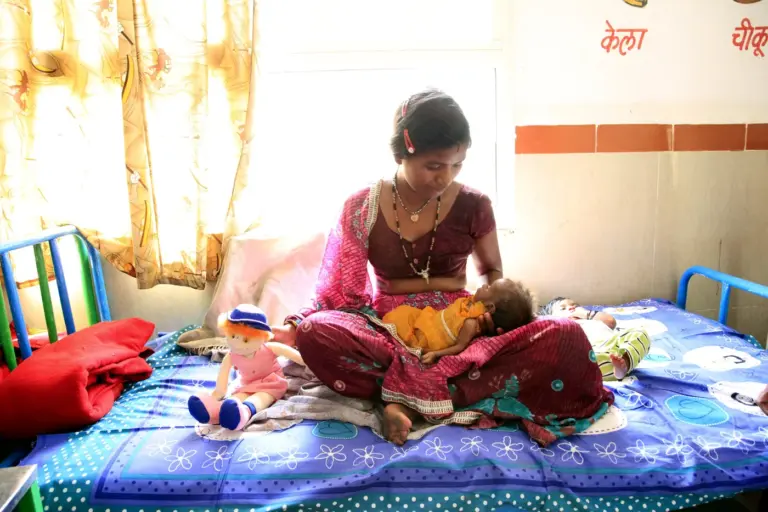
Since the Liberalisation-Privatisation-Globalisation (LPG) reforms of 1991, globalisation has reshaped Indian society at a velocity unmatched in history. More Indians are connected, consuming, migrating, and negotiating multiple cultural registers than ever. For UPSC GS-I, understanding globalisation’s impact across youth, children, culture, rural India, tribals, agriculture, and the informal sector is essential — particularly as deglobalisation, protectionism, and AI-driven globalisation now reshape the landscape.
Conceptual Framework
Globalisation is a process of interaction and integration among peoples, companies, and governments, driven by international trade, investment, technology, migration, and cultural flows. It has four dimensions:
| Dimension | Examples |
|---|---|
| Economic | Trade liberalisation, FDI, MNCs |
| Political | International treaties, governance |
| Cultural | Media, consumption, values |
| Technological | Internet, mobile, AI |
Modern globalisation followed the end of the Cold War (1991) and was propelled by democracy, capitalism, and the Washington Consensus. India's 1991 LPG reforms marked the country's plunge into this current.
Impact on Youth
Indian youth (13-35 years, over 60 crore) live at the heart of globalisation's contradictions:
- Health and education gains: Youth in globalised economies show longer life expectancy, higher literacy.
- Hybrid identities: "Best of both worlds" — jeans for casual, sari/sherwani for ceremonies; love marriage with parental blessing.
- Reduced parental authority: Independent decision-making on education, career, spouse.
- Consumerism: Western food, beverages, fashion, and entertainment permeate youth culture.
- Erosion of traditional values: Easy access to pornography, social media, and peer influence challenge relationship norms.
- Digital divide: Youth without smartphones or internet access face new forms of exclusion.
Impact on Children
- Broadened access: Childcare products, global media.
- Multicultural awareness: Student exchange programmes, international schools.
- Internet as equaliser: Khan Academy, YouTube, Coursera open learning for kids across classes.
- Fast-food culture: McDonaldisation of diets; rising childhood obesity and diabetes.
- Screen time surge: Excessive social media and gaming (PUBG, BGMI, Roblox) affecting sleep and mental health.
- Environmental burden: E-waste dumping by developed nations exposes Indian kids to toxins.
- Persistent child labour: ~300,000 children work in India's hand-knotted carpet industry meeting global demand.
Impact on Culture
| Cultural Sphere | Globalisation's Impact |
|---|---|
| Language | English dominance; urban families shift to English in daily use; regional languages face attrition |
| Caste | Relaxed norms of commensality and inter-caste marriage; economic opportunities breaking hierarchies |
| Religion | Diaspora spreads Hindu, Sikh, Jain thought globally; Triple Talaq, Sabarimala debates framed by global feminism |
| Food | McDonald's Aloo Tikki burger; KFC; Indian takes on global fusion |
| Clothing | Denim everywhere; traditional dress becomes ceremonial |
| Family | Joint → nuclear; acceptance of live-in; Kanniammal Case (2010) legitimised live-in |
| Marriage | Love marriages rise; web-based matrimonial alliances mainstream |
Cultural homogenisation (uniform global consumption) coexists with glocalisation — localisation of global products (McDonald's Paneer Wrap, Starbucks Masala Chai).
Impact on Rural India
- Primary sector revolution: Affordable machines, hybrid seeds, drip irrigation, horticulture have transformed agriculture and allied sectors.
- Employment generation: Contract farming, food processing, dairy cooperatives.
- Market access: Rural producers sell globally via e-commerce, FPOs.
- Labour migration: 600+ million internal migrants — rural to urban, cyclical and permanent.
- Better service delivery: Common Service Centres, e-Health, Digital Public Infrastructure (Aadhaar, UPI).
- Educational access: Tele-education, online skill training.
- Cultural exposure: Mass media and internet challenge conservative rural taboos.
Impact on Tribals
- Economic opportunities: Tribal handicrafts (Odisha dhokra, Bastar metal), textiles, and music reach global markets.
- Displacement: ~55% of India's tribal population now lives outside traditional habitats. Irrigation and industrial projects (Narmada, Polavaram, Sardar Sarovar) trigger displacement.
- Unsustainable extraction: Mining in ecologically fragile tribal territories (Bastar, Jharkhand, Odisha).
- Loss of indigenous knowledge: Traditional medicine, agricultural practices, forest management erode.
- PESA and FRA: Legal counterweights — Panchayats (Extension to Scheduled Areas) Act, 1996 and Forest Rights Act, 2006 — partially protect tribal rights.
Impact on Agriculture
- Farm productivity: New seeds (GM cotton), drip irrigation, precision agriculture.
- Export growth: Basmati, spices, marine products, horticulture.
- R&D collaboration: ICAR partnerships with CGIAR, CIMMYT.
- Contract farming: Pepsi-farmer contracts for potato, tomato.
- Value addition: Food processing industry worth Rs 35+ lakh crore by 2025.
- IPR concerns: Monsanto's Bt cotton monopoly; biopiracy.
- WTO pressures: Amber-box subsidy curbs affect MSP, fertiliser, electricity support.
- Global price volatility: Edible oil, pulses, and vegetable prices swing with imports.
Impact on Informal Sector
India's informal sector employs roughly 90% of the workforce (PLFS 2022-23). Globalisation's effects:
- Sub-contracting boom: Firms outsource to informal units for cost advantage.
- Casualisation: Formal workers replaced by contract workers without minimum wages or social security.
- Gig economy: Uber, Zomato, Swiggy, Urban Company — new platforms, old informality.
- Unequal gains: Large firms with cross-border mobility thrive; low-skilled workers lose.
- Feminisation of informality: Women pushed into lowest-paying informal work as men enter slightly better informal jobs.
Government Schemes and Institutional Framework
| Instrument | Purpose |
|---|---|
| LPG Reforms, 1991 | Economic liberalisation |
| FEMA 1999 | Foreign exchange management |
| Make in India | Manufacturing push |
| Digital India | Digital infrastructure |
| Skill India | Global employability |
| Startup India | Entrepreneurship |
| Code on Social Security, 2020 | Gig & platform workers |
| RCEP withdrawal (2019) | Protecting domestic sectors |
Challenges
- Cultural homogenisation vs. diversity preservation.
- Inequality: Globalisation's gains skew toward urban, educated, upper-caste Indians.
- Environmental damage: Carbon-intensive consumption.
- Informalisation: 90% workforce without social security.
- Geopolitical shocks: COVID-19, Ukraine war, US-China decoupling.
Latest Developments (2024-26)
- 2024 Lok Sabha elections: Parties debated FTA policies (India-UK, India-EU), Chinese imports, and employment. Elections produced a more pluralistic mandate (293 NDA; 234 INDIA bloc), signalling public demand for balancing globalisation with jobs.
- Deglobalisation trend: Protectionism (US tariffs, EU CBAM, India's Atmanirbhar Bharat) reshaping global trade.
- G20 Presidency (2023) and New Delhi Declaration: India balanced global leadership with domestic priorities.
- DPDP Act, 2023 and Digital India Act (Draft, 2024): Regulating cross-border data flows.
- Caste census movement: Bihar, Karnataka, Telangana surveys reveal globalisation's differential impact across castes.
- Women's Reservation Act, 2023: Implementation linked to delimitation; once active, will reshape political economy of global integration.
- MPI 2024 (NITI Aayog): India reduced multidimensional poverty from 29.17% (2013-14) to 11.28% (2022-23) — fastest decline among major globalising economies.
- SDG India Index 2023-24: Improved scores on SDG 1 (No Poverty), SDG 8 (Decent Work); persistent gaps on SDG 5 (Gender Equality).
- AI and global labour markets: ChatGPT, generative AI reshape Indian IT/BPO exports; threats to low-value-add call-centre work.
- Production-Linked Incentive (PLI) schemes: Rs 2 lakh crore outlay across 14 sectors to attract global manufacturing.
UPSC Relevance
- Prelims: LPG reforms; WTO agreements; FEMA; glocalisation.
- GS-I: Effects of globalisation on Indian society; cultural change.
- GS-II: India's global role.
- GS-III: Liberalisation impacts; economic reforms.
- Essay: "Globalisation: boon or burden for Indian society?"
Key takeaways:
- Globalisation is neither purely destructive nor liberatory — it redistributes winners and losers.
- Youth and middle classes gained the most; tribals and informal workers gained the least.
- Glocalisation — not homogenisation — describes India's actual experience.
- Post-2020 deglobalisation creates both risks (supply disruptions) and opportunities (manufacturing shift from China).
A mature answer treats globalisation as a force to be governed, not worshipped or feared. Policy must harness its productive capacity while protecting cultural diversity, labour rights, environment, and marginalised communities.
Tell Google you want more of this.
Add Anantam IAS as a preferred sourceOne tap, and this site shows up more often in your own Top Stories, AI Overviews and AI Mode. Remove it any time.