The Golden Revolution refers to the rapid rise of India's horticulture sector between 1991 and 2003, when targeted investments in fruits, vegetables, spices, flowers, plantation crops, and medicinal plants transformed the country into the world's second-largest producer of fruits and vegetables. Horticulture now occupies only about 14% of India's cropped area but contributes over 33% of agricultural Gross Value Added (GVA). For UPSC aspirants, this chapter sits at the intersection of GS-III topics on cropping patterns, food security, farmer incomes, and agricultural diversification. Prelims has tested MIDH, PGS certification, and spice production ranks; Mains frequently asks candidates to evaluate whether horticulture can deliver doubling farmer income and secondary-agriculture growth.
What the Horticulture Sector Covers
Horticulture is a high-value segment of agriculture that spans six sub-categories:
- Pomology — fruits (mango, banana, citrus, apple)
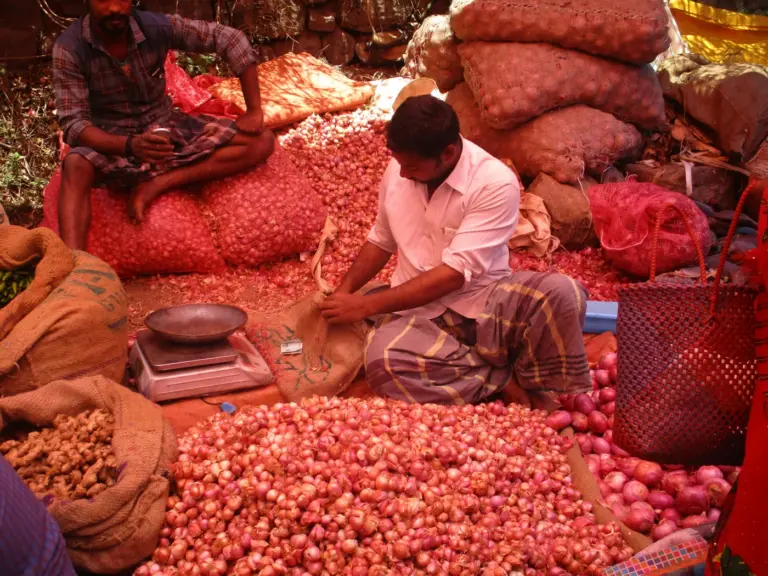
- Olericulture — vegetables (potato, onion, tomato)
- Floriculture — flowers and ornamental plants
- Plantation crops — coconut, cashew, cocoa, arecanut
- Spices — chilli, turmeric, cardamom, pepper
- Aromatics and medicinal herbs — mint, lemongrass, ashwagandha
Nalla Thampy Terah is often credited with coining the term "Golden Revolution" to describe the combination of these sub-sectors growing together.
Present Status of Indian Horticulture
India's production profile is remarkable for a country where most people still associate agriculture with rice and wheat:
| Indicator | Value (latest) |
|---|---|
| Area under horticulture | ~28.6 Mha (2023-24, 3rd Advance Estimates) |
| Total production | ~355 million tonnes |
| Share in agri-GVA | ~33% |
| Productivity | ~12.5 tonnes/ha (vs 2.25 t/ha for foodgrains) |
| Global rank (fruits, vegetables) | Second largest producer |
| Global rank (spices) | Largest producer and exporter |
Updated context: As per the 3rd Advance Estimates for 2023-24 released by the Ministry of Agriculture & Farmers Welfare in 2024, total horticulture output crossed 352 million tonnes, with vegetables (~213 MT) and fruits (~112 MT) dominating the mix. Onion, banana, and mango remain the top three commodities by volume.
Why Horticulture Matters for India
- High-value crops: Consumer demand has risen sharply with urbanisation, nuclear families, and rising awareness of nutritional benefits.
- Higher returns per hectare: The Dalwai Committee on Doubling Farmers' Income (2018) found that replacing 1 hectare of staple crops with horticultural crops can increase annual farm income by around Rs 80,000.
- Nutritional security: Fruits and vegetables address hidden hunger — Vitamin A, iron, and micronutrient deficiencies that cereals cannot solve.
- Labour-intensive: Horticulture generates more employment per hectare than cereal cultivation, suiting India’s demographic dividend.
- Boosts secondary agriculture: Post-harvest processing, packaging, and cold-chain logistics create village-level cottage industries.
- Export earnings: Spices alone earned India over USD 4 billion in exports in 2023-24.
Government Initiatives
Mission for Integrated Development of Horticulture (MIDH)
Launched in 2014-15, MIDH is the flagship centrally sponsored scheme. It subsumed earlier missions — National Horticulture Mission, Horticulture Mission for North East and Himalayan States (HMNEH), National Bamboo Mission, National Horticulture Board (NHB), and Coconut Development Board. MIDH supports:
- High-density plantations and protected cultivation (polyhouses, shade-nets).
- Quality planting material through accredited nurseries.
- Micro-irrigation convergence with PMKSY.
- Rejuvenation of old and senile orchards.
- Post-harvest management, packhouses, and cold storage.
Other Supporting Schemes
- Cluster Development Programme (CDP) — launched 2021 to develop horticulture clusters for export competitiveness (e.g., Lucknow mango, Nashik grapes, Shopian apple).
- Operation Greens — price stabilisation and value-chain development, initially for TOP (Tomato, Onion, Potato), expanded to TOTAL (22 perishables).
- Pradhan Mantri Kisan Sampada Yojana (PMKSY) — mega food parks, cold chains, and agro-processing clusters.
- Agricultural and Processed Food Products Export Development Authority (APEDA) — market access and certification support.
Challenges in Horticulture
- Capital intensity: Orchard establishment requires 3-5 year gestation for apples, guavas, and oranges, which small farmers cannot bankroll.
- Old and senile orchards: Low planting density and uneven tree canopies drag down productivity.
- Quality planting material: Only about 15% of nurseries are accredited by the National Horticulture Board.
- Rainfed cultivation: A large share of horticulture is unirrigated, making it climate-vulnerable.
- Post-harvest losses: India loses 10-16% of fruits and vegetables post-harvest — worth over Rs 1.5 lakh crore annually (NABCONS).
- Fragmented supply chains: Too many intermediaries, poor cold-chain penetration, and inadequate aggregation.
- Weak extension services: Horticulture-specific extension is thin compared to cereal extension through KVKs.
Strategy to Boost Horticulture
A second Golden Revolution requires production-side and marketing-side reforms working together:
Productivity-boosting measures
- Hybrid varieties for tomato, chilli, cucumber, and muskmelon.
- Accredited nurseries producing virus-free, true-to-type planting material.
- High-density planting systems for mango, citrus, and apple — yielding 3-4x returns per unit area.
- Micro-irrigation and fertigation to optimise input use.
Area and intensity measures
- Integrated Farming System (IFS) combining horticulture with livestock and fisheries.
- Urban and peri-urban horticulture using vertical farms, kitchen gardens, and rooftop polyhouses.
- Crop rotation and mixed cropping to raise intensity.
Diversification and secondary agriculture
- Shift from staples to high-value crops like floriculture, spices, mushrooms, and medicinal plants.
- Value addition — jams, pickles, dried spices, essential oils — at farmgate.
Market linkages
- e-NAM integration for perishables with dedicated horticulture modules.
- FPOs for aggregation, grading, and direct retail tie-ups.
- Cluster Development Programme to build geographical indicator (GI) brands.
Latest developments (2024-26)
- Budget 2025-26 expanded the Cluster Development Programme to 55 horticulture clusters, up from the initial 12, with a focus on export-oriented production.
- The government launched the National Mission on Edible Oils – Oilseeds and Oil Palm (NMEO-OP) and extended horticulture-linked PM Kisan Sampada support for cold-chain infrastructure.
- Operation Greens was restructured in 2024 to include subsidy for transportation and storage of 22 perishables, not just TOP.
- Digital Agriculture Mission (2024) — horticulture crops brought under the AgriStack with farmer registry, unique Farmer IDs, and crop maps. Updated context: roll-out is phased across states through 2025-26.
- PM-AASHA price-support scheme was extended in September 2024 with enhanced Price Deficiency Payment for oilseeds and pulses; horticulture perishables remain covered under Market Intervention Scheme (MIS).
- India's horticulture exports — fresh fruits, vegetables, and processed products — crossed USD 3.5 billion in 2023-24 (APEDA).
- Finance Minister's Budget 2025-26 announced a Mission for Aatmanirbharta in Pulses and a Comprehensive Programme for Vegetables & Fruits, with state partnership to promote production and post-harvest management.
UPSC Relevance
GS-III Mapping
- Major crops, cropping patterns, irrigation systems, storage, transport, marketing — horticulture changes the answer to each of these.
- Technology missions, e-technology in aid of farmers — MIDH, NHB portals, hortinet.
- Issues related to direct and indirect farm subsidies, MSP, PDS, buffer stocks, food security — horticulture lies largely outside MSP, making diversification a policy lever.
- Food processing and allied industries — horticulture is the raw material for most processing clusters.
Prelims Pointers
- MIDH is an umbrella scheme — know its sub-missions (HMNEH, NHB, CDB, NBM).
- India is the second-largest producer of fruits and vegetables; largest producer and exporter of spices.
- Jaivik Bharat logo is India's organic certification mark; PGS-India for domestic market, NPOP for exports.
- Dalwai Committee (2018) — doubling farmers' income framework mentioned horticulture as a core lever.
- Operation Greens — TOP and later TOTAL perishables.
- Sikkim was declared India's first fully organic state in 2016.
Mains Angles
- "Horticulture has the potential to double farmers' income but faces structural bottlenecks. Critically examine." (GS-III)
- "Evaluate the role of MIDH and Cluster Development Programme in transforming India's horticulture sector."
- "Despite being the second-largest producer of fruits and vegetables, India's share in global horticulture exports remains low. Analyse the reasons and suggest reforms."
- "How can horticulture-led Rainbow Revolution counter the second-generation problems of the Green Revolution?"
A Golden Revolution 2.0 — powered by FPOs, climate-smart varieties, cold-chain logistics, and digital market linkage — is both an aspiration and an examination hot-spot. For aspirants, internalising MIDH provisions, Dalwai committee numbers, and the latest Budget announcements will cover nearly every angle the UPSC tests on this theme.
Tell Google you want more of this.
Add Anantam IAS as a preferred sourceOne tap, and this site shows up more often in your own Top Stories, AI Overviews and AI Mode. Remove it any time.