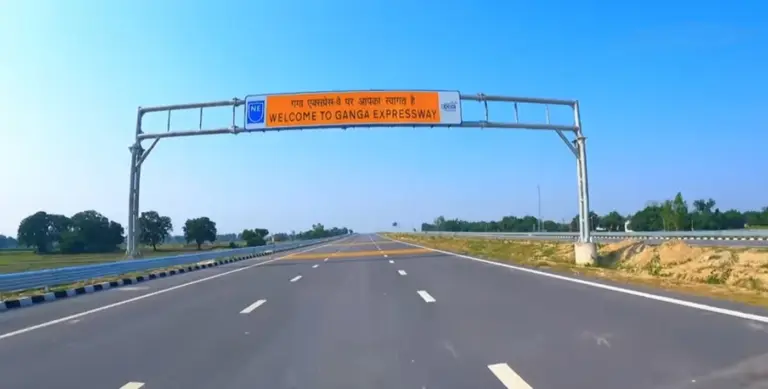
The Hybrid Annuity Model (HAM) is a Public-Private Partnership format that combines the strengths of the Build-Operate-Transfer (BOT) and Engineering Procurement Construction (EPC) models. It emerged in 2016 to revive India's stalled highway construction pipeline, when traditional BOT-Toll projects had run into financing stress and EPC was overloading the government's balance sheet. A decade later, HAM has become the dominant mode of highway award, and it is now being considered for metros, water supply, and other urban infrastructure. For UPSC GS III, HAM is the canonical example of how policymakers redesign risk allocation in PPP contracts to keep both government and private players willing to invest.
Why HAM Was Introduced
In the mid-2010s, India's highway programme was stuck. BOT-Toll projects were failing because traffic grew slower than expected and commercial bank debt dried up. Pure EPC projects were fully funded by the government, exhausting budgetary capacity. Developers faced bankruptcy, NHAI faced stalled projects, and banks faced NPAs.
HAM was designed to break this impasse. It brought back the private sector for construction quality and speed, kept the government's risk exposure limited to 40% of project cost, and removed traffic risk from the developer altogether. Developers could now focus on construction and maintenance discipline without worrying about whether commuters would use the highway.
Features of HAM and Comparison with Other Models
| PPP Model | Role of Private Sector | Role of Government | Who Bears Risk |
|---|---|---|---|
| Build-Operate-Transfer (BOT) | Builds, finances, constructs, maintains, transfers | Minimal | Private sector (financing, revenue, maintenance) |
| Engineering Procurement Construction (EPC) | Designs, procures, constructs | Funds project, acquires land, collects user fees, maintains | Government (all) |
| Hybrid Annuity Model (HAM) | Finances 60%, builds, maintains | Funds 40% upfront in five instalments, collects tolls, pays annuities | Split: financing shared, revenue with government, maintenance with private |
Shared Risk
HAM allocates risks deliberately. The government funds 40% of project cost as milestone-linked construction grants. The private concessionaire finances the remaining 60% through a mix of equity (typically 20–25%) and debt (75–80%). Construction and quality risks sit with the private developer. Traffic risk sits with the government, which collects tolls. This balance makes HAM projects financeable by banks who had burned their fingers on BOT-Toll.
Assured Annuity Payments
Over the concession period (typically 15–20 years including a two- to three-year construction phase), the concessionaire receives fixed annuity payments from the government, covering debt service and a return on equity. These periodic payments are independent of traffic volumes, which is why lenders treat them almost like sovereign cash flows.
Reduced Project Cost of Capital
The 40% upfront funding plus assured annuities means lenders see lower risk, which translates into lower interest rates. That reduces the overall project cost and improves viability.
Land Acquisition and Clearances
One of the biggest killers of BOT-Toll projects was delayed land acquisition. HAM shifts that obligation clearly to the government. NHAI must hand over at least 80% of land free of encumbrance before the concessionaire is required to start construction.
Milestone-Linked Monitoring
Government funds flow in five equal instalments tied to physical completion milestones. This builds in natural project supervision and discourages cost-padding.
Challenges with HAM
Delays in Completion
Land acquisition continues to be the biggest bottleneck. Of the roughly Rs 1.5 lakh crore HAM projects awarded after March 2020, a significant share was delayed four to six months beyond the three-month grace period due to land hurdles. The Covid-19 pandemic, post-bidding commodity price spikes (especially steel and bitumen), and stringent debt covenants compounded delays.
Financial Hurdles for Developers
Delays, cost escalations, and revenue uncertainties have reduced HAM's attractiveness to some developers. Smaller players have exited, and the bidder pool has concentrated among a few large infrastructure conglomerates. Aggressive bidding in earlier tranches also left some projects financially stretched.
Budgetary Constraints
HAM is government-cash-intensive because of the 40% grant and ongoing annuities. When fiscal space narrows, as happened post-pandemic, the outlay for new HAM awards is the first to shrink.
Refinancing Risk
Developers typically refinance HAM debt after construction is complete, by transferring the operating asset to a new lender at lower interest. Volatile interest rates can disrupt this cycle and squeeze equity returns.
Way Forward
Despite these frictions, HAM remains the best-balanced Indian PPP model. It takes the positives of both BOT (private sector discipline) and EPC (government funding support) and allocates risks sensibly.
Going forward, the priorities are tighter project supervision, better land acquisition before award (at least 90% encumbrance-free), exploration of multilateral funding and green bonds for HAM debt, removal of regulatory bottlenecks like delayed forest and environmental clearances, and a more predictable policy environment so that developers can price risk confidently.
HAM’s principles also have broader potential. State governments are adapting HAM for sewage treatment plants (SBM-U), metro rail projects, and water supply under Jal Jeevan Mission. Wherever the public sector wants private construction efficiency but traffic or demand risk is hard to forecast, HAM’s logic applies.
Latest Developments (2024-26)
HAM continues to account for the majority of National Highway PPP awards. NHAI has refined model concession agreements based on a decade of experience, with cleaner force-majeure clauses and pre-defined compensation for delayed payments. A National Highway Infrastructure Trust (InvIT) has monetised several operating HAM stretches, recycling capital for new projects. The Union Budget 2025-26 sustained high capex for road PPPs. A revised toll policy is being designed to rationalise user charges across BOT-Toll and HAM stretches. State governments including Maharashtra, Tamil Nadu, and Madhya Pradesh have adopted HAM-style risk-sharing for state highways, metros, and solid waste management projects. NaBFID has emerged as a key debt financier for HAM projects, easing bank concentration risk.
UPSC Relevance
Prelims
Expect direct questions on the 40:60 split, which party bears which risk in HAM vs BOT vs EPC, milestone-linked disbursement, and the concession period structure. Know that NHAI implements HAM on national highways and that state governments are extending it to other sectors.
Mains (GS III)
Use HAM as a flagship case study for PPP design, risk allocation, and the revival of stalled infrastructure. Explain why pure BOT failed and how HAM corrected the imbalance. Link to banking sector stress and the NPA cycle. Balance HAM's success with honest acknowledgement of delays and the continuing bottleneck of land acquisition.
Essay
HAM is a concrete example of iterative policy design in essays on governance, reform, or infrastructure-led growth. It shows that good policy often arises from learning through failure rather than ideological preference for public or private delivery.
Tell Google you want more of this.
Add Anantam IAS as a preferred sourceOne tap, and this site shows up more often in your own Top Stories, AI Overviews and AI Mode. Remove it any time.