ज़्यादातर aspirants को temple की age को लेकर confusion होता है। Mahabodhi Temple कब बना, पूछें तो ईमानदार answer दो हिस्सों वाला है। Site को Emperor Ashoka ने third century BCE में पवित्र बनाया, लेकिन हर photograph में दिखने वाला ऊँचा brick tower Ashoka का नहीं है। वह Gupta period का है, लगभग fifth से sixth century CE का, यानी सात या आठ centuries बाद का। इसलिए “Mahabodhi किसने बनाया” का trap one date चुनने का है। सही answer यह है कि Ashoka ने shrine शुरू किया और Guptas ने आज दिखाई देने वाला temple खड़ा किया। यही seam full mark और half mark के बीच का फर्क है।
Bihar के Bodh Gaya में Phalgu यानी Niranjana river के किनारे खड़ा Mahabodhi Temple Buddhist world की सबसे पवित्र जगह को चिह्नित करता है। यहीं peepal tree के नीचे बैठे Siddhartha Gautama Buddha, यानी “the awakened one”, बने थे। यह UNESCO World Heritage Site है, India में खड़े सबसे पुराने brick temples में से एक है और एक ऐसे pilgrimage तथा diplomacy circuit का anchor है जो दर्जनभर देशों तक फैला है। नीचे history, architecture, Bodhi Tree, Vajrasana और art-and-culture तथा international-relations questions में इसकी बार-बार वापसी को साथ समझेंगे।
Bodh Gaya में क्या हुआ था
Bodh Gaya वह जगह है जहाँ enlightenment यानी bodhi हुआ और site की बाकी हर बात उसी घटना से निकलती है। Buddhist tradition में Prince Siddhartha palace छोड़ने और extreme asceticism आज़माने के बाद, उससे संतुष्ट न होकर, Phalgu के किनारे peepal tree यानी Ficus religiosa के नीचे meditation में बैठे। उन्होंने तय किया कि suffering का nature समझे बिना नहीं उठेंगे। एक रात के ध्यान के बाद उन्हें enlightenment मिला और वे Buddha बने। Tree Bodhi Tree कहलाया और उसके नीचे की जगह Buddhism की सबसे पवित्र जमीन बन गई।
यह Buddha के जीवन के चार defining moments और places में से एक है और set को साथ याद रखना चाहिए। उनका जन्म आज के Nepal में Lumbini में हुआ, Bodh Gaya में enlightenment मिला, Varanasi के पास Sarnath में पहला sermon दिया और Uttar Pradesh के Kushinagar में parinirvana यानी death हुआ। Bodh Gaya इन चार में दूसरा है और अधिकतर Buddhists के लिए सबसे sacred है। Religion, उसके schools और royal patrons की बड़ी story में इसे रखने के लिए Buddhism in India वाली note Buddha की teaching से Ashoka की evangelism तक का arc देती है।
Ashoka ने शुरू किया, Guptas ने पूरा किया
Building history इस topic का heart है। करीब 250 BCE में, enlightenment के लगभग दो centuries बाद, Maurya dynasty के Emperor Ashoka Bodh Gaya आए। उन्होंने यहाँ shrine और monastery बनवाए और वही Diamond Throne भी रखा जो आज मौजूद है। Ashoka की original structure लगभग निश्चित रूप से साधारण थी और अपने पहले रूप में बची नहीं।
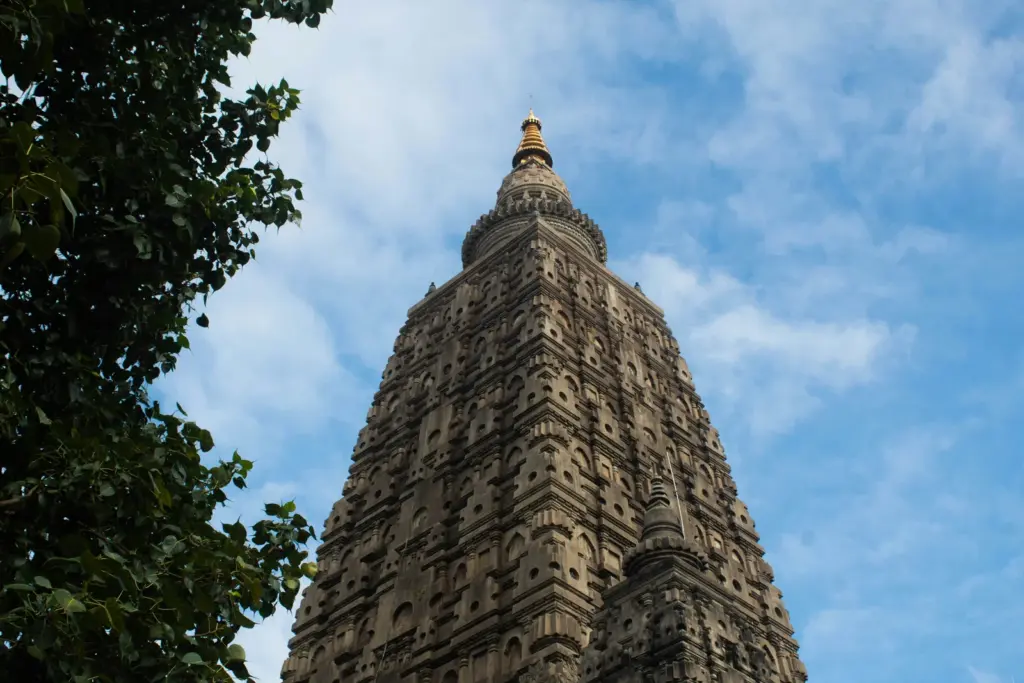
आज खड़ा temple Gupta-period construction है और इसे fifth से sixth century CE का माना जाता है। यह इसलिए महत्वपूर्ण है क्योंकि यह India में पूरी तरह brick से बने सबसे पुराने और प्रभावशाली structures में है। उस समय बचे हुए ज़्यादातर monuments stone के थे। इसका central tower सीधी sides वाला pyramid है, जिसके ऊपर छोटा stupa-जैसा finial है और ऊँचाई करीब 55 metres है। Platform के corners पर चार छोटे towers central spire की echo करते हैं। इससे पूरा temple ऊपर की ओर उठती tiered silhouette जैसा दिखता है और बाद की Asian temple design पर इसका असर पड़ा।
Brick इतना मायने क्यों रखता है? Ancient India की बची हुई monumental religious art, Ashokan pillars, rock-cut caves और बड़े stupas, ज़्यादातर stone या living rock में हैं, जो टिकते हैं। Brick उसके मुकाबले fragile है और इतनी age की बहुत कम brick structures intact बची हैं। इसलिए Mahabodhi tower यह देखने की दुर्लभ window है कि ancient Indian builders ने सस्ती और साधारण material को monumental scale पर कैसे इस्तेमाल किया। Surface को plaster और moulding से tiers और niches में बदला गया, जिनमें कभी images रही होंगी। Burial, weathering और भारी restoration के बाद भी इसका खड़ा रहना World Heritage recognition की वजहों में है।
Style को सावधानी से नाम दें, क्योंकि यह Hindu temples के लिए याद की जाने वाली categories में साफ़-साफ़ fit नहीं होता। इसका tall curvilinear-to-straight tower North Indian Nagara tradition के कुछ elements का पूर्वरूप दिखाता है और Mahabodhi को early transitional form की तरह discuss किया जाता है। Temple architecture in India और Nagara style वाली explainers में shikhara, tiers और बाद की regional schools का framework मिलता है। Site को उस Mauryan world से जोड़ना हो जिसने इसे पहले sacred बनाया, तो Samrat Ashoka, Maurya Empire और Magadha वाली notes political ground साफ़ करती हैं।
Vajrasana और Bodhi Tree
Complex के भीतर दो objects building से भी अधिक devotional weight रखते हैं और दोनों बार-बार पूछे जाते हैं।
Vajrasana यानी “Diamond Throne” या “thunderbolt seat” polished sandstone slab है। Ashoka ने इसे उस exact spot पर रखा जहाँ Buddha के enlightenment के समय बैठे होने की मान्यता है। यह काम करीब 250 से 233 BCE के बीच हुआ। Vajrasana bodhimanda, यानी awakening की seat, को चिह्नित करता है और इसका Mauryan polish प्रसिद्ध Ashokan pillars से stylistically जुड़ा है। Mauryan stone-working tradition जाननी हो तो Ashoka Pillar वाली note उस mirror-like finish और imperial art को समझाती है।
Temple के पीछे का Bodhi Tree peepal है और इसे original tree का direct descendant माना जाता है। इसकी lineage खुद एक story है। Tradition के अनुसार original tree की sapling Ashoka की daughter Sanghamitra Sri Lanka ले गईं। Anuradhapura में वह लगाई गई और आज Sri Maha Bodhi के रूप में बढ़ती है। Bodh Gaya का tree बाद में damage हुआ तो Sri Lankan tree से saplings वापस लाकर इसे फिर स्थापित किया गया। आज pilgrims जिस peepal की छाया में बैठते हैं, वह एक अर्थ में घर लौट आया great-grandchild है। यह दुनिया में लगातार श्रद्धा पाने वाले सबसे पुराने documented sacred trees में है।
Complex के भीतर: सात पवित्र सप्ताह
Temple अकेला नहीं खड़ा है। यह shrines, platforms और centuries में pilgrims द्वारा छोड़े गए सैकड़ों छोटे votive stupas वाले walled complex का anchor है। Layout उस story से जुड़ा है जिस पर pilgrims आज भी चलते हैं। Tradition कहती है कि enlightenment के बाद Buddha Bodh Gaya में सात weeks रहे और हर week अलग जगह meditation की। Vajrasana के साथ उन सात में से छह places complex के भीतर या पास बचे हैं।
दो names याद रखने लायक हैं। Animeshlochana Chaitya second week को चिह्नित करता है। माना जाता है कि Buddha ने Bodhi Tree को बिना पलक झपकाए देखते हुए उस tree के प्रति gratitude जताया। Chankramana यानी “Jewel Walk” third week को दिखाता है। यह carved lotuses वाली raised stone platform है। मान्यता है कि walking meditation में Buddha के पैर जहाँ पड़े, वहाँ lotuses खिले। ये spots complex को ऐसी जगह बनाते हैं जिसमें आप चलते हुए कहानी देखते हैं, केवल building को देखते नहीं। इसी वजह से यह museum नहीं, living pilgrimage site है।
Complex में India की सबसे पुरानी बची stone sculptural railings में से कुछ भी हैं। सबसे पुराने balustrades करीब first century BCE, Shunga period, के हैं। उनके reliefs में medallions, lotus motifs और devotion के scenes हैं, जिन्हें Indian narrative sculpture के early examples माना जाता है। Mauryan, Shunga, Kushana, Gupta और Pala periods में additions जुड़ते गए। इसलिए boundary पर चलना एक enclosure में ancient Indian art की timeline पढ़ने जैसा है।
Ruins से World Heritage तक
इतनी sacred जगह होने के बावजूद Mahabodhi centuries तक decline में रहा। Early medieval period के बाद अपने जन्मस्थान में Buddhism कमज़ोर पड़ा, complex neglect में गया, कुछ हिस्से दब गए और site भुला दी गई। इसका बचना nineteenth-century archaeology और Buddhist Asia, दोनों का परिणाम है।
Burmese Buddhist missions ने nineteenth century में repairs की कोशिश की। British Archaeological Survey के तहत Sir Alexander Cunningham और Joseph David Beglar ने 1880s में बड़ी scientific restoration की। उन्होंने crumbling structure excavate, document और rebuild की। बड़ी Pala-period Buddha image 1884 में फिर स्थापित हुई। Restoration की विरासत mixed है। Temple बचाने के लिए इसकी प्रशंसा होती है, Victorian reconstruction की liberties के लिए आलोचना भी। लेकिन इसके बिना building का खड़ा रहना बहुत मुश्किल था।
Temple को June 2002 में UNESCO World Heritage Site बनाया गया। इसे early brick temple architecture का finest surviving example और Buddha के जीवन की exceptional testimony माना गया। India के दूसरे inscribed treasures के बीच इसकी जगह समझने के लिए UNESCO World Heritage Sites in India वाली roundup इसे Sanchi Stupa, एक और Ashokan-origin Buddhist site, और Dholavira जैसे पुराने cultural landscapes के साथ रखती है।
Temple कौन चलाता है: Bodh Gaya Temple Act
यहाँ art और culture governance से मिलते हैं। यह genuinely contested topic है, इसलिए इसे अंधेरे में याद करने के बजाय समझें। Complex Bodh Gaya Temple Act, 1949 के तहत चलता है। Bihar के इस state law ने site के लिए management committee बनाई।
Original design में committee के आठ members थे और Gaya के District Magistrate chairman। Hindu और Buddhist representation बराबर थी, चार-चार members। यह व्यवस्था जमीन की awkward reality को reflect करती थी। Centuries तक Mahant के नेतृत्व वाला Hindu monastic order Bodh Gaya Math site को control करता रहा था। 1949 law ने management को Buddhist community को पूरी तरह देने के बजाय share करने का compromise बनाया। Buddhist groups लंबे समय से protest करते हैं कि उनके धर्म का सबसे पवित्र site Buddhists द्वारा managed होना चाहिए, जैसे बड़े Hindu, Sikh और Muslim shrines अपनी communities manage करती हैं। Original Act में chairman यानी District Magistrate का Hindu होना ज़रूरी था। बाद में इसे बदला गया, अब किसी भी faith का District Magistrate यह post रख सकता है। Temple governance का debate आज भी live है और Mains में society-and-polity angle खोल सकता है।
Soft power: Bodh Gaya और Buddhist diplomacy
Mahabodhi international-relations preparation में इसलिए आता है क्योंकि यह Buddhist diplomacy का केंद्र है। India Buddhism का birthplace है और Bodh Gaya उसका सबसे sacred site। इससे New Delhi को Buddhist-majority और Buddhist-influenced countries के साथ relations में ऐसा cultural asset मिलता है जिसे money से नहीं खरीदा जा सकता: Sri Lanka, Myanmar, Thailand, Cambodia, Bhutan, Japan, South Korea और Mongolia। Asia में influence की शांत competition में यह खास महत्व रखता है।
Bodh Gaya के built landscape में strategy दिखती है। Buddhist world की governments और communities द्वारा funded monasteries और temples sacred core को घेरे हैं। हर एक brick और gold की छोटी embassy जैसा है। Thai, Bhutanese, Japanese, Tibetan, Burmese और Chinese monasteries आसपास हैं। Town में walk करना Buddhist Asia का tour करने जैसा है। India international Buddhist conclaves host करता है और Buddhist Circuit tourism corridor promote करता है, जो Bodh Gaya, Sarnath, Kushinagar और Rajgir को dedicated trains तथा upgraded airports से जोड़ता है। Summit diplomacy में India उन देशों के सामने Buddhist heritage को बार-बार रखता है जहाँ faith national identity को shape करता है। Subtext strategic है। दूसरी बड़ी Asian power खुद को Buddhist patron की तरह पेश करे, तो India के पास actual enlightenment ground की ओर इशारा करने वाला card है जो किसी और के पास नहीं। Civilisational identity बाहर project करने वाले देश के लिए यह temple, जहाँ Indian prince ऐसे teacher बने जिन्हें करोड़ों लोग मानते हैं, soft power का सबसे प्रभावी instrument है।
Temple की reach architectural भी है, केवल diplomatic नहीं। Sacred shrine के ऊपर ऊँचा straight-sided tower वाला Mahabodhi form Asia भर में copy और reinterpret हुआ। Myanmar के Bagan और modern Thailand जैसी जगहों पर इसकी full-scale replicas बनीं। Bihar न पहुँच पाने वाला pilgrim भी घर के करीब Bodh Gaya tower की copy के सामने खड़ा हो सकता है। इससे पता चलता है कि Buddhist imagination में यह silhouette कितना central हो गया। पूरे continent में stone और brick में इसका afterlife cultural transmission और Asia की trade तथा pilgrimage routes पर answer में डालने लायक point है।
Exam के लिए Mahabodhi को कैसे पढ़ें
इस temple को crossroads की तरह पढ़ें। इसके marks syllabus के तीन या चार sections में बिखरे हैं और एक ही fact अलग questions के जवाब में काम आता है।
पहले non-negotiable data points पक्के करें: Bihar का Bodh Gaya, Phalgu river के किनारे; Buddha का enlightenment site; third century BCE में Ashoka द्वारा founded; present brick temple Gupta period, fifth से sixth century CE; central tower करीब 55 metres; 2002 में UNESCO World Heritage; Bodh Gaya Temple Act, 1949 के तहत management। यह chain बोल सकते हैं तो objective questions बहुत हद तक खुद संभल जाते हैं।
दूसरा, “four sites” reflex बनायें। Bodh Gaya दिखते ही mind में Lumbini, Sarnath और Kushinagar तथा उनसे जुड़े events आ जाएँ। Prelims matching format पसंद करता है और interview panels quick recall। एक architectural point भी जोड़ें: Mahabodhi early brick temple के रूप में महत्वपूर्ण है, stone age की rare बात।
फिर Mains के लिए analysis करें। दो arguments तैयार रखें। पहला 1949 Act की governance debate है: community के holiest shrine को कौन control करे, इस सवाल को nuance के साथ लिख सकते हैं। दूसरा Buddhist soft power है, जहाँ Bodh Gaya cultural diplomacy और India की civilisational statecraft का evidence बनता है। हर heritage site पढ़ते समय पूछने की आदत डालें: “History के आगे यह किससे जुड़ता है?” Mahabodhi का answer तीन दिशाओं में एक साथ जाता है। इसी वजह से size से कहीं अधिक deep study लौटाता है।
सामान्य प्रश्न
Mahabodhi Temple कहाँ है?
यह Bihar के Gaya district में Bodh Gaya, Phalgu यानी Niranjana river के किनारे, historical Magadha region में है।
Mahabodhi Temple महत्वपूर्ण क्यों है?
यह उस exact site को चिह्नित करता है जहाँ Siddhartha Gautama ने Bodhi Tree के नीचे enlightenment पाया और Buddha बने। यह Buddhism की सबसे sacred जगह और UNESCO World Heritage Site है।
Mahabodhi Temple किसने बनाया?
Emperor Ashoka ने करीब 250 BCE में original shrine शुरू किया, लेकिन आज का brick temple Gupta period, लगभग fifth से sixth century CE, में बना।
Mahabodhi Temple UNESCO World Heritage Site कब बना?
June 2002 में इसे UNESCO World Heritage List में शामिल किया गया। इसे ancient India के सबसे पुराने और उत्कृष्ट brick temples में माना गया।
Bodh Gaya का Vajrasana क्या है?
Vajrasana यानी Diamond Throne polished sandstone slab है, जिसे Ashoka ने उस जगह रखा जहाँ Buddha के enlightenment के समय बैठने की मान्यता है। यह awakening की seat है।
क्या Bodhi Tree original tree है?
आज का tree original peepal tree का direct descendant माना जाता है। Centuries में tree damage हुआ तो saplings से फिर लगाया गया। इनमें Sri Lanka के Anuradhapura वाले Sri Maha Bodhi के saplings भी शामिल थे, जो Ashoka की daughter वहाँ लेकर गई थीं।
Mahabodhi Temple का management कौन करता है?
यह Bodh Gaya Temple Act, 1949 के तहत management committee से चलता है। इसमें historically Hindu और Buddhist members रहे हैं और Gaya के District Magistrate chairman रहे हैं। Buddhists के exclusively control की माँग को लेकर यह arrangement लंबे समय से debate में है।
अभ्यास प्रश्न
1. Mahabodhi Temple Buddha के जीवन की किस घटना से जुड़ा है?
a) जन्म
b) Enlightenment
c) पहला sermon
d) Parinirvana
उत्तर: b) Enlightenment
2. वर्तमान Mahabodhi Temple structure मुख्य रूप से किस period का है?
a) Maurya period
b) Kushana period
c) Gupta period
d) Pala period
उत्तर: c) Gupta period
- Mahabodhi Temple के बारे में निम्नलिखित statements पर विचार कीजिए:
- यह Bihar के Bodh Gaya में Phalgu river के किनारे स्थित है।
- यह largely brick से बना है।
- इसे 2002 में UNESCO World Heritage Site में शामिल किया गया।
इनमें से कौन-से statements सही हैं?
a) केवल 1 और 2
b) केवल 2 और 3
c) केवल 1 और 3
d) 1, 2 और 3
उत्तर: d) 1, 2 और 3
4. Bodh Gaya का Vajrasana किसका सबसे सही description है?
a) Guptas द्वारा बनाया monastery
b) Enlightenment spot पर Ashoka द्वारा रखा Diamond Throne
c) Ashoka का pillar edict
d) Buddha relics वाला stupa
उत्तर: b) Enlightenment spot पर Ashoka द्वारा रखा Diamond Throne
- Buddha के जीवन की घटना से site का मिलान कीजिए:
- Lumbini, 2. Bodh Gaya, 3. Sarnath, 4. Kushinagar
a) Birth, Enlightenment, First sermon, Parinirvana
b) Enlightenment, Birth, Parinirvana, First sermon
c) First sermon, Birth, Enlightenment, Parinirvana
d) Birth, First sermon, Enlightenment, Parinirvana
उत्तर: a) Birth, Enlightenment, First sermon, Parinirvana
- Mahabodhi Temple को India के सबसे पुराने brick temples में कहा गया है। इसकी architectural significance और Indian temple design के evolution में इसकी जगह पर चर्चा कीजिए।
- एक ही site Bodh Gaya Mauryan और Gupta ages को कैसे जोड़ती है, trace कीजिए। इसकी building history ancient India में Buddhism के patronage के बारे में क्या बताती है?
- Bodh Gaya Temple Act, 1949 के तहत Mahabodhi Temple का management लगातार debate का विषय रहा है। इस issue और religious autonomy से जुड़े सवालों की जाँच कीजिए।
- “Bodh Gaya India के सबसे valuable soft-power instruments में है।” Buddhist diplomacy और Asia में India की cultural outreach के संदर्भ में इसका आलोचनात्मक मूल्यांकन कीजिए।
- Nineteenth-century archaeology ने India की Buddhist heritage को बचाने में क्या भूमिका निभाई, Mahabodhi Temple की restoration के example से चर्चा कीजिए।
Mahabodhi को “enlightenment temple” कहकर file करना आसान है और यही shortcut marks कटवाता है। यह Mauryan foundation पर खड़ा Gupta tower है, stone के युग में brick landmark है, एक century पुराना governance dispute है और Indian diplomacy का working tool है, सब Bihar की एक जमीन पर। इन layers में इसे सीखें। तब समझ आएगा कि जहाँ prince Buddha बने, वही temple history, art, polity और international relations, examiner के चारों तरह के questions का जवाब देता है।