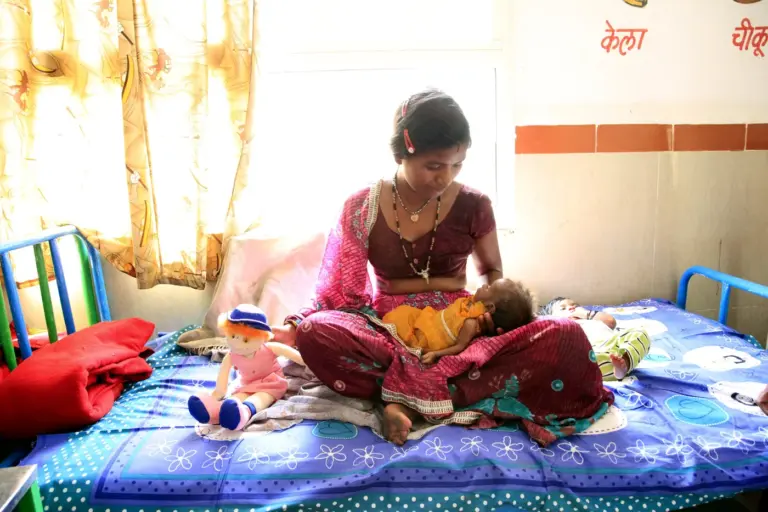
In December 2021, the Union Cabinet approved raising the minimum age of marriage for women from 18 to 21 years, aligning it with men's age. The Prohibition of Child Marriage (Amendment) Bill, 2021 was referred to a Parliamentary Standing Committee. Though not yet law as of 2026, the debate it sparked — on gender equality, choice, health, education, and population — remains central for UPSC GS-I (women, society) and GS-II (welfare) aspirants.
The Conceptual Framework
Existing Minimum Age Laws
| Law | Women | Men |
|---|---|---|
| Hindu Marriage Act, 1955 | 18 | 21 |
| Special Marriage Act, 1954 | 18 | 21 |
| Indian Christian Marriage Act, 1872 | 18 | 21 |
| Prohibition of Child Marriage Act (PCMA), 2006 | 18 | 21 |
| Personal laws (Muslim) | Puberty-based per traditional interpretations | |
| Parsi Marriage and Divorce Act, 1936 | 18 | 21 |
Proposed Amendment (2021)
- Prohibition of Child Marriage (Amendment) Bill, 2021: Minimum age for women raised to 21 — equal to men.
- Overrides all personal laws (per PCMA's secular intent).
- Proposed by the Jaya Jaitly Committee (Task Force on Age of Motherhood, Maternal Mortality Rate, Nutritional Levels).
India's Situation
NFHS-5 Data (2019-21)
- 23.3% of women aged 20-24 married before 18.
- 6.8% of women aged 15-19 are currently married or pregnant.
- 7% women gave birth before 18.
- Child marriage prevalence highest in Bihar (40.8%), West Bengal (41.6%), Jharkhand (32.2%), Tripura (40.1%).
- Lowest in Lakshadweep, Kerala, Himachal Pradesh, Punjab, Goa.
Demographic Context
- India's TFR at 2.0 — at replacement level.
- MMR at 97 per 100,000 live births (2018-20).
- Stunting at 35.5%, partly linked to early motherhood.
- Anaemia at 57% in women 15-49.
Rationale for Raising Age of Marriage
1. Gender Equality
- Constitution guarantees gender equality (Articles 14, 15); existing asymmetric minimum ages contradict this.
- Convention on Elimination of All Forms of Discrimination Against Women (CEDAW) — India is signatory.
2. Breaking Intergenerational Malnutrition
- Early marriage → teenage pregnancy → underweight babies.
- Children of teenage mothers more likely to be undernourished.
- India has the world's largest stunted children population (46.6 million).
- Among 10 countries with largest teenage pregnancy burden.
3. Reducing MMR and IMR
- Teenage pregnancy → higher maternal mortality, miscarriages, stillbirths.
- Physical immaturity increases birth complications.
4. Female Labour Force Participation
- Early marriage → reduced employment.
- Raising marriage age extends time available for education, work.
- India's FLFPR at 41.7% (PLFS 2023-24) — room to grow.
5. Reinforcing Patriarchy Avoided
- Early marriage limits education, employment.
- Financial dependence → skewed domestic labour division.
6. Population Control
- Female age of marriage is a key fertility determinant.
- Later marriage → lower fertility.
- World Bank estimates: Developing countries could save billions by eliminating under-18 marriage — via lower fertility, reduced health investments.
Arguments Against Raising Marriage Age
1. Restricts Choice of Marriage
- Can be used by parents to punish elopement.
- Women escaping forced marriage, domestic abuse, housework may lack legal protection.
- Criminalises young adult choices.
2. Legal Limits Haven't Worked
- 23.3% of women aged 20-24 married before 18 — PCMA 2006 has not prevented child marriage.
- Enforcement, not law, is the gap.
3. Depriving Legal Protection
- More young women declared "underage."
- 18-21 year olds lose legal adult status for marriage while retaining it for contracts, voting, employment.
4. Declining Fertility Rates
- India's TFR already at 2.0 (replacement level).
- Many states — Kerala, Tamil Nadu, Andhra Pradesh — at sub-replacement fertility.
- Raising marriage age may unnecessarily curtail choice.
5. Poverty as Underlying Cause
- Per NFHS-4 analysis: 56% girls married below 21; 75% among poorest quintile.
- Poverty and lack of higher education are root causes — not minimum age.
- Law without structural change = ineffective.
6. Adult Autonomy
- Adults (above 18) should choose when to marry.
- Raising the age above 18 compromises reproductive autonomy.
Government Schemes and Institutional Framework
| Instrument | Purpose |
|---|---|
| Prohibition of Child Marriage Act, 2006 | Prohibits marriages below 18 (women), 21 (men) |
| Prohibition of Child Marriage (Amendment) Bill, 2021 | Raise women's age to 21 — pending |
| Child Marriage Prohibition Officers | District-level enforcement |
| Beti Bachao Beti Padhao | Awareness and girl child welfare |
| Sukanya Samriddhi Yojana | Girl child savings |
| Mukhyamantri Kanya Sumangala Yojana (UP) | Cash transfers for girl child education |
| Kasturba Gandhi Balika Vidyalaya | Girls' residential schools |
| Mission Shakti | Women's empowerment |
Way Forward
Addressing Root Causes
- Conditional cash transfer schemes to improve girls' school attendance and skill training.
- Increased contraceptive access for adults.
- Safer environments — free from sexual assault — so early marriage isn't defensive response.
- Free education for girl child up to university (PCMA 2006 envisages; implementation uneven).
- Livelihood support for families postponing marriage.
Awareness
- Community mobilisation — parents, panchayats, religious leaders.
- Role models and media campaigns.
- Village child-protection committees.
Enforcement
- Compulsory marriage registration — Uttarakhand UCC (2024) includes this.
- Age verification at marriage registration.
- Fast-track courts for child marriage cases.
Latest Developments (2024-26)
- Prohibition of Child Marriage (Amendment) Bill, 2021: Still under Parliamentary Standing Committee consideration as of 2025. Not yet law.
- Uttarakhand UCC, 2024: Mandatory marriage registration; minimum age enforcement.
- 2024 Lok Sabha elections: Women's welfare featured; various parties committed to girl child programmes.
- Assam anti-child marriage crackdown (2023-24): Large-scale arrests, political controversy.
- NFHS-6 data collection: Updated child marriage figures expected 2025-26.
- Women's Reservation Act, 2023: 33% reservation; implementation post-delimitation.
- Caste census (Bihar 2023): Revealed caste-income-child marriage correlations.
- MPI 2024 (NITI Aayog): Multidimensional poverty decline; girls in poor households still at risk.
- SDG India Index 2023-24: SDG 5.3 (eliminate child marriage by 2030) tracking improved.
- Global Gender Gap Index 2024 (WEF): India 129th/146.
- Supreme Court directions (2024): Pan-India directions on strengthening PCMA enforcement, protection officers.
- Kudumbashree, DAY-NRLM: Community mobilisation reducing child marriage through women's groups.
- Beti Bachao Beti Padhao Budget 2024-25: Continued focus.
- Digital registration: States digitising marriage records.
- Meghalaya Shillong NGT on child marriage among specific communities (2024).
UPSC Relevance
- Prelims: PCMA 2006, PCMA Amendment Bill 2021, NFHS-5 child marriage data, Jaya Jaitly Committee.
- GS-I: Role of women; women's issues.
- GS-II: Welfare schemes, legal reforms.
- Essay: "Age of marriage: equality, choice, or conservatism?"
Your answer should:
- Explain existing legal regime across personal laws.
- Cite NFHS-5 data and state variations.
- Present arguments for and against with empirical grounding.
- Argue for addressing root causes — poverty, education, safety — alongside legal change.
- Note that the Amendment Bill remains pending but debate has shifted public discourse.
- Frame the issue as gender equality + public health + economic empowerment.
Raising marriage age is not a silver bullet, but it is a symbolic step toward formal equality. The deeper battle is at the village level, in school classrooms, and in household budgets. Law can set the minimum; society must set the norm. Both are needed; neither alone will end child marriage or deliver gender equality in Indian families.
Tell Google you want more of this.
Add Anantam IAS as a preferred sourceOne tap, and this site shows up more often in your own Top Stories, AI Overviews and AI Mode. Remove it any time.