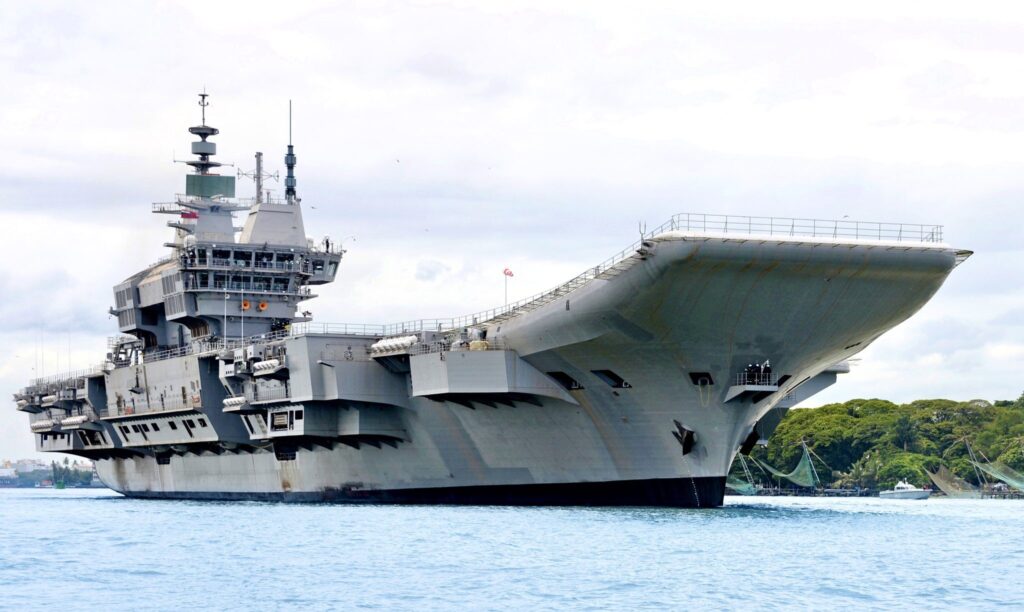
INS Vikrant 2022 is the first aircraft carrier ever designed and built in India and the most consequential warship the country has commissioned. Constructed at Cochin Shipyard Limited (CSL) in Kochi and commissioned by Prime Minister Narendra Modi on 2 September 2022, INS Vikrant 2022 (also called the Indigenous Aircraft Carrier-1 or IAC-1) displaces about 45,000 tonnes, measures 262 metres long and was built at a cost of roughly ₹20,000 crore. The new INS Vikrant 2022 inherits the name of India’s first aircraft carrier (the original INS Vikrant served from 1961 to 1997) and joins INS Vikramaditya — a refurbished Soviet-era carrier acquired from Russia in 2013 — to give India a two-carrier blue-water navy. INS Vikrant 2022 operates the MiG-29K fighter and Kamov Ka-31 helicopter air wing, uses a Short Take-Off But Arrested Recovery (STOBAR) configuration with a ski-jump and arrestor wires, and features a twin-island superstructure design.
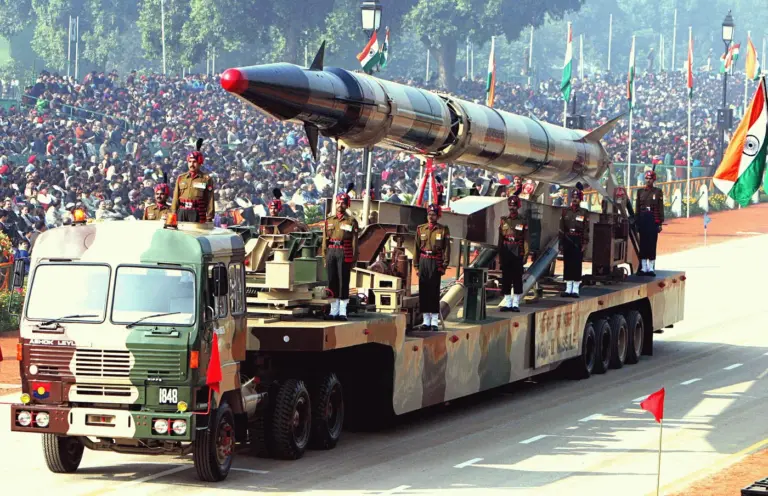
For UPSC, INS Vikrant 2022 spans GS-III internal security, GS-II maritime strategy and Indian Ocean diplomacy, and GS-III science and technology and Atmanirbhar Bharat. It is also a defining Mains case study on shipbuilding capability, alongside the BrahMos missile and the Agni missile series as exemplars of indigenous defence.
The Indigenous Aircraft Carrier Programme
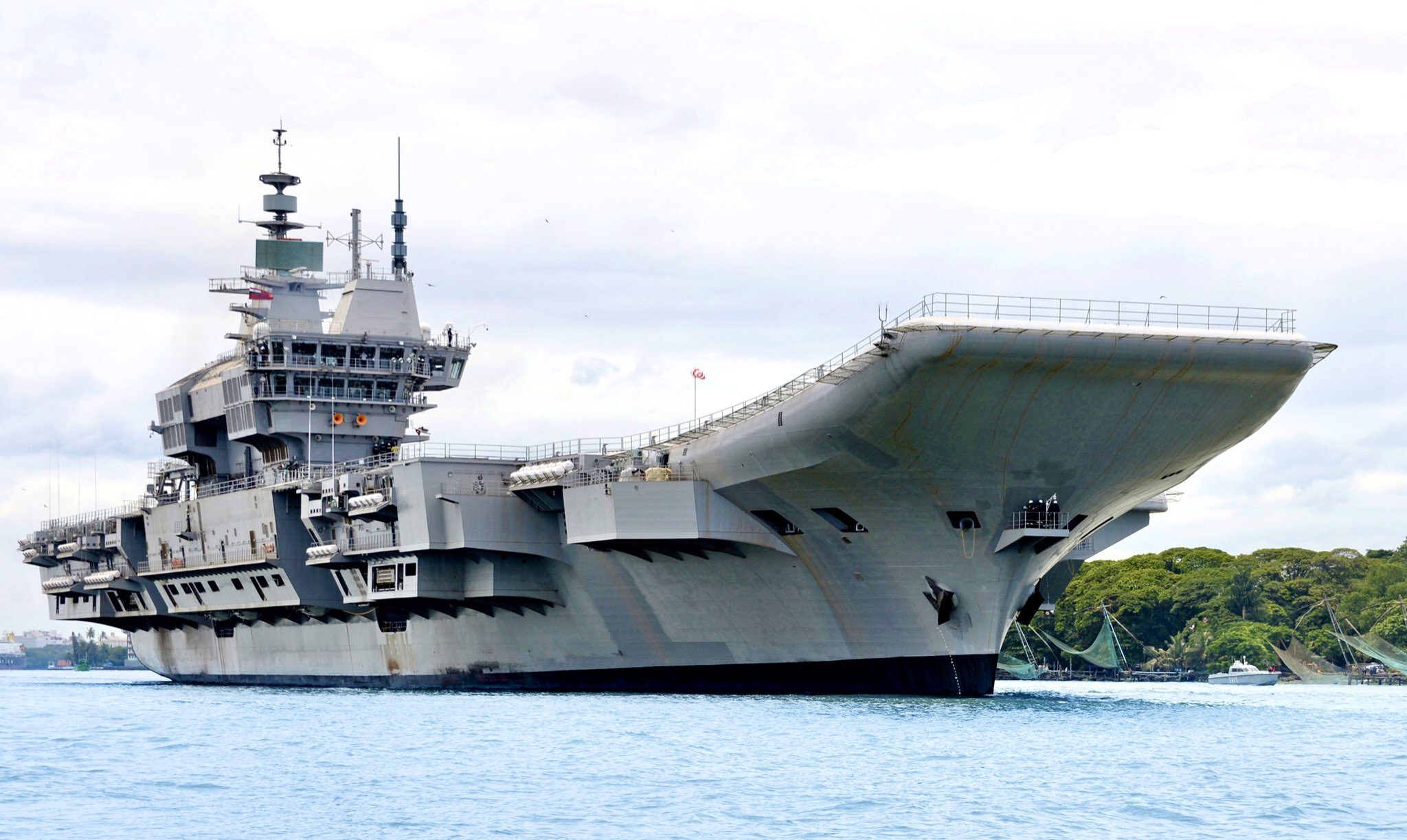
INS Vikrant 2022 is the product of a programme that began over two decades ago and survived multiple delays.
Why India Wanted an Indigenous Carrier
Aircraft carriers project power far beyond a nation’s coastline. They allow a navy to operate combat aircraft thousands of kilometres from home, escort merchant shipping, conduct disaster relief and signal national resolve. India has operated carriers since 1961 — the original INS Vikrant (a British-built Hercules-class) and INS Viraat (a British Hermes-class) — but all earlier carriers were foreign-built. Designing and building a carrier domestically is one of the most demanding engineering tasks any country can attempt; only the US, the UK, France, Russia, Italy and China have done it before India.
Approval and Construction Timeline
The Indigenous Aircraft Carrier (IAC) programme received approval in 1999. Design contracts went to the Directorate of Naval Design and Italian firm Fincantieri (for hull form consultation). The keel was laid at Cochin Shipyard in February 2009. The ship was launched in August 2013 — the same year INS Vikramaditya was commissioned. Sea trials began in August 2021 and continued through 2022. INS Vikrant 2022 was commissioned by Prime Minister Modi at Cochin on 2 September 2022, completing a 23-year design-to-deployment cycle.
Cochin Shipyard
Cochin Shipyard Limited, a public-sector undertaking, executed the entire build. The project employed over 2,000 CSL workers directly and supported more than 50,000 jobs in the wider supply chain. About 76 per cent of the materials by value are indigenous — including specialised warship-grade steel developed by SAIL and DMRL specifically for this programme.
Specifications
INS Vikrant 2022 is a medium-size conventional-propulsion carrier.
Dimensions and Displacement
- Length — 262 metres
- Beam — 62 metres
- Draught — 8.4 metres
- Displacement — about 45,000 tonnes (full load)
- Flight deck — 12,500 square metres (two-and-a-half football fields)
- Crew — about 1,700 including 196 officers
Propulsion
Four General Electric LM2500 gas turbines drive two propellers through reduction gears, producing a top speed of about 28 knots (52 km/h) and a cruising range of 7,500 nautical miles. The ship carries about 2,400 tonnes of marine diesel and aviation fuel.
Twin-Island Design
INS Vikrant 2022 uses a twin-island superstructure — two separate towers on the starboard side rather than the single island found on most carriers. The forward island handles navigation and ship-handling; the aft island handles flight operations and air-traffic control. The arrangement saves deck space, improves redundancy and provides better forward and aft visibility for the respective functions. The British Queen Elizabeth-class and the Chinese Type 003 Fujian carrier also use twin-island designs.
Compartments and Decks
INS Vikrant 2022 has 14 decks and over 2,300 compartments, including dedicated medical complexes with a 16-bed hospital, two operating theatres, ICU, dental chair and isolation ward. The ship can serve as a hospital ship for humanitarian missions when its primary air wing is not embarked.
STOBAR Aircraft Operations
INS Vikrant 2022 uses STOBAR — Short Take-Off But Arrested Recovery — the same configuration as INS Vikramaditya.
How STOBAR Works
In STOBAR, aircraft take off using their own engines, accelerated by the carrier’s forward speed and aided by a 12-degree ski-jump at the bow. Landing is by tailhook capturing one of three arrestor wires across the deck. STOBAR is mechanically simpler than the catapult-launch (CATOBAR) used by US Navy supercarriers, but it limits the size and fuel load of aircraft that can launch and is less efficient than CATOBAR for heavy aircraft.
Ski-Jump
INS Vikrant 2022’s ski-jump ramp angles the aircraft upward as it leaves the deck, giving it a positive climb rate at lower take-off speeds. The ski-jump is welded to the bow and forms a distinctive curved profile.
Aircraft Lifts
Two aircraft lifts move aircraft between the hangar deck below and the flight deck above. The lifts can carry the MiG-29K or two helicopters at a time.
The Air Wing
INS Vikrant 2022 carries up to 30 aircraft.
MiG-29K — The Fighter
The MiG-29K is a Russian-built carrier-capable fighter. The Indian Navy operates about 45 MiG-29Ks acquired between 2009 and 2017. The aircraft is the primary strike asset of INS Vikrant 2022 and INS Vikramaditya — armed with R-77 air-to-air missiles, KH-31 anti-ship missiles and laser-guided bombs. The MiG-29K is being supplemented by the indigenous Tejas Naval Mk2 and potentially the Rafale-M acquired from France from 2025.
Kamov Ka-31 — Airborne Early Warning
The Russian Kamov Ka-31 is a coaxial-rotor helicopter equipped with a folding underbelly radar that gives the carrier group early warning of incoming aircraft and missiles. India operates over a dozen Ka-31s and they are deployed aboard both Indian carriers.
MH-60R Romeo — Anti-Submarine
The American Sikorsky MH-60R Romeo is the Indian Navy’s new anti-submarine and anti-surface-warfare helicopter, deliveries having begun in 2022. They embark on both carriers and the major surface combatants.
ALH Dhruv
The indigenous HAL Advanced Light Helicopter Dhruv provides utility, transport and search-and-rescue.
INS Vikrant 2022 vs INS Vikramaditya
India operates two carriers. The differences explain India’s two-carrier doctrine.
- INS Vikramaditya — 44,500 tonnes, commissioned 2013, refurbished Russian Kiev-class Admiral Gorshkov, single-island design, STOBAR, MiG-29K + helicopters
- INS Vikrant 2022 — 45,000 tonnes, commissioned 2022, indigenously designed and built at Cochin, twin-island design, STOBAR, MiG-29K + helicopters
INS Vikramaditya was a stop-gap acquisition that gave India a functional carrier while the indigenous programme took shape. INS Vikrant 2022 is the first all-Indian carrier and the blueprint for future indigenous carriers.
IAC-2 (INS Vishal) and the Future
The Indian Navy has long sought a third carrier, often called IAC-2 or by the working name INS Vishal. The proposal is for a larger ship of 65,000 tonnes with CATOBAR catapult-launch, allowing heavier aircraft such as the Tejas Mk2 with full ordnance loads or future stealth carrier fighters. The Cabinet Committee on Security has not yet approved IAC-2; debate continues over cost (about ₹50,000 crore), technology (electromagnetic versus steam catapult) and strategic priority (more carriers versus more submarines). A final decision is expected by 2026–27.
Strategic Role of INS Vikrant 2022
INS Vikrant 2022 changes India’s strategic posture in three ways.
Indian Ocean Power Projection
The Indian Ocean is the world’s busiest energy artery and the principal sea-lane between Asia and the Middle East and Europe. INS Vikrant 2022 gives India the ability to project air power across this entire arc, supporting humanitarian relief, anti-piracy patrols and presence missions. The two-carrier navy lets India keep one carrier always deployable while the other refits.
Deterring China at Sea
China’s People’s Liberation Army Navy now operates three carriers (Liaoning, Shandong, Fujian) and is building more. Indian carriers are part of the response, alongside SIPRI-tracked arms imports, the BrahMos cruise missile and Indian-built nuclear submarines.
Atmanirbhar Bharat and Defence Indigenisation
INS Vikrant 2022 is the largest indigenous warship ever built in India. Its successful design and construction validate the Atmanirbhar Bharat (self-reliant India) programme in defence. Sub-systems developed for INS Vikrant 2022 — warship steel, gas-turbine integration, large-block construction methods, weapons systems integration — are now feeding into other naval programmes. Defence engine programmes such as the Kaveri engine being adapted by DRDO for marine applications draw on this expanding industrial base.
Why INS Vikrant 2022 Matters for UPSC
INS Vikrant 2022 is a UPSC favourite for Prelims facts and Mains analysis.
Prelims Facts
- Builder — Cochin Shipyard Limited (CSL)
- Designer — Indian Navy’s Directorate of Naval Design
- Commissioning — 2 September 2022 by PM Narendra Modi at Cochin
- Displacement — about 45,000 tonnes
- Length — 262 metres
- Configuration — STOBAR with 12-degree ski-jump and twin-island design
- Air wing — MiG-29K, Kamov Ka-31, MH-60R Romeo, ALH Dhruv
- Indigenous content — about 76 per cent by value
- Successor to original INS Vikrant (1961–1997)
Mains Angles
- Indigenisation, Atmanirbhar Bharat and the defence industrial base
- Indian Ocean strategy and the Indo-Pacific
- China’s naval modernisation and Indian responses
- Two-carrier versus three-carrier naval doctrine
- Comparison with Chinese, US and UK carrier programmes
- Maritime security, sea lines of communication, anti-piracy
Frequently Asked Questions
When was INS Vikrant 2022 commissioned?
INS Vikrant 2022 was commissioned by Prime Minister Narendra Modi at Cochin Shipyard on 2 September 2022. It became the first aircraft carrier ever designed and built in India. The ceremony also marked the unveiling of the new Indian Navy ensign, replacing the colonial-era cross-and-stripes design.
Who built INS Vikrant 2022?
INS Vikrant 2022 was built by Cochin Shipyard Limited (CSL), a public-sector shipyard in Kochi, Kerala. The Indian Navy’s Directorate of Naval Design designed the ship with hull form consultancy from Italian firm Fincantieri. About 76 per cent of the materials by value are indigenous, including the specialised warship-grade steel developed by SAIL and DMRL.
How big is INS Vikrant 2022?
INS Vikrant 2022 displaces about 45,000 tonnes at full load, measures 262 metres in length and 62 metres at the beam. It has 14 decks, over 2,300 compartments and a 12,500-square-metre flight deck. The ship carries a crew of about 1,700 including 196 officers and can embark up to 30 aircraft.
What aircraft does INS Vikrant 2022 carry?
INS Vikrant 2022 carries an air wing of MiG-29K multirole fighters, Kamov Ka-31 airborne early warning helicopters, Sikorsky MH-60R Romeo anti-submarine helicopters and HAL Dhruv utility helicopters. The MiG-29K is the primary strike fighter. Future air wings may include the indigenous Tejas Naval Mk2 and possibly the Rafale-M from France.
What is the difference between INS Vikrant and INS Vikramaditya?
INS Vikramaditya is a Russian-built refurbished Kiev-class carrier commissioned by India in 2013, displacing 44,500 tonnes with a single-island superstructure. INS Vikrant 2022 is India’s first indigenously designed and built carrier, commissioned in 2022, displacing 45,000 tonnes with a distinctive twin-island design. Both use STOBAR configuration with ski-jumps.
What is STOBAR?
STOBAR — Short Take-Off But Arrested Recovery — is a carrier aircraft operating mode in which aircraft launch using their own engines aided by a curved ski-jump at the bow and recover by snagging arrestor wires on landing. Both Indian carriers use STOBAR. It is mechanically simpler than the catapult-launch CATOBAR used by US Navy supercarriers but limits the size and fuel load of aircraft that can launch.
What is the twin-island design of INS Vikrant 2022?
INS Vikrant 2022 has two separate superstructure towers on the starboard side of the flight deck rather than the single island found on most carriers. The forward island handles navigation and ship-handling; the aft island handles flight operations and air-traffic control. This saves deck space, improves redundancy and provides better visibility for each function. Britain’s Queen Elizabeth-class carriers also use this design.
What is IAC-2 or INS Vishal?
IAC-2, working name INS Vishal, is the proposed third Indian aircraft carrier — a larger ship of about 65,000 tonnes with catapult-launch CATOBAR allowing heavier aircraft loadouts. The Cabinet Committee on Security has not yet approved IAC-2. A final go/no-go decision is expected by 2026–27 after debates over cost, technology choices and naval doctrine.
Tell Google you want more of this.
Add Anantam IAS as a preferred sourceOne tap, and this site shows up more often in your own Top Stories, AI Overviews and AI Mode. Remove it any time.