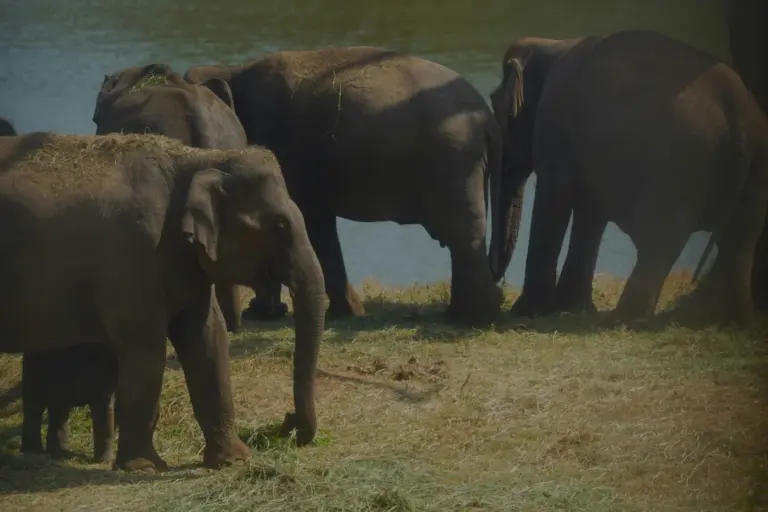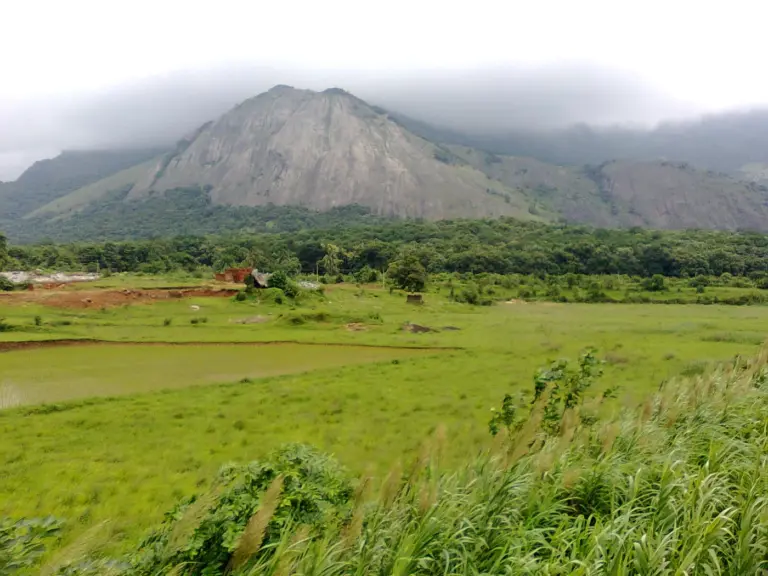
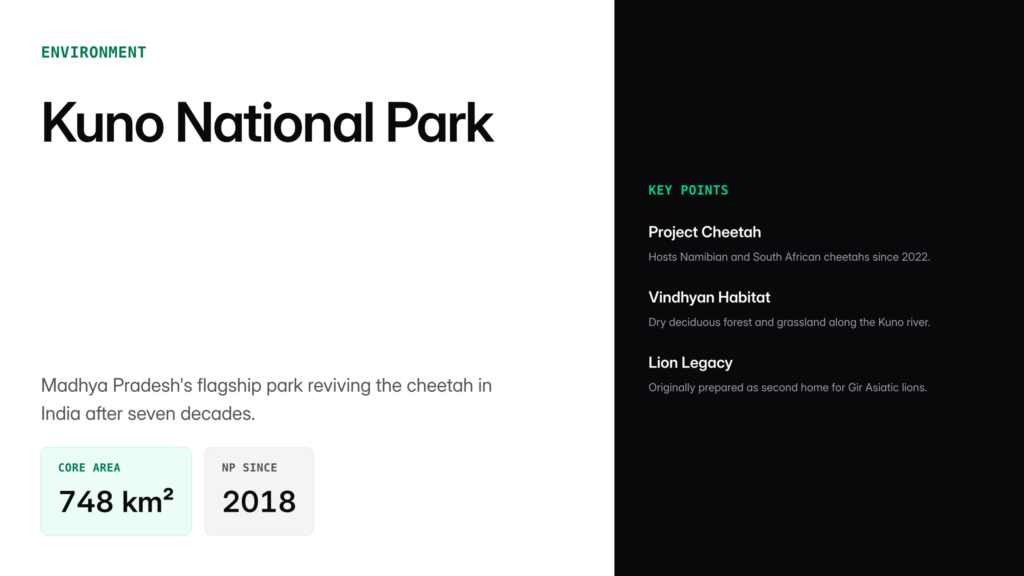
Kuno National Park is a protected area in the Sheopur district of Madhya Pradesh, best known as the site chosen for Project Cheetah — India's ambitious programme to reintroduce the cheetah seven decades after it was declared extinct in the country in 1952. Spread over approximately 748.76 sq km of core area (with a larger landscape of ~1,235 sq km including the wider Kuno division), Kuno is part of the Vindhyan hills and Chambal basin and is home to a wide variety of wildlife. For UPSC aspirants, Kuno National Park is a frequently tested topic under GS Paper III (Environment & Ecology) and current affairs, linked to Project Cheetah, species reintroduction, and biodiversity conservation.
Where Is Kuno National Park?
- State: Madhya Pradesh
- District: Sheopur (adjoining Morena and Shivpuri)
- Region: Vindhyan range; Chambal basin
- Area: Core ~748.76 sq km; wider Kuno landscape larger when adjoining sanctuaries are counted
- Upgraded to National Park: 2018 (earlier a Wildlife Sanctuary since 1981)
- Nearest rivers: Kuno River (a tributary of the Chambal)
- Nearest cities: Sheopur, Gwalior, Morena
Historical Background
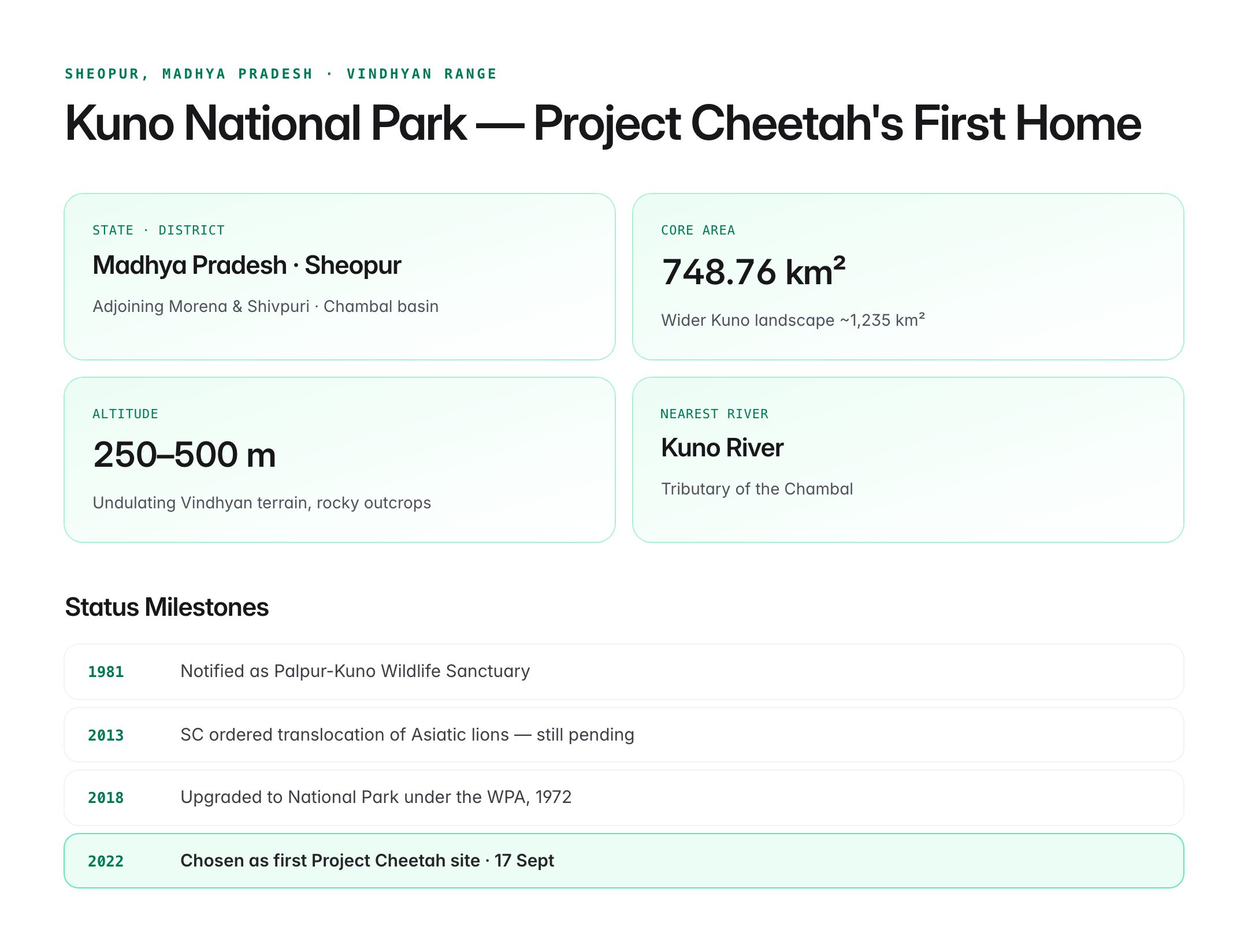
- 1981: Notified as a Wildlife Sanctuary (Palpur-Kuno).
- 1990s onwards: Identified as a potential second home for Asiatic lions to reduce the risk of loss from a single habitat (Gir, Gujarat).
- 2013: Supreme Court ordered translocation of Asiatic lions to Kuno — still pending due to inter-state issues.
- 2018: Upgraded to National Park under the Wildlife (Protection) Act, 1972.
- 2022: Chosen as the first site for Project Cheetah; cheetahs translocated from Namibia and South Africa.
Kuno Landscape and Ecology
Kuno sits in a unique ecological zone:
- Topography: Undulating terrain of the Vindhyan range; rocky outcrops, grasslands, deciduous forests.
- Altitude: 250–500 m above sea level.
- Climate: Tropical; hot summers, cold winters, monsoon from June to September.
- Soil: Shallow rocky, sandy loam.
Vegetation
- Dry deciduous forests dominated by:
- Kardhai (Anogeissus pendula) — signature tree of Kuno.
- Salai (Boswellia serrata), Khair (Acacia catechu), Tendu (Diospyros melanoxylon).
- Ber, Palash (Butea monosperma), Dhak.
- Grasslands — ideal for ungulates and cheetahs.
- Riverine vegetation along the Kuno River.
Fauna
| Category | Key Species |
|---|---|
| Carnivores | Leopard, Striped hyena, Jackal, Jungle cat, Indian wolf, Sloth bear |
| Herbivores | Chital, Sambar, Nilgai, Chinkara, Four-horned antelope, Wild boar |
| Primates | Langur, Rhesus macaque |
| Reptiles | Indian python, Mugger crocodile (Chambal–Kuno), Monitor lizard |
| Birds | Indian vulture, King vulture, Bonelli's eagle, Painted stork, Peafowl |
The area also supports gharials and Gangetic dolphins in nearby Chambal.
Project Cheetah: Kuno's Flagship Role
Launch
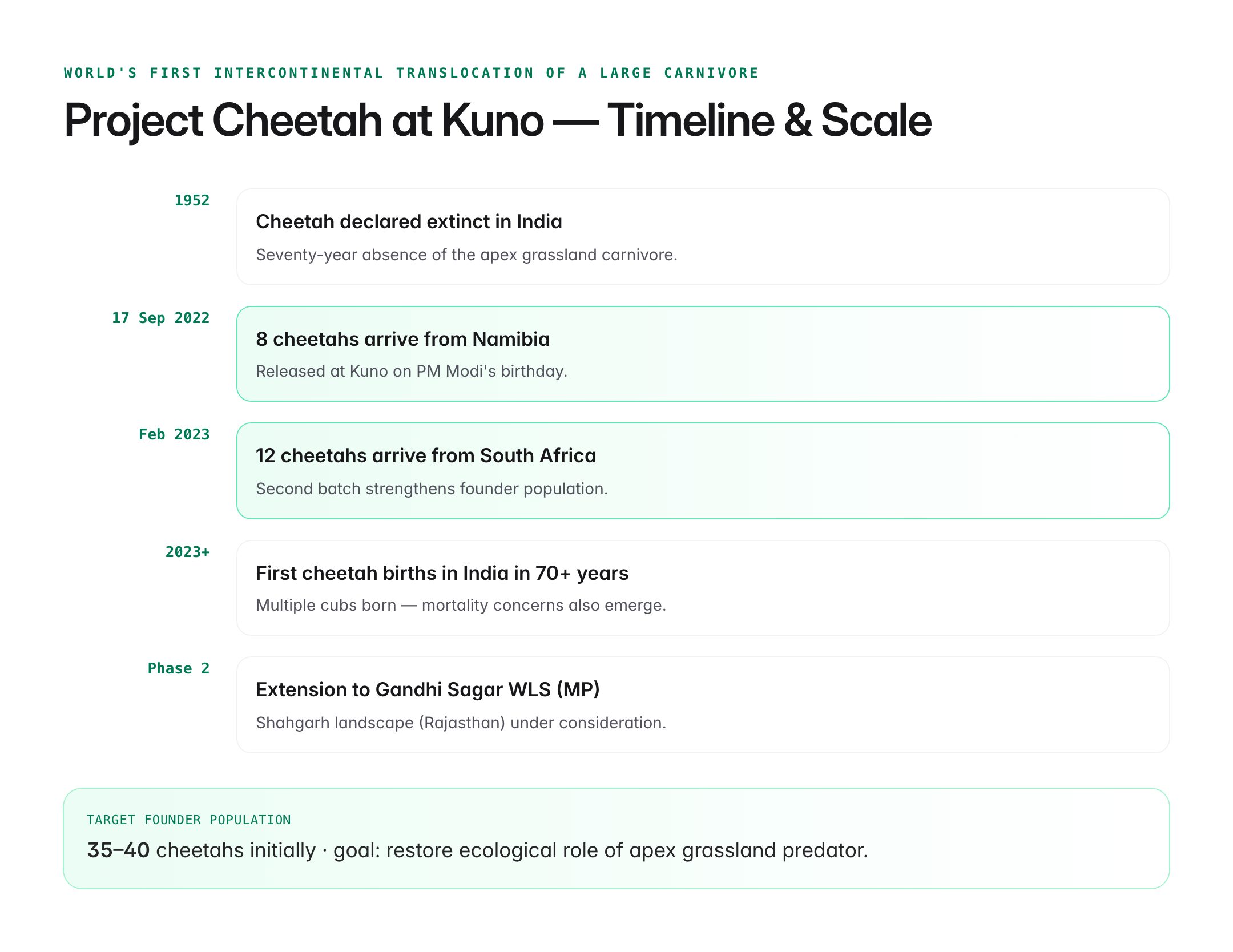
- Date: 17 September 2022 (PM Narendra Modi's birthday).
- First batch: 8 cheetahs from Namibia — world's first intercontinental translocation of a large carnivore.
- Second batch: 12 cheetahs from South Africa in February 2023.
Objectives
- Restore the ecological role of a top predator (apex grassland carnivore).
- Revive degraded grasslands through trophic cascading.
- Establish a founder cheetah population of around 35–40 individuals initially.
- Scientific, cultural, and ecological justice for a species locally extinct since 1952.
Progress and Challenges
- Successful births in India — multiple cheetah cubs born in Kuno, marking the first cheetah births on Indian soil in over 70 years.
- Mortality concerns due to infections (dermatitis linked to thick winter coats), intra-species fights, and adaptation stress.
- Need for larger prey base, expanded habitat, and reduced human pressure.
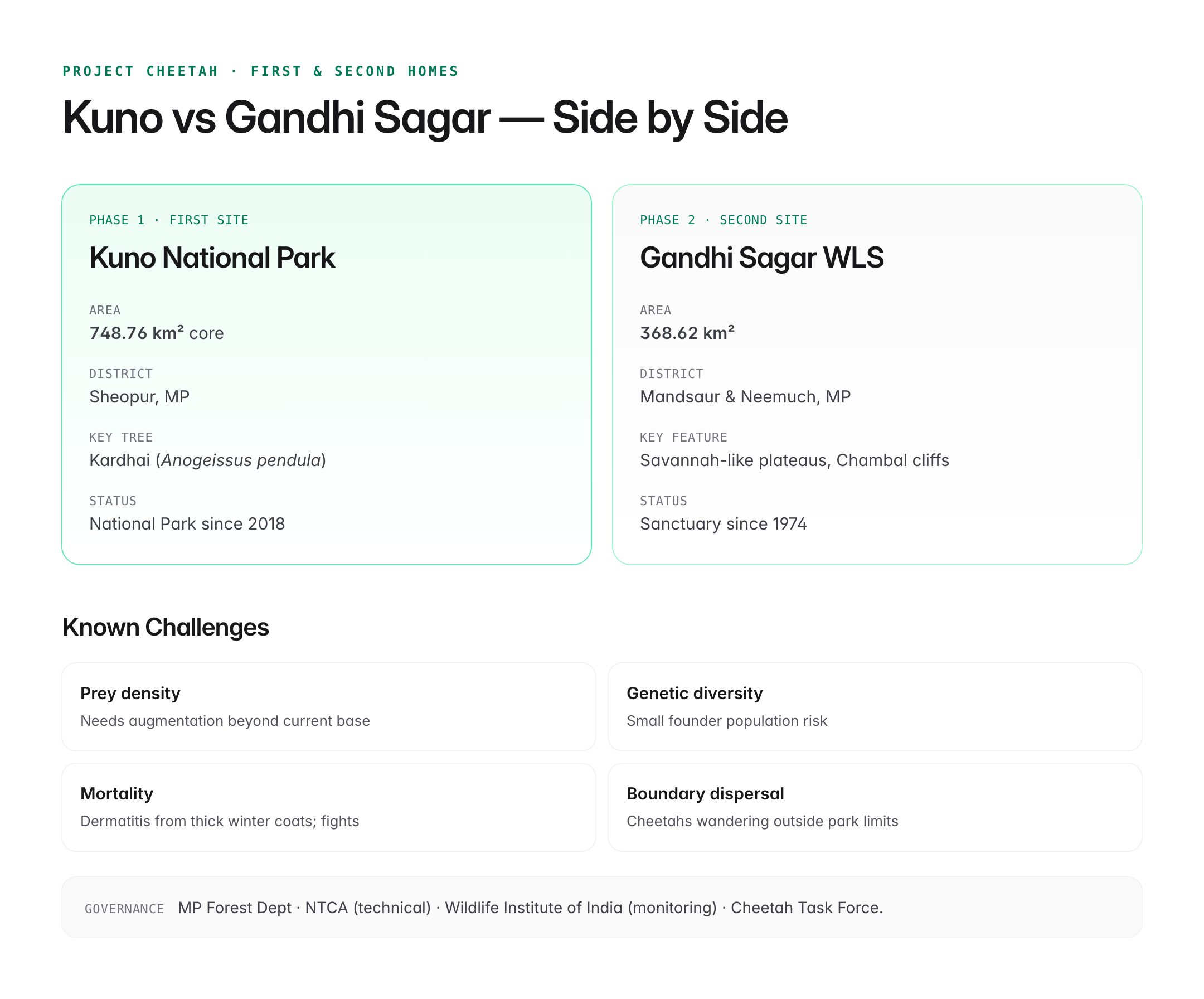
- Phase 2 extends to Gandhi Sagar Wildlife Sanctuary (MP) and potentially to Shahgarh (Rajasthan).
The Asiatic Lion Question
Kuno was originally prepared as a second home for Asiatic lions (listed as Endangered, currently only in Gir, Gujarat):
- Supreme Court's 2013 judgement ordered translocation.
- Gujarat has resisted; relocation still pending.
- Meanwhile, Kuno was repurposed for cheetahs — a choice that has drawn both support (filled an ecological niche) and criticism (diluted lion conservation focus).
Significance of Kuno National Park
- Biodiversity: Protects dry deciduous ecosystems and grasslands.
- Conservation symbolism: First national park to host reintroduced cheetahs.
- Grassland restoration: Project Cheetah promotes grasslands, often ignored vs. forests.
- Corridor value: Links with Shivpuri–Madhav NP and Chambal ecosystem.
- Livelihood opportunities: Eco-tourism, guides, homestays for locals.
Challenges
- Prey density — needs further augmentation.
- Genetic diversity in small founder population.
- Cheetah mortality and veterinary management.
- Human-wildlife conflict at fringes.
- Infrastructure: Cheetahs wandering out of park boundaries.
- Coordination among NTCA, WII, MoEFCC, and state forest department.
Governance Framework
- Managed by the Madhya Pradesh Forest Department.
- National Tiger Conservation Authority (NTCA) — technical coordination.
- Wildlife Institute of India (WII) — scientific monitoring.
- Cheetah Task Force — strategic oversight of Project Cheetah.
UPSC Relevance
- Prelims focus: Kuno National Park is in Madhya Pradesh (Sheopur district); upgraded to NP in 2018; sanctuary since 1981; Kuno river (tributary of Chambal); Project Cheetah launched 2022 from Namibia; second batch from South Africa 2023; linked with plan for Asiatic lion translocation; flora — kardhai, salai.
- Mains GS-III angle: Species reintroduction and its ecological, ethical and scientific dimensions; grassland conservation; critique of Project Cheetah; IUCN reintroduction guidelines; Asiatic lion relocation debate.
- Sample PYQ angle: "Examine the scientific, ecological, and socio-political dimensions of Project Cheetah with particular reference to Kuno National Park." — structure the answer using ecological rationale, prey-predator dynamics, translocation history, challenges (mortality, adaptation), and way forward including Gandhi Sagar as second site.
Tell Google you want more of this.
Add Anantam IAS as a preferred sourceOne tap, and this site shows up more often in your own Top Stories, AI Overviews and AI Mode. Remove it any time.