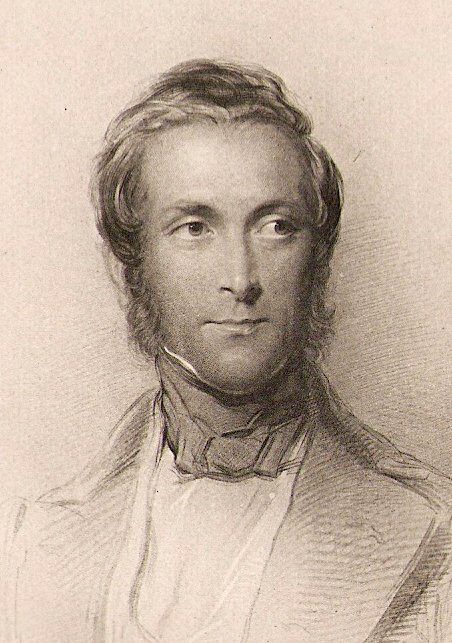
Lord Dalhousie served as Governor-General of India between 1848 and 1856 and is one of the most consequential figures in the entire colonial period. In just eight years he annexed more Indian territory than any other British administrator, laid the first railway track on the subcontinent, opened the telegraph and modern postal services, codified a centralised Public Works Department, and pushed through educational reforms whose institutional logic still shapes the country. He also, almost single-handedly, manufactured the political grievances that exploded in the Revolt of 1857 within a year of his departure.
For UPSC, Lord Dalhousie is unavoidable. He sits at the hinge between Company rule and Crown rule, between a patchwork of subsidiary alliances and a directly administered Raj, between bullock-cart India and steam-and-wire India. Mains questions on the causes of 1857 almost always return to his Doctrine of Lapse and the annexation of Awadh. Prelims regularly tests his reforms — Wood’s Despatch (1854), the first railway from Bombay to Thane (1853), the Public Works Department, the cheap uniform postage and the postage stamp. Lord Dalhousie is the answer to more standard exam prompts than perhaps any single Governor-General other than Warren Hastings or Lord Curzon.
This explainer walks through Lord Dalhousie’s career, his expansionist doctrine, every major annexation, the four modernising reforms he is remembered for, and the political legacy that historians still debate.
Who Was Lord Dalhousie
James Andrew Broun-Ramsay, the 1st Marquess of Dalhousie, was a Scottish peer born in 1812. He entered Parliament in 1837, served as President of the Board of Trade under Robert Peel, and arrived in Calcutta as Governor-General in January 1848 at the unusually young age of 35. He left India in March 1856 in broken health and died in 1860.
A young, ambitious administrator
Dalhousie inherited an East India Company that had finished the First Anglo-Sikh War the year before and was uncertain about how far to push direct rule. He resolved the uncertainty rapidly. Within months of his arrival, friction in Multan triggered the Second Anglo-Sikh War, and by 1849 the entire Punjab had been annexed, ending the Sikh Empire of Ranjit Singh’s successors. The speed and finality of that annexation set the tone for everything that followed.
Personal style
Contemporaries describe Lord Dalhousie as hardworking, impatient, sure of his judgments, and contemptuous of what he called Indian “mismanagement”. He believed annexation served Indians as much as it served Britain. That conviction made him politically incapable of slowing down, even when his Council and the Court of Directors urged caution over Awadh.
The Doctrine of Lapse
The Doctrine of Lapse is the single policy most closely associated with Lord Dalhousie. It was not invented by him, but he applied it with a determination no predecessor had shown.
What the doctrine claimed
Under the doctrine, when the ruler of a dependent princely state died without a natural-born male heir, the state would “lapse” to the British paramount power rather than pass to an adopted son. Hindu personal law had long permitted adoption to continue a line. The British position was that the sovereign right to recognise an adopted heir of a dependent state rested with the paramount power, and that the paramount power would now refuse such recognition as a matter of policy.
Annexations under the doctrine
Lord Dalhousie used the Doctrine of Lapse to annex:
- Satara (1848) — the first major application, after the death of Appa Sahib without a natural heir.
- Jaitpur and Sambalpur (1849).
- Baghat (1850).
- Udaipur state in Chhattisgarh (1852).
- Jhansi (1854) — the British refused to recognise Damodar Rao, the adopted son of Raja Gangadhar Rao and Rani Lakshmibai. The refusal turned Jhansi into one of the rallying points of 1857.
- Nagpur (1854) — the largest Maratha state to fall under the doctrine.
Karauli was a notable exception. The Court of Directors overruled Dalhousie and allowed the adoption to stand, which shows that the doctrine was a policy choice, not a legal necessity.
Annexation of Awadh — the exception that proved the rule
Awadh was annexed in February 1856, just weeks before Lord Dalhousie left India. The annexation was not done under the Doctrine of Lapse because Nawab Wajid Ali Shah had natural heirs. Instead, Dalhousie cited alleged misgovernment and the failure to implement reforms demanded by successive British Residents. Awadh’s revenue value, its position in the Gangetic plain, and the disproportionate number of sepoys from Awadh in the Bengal Army made the annexation politically toxic. It directly destabilised the loyalty of the Bengal Native Infantry and is treated by historians from R. C. Majumdar to Eric Stokes as a proximate trigger of the 1857 Revolt.
Wars and Other Annexations
The Doctrine of Lapse was only one tool. Lord Dalhousie was equally willing to use military force.
Second Anglo-Sikh War and Punjab (1849)
The war began over the Multan revolt of Diwan Mulraj. After the battles of Chillianwala and Gujrat, the Punjab was annexed in March 1849. Dalip Singh, the minor Maharaja, was pensioned off. The Koh-i-Noor diamond was sent to Queen Victoria. A three-member Board of Administration under Henry Lawrence and his brother John Lawrence administered the new province until the Board was dissolved and John Lawrence became Chief Commissioner in 1853.
Second Anglo-Burmese War and Pegu (1852)
After commercial disputes in Rangoon, British forces under General Godwin captured Rangoon, Bassein and Pegu. The Pegu province (Lower Burma) was annexed in December 1852, extending British India to the eastern coast.
Sikkim (1850)
Dalhousie annexed a tract of Sikkimese territory after detention of two British travellers, including Joseph Hooker.
Reforms Under Lord Dalhousie
Lord Dalhousie is the godfather of modern administrative India. His reforms in transport, communications, public works and education established the institutional skeleton that the Raj, and later independent India, would build on.
Railways — the first track in India
Lord Dalhousie’s “Railway Minute” of 1853 set out the strategic, commercial and political case for a railway network covering the entire subcontinent. He insisted that the network be planned as one system, even though it would be built by private guaranteed-return companies under government supervision. The first passenger railway in India ran from Bombay (Boribunder) to Thane on 16 April 1853, a distance of 34 km. The Calcutta–Raniganj line opened in 1854. By the time Dalhousie left in 1856, the broad-gauge standard, the trunk-line plan and the contracting framework were all in place.
Telegraph and modern postal service
The first telegraph line connected Calcutta and Diamond Harbour in 1851. By 1855 a 4,000-mile telegraph network linked Calcutta, Agra, Bombay, Peshawar and Madras. The military value of this network during the Revolt of 1857 was decisive.
The Post Office Act of 1854 introduced a uniform half-anna postage rate across India regardless of distance, replacing the older zonal pricing. The Director-General of Post Offices became a unified national post. India’s first postage stamps were issued the same year. The cheap, uniform, national post is a Dalhousie creation.
Public Works Department
Earlier public works in each Presidency had been run by the military boards. Lord Dalhousie created a separate civilian Public Works Department in 1854, with engineering establishments under each provincial government. Irrigation works including the Upper Bari Doab canal, the Ganges Canal completion, and a programme of trunk-road construction (Grand Trunk Road metallisation) followed.
Wood’s Despatch (1854) — the Magna Carta of Indian education
The Educational Despatch of 1854, drafted by Sir Charles Wood, President of the Board of Control, was issued during Dalhousie’s tenure. It proposed:
- A graded system from village primary schools to universities.
- English as the medium of instruction at higher levels and Indian vernaculars at the primary level.
- The establishment of departments of public instruction in each province.
- The founding of universities at Calcutta, Bombay and Madras, which followed in 1857.
- Grants-in-aid to private institutions.
Wood’s Despatch is the foundation document of the modern Indian education system. It is sometimes called the “Magna Carta of English education in India”.
Other reforms
Lord Dalhousie also legalised widow remarriage’s social ground through patronage of Ishwar Chandra Vidyasagar’s campaign, though the Hindu Widows’ Remarriage Act passed in July 1856 under his successor, Lord Canning. He recruited the Gurkha regiments into the Bengal Army and reorganised the Indian artillery. He moved the seat of government to Simla in summer.
Lord Dalhousie and the Road to 1857
The Revolt of 1857 broke out fifteen months after Lord Dalhousie left India, but the political ingredients were almost entirely his.
Grievances of the princes
The Doctrine of Lapse alienated almost every adopting princely house in India. The Rani of Jhansi, Nana Sahib (denied the Peshwa’s pension after Baji Rao II’s death), and the dispossessed family of Wajid Ali Shah of Awadh were active organisers or symbols of the revolt. The 1857 movement is unimaginable without these dispossessions.
Sepoy resentment
The Bengal Army drew heavily from Awadh and Bihar. The annexation of Awadh destroyed the prestige and pension arrangements of these sepoys’ home districts and broke the unspoken contract under which the Nawab’s territory had been treated as a friendly state. The General Service Enlistment Act of 1856, passed under Lord Canning but prepared under Dalhousie, required new recruits to serve overseas if ordered. That offended caste norms that the Bengal Army had previously protected.
Cultural and religious anxieties
Wood’s Despatch, missionary patronage, and abolitionist measures (sati had been abolished long before, but stricter enforcement, and the prospect of legalising widow remarriage) combined to produce a perception that the Company was attacking Hindu and Muslim religious life. Dalhousie’s railway, telegraph and postal modernisation, with their breaching of caste-based travel restrictions, deepened that perception.
The 1857 Revolt is therefore not “caused” by Lord Dalhousie alone. But the political map of grievances that the revolt drew on was a Dalhousie map. The connection between his policies and 1857 is recognised in NCERT and standard UPSC reference texts. See our overview of the 1857 ki Kranti for the full chronology.
Assessment and Legacy
Historians remain divided on Lord Dalhousie.
The imperialist case
The standard imperialist defence, articulated by Sir William Lee-Warner and later Percival Spear, presents Dalhousie as the architect of a unified, modern India: railways, telegraph, post, public works, education, and a single administrative system replacing dozens of overlapping princely jurisdictions. On this view, the reforms outweigh the annexations, and the revolt was a temporary crisis on the road to a properly governed subcontinent.
The nationalist case
Indian nationalist historians from R. C. Majumdar onwards have been sharper. They argue that Lord Dalhousie’s expansionism violated explicit treaty obligations, that the Doctrine of Lapse repudiated Hindu personal law without authority, and that the annexation of Awadh was based on a deliberately constructed misgovernment narrative. They also note that the “modernisation” was designed primarily to extract resources and move troops, and that its benefits to the Indian population were incidental.
Modern scholarship
Recent scholarship, especially Eric Stokes and Christopher Bayly, balances the two views. The reforms were real and consequential, but they were carried out within a coercive political project that treated Indian rulers and Indian society as administrative obstacles. The modern Indian state inherits both the institutional gains and the centralising habits of the Dalhousie years.
For UPSC purposes, the safe formulation is that Lord Dalhousie was the most aggressive Governor-General of the Company period, that his policy of annexation through doctrine and war doubled the directly administered British Indian territory, that his administrative and infrastructural reforms were the most far-reaching of any colonial administrator before Curzon, and that the unintended consequence was the Revolt of 1857.
Quick Reference for UPSC
- Tenure — 1848 to 1856.
- Major annexations by doctrine — Satara (1848), Jaitpur, Sambalpur, Baghat, Udaipur (Chhattisgarh), Jhansi (1854), Nagpur (1854).
- Annexations by war — Punjab (1849, Second Anglo-Sikh War), Lower Burma / Pegu (1852, Second Anglo-Burmese War).
- Annexation on grounds of misgovernment — Awadh (1856).
- First railway — Bombay to Thane, 16 April 1853.
- Telegraph — Calcutta-Diamond Harbour 1851; pan-India network by 1855.
- Postal reform — Post Office Act 1854, uniform half-anna rate, first postage stamps.
- Education — Wood’s Despatch 1854, leading to Calcutta, Bombay, Madras universities in 1857.
- Public Works Department — civilianised in 1854.
- Legacy — set the political stage for the 1857 Revolt, especially through Doctrine of Lapse and Awadh annexation.
Frequently Asked Questions
Who was Lord Dalhousie?
Lord Dalhousie, James Andrew Broun-Ramsay, was the Governor-General of India from 1848 to 1856 under the East India Company. He is remembered for the Doctrine of Lapse, the annexation of Awadh, the first Indian railway, the telegraph and modern postal services, the Public Works Department, and Wood’s Despatch on education.
What is the Doctrine of Lapse?
The Doctrine of Lapse, applied vigorously by Lord Dalhousie, held that a dependent princely state would lapse to the British paramount power on the death of its ruler without a natural-born male heir, ignoring the Hindu practice of adoption. It was used to annex Satara, Jhansi, Nagpur, Sambalpur and other states.
Why did Lord Dalhousie annex Awadh?
Awadh was annexed in February 1856 not under the Doctrine of Lapse but on the ground of alleged misgovernment by Nawab Wajid Ali Shah. The annexation alienated sepoys from Awadh in the Bengal Army and is treated as a direct trigger of the Revolt of 1857.
When did the first railway run in India under Lord Dalhousie?
The first passenger railway in India ran from Bombay (Boribunder) to Thane on 16 April 1853, during Lord Dalhousie’s tenure. His Railway Minute of the same year set out the framework for the all-India network built by private companies under government guarantee.
What was Wood’s Despatch?
Wood’s Despatch of 1854 was the foundational education policy document issued during Lord Dalhousie’s tenure. It proposed a graded school system, English at higher levels, vernacular instruction at the primary level, departments of public instruction in each province, and the establishment of the Universities of Calcutta, Bombay and Madras in 1857.
How did Lord Dalhousie contribute to the Revolt of 1857?
Lord Dalhousie’s Doctrine of Lapse dispossessed the rulers of Jhansi, Nagpur, Satara and other states. The annexation of Awadh broke the political contract that underpinned Bengal Army recruitment. His modernisation programme, especially Wood’s Despatch and the telegraph, fed cultural anxieties. These grievances combined with the cartridge controversy to produce the 1857 uprising.
Which states were annexed under the Doctrine of Lapse?
The principal annexations under the Doctrine of Lapse were Satara (1848), Jaitpur and Sambalpur (1849), Baghat (1850), Udaipur in Chhattisgarh (1852), Jhansi (1854) and Nagpur (1854). Karauli was a notable case where the Court of Directors overruled the doctrine.
What reforms did Lord Dalhousie introduce in communication?
Lord Dalhousie introduced the first telegraph line from Calcutta to Diamond Harbour in 1851 and built a 4,000-mile pan-India telegraph network by 1855. The Post Office Act of 1854 introduced a uniform half-anna postage rate across India and the country’s first postage stamps were issued the same year.
Tell Google you want more of this.
Add Anantam IAS as a preferred sourceOne tap, and this site shows up more often in your own Top Stories, AI Overviews and AI Mode. Remove it any time.