Maharaja Surajmal, also written Suraj Mal, was the Jat ruler of Bharatpur who, between the 1730s and his death in battle on 25 December 1763, turned a cluster of Jat strongholds in the Braj country into one of the strongest states of eighteenth-century north India. NCERT credits Maharaja Surajmal with consolidating the Bharatpur state from 1756 to 1763 over parts of eastern Rajasthan, southern Haryana, western Uttar Pradesh and Delhi, and with building Lohagarh, the fort that later held off the British. He matters because his career shows how regional powers rose out of Mughal decline, and because his refusal to stay with the Maratha army before Panipat in 1761 is still argued over.
Two stories crowd around him. One says he betrayed the Marathas at Panipat; the other says Lohagarh was never captured by anyone. Both are wrong in the form people repeat them. Suraj Mal left the Maratha camp months before the battle after his advice was rejected, and then sheltered the fugitives; Lohagarh beat off Lord Lake in 1805 but fell to Lord Combermere in 1826. This note sets out what the record supports.
Who Was Maharaja Surajmal?
Maharaja Surajmal was a Sinsinwar Jat chief whose family had built power around Deeg and Bharatpur, south of Agra and Delhi, as Mughal authority weakened after 1707. The table gives the core facts with the source type behind each.
| Fact | Detail |
|---|---|
| Lived | Born about 1707 by later accounts; killed 25 December 1763 near the Hindan river, east of Delhi |
| Dynasty | Sinsinwar Jats of Deeg and Bharatpur; son and successor of Badan Singh |
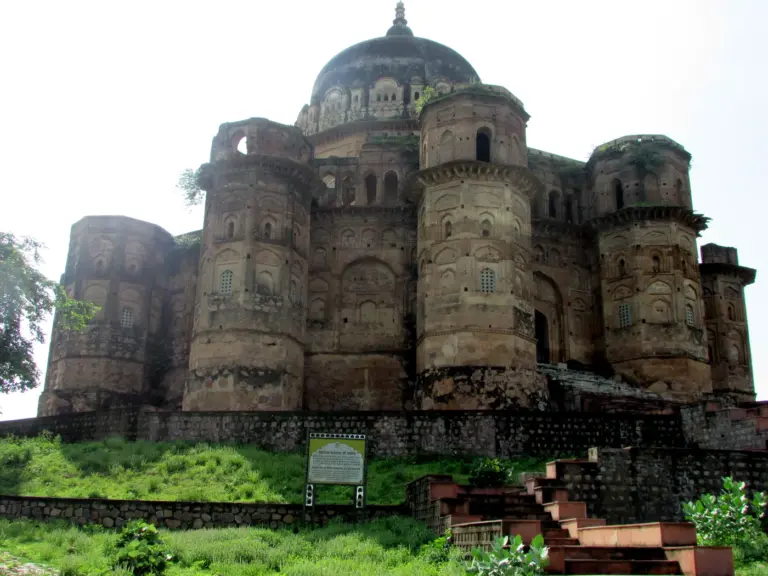
| Capital | Bharatpur, taken from the Sogaria chief Khem Karan in 1732 (Qanungo) and fortified as Lohagarh, the “iron fort” |
| Other strongholds | Deeg, Kumher and Ballabhgarh |
| Territory at its height | Parts of eastern Rajasthan, southern Haryana, western Uttar Pradesh and Delhi (NCERT) |
| Key events | Sack of Delhi (1753); Maratha siege of Kumher (1754); withdrawal from the Maratha camp (1760); capture of Agra fort (1761) |
| Title given by a contemporary | “The Plato of the Jat tribe”, by the author of the Persian history Imad-us-Saadat |
| Successor | His son Jawahar Singh |
How Did Suraj Mal Build the Bharatpur State?
Suraj Mal built Bharatpur the way most eighteenth-century successor states were built: by taking forts, attaching himself to a stronger patron and running revenue efficiently while Delhi could not stop him. The Jat rebellions of the late seventeenth century under Gokula, Rajaram and Churaman had already made the Braj country hard to govern; NCERT notes that by the 1680s Jats dominated the region between Delhi and Agra.
Forts First
Kalika Ranjan Qanungo, whose History of the Jats (1925) remains the standard scholarly account, says Suraj Mal took Bharatpur in 1732 by a night attack on its lord, Khem Karan Sogoria, when it was “only a small mud-fort”. Local accounts date the founding to 1733. Over the next two decades he ringed it with earthen ramparts and a moat, and the Encyclopaedia Britannica of 1911 credits him with the forts of Deeg and Kumher as well. Earth walls were the point: they absorbed cannon shot that would have shattered masonry.
A Rajput Patron
Qanungo stresses one political choice. Suraj Mal attached himself early to Sawai Jai Singh of Amber, the most powerful Rajput ruler of the day, so that the young Jat power could grow without Rajput hostility. After Jai Singh’s death he stood by his eldest son Ishwari Singh in the Jaipur succession war, fighting at Bagru, south-west of Jaipur, in the late 1740s.
Revenue, Not Just Raids
Britannica notes that Suraj Mal, like Jai Singh, adopted a modified form of Mughal revenue administration in his territories. That is the institutional side of the “Plato” title. The Persian historian who coined it said that in managing revenue and civil affairs he had no equal among the nobles of Hindustan except the Nizam, Asaf Jah.
Alexander Dow estimated in 1770 that the Bharatpur raja’s revenue was about two million pounds and his army 60,000 to 70,000 men. The 1911 Britannica, reporting the figure, adds “perhaps extravagantly”, and that caution should travel with it.
Delhi, Kumher and the Marathas
Suraj Mal’s middle years were a contest with three larger powers at once: the Mughal court, the Marathas and the Afghan invader Ahmad Shah Abdali. He survived by switching sides without ever becoming anyone’s vassal for long.
The Sack of Delhi, 1753
In 1753 the Mughal emperor Ahmad Shah dismissed his wazir, Safdar Jang of Awadh, and civil war broke out. Safdar Jang called in Suraj Mal, and the Jats plundered old Delhi and its outskirts so thoroughly, Qanungo writes, that the city remembered it as the Jat-gardi, the Jat loot, beside the Shah-gardi of Ahmad Shah Abdali and the Bhao-gardi of the Marathas. Britannica records the same event: Suraj Mal “plundered Delhi (1753)”. The episode belongs in any honest account; the state-builder was also a raider when the occasion offered.
The Siege of Kumher, 1754
The young wazir Imad-ul-Mulk then brought the Marathas against the Jats. Raghunath Rao demanded a ransom of one crore rupees; Suraj Mal’s envoy offered forty lakhs. In January 1754 the Maratha army sat down before Kumher, and the siege dragged on until May. During it, Qanungo records, Khande Rao Holkar, the only son of Malhar Rao Holkar, was struck down by a shot from the fort. Khande Rao was the husband of Ahilyabai Holkar, who would later rule Indore.
The siege ended in a negotiated settlement rather than a storm. That pattern, a fort too strong to take and a price paid to make the besiegers leave, would repeat at Bharatpur half a century later.
Why Did Suraj Mal Leave the Marathas Before Panipat?
Suraj Mal left the Maratha camp in the summer of 1760, about five months before the battle of 14 January 1761, because the Maratha commander Sadashivrao Bhau rejected his plan of campaign and then crossed him on Delhi. He did not desert on the battlefield, and he did not fight for the Abdali.
When Ahmad Shah Abdali invaded again in 1759-60, the Peshwa sent a large army north under the Bhau, and Suraj Mal joined it near Agra. The advice he offered survives in the Marathi Bhau Sahib chi Bakhar, which Qanungo translates. Its gist:
- send the women, the surplus baggage and the heavy guns south of the Chambal to the forts of Jhansi or Gwalior, or into one of Suraj Mal’s own forts;
- fight the Afghans with light, mobile troops in the old Maratha manner, not as a slow army tied to its camp;
- keep the line of retreat open.
The Bhau rejected it. The Maratha historian G. S. Sardesai adds the frictions that followed at Delhi: the families were not sent to Gwalior, the wazirship was not given to Suraj Mal’s candidate Imad-ul-Mulk, and the Bhau stripped the silver ceiling of the Diwan-i-Khas to pay his troops. Suraj Mal slipped away to Ballabhgarh. The Bhau is reported to have said that once the Durrani was defeated, the Jat would hardly matter.
Read the note on the Third Battle of Panipat for the campaign itself. For Suraj Mal, the verdict historians reach is mostly about judgment: the heavy, family-laden army he warned against is exactly what starved at Panipat.
What He Did After Panipat
The Maratha record itself clears him of the charge of profiting from the defeat. Fugitives who reached Bharatpur wrote that Suraj Mal kept them for fifteen to twenty days, treated them with respect and had his chiefs escort them to Gwalior. Qanungo cites a Persian account that he gave every common soldier a rupee, a piece of cloth and a seer of grain. Shamsher Bahadur, the Peshwa Baji Rao I’s son, reached Kumher wounded and died there in his care. Nana Fadnavis wrote that the Peshwa’s heart was “greatly consoled” by Suraj Mal’s conduct.
He also used the vacuum. In 1761, with the Abdali still in north India, his troops forced the Mughal commander out of Agra fort, the old imperial capital, after a siege of about twenty days. Britannica’s line is blunt: he “took Agra (1761)”. Read the Agra Fort note for the monument he captured.
How Did Suraj Mal Die, and What Followed?
Suraj Mal died in battle against the Rohilla chief Najib-ud-daula, who controlled Delhi after Panipat. Qanungo, using a court newsletter recorded two days after the event, dates the death to Sunday, 25 December 1763. Suraj Mal crossed the Hindan, a tributary of the Yamuna east of Delhi, with a few thousand horsemen and was killed in an ambush by Rohilla infantry.
His son Jawahar Singh carried on the war. NCERT notes that Jawahar Singh fielded 30,000 troops of his own and hired 20,000 Maratha and 15,000 Sikh soldiers against the Mughals. Britannica’s summary of what came next is that the state declined soon after Suraj Mal’s death.
Bharatpur’s later history is where the Lohagarh legend comes from. In 1804 the raja sided with the Maratha chief Holkar against the East India Company. Lord Lake took Deeg and besieged Bharatpur in 1805, but had to raise the siege after four failed assaults, and a treaty of 17 April 1805 left the raja his territory. Twenty years later a succession dispute brought the British back, and Lord Combermere captured Bharatpur on 18 January 1826 after a hard siege and dismantled its fortifications. Lohagarh was the fort that defeated Lake. It was not the fort that was never taken.
What Historians Dispute About Suraj Mal
Three judgments divide writers on Suraj Mal, and each turns on how you read the same evidence.
Betrayal or Prudence at Panipat?
Older Maratha bakhars and later popular retellings cast his withdrawal as betrayal. The Bhau Bakhar itself, and the Maratha letters after the battle, support a different reading: an ally who gave advice, was overruled and left before the fighting. Qanungo argues the second view at length, and the post-battle letters make it hard to sustain the first.
State-Builder or Opportunist?
The Jat-gardi of 1753 and the seizure of Agra in 1761 show a ruler who took what weakness offered. The revenue system, the forts and the Persian historian’s praise show an administrator. Both are true, and the eighteenth-century regional states generally combined plunder and governance; the Maratha Empire did the same.
A Caste or Religious Hero?
Today Suraj Mal is claimed as a Jat community icon and sometimes as a Hindu champion against the Mughals and Afghans. The record is more practical. He fought alongside Safdar Jang, a Shia Mughal noble, and against Hindu Marathas at Kumher; Qanungo notes the Persian claim that he built a mosque and a tomb over Shamsher Bahadur’s grave. A neutral answer describes his alliances rather than assigning him a cause.
Maharaja Surajmal Today
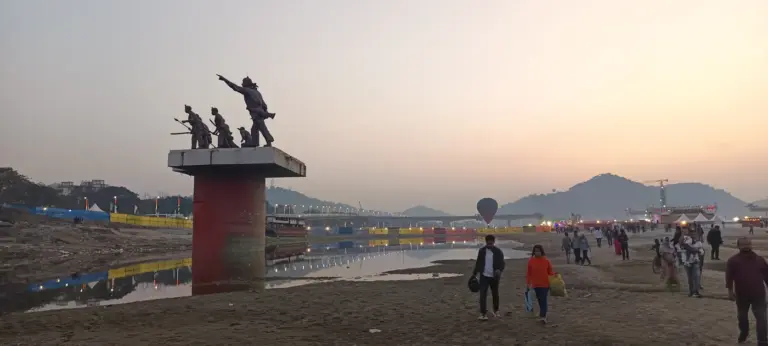
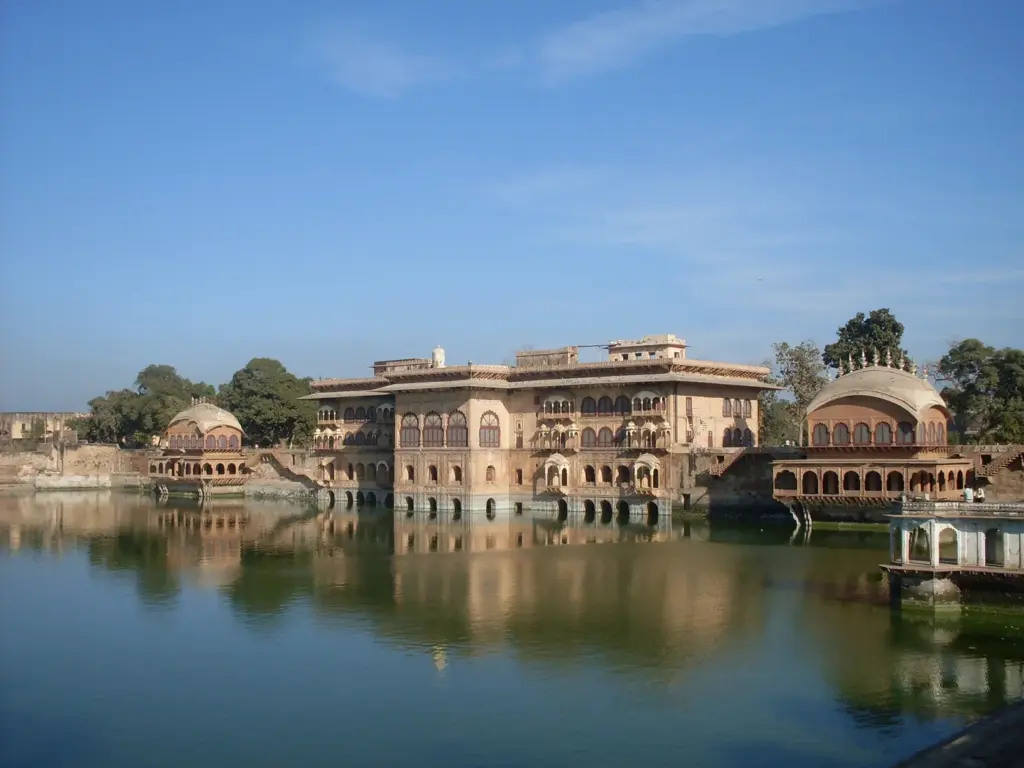
Maharaja Surajmal’s memory is now a matter of public commemoration in Rajasthan, Haryana and Delhi. The Government of India’s festival listing schedules the Maharaja Surajmal Jayanti at Bharatpur for 24 and 25 December 2026, built around the anniversary of his death, and in December 2024 the Haryana Chief Minister installed his statue at Phoolkan in Sirsa district on his “sacrifice day”. Lohagarh’s walls and moat still stand in the old city of Bharatpur, in a district covered in the note on the districts of Rajasthan.
Bharatpur’s other famous landmark has a different history. Keoladeo National Park, now a UNESCO World Heritage wetland, was shaped much later by Bharatpur’s rulers as a duck-shooting reserve, not by Suraj Mal. Keep the two apart in a geography answer.
How to Study Maharaja Surajmal for Exams
Maharaja Surajmal sits in General Studies Paper I under modern Indian history, in the topic of eighteenth-century political formations, and in History optional Paper I under the decline of the Mughals. Rajasthan and Haryana state services ask about him more directly.
Questions use him as evidence rather than as the subject. Mains 2014 GS Paper I asked: “The third battle of Panipat was fought in 1761. Why were so many empire-shaking battles fought at Panipat?” A paragraph on Suraj Mal’s withdrawal and the Maratha supply crisis strengthens that answer. In Prelims, History accounts for 184 of the 1,403 questions in the Prelims question bank from 2013 to 2026, and eighteenth-century states appear as ruler-to-state or fort-to-ruler pairings.
The revision facts worth fixing:
- Bharatpur taken from Khem Karan Sogoria in 1732 (local accounts 1733); Lohagarh, the iron fort, with earthen ramparts and a moat.
- NCERT dates his consolidation of the Jat state to 1756 to 1763.
- Sack of Delhi in 1753 on behalf of Safdar Jang, remembered as the Jat-gardi.
- Siege of Kumher, January to May 1754; Khande Rao Holkar killed.
- Left the Bhau’s camp in 1760 after his plan was rejected; sheltered Maratha fugitives after 14 January 1761.
- Took Agra fort in 1761; killed fighting Najib-ud-daula’s forces on 25 December 1763.
- Lohagarh beat Lord Lake in 1805 and fell to Lord Combermere on 18 January 1826.
Three confusions cost marks:
- “Lohagarh was never captured.” It resisted Lake’s four assaults in 1805 and was taken by Combermere in 1826.
- “Suraj Mal fought at Panipat.” He left the Maratha camp months before the battle and fought on neither side.
- Badan Singh, Suraj Mal and Jawahar Singh. Father, son and grandson in that order; the 30,000 troops and hired Maratha and Sikh contingents belong to Jawahar Singh, not Suraj Mal.
Set him beside the other eighteenth-century powers:
| State | Founder or key ruler | Base | Relation to the Mughals |
|---|---|---|---|
| Bharatpur (Jats) | Suraj Mal | Braj, south of Delhi | Rose by rebellion, then served and plundered Mughal factions |
| Awadh | Saadat Khan, Safdar Jang | Lucknow and Faizabad | Mughal governors turned hereditary rulers |
| Hyderabad | Asaf Jah (Nizam-ul-Mulk) | Deccan | Mughal governor who kept nominal allegiance |
| Marathas | The Peshwas | Pune | Expanded at Mughal cost, then claimed to protect the emperor |
| Sikhs | The misls | Punjab | Fought Mughal governors and the Abdali |
Pair this note with the overview of the Mughal Empire for the decline narrative and the note on Nadir Shah for the invasion of 1739 that sent many Delhi notables to seek refuge with the Jats.
Suraj Mal is small in the syllabus and useful in an answer. He turns “the rise of regional states” into a named man with forts, a revenue system and a dated choice before Panipat, and a candidate who can correct the two popular myths about him is showing exactly the source sense these questions reward.
Frequently Asked Questions
Who was Maharaja Surajmal?
Maharaja Surajmal was the Jat ruler of Bharatpur in the eighteenth century who built the Bharatpur state and its fort, Lohagarh. NCERT credits him with consolidating the state from 1756 to 1763 over parts of eastern Rajasthan, southern Haryana, western Uttar Pradesh and Delhi. He was killed in battle on 25 December 1763.
Why is Suraj Mal called the Plato of the Jats?
The phrase comes from the author of Imad-us-Saadat, an eighteenth-century Persian history, as quoted by the historian K. R. Qanungo. The author praised his sagacity and said that in managing revenue and civil affairs he had no equal among the nobles of Hindustan except the Nizam. It is a contemporary compliment, not an official title.
Did Suraj Mal betray the Marathas at Panipat?
The evidence does not support that charge. He left the Maratha camp in 1760, months before the battle, after Sadashivrao Bhau rejected his advice to send away families and heavy guns and fight with light troops. After the defeat he sheltered and fed Maratha fugitives, and Nana Fadnavis wrote that the Peshwa was consoled by his conduct.
Was Lohagarh fort ever captured?
Yes. Lohagarh resisted four British assaults under Lord Lake in 1805, which is the source of its reputation. It was captured by Lord Combermere on 18 January 1826, after which the British dismantled its fortifications.
How did Maharaja Surajmal die?
He was killed on 25 December 1763 near the Hindan river, east of Delhi, while fighting the forces of the Rohilla chief Najib-ud-daula. Contemporary accounts say he crossed the river with a small body of horsemen and was caught in an ambush. His son Jawahar Singh succeeded him.
Who founded Bharatpur?
Bharatpur as a Jat capital was built by Suraj Mal, who took the site from the Sogaria chief Khem Karan in 1732 according to Qanungo, while local accounts give 1733. It was then a small mud fort, which he turned into the stronghold of Lohagarh. His family’s earlier seat had been at Deeg.
What was the Jat-gardi?
Jat-gardi, meaning the Jat loot, is the name Delhi gave to the plunder of the city and its suburbs by Suraj Mal’s troops in 1753. It happened during the civil war between the emperor and his dismissed wazir Safdar Jang, who had called in the Jats. Britannica records it simply as his plunder of Delhi in 1753.
Practice Questions
Prelims
1. Consider the following statements about Maharaja Surajmal: 1. He fought alongside the Marathas at the Third Battle of Panipat in 1761. 2. His troops captured Agra fort in 1761. 3. He was killed in battle in 1763. Which of the statements given above is/are correct?
- (a) 1 and 2 only
- (b) 2 and 3 only
- (c) 1 and 3 only
- (d) 1, 2 and 3
Answer: (b) He left the Maratha camp months before Panipat; he took Agra in 1761 and was killed on 25 December 1763.
2. Consider the following statements about Lohagarh fort: 1. It is located at Bharatpur. 2. It withstood the siege of Lord Lake in 1805. 3. It was never captured by any power. Which of the statements given above is/are correct?
- (a) 1 only
- (b) 1 and 2 only
- (c) 2 and 3 only
- (d) 1, 2 and 3
Answer: (b) Lord Combermere captured Bharatpur on 18 January 1826, so statement 3 is wrong.
3. Khande Rao Holkar, husband of Ahilyabai Holkar, was killed during the siege of which fort?
- (a) Kumher
- (b) Gwalior
- (c) Deeg
- (d) Ballabhgarh
Answer: (a) He was killed during the Maratha siege of Suraj Mal’s fort of Kumher in 1754.
4. The plunder of Delhi known as the ‘Jat-gardi’ took place in 1753 when the Jats were supporting:
- (a) Ahmad Shah Abdali
- (b) Nadir Shah
- (c) Safdar Jang
- (d) Najib-ud-daula
Answer: (c) Safdar Jang, the dismissed wazir, called in Suraj Mal during his civil war with the emperor.
5. Which of the following regions was NOT part of the Jat state under Suraj Mal as described by NCERT?
- (a) Eastern Rajasthan
- (b) Southern Haryana
- (c) Western Uttar Pradesh
- (d) Malwa
Answer: (d) NCERT lists eastern Rajasthan, southern Haryana, western Uttar Pradesh and Delhi; Malwa was a Maratha sphere.
Mains
- Clarify how mid-eighteenth century India was beset with the spectre of a fragmented polity. (10 marks, 150 words) Previous year: Mains 2017, GS Paper I.
- “Suraj Mal’s withdrawal before Panipat was a judgment on Maratha strategy, not a betrayal.” Examine with reference to contemporary evidence. (15 marks, 250 words)
- How did the Jat state of Bharatpur combine fortification, revenue administration and shifting alliances to survive in the eighteenth century? (15 marks, 250 words)
- Compare the rise of the Jat state under Suraj Mal with the rise of Awadh as a successor state of the Mughal Empire. (10 marks, 150 words)
- Examine why Bharatpur could resist the East India Company in 1805 but fell in 1826. What does this reveal about the military balance in early nineteenth-century India? (10 marks, 150 words)
Tell Google you want more of this.
Add Anantam IAS as a preferred sourceOne tap, and this site shows up more often in your own Top Stories, AI Overviews and AI Mode. Remove it any time.