
Opens in a new tab
Join Anantam IAS Channel on Telegram

MCQ SUBJECT

Environment

247 UPSC Prelims MCQs tagged "Environment". Free practice with answer keys, explanations, and timed mock tests on Anantam IAS.

  1. Consider the following pairs: | Wildlife | Naturally found in | | :— |…

    Consider the following pairs: | Wildlife | Naturally found in | | :--- | :--- | | 1. Blue-finned Mahseer | Cauvery River | | 2. Irrawaddy Dolphin | Chambal River | | 3. Rusty-spotted Cat | Eastern Ghats | Which of the pairs given above are correctly matched?

    1. A1 and 2 only
    2. B2 and 3 only
    3. C1 and 3 only
    4. D1, 2 and 3
    Answer and explanation

    Correct answer: C

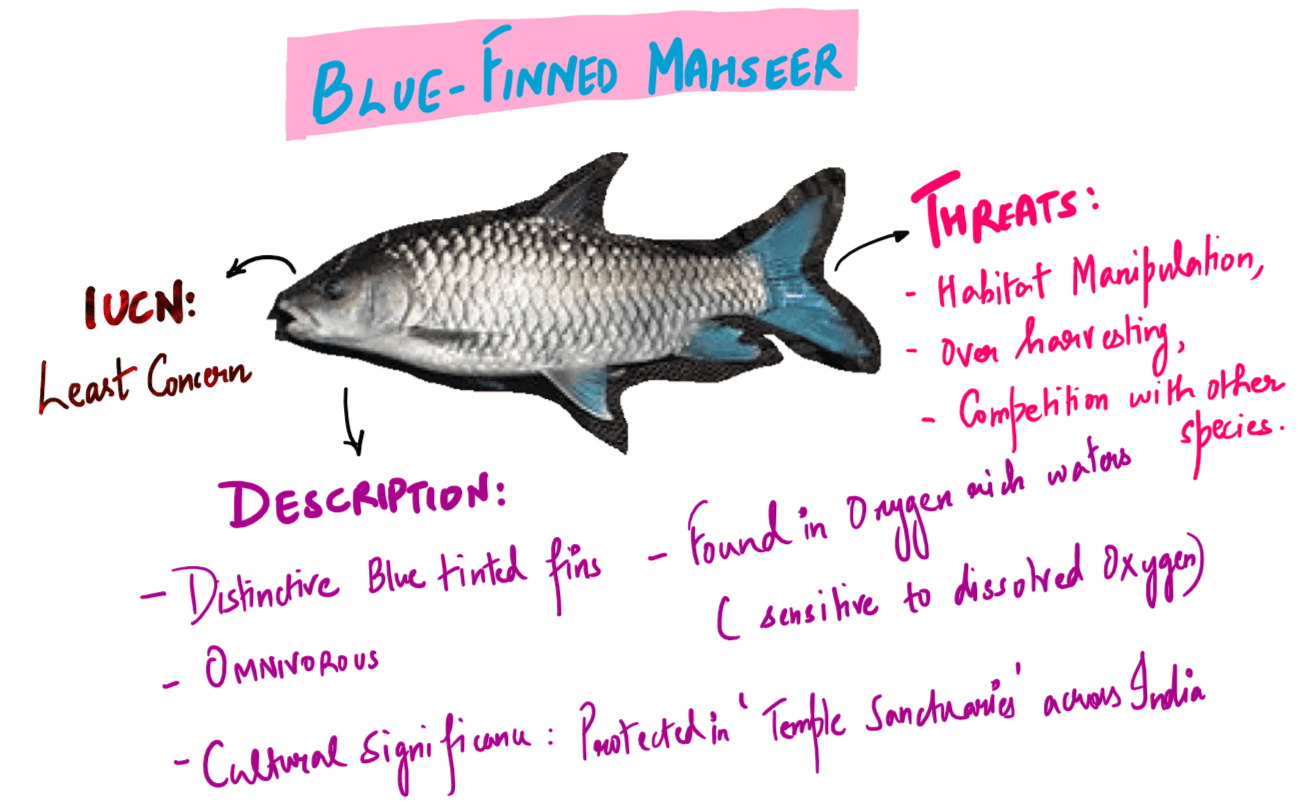
    Pair 1 is Correct: The Blue-finned Mahseer is a freshwater fish species that is naturally found in the Cauvery River. This species is also found in other rivers of the Deccan Plateau.
    ![Blue-finned Mahseer](https://d39jluplm5thpx.cloudfront.net//Blue_Finned_Mahneer_e41b46e845.PNG)

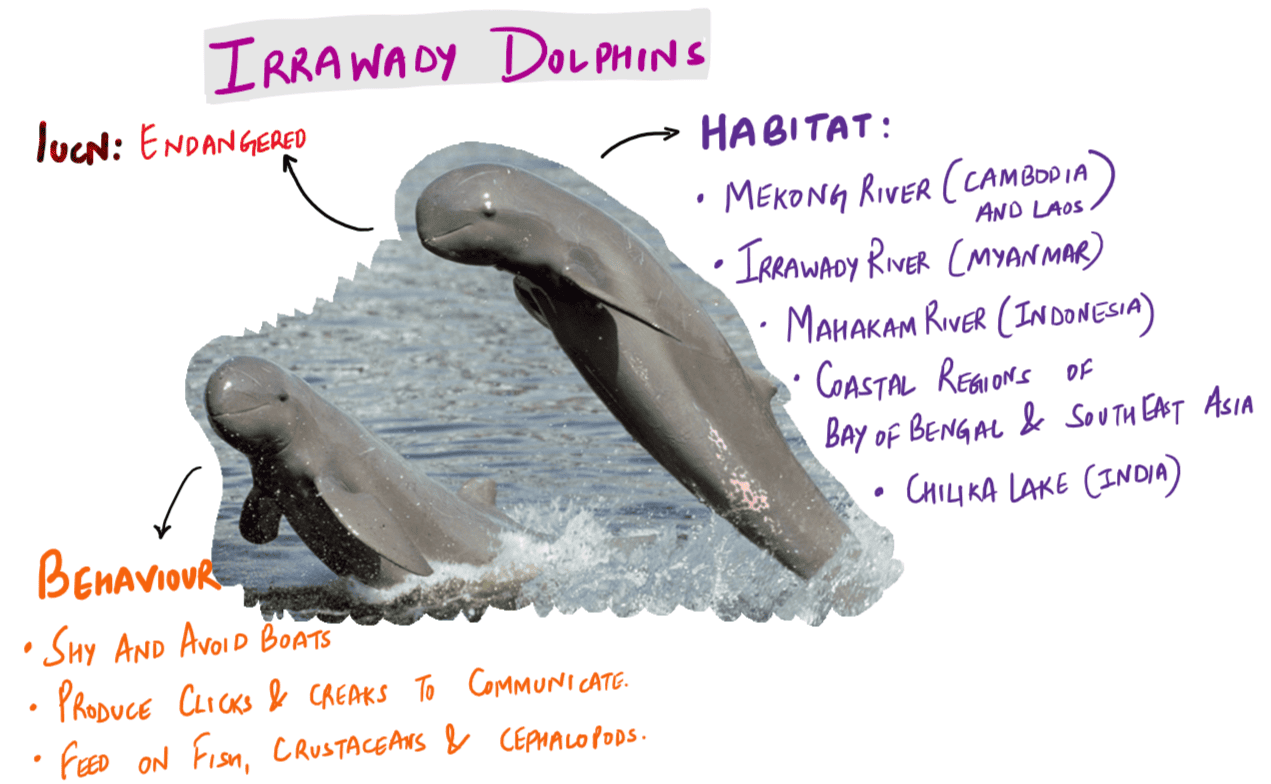
    Pair 2 is incorrect: The Irrawaddy Dolphin is not found in the Chambal River, which is known for the Gangetic Dolphin. It is found in coastal areas in South and Southeast Asia, and in three rivers: the Ayeyarwady (Myanmar), the Mahakam (Indonesian Borneo) and the Mekong (Cambodia and Laos). In India, it is found in Lake Chilika (Odisha).
    ![Irrawaddy Dolphin](https://d39jluplm5thpx.cloudfront.net//Irrawady_Dolphins_3f3774cff8.PNG)

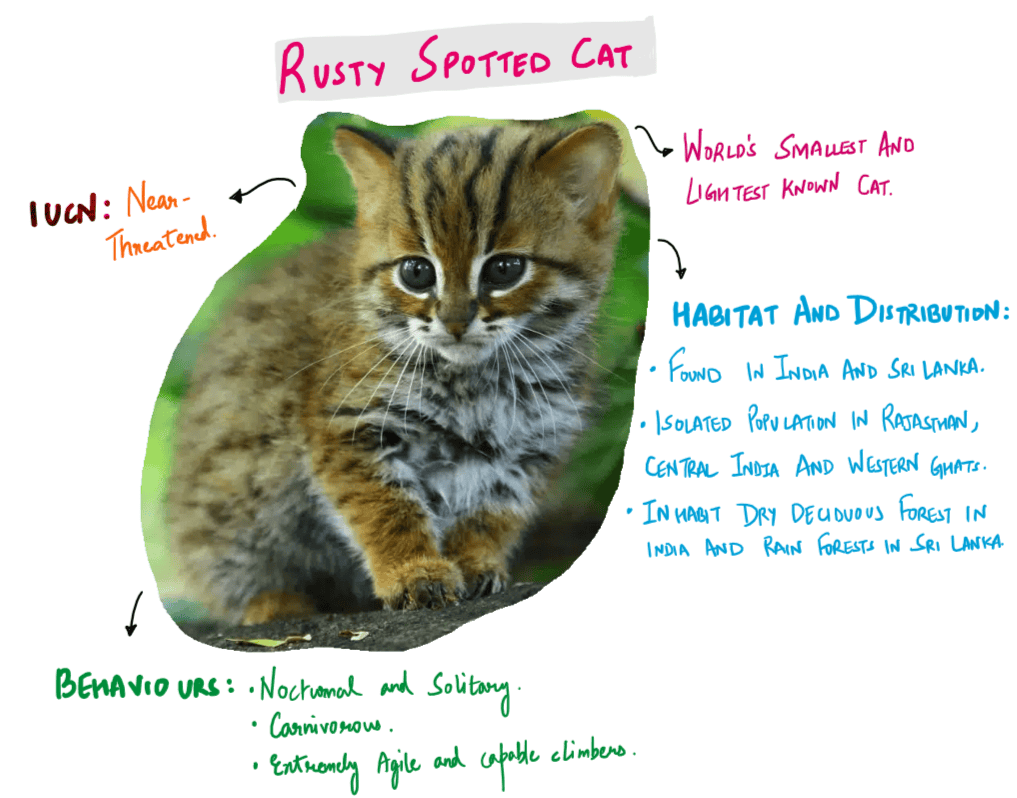
    Pair 3 is correct: The Rusty-spotted Cat is a small wild cat species that is found in the Eastern Ghats. It is also found in the Western Ghats, central India, and Sri Lanka.
    ![Rusty Spotted Cat](https://d39jluplm5thpx.cloudfront.net//Rusty_Spotted_Cat_9d6430f834.PNG)

    Therefore, option (C) 1 and 3 are correctly matched.

  2. Consider the following statements : 1. Under the Ramsar Convention, it is mandatory on…

    Consider the following statements : 1. Under the Ramsar Convention, it is mandatory on the part of the Government of India to protect and conserve all the wetlands in the territory of India. 2. The Wetlands (Conservation and Management) Rules, 2010 were framed by the Government of India based on the recommendations of Ramsar Convention. 3. The Wetlands (Conservation and Management) Rules, 2010 also encompass the drainage area or catchment regions of the wetlands as determined by the authority. Which of the statements given above is/are correct?

    1. A1 and 2 only
    2. B2 and 3 only
    3. C3 only
    4. D1, 2 and 3
    Answer and explanation

    Correct answer: C

    Statement 1 is Incorrect: The Ramsar Convention requires contracting parties to designate suitable wetlands for the List of Wetlands of International Importance and promote their conservation and "wise use." It does not impose a mandatory legal obligation to protect and conserve every single wetland within the entire territory of a country.

    Statement 2 is Incorrect: The Wetlands (Conservation and Management) Rules, 2010 were framed by the Central Government in exercise of the powers conferred by the Environment (Protection) Act, 1986. They were not framed based on specific recommendations of the Ramsar Convention, although they align with the general spirit of wetland conservation.

    Statement 3 is Correct: According to the Wetlands (Conservation and Management) Rules, 2010, the definition of a 'wetland' includes the drainage area or catchment regions of the wetlands as determined by the authority. This allows for a more comprehensive protection of the ecosystem's hydrological cycle.

  3. Recently, there was a growing awareness in our country about the importance of Himalayan…

    Recently, there was a growing awareness in our country about the importance of Himalayan nettle (Girardinia diversifolia) because it is found to be a sustainable source of

    1. Aanti-malarial drug
    2. Bbiodiesel
    3. Cpulp for paper industry
    4. Dtextile fibre
    Answer and explanation

    Correct answer: D

    * The Himalayan nettle, also known as Girardinia diversifolia, is a plant species native to the Himalayan regions of India, Nepal, and parts of China. It grows at high altitudes and is known for its long fibres that can be extracted from the stem.

    * These fibres are some of the longest in the plant world and are used in the production of textiles.

    * Therefore, the Himalayan nettle is found to be a sustainable source of textile fibre.

  4. Consider the following statements : The Environment Protection Act, 1986 empowers the Government of…

    Consider the following statements : The Environment Protection Act, 1986 empowers the Government of India to 1. state the requirement of public participation in the process of environmental protection, and the procedure and manner in which it is sought 2. lay down the standards for emission or discharge of environmental pollutants from various sources Which of the statements given above is/are correct?

    1. A1 only
    2. B2 only
    3. CBoth 1 and 2
    4. DNeither 1 nor 2
    Answer and explanation

    Correct answer: B

    Statement 1 is incorrect: The Environment (Protection) Act, 1986, provides the Central Government with broad powers to take measures to protect and improve the environment. However, the Act itself does not explicitly mention the 'requirement of public participation' or the 'procedure and manner in which it is sought'. These requirements were later established through the Environmental Impact Assessment (EIA) Notifications (such as those in 1994 and 2006) issued under the authority of the Act.

    Statement 2 is correct: Section 3(2)(iv) of the Environment (Protection) Act, 1986, specifically empowers the Central Government to lay down standards for emission or discharge of environmental pollutants from various sources. This allows the government to regulate industrial and other activities to prevent environmental degradation.

  5. Which one of the following National Parks lies completely in the temperate alpine zone?

    Which one of the following National Parks lies completely in the temperate alpine zone?

    1. AManas National Park
    2. BNamdapha National Park
    3. CNeora Valley National Park
    4. DValley of Flowers National Park
    Answer and explanation

    Correct answer: D

    Manas National Park (Assam): Situated on the banks of the Manas River, it encompasses a range of ecosystems including grasslands, tropical evergreen forests, and semi-evergreen forests.

    Namdapha National Park (Arunachal Pradesh): This park boasts diverse vegetation zones, ranging from tropical evergreen forests at lower elevations to sub-alpine meadows at higher altitudes.

    Neora Valley National Park (West Bengal): This park covers a range of elevations with subtropical broadleaf forests at lower levels and temperate forests at higher reaches.

    The Valley of Flowers National Park (Uttarakhand): On the other hand, is situated at a high altitude (3352 to 3658 metres above sea level) and falls entirely within the temperate alpine zone, known for its meadows, low-growing vegetation, and cooler climate.

    ![National Parks in Temperate Alpine Zone](https://d39jluplm5thpx.cloudfront.net//Alpine_zone_6373449c25.PNG)

    Hence, option D is the correct Answer.

  6. Why is there a great concern about the ‘microbeads’ that are released into the…

    Why is there a great concern about the 'microbeads' that are released into the environment?

    1. AThey are considered harmful to marine ecosystems.
    2. BThey are considered to cause skin cancer in children.
    3. CThey are small enough to be absorbed by crop plants in irrigated fields.
    4. DThey are often found to be used as food adulterants.
    Answer and explanation

    Correct answer: A

    Because of their small size, marine animals like fish, shellfish, and plankton can easily ingest microbeads. These plastic particles can block their digestive systems, leading to starvation or death.

    Additionally, microbeads might absorb pollutants and toxins present in the water, concentrating them in the food chain and potentially harming larger predators, including humans.

  7. In India, the use of carbofuran, methyl parathion, phorate and triazophos is viewed with…

    In India, the use of carbofuran, methyl parathion, phorate and triazophos is viewed with apprehension. These chemicals are used as

    1. Apesticides in agriculture
    2. Bpreservatives in processed foods
    3. Cfruit-ripening agents
    4. Dmoisturising agents in cosmetics
    Answer and explanation

    Correct answer: A

    Carbofuran, methyl parathion, phorate, and triazophos are highly toxic pesticides (specifically organophosphates and carbamates) used in agriculture. These chemicals are viewed with apprehension due to their acute toxicity and harmful effects on human health, non-target organisms, and the environment. Based on the recommendations of the Anupam Verma Committee, which reviewed 66 pesticides that were banned or restricted in other countries but continued to be used in India, the Ministry of Agriculture and Farmers Welfare issued notifications to ban or phase out these specific hazardous substances to ensure safety in the agricultural sector.

  8. Which of the following statements are correct about the deposits of ‘methane hydrate’? 1.…

    Which of the following statements are correct about the deposits of 'methane hydrate'? 1. Global warming might trigger the release of methane gas from these deposits. 2. Large deposits of 'methane hydrate' are found in Arctic Tundra and under the seafloor. 3. Methane in atmosphere oxidizes to carbon dioxide after a decade or two. Select the correct answer using the code given below:

    1. A1 and 2 only
    2. B2 and 3 only
    3. C1 and 3 only
    4. D1, 2 and 3
    Answer and explanation

    Correct answer: D

    Statement 1 is correct: Global warming poses a significant threat to methane hydrate deposits. These icy structures, found in permafrost and deep-sea sediments, can destabilize as temperatures rise, releasing methane into the atmosphere. Since methane is a potent greenhouse gas its release could create a positive feedback loop, further accelerating global warming.

    Statement 2 is correct: Large deposits of methane hydrate are primarily found in two locations: 1. Arctic Tundra: Permafrost soils in the Arctic hold significant methane hydrate reserves, which are at risk of melting due to rising temperatures. 2. Seafloor Deposits: Continental margins and deep ocean sediments contain vast methane hydrate reserves. Changes in ocean temperature and pressure fluctuations can trigger their release.

    Statement 3 is correct: After about 12 years, the methane is converted into carbon dioxide through hydroxyl oxidation. While CO₂ is a less potent greenhouse gas than methane, its longer atmospheric lifetime means it continues contributing to long-term climate change.

    Therefore, option (D) 1, 2 and 3 is correct.

  9. Consider the following statements: 1. Some species of turtles are herbivores. 2. Some species…

    Consider the following statements: 1. Some species of turtles are herbivores. 2. Some species of fish are herbivores. 3. Some species of marine mammals are herbivores. 4. Some species of snakes are viviparous. Which of the statements given above are correct?

    1. A1 and 3 only
    2. B2, 3 and 4 only
    3. C2 and 4 only
    4. D1, 2, 3 and 4
    Answer and explanation

    Correct answer: D

    Herbivorous turtles: Many turtle species, such as the green sea turtle and the Galapagos tortoise, are primarily herbivores, feeding on leaves, fruits, and other plant material.

    Herbivorous fish: There are numerous herbivorous fish species, including surgeonfish, parrotfish, and tangs. These fish feed on algae and seaweed, playing a crucial role in maintaining healthy coral reef ecosystems.

    Herbivorous marine mammals: While many marine mammals are carnivorous, some, like manatees and dugongs, are herbivores, feeding on seagrasses and other underwater plants.

    Viviparous snakes: Not all snakes lay eggs; some, like boas, vipers, and sea snakes, are viviparous. This means they give birth to live young that have developed inside the mother's body.

  10. Which of the following are in Agasthyamala Biosphere Reserve?

    Which of the following are in Agasthyamala Biosphere Reserve?

    1. ANeyyar, Peppara and Shendurney Wildlife Sanctuaries; and Kalakad Mundanthurai Tiger Reserve
    2. BMudumalai, Sathyamangalam and Wayanad Wildlife Sanctuaries; and Silent Valley National Park
    3. CKaundinya, Gundla Brahmeswaram and Papikonda Wildlife Sanctuaries; and Mukurthi National Park
    4. DKawal and Sri Venkateswara Wildlife Sanctuaries; and Nagarjunasagar-Srisailam Tiger Reserve
    Answer and explanation

    Correct answer: A

    The Agasthyamala Biosphere Reserve is a vital ecological hotspot located in the Western Ghats of southern India. It serves as a unique genetic reservoir of cultivated and wild plant species, including many rare, endemic, and medicinal plants.

    The biosphere reserve spans across Kerala and Tamil Nadu, covering diverse ecosystems from tropical forests to montane grasslands. It includes three wildlife sanctuaries Shendurney (Kerala), Peppara (Kerala) and Neyyar (Kerala), as well as the Kalakad Mundanthurai Tiger Reserve (Tamil Nadu).

  11. As per the Solid Waste Management Rules, 2016 in India, which one of the…

    As per the Solid Waste Management Rules, 2016 in India, which one of the following statements is correct?

    1. AWaste generator has to segregate waste into five categories.
    2. BThe Rules are applicable to notified urban local bodies, notified towns and all industrial townships only.
    3. CThe Rules provide for exact and elaborate criteria for the identification of sites for landfills and waste processing facilities.
    4. DIt is mandatory on the part of waste generator that the waste generated in one district cannot be moved to another district.
    Answer and explanation

    Correct answer: C

    Option C is correct: The Solid Waste Management Rules, 2016, include detailed guidelines under Schedule I regarding the 'Specifications for Sanitary Landfills'. This schedule provides exact and elaborate criteria for site selection, such as maintaining a distance of at least 100 meters from rivers, 200 meters from state and national highways, 500 meters from habitations, and 20 km from airports.

    Option A is incorrect: The rules mandate waste generators to segregate waste into three categories: Bio-degradable (wet waste), Non-biodegradable (dry waste), and Domestic Hazardous Waste (such as diapers, napkins, and cleaning agents).

    Option B is incorrect: The rules have a broad scope and apply to every urban local body, outgrowths in urban agglomerations, census towns, notified industrial townships, areas under the control of Indian Railways, airports, airbases, ports, special economic zones, and places of religious or historical importance.

    Option D is incorrect: There is no restriction in the rules prohibiting the movement of waste across district lines. In fact, the rules encourage the development of regional sanitary landfills to be shared by multiple local bodies for better waste management efficiency.

  12. Consider the following statements: 1. As per law, the Compensatory Afforestation Fund Management and…

    Consider the following statements: 1. As per law, the Compensatory Afforestation Fund Management and Planning Authority exists at both National and State levels. 2. People's participation is mandatory in the compensatory afforestation programmes carried out under the Compensatory Afforestation Fund Act, 2016. Which of the statements given above is/are correct?

    1. A1 only
    2. B2 only
    3. CBoth 1 and 2
    4. DNeither 1 nor 2
    Answer and explanation

    Correct answer: A

    Statement 1 is correct: The Compensatory Afforestation Fund Management and Planning Authority (CAMPA) exists at both National and State levels. - National CAMPA Oversees the national-level administration of the Compensatory Afforestation Fund (CAF). It lays down broad guidelines and ensures proper utilisation of funds across states. - State CAMPA established in each state, manage funds allocated for compensatory afforestation activities within their jurisdiction.

    Statement 2 is incorrect: The Compensatory Afforestation Fund Act, 2016 does not explicitly mandate people's participation in the compensatory afforestation programmes carried out under the Act. The Act focuses on the management and utilisation of the Compensatory Afforestation Fund but does not have a specific provision for mandatory public participation.

  13. In the context of proposals to the use of hydrogen-enriched CNG (H-CNG) as fuel…

    In the context of proposals to the use of hydrogen-enriched CNG (H-CNG) as fuel for buses in public transport, consider the following statements : 1. The main advantage of the use of H-CNG is the elimination of carbon monoxide emissions. 2. H-CNG as fuel reduces carbon dioxide and hydrocarbon emissions. 3. Hydrogen up to one-fifth by volume can be blended with CNG as fuel for buses. 4. H-CNG makes the fuel less expensive than CNG. Which of the statements given above is/are correct?

    1. A1 only
    2. B2 and 3 only
    3. C4 only
    4. D1, 2, 3 and 4
    Answer and explanation

    Correct answer: B

    Statement 1 is incorrect: While H-CNG significantly reduces carbon monoxide (CO) emissions, it does not eliminate them entirely. Burning hydrogen produces only water vapor, but since H-CNG is a blend of hydrogen and CNG, some CO is still emitted though at lower levels than conventional CNG.

    Statement 2 is correct: H-CNG is cleaner than CNG, leading to a reduction in carbon dioxide (CO₂) and hydrocarbon (HC) emissions. The reduction depends on the specific blend ratio and engine efficiency.

    Statement 3 is correct: As per Indian government guidelines, up to 18% hydrogen (by volume) can be blended with CNG for use in buses and other vehicles. This blend improves combustion efficiency and reduces emissions.

    Statement 4 is incorrect: H-CNG is not necessarily cheaper than CNG. The cost is influenced by Hydrogen production methods, Infrastructure development and Blending technology.

    Therefore, option (B) statements 2 and 3 are correct.

  14. Consider the following statements: 1. Agricultural soils release nitrogen oxides into the environment. 2.…

    Consider the following statements: 1. Agricultural soils release nitrogen oxides into the environment. 2. Cattle release ammonia into the environment. 3. Poultry industry releases reactive nitrogen compounds into environment. Which of the statements given above is/are correct?

    1. A1 and 3 only
    2. B2 and 3 only
    3. C2 only
    4. D1, 2 and 3
    Answer and explanation

    Correct answer: D

    All three statements (1, 2, and 3) are correct.

    Statement 1 is correct: Agricultural soils are a major source of nitrogen oxides (NOx) emissions, primarily nitrous oxide (NO). This occurs during microbial processes in the soil, such as nitrification and denitrification.

    Statement 2 is correct: Cattle release significant amounts of ammonia (NH) into the atmosphere through their urine and manure. This ammonia contributes to air pollution and can have negative environmental consequences.

    Statement 3 is correct: The poultry industry releases various reactive nitrogen compounds into the environment, including ammonia, nitrous oxide, and nitrogen oxides. These emissions come from poultry manure and the use of nitrogen-based fertilizers in feed production.

  15. In India, ‘extended producer responsibility’ was introduced as an important feature in which of…

    In India, 'extended producer responsibility' was introduced as an important feature in which of the following?

    1. AThe Bio-medical Waste Management and Handling Rules, 1998
    2. BThe Recycled Plastic Manufacturing and Usage Rules, 1999
    3. CThe e-Waste Management and Handling Rules, 2011
    4. DThe Food Safety and Standard Regulations, 2011
    Answer and explanation

    Correct answer: C

    Extended Producer Responsibility (EPR) in E-waste Management Rules, 2011 Makes producers of electrical and electronic equipment (EEE) responsible for the collection and channelization of e-waste after its end-of-life. This promotes responsible production and encourages proper e-waste disposal.

    EPR in Plastic Waste Management Rules, 2016 Extends the EPR principle to plastic waste. Producers, importers, and brand owners are accountable for managing plastic packaging waste after consumption.

  16. With reference to the circumstances in Indian agriculture, the concept of “Conservation Agriculture” assumes…

    With reference to the circumstances in Indian agriculture, the concept of "Conservation Agriculture" assumes significance. Which of the following fall under the Conservation Agriculture? 1. Avoiding monoculture practices 2. Adopting minimum tillage 3. Avoiding the cultivation of plantation crops 4. Using crop residues to cover the soil surface 5. Adopting spatial and temporal crop sequencing/crop rotations Select the correct answer using the code given below:

    1. A1, 3 and 4
    2. B2, 3, 4 and 5
    3. C1, 2, 3 and 5
    4. D2, 4 and 5
    Answer and explanation

    Correct answer: D

    Conservation Agriculture is a set of practices aimed at minimizing soil disturbance, maintaining permanent soil cover, and adopting crop rotations or intercropping.

    ![Conservation Agriculture](https://d39jluplm5thpx.cloudfront.net//Conservation_Agriculture_c7064fc344.PNG)

    Avoiding monoculture practices: This does not directly fall under Conservation Agriculture. Monoculture refers to the cultivation of a single crop over a wide area.

    Adopting minimum tillage: Minimum or no tillage is one of the key principles of Conservation Agriculture, as it reduces soil disturbance.

    Avoiding the cultivation of plantation crops: This is not a part of Conservation Agriculture. Plantation crops like tea, coffee, or rubber can be cultivated using conservation agriculture practices.

    Using crop residues to cover the soil surface: Maintaining soil cover with crop residues or mulches is a crucial component of Conservation Agriculture.

    Adopting spatial and temporal crop sequencing/crop rotations: Crop rotations and intercropping are recommended practices under Conservation Agriculture to improve soil fertility and reduce pest and disease incidence.

    Therefore, the correct options that fall under Conservation Agriculture are 2, 4, and 5.

  17. Which of the following statements best describes “carbon fertilization”?

    Which of the following statements best describes "carbon fertilization"?

    1. AIncreased plant growth due to increased concentration of carbon dioxide in the atmosphere
    2. BIncreased temperature of Earth due to increased concentration of carbon dioxide in the atmosphere
    3. CIncreased acidity of oceans as a result of increased concentration of carbon dioxide in the atmosphere
    4. DAdaptation of all living beings on Earth to the climate change brought about by the increased concentration of carbon dioxide in the atmosphere
    Answer and explanation

    Correct answer: A

    * Carbon fertilization is the increased rate of photosynthesis in plants due to the higher concentration of carbon dioxide in the atmosphere.

    * During Photosynthesis plants absorb carbon dioxide (CO₂) from the atmosphere, along with water and sunlight, to produce sugars (glucose) that provide energy for growth. This process releases oxygen (O₂) as a byproduct.

    * The concentration of CO₂ in the atmosphere is currently at its highest level in millions of years, primarily due to human activities such as fossil fuel combustion and deforestation.

    * Many plants respond to higher CO₂ levels with an increased rate of photosynthesis, enabling them to produce more sugars, which can lead to faster growth and higher biomass production.

  18. Consider the following statements: 1. The definition of “Critical Wildlife Habitat” is incorporated in…

    Consider the following statements: 1. The definition of "Critical Wildlife Habitat" is incorporated in the Forest Rights Act, 2006. 2. For the first time in India, Baigas have been given Habitat Rights. 3. Union Ministry of Environment, Forest and Climate Change officially decides and declares Habitat Rights for Primitive and Vulnerable Tribal Groups in any part of India. Which of the statements given above is/are correct ?

    1. A1 and 2 only
    2. B2 and 3 only
    3. C3 only
    4. D1, 2 and 3
    Answer and explanation

    Correct answer: A

    Statement 1 is correct: The Scheduled Tribes and Other Traditional Forest Dwellers (Recognition of Forest Rights) Act, 2006, commonly known as the Forest Rights Act (FRA), 2006, introduces the concept of Critical Wildlife Habitat (CWH). These are areas within National Parks and Wildlife Sanctuaries that must be kept inviolate to ensure wildlife protection. CWHs can only be declared based on scientific evidence and after completing the due process of rehabilitation and resettlement of affected communities.

    ![Critical wildlife habitat](https://d39jluplm5thpx.cloudfront.net//Critical_wildlife_habitat_4c10198b48.PNG)

    Statement 2 is correct: In 2015, the Baiga tribal community in Madhya Pradesh became the first to be granted Habitat Rights under the Forest Rights Act, 2006. This recognition allowed them to continue living within the Kanha Tiger Reserve while accessing forest resources for their bonafide livelihood needs.

    Statement 3 is incorrect: According to the Forest Rights Act, 2006, it is the respective State governments that have the authority to declare and vest Habitat Rights for Primitive Tribal Groups and pre-agricultural communities over critical wildlife habitats, after obtaining consent from the tribal communities and establishing measures for their resettlement and rehabilitation.

    Hence, correct answer is option (a) 1 and 2 only.

  19. Which of the following leaf modifications occur(s) in the desert areas to inhibit water…

    Which of the following leaf modifications occur(s) in the desert areas to inhibit water loss? 1. Hard and waxy leaves 2. Tiny leaves 3. Thorns instead of leaves Select the correct answer using the code given below:

    1. A2 and 3 only
    2. B2 only
    3. C3 only
    4. D1, 2 and 3
    Answer and explanation

    Correct answer: D

    Plants in arid environments have evolved adaptive features to minimize water loss through transpiration:

    ![Plant Modifications](https://d39jluplm5thpx.cloudfront.net//Plant_Modifications_ca54c03077.PNG)

    - Hard and waxy leaves have a thick cuticle and fewer stomata, reducing water loss by limiting evaporation. - Tiny leaves have a smaller surface area, which decreases the area exposed to transpiration. - Thorns, though primarily modified branches for protection, can also replace leaves in some desert plants (e.g., cacti), further reducing transpiration by limiting leaf surface area.

    Therefore, the correct answer is option (d) 1, 2 and 3.

  20. The Partnership for Action on Green Economy (PAGE), a UN mechanism to assist countries…

    The Partnership for Action on Green Economy (PAGE), a UN mechanism to assist countries transition towards greener and more inclusive economies, emerged at

    1. AThe Earth Summit on Sustainable Development 2002, Johannesburg
    2. BThe United Nations Conference on Sustainable Development 2012, Rio de Janeiro
    3. CThe United Nations Framework Convention on Climate Change 2015, Paris
    4. DThe World Sustainable Development Summit 2016, New Delhi
    Answer and explanation

    Correct answer: B

    The Partnership for Action on Green Economy (PAGE) was established in response to the United Nations Conference on Sustainable Development (UNCSD) 2012, also known as Rio+20, held in Rio de Janeiro, Brazil.

    The Rio+20 conference aimed to reaffirm global commitment to sustainable development and highlight the importance of transitioning to green economies i.e. economic systems that promote environmental sustainability, social inclusion, and economic growth.

    PAGE was launched as a collaborative initiative to support countries in developing policies and strategies for sustainable and inclusive economic growth.

  21. With reference to the ‘Global Alliance for Climate-Smart Agriculture (GACSA)’, which of the following…

    With reference to the 'Global Alliance for Climate-Smart Agriculture (GACSA)', which of the following statements is/are correct. 1. GACSA is an outcome of the Climate Summit held in Paris in 2015. 2. Membership of GACSA does not create any binding obligations. 3. India was instrumental in the creation of GACSA. Select the correct answer using the code given

    1. A1 and 3 only
    2. B2 only
    3. C2 and 3 only
    4. D1, 2 and 3
    Answer and explanation

    Correct answer: B

    Statement 1 is incorrect. GACSA was launched in 2014 at the UN Climate Summit in New York, not at the Paris Climate Summit in 2015.

    Statement 2 is correct. GACSA is a voluntary partnership, and membership does not create any legally binding obligations for its members.

    Statement 3 is incorrect. GACSA was launched by the Netherlands and several other countries, but India was not among the founding members or instrumental in its creation.

  22. Which of the following is/are the possible consequence/s of heavy sand mining in riverbeds?…

    Which of the following is/are the possible consequence/s of heavy sand mining in riverbeds? 1. Decreased salinity in the river 2. Pollution of groundwater 3. Lowering of the water-table Select the correct answer using the code given below :

    1. A1 only
    2. B2 and 3 only
    3. C1 and 3 only
    4. D1, 2 and 3
    Answer and explanation

    Correct answer: B

    Statement 1 is Incorrect: Sand mining does not decrease salinity. In coastal and estuarine regions, excessive sand mining can lead to saltwater intrusion from the sea into the river system, which actually increases the salinity of the river water.

    Statement 2 is Correct: River sand acts as a natural filter for water percolating through the riverbed. Removing this sand layer reduces the filtration capacity, allowing pollutants, heavy metals, and contaminants to seep more easily into the underlying groundwater aquifers.

    Statement 3 is Correct: Heavy sand mining causes riverbed incision (deepening of the river channel). As the riverbed drops, the surrounding groundwater drains into the deepened channel to maintain hydrological equilibrium, leading to a significant lowering of the water table in the adjacent areas.

  23. With reference to agricultural soils, consider the following statements : 1. The high content…

    With reference to agricultural soils, consider the following statements : 1. The high content of organic matter in soil drastically reduces its water holding capacity. 2. Soil does not play any role in the sulphur cycle. 3. Irrigation over a period of time can contribute to the salinization of some agricultural lands. Which of the statements given above is/are correct?

    1. A1 and 2 only
    2. B3 only
    3. C1 and 3 only
    4. D1, 2 and 3
    Answer and explanation

    Correct answer: B

    Statement 1 is incorrect: High organic matter content in soil actually increases its water-holding capacity. Organic matter helps to bind soil particles together, creating pore spaces that can hold water. It acts like a sponge, absorbing and retaining moisture effectively.

    Statement 2 is incorrect: Soil plays a crucial role in the sulphur cycle. Soil contains various forms of sulfur compounds, including sulfates, which are essential nutrients for plant growth. Microorganisms in the soil participate in the transformation of sulfur compounds through processes like mineralization and immobilization.

    Statement 3 is correct: Excessive or improper irrigation practices can lead to the salinization of agricultural lands. When irrigation water contains high levels of dissolved salts, and there is inadequate drainage, these salts can accumulate in the soil over time, leading to soil salinization. This can adversely affect crop growth and productivity.

    Therefore, among the given statements, only statement 3 is correct.

  24. Why is a plant called Prosopis juliflora often mentioned in the news?

    Why is a plant called Prosopis juliflora often mentioned in the news?

    1. AIts extract is widely used in cosmetics.
    2. BIt tends to reduce the biodiversity in the area in which it grows.
    3. CIts extract is used in the synthesis of pesticides.
    4. DNone of the above
    Answer and explanation

    Correct answer: B

    * Prosopis juliflora, commonly known as mesquite or thorn mimosa, frequently appears in discussions about invasive species due to its significant impact on ecosystems and biodiversity.

    * Originally native to Central and South America, Prosopis juliflora was introduced to various parts of Africa, Asia, and Australia for purposes like afforestation, erosion control, and fuelwood supply.

    * However, due to its rapid growth rate, tolerance for harsh conditions, and prolific seed production, it can become invasive.

    * It can outcompete native plants, disrupt ecological balances, and form dense thickets that hinder other vegetation growth.

    * In states like Tamil Nadu, Prosopis juliflora has been labelled an invasive species causing ecological damage. Efforts are underway to remove it from certain areas to restore native ecosystems.

  25. How is the National Green Tribunal (NGT) different from the Central Pollution Control Board…

    How is the National Green Tribunal (NGT) different from the Central Pollution Control Board (CPCB)? 1. The NGT has been established by an Act whereas the CPCB has been created by executive order of the Government. 2. The NGT provides environmental justice and helps reduce the burden of litigation in the higher courts whereas the CPCB promotes cleanliness of streams and wells, and aims to improve the quality of air in the country. Which of the statements given above is/are correct

    1. A1 only
    2. B2 only
    3. C1 and 2
    4. DNone of the above
    Answer and explanation

    Correct answer: B

    Statement 1 is incorrect: The National Green Tribunal (NGT) was established under the National Green Tribunal Act, 2010, passed by Parliament, making it a statutory body. Similarly, the Central Pollution Control Board (CPCB) was constituted under the Water (Prevention and Control of Pollution) Act, 1974 and is also a statutory body. It plays a key role in environmental regulation in India.

    Statement 2 is correct: The NGT's primary role is to ensure the expeditious disposal of environmental cases related to forest conservation, natural resource protection, and pollution control, thereby reducing the burden on higher courts.

    The CPCB, functioning under the Ministry of Environment, Forest and Climate Change (MoEFCC), is responsible for monitoring water and air quality, implementing pollution control measures, and enforcing environmental laws to promote a cleaner environment.

    Thus, while both bodies deal with environmental protection, the NGT focuses on adjudication, whereas the CPCB handles regulatory and enforcement functions. Therefore, the correct answer is option (b) 2 only.

  26. The term “sixth mass extinction/sixth extinction” is often mentioned in the news in the…

    The term "sixth mass extinction/sixth extinction" is often mentioned in the news in the context of the discussion of

    1. AWidespread monoculture practices in agriculture and large-scale commercial farming with indiscriminate use of chemicals in many parts of the world that may result in the loss of good native ecosystems.
    2. BFears of a possible collision of a meteorite with the Earth in the near future in the manner it happened 65 million years ago that caused the mass extinction of many species including those of dinosaurs.
    3. CLarge scale cultivation of genetically modified crops in many parts of the world and promoting their cultivation in other parts of the world which may cause the disappearance of good native crop plants and the loss of food biodiversity.
    4. DMankind's over-exploitation/misuse of natural resources, fragmentation/loss of natural habitats, destruction of ecosystems, pollution and global climate change.
    Answer and explanation

    Correct answer: D

    The term "sixth mass extinction" is used in the context of discussions about the current rapid decline in biodiversity and the potential for it to be as significant as the five major extinction events in Earth's history.

    Mass extinction events: Throughout Earth's history, there have been five major extinction events where a large percentage of species (estimated at 75% or more) disappeared in a geologically short period. Examples include the Cretaceous-Paleogene extinction event that wiped out non-avian dinosaurs.

    Sixth mass extinction: Scientists are concerned that human activities like habitat destruction, climate change, pollution, and overexploitation of resources are causing a mass extinction event that could be as severe as the previous ones.

    Thus, the correct answer is 'D'.

  27. In which one of the following States is Pakhui Wildlife Sanctuary located?

    In which one of the following States is Pakhui Wildlife Sanctuary located?

    1. AArunachal Pradesh
    2. BManipur
    3. CMeghalaya
    4. DNagaland
    Answer and explanation

    Correct answer: A

    The Pakhui Wildlife Sanctuary, located in Arunachal Pradesh, is part of the Kameng Elephant Reserve and is contiguous with the Pakke Tiger Reserve. It is known for its rich biodiversity and dense forests, making it a critical habitat for various wildlife species. The Bhareli (Pakke) and Bamadi rivers flow through the sanctuary, supporting its diverse ecosystem. Several indigenous tribes, including the Nyishi and Apatani, reside in the region, coexisting with the forest and its resources.

    ![Wildlife Santuaries in Arunachal pradesh](https://d39jluplm5thpx.cloudfront.net//Wildlife_in_Arunachal_pradesh_fecb54d006.PNG)

  28. Which of the following has/have shrunk immensely/dried up in the recent past due to…

    Which of the following has/have shrunk immensely/dried up in the recent past due to human activities? 1. Aral Sea 2. Black Sea 3. Lake Baikal

    1. A1 and 3
    2. B2 and 3
    3. C2 only
    4. D1 only
    Answer and explanation

    Correct answer: D

    * Aral Sea: The Aral Sea was once one of the world's largest inland lakes, but due to extensive water diversion for irrigation projects, particularly from the Amu Darya and Syr Darya rivers, it has shrunk by over 75% since the 1960s. This has led to severe environmental, economic, and social consequences, including increased salinity, loss of marine life, and desertification.

    ![Aral Sea](https://d39jluplm5thpx.cloudfront.net//Aral_sea_e3f90f7bf4.PNG)

    * Black Sea: While the Black Sea faces environmental challenges such as pollution, biodiversity loss, and reduced oxygen levels in deep waters, it has not experienced significant drying like the Aral Sea.

    * Lake Baikal: Lake Baikal in Russia is the deepest and oldest freshwater lake in the world, containing about 20% of the world's unfrozen freshwater supply. Although it experiences natural fluctuations in water levels, it has not undergone severe drying like the Aral Sea.

    Thus, the correct answer is option (d).

  29. “Momentum for Change: Climate Neutral Now” is an initiative launched by

    "Momentum for Change: Climate Neutral Now" is an initiative launched by

    1. AThe Intergovernmental Panel on Climate Change
    2. BThe UNEP Secretariat
    3. CThe UNFCCC Secretariat
    4. DThe World Meteorological Organisation
    Answer and explanation

    Correct answer: C

    The United Nations Framework Convention on Climate Change (UNFCCC) Secretariat launched the Climate Neutral Now initiative in 2015 to encourage individuals, businesses, and governments to take voluntary action towards climate neutrality.

    In 2016, the Secretariat introduced a new pillar under its "Momentum for Change" initiative, focusing on Climate Neutral Now as part of broader efforts to highlight and promote successful climate action worldwide.

    Climate neutrality is a three-step process, which requires individuals, companies, and governments to: 1. Measure their climate footprint (greenhouse gas emissions). 2. Reduce emissions as much as possible through sustainable practices and efficiency improvements. 3. Offset unavoidable emissions using UN-certified emission reductions (CERs).

    This initiative aligns with global efforts to meet the Paris Agreement goals, fostering greater accountability and proactive engagement in combating climate change.

  30. Biological Oxygen Demand (BOD) is a standard criterion for –

    Biological Oxygen Demand (BOD) is a standard criterion for -

    1. AMeasuring oxygen levels in the blood
    2. BComputing oxygen levels in forest ecosystems
    3. CPollution assay in aquatic ecosystems
    4. DAssessing oxygen levels in high altitude regions
    Answer and explanation

    Correct answer: C

    Biological Oxygen Demand (BOD) is a standard criterion for assessing the quality of water.

    Microbial activity: BOD measures the amount of dissolved oxygen used by microorganisms (like bacteria) as they decompose organic matter in water.

    Pollution indicator: Higher BOD indicates a greater presence of organic matter, often suggesting pollution from sources like sewage, animal waste, or decaying plants.

    Aquatic life impact: Excessive organic matter decomposition can deplete oxygen levels in water, harming aquatic life that depends on dissolved oxygen for survival.

    Therefore, BOD serves as a valuable tool for monitoring water quality and identifying potential pollution issues.

    ![BOD vs. COD](https://d39jluplm5thpx.cloudfront.net//bod_cod_14c8513e13.PNG)