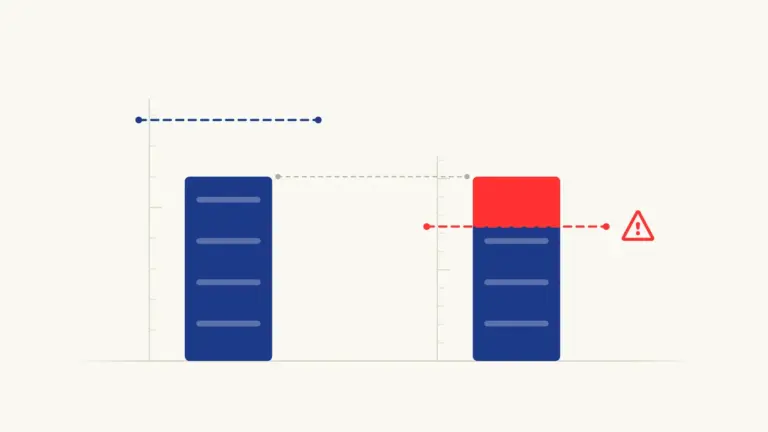
Micro-irrigation (MI) — sprinkler and drip systems that deliver water directly to the root zone of crops — is the single most scalable reform for reconciling India's growth in farm output with its water scarcity. The Dalwai Committee on Doubling Farmers' Income calculated that MI can deliver 40% water savings, 45% productivity gains and 50% higher income. Yet India's MI coverage is only around 17 mha against a potential of 70 mha. This guide unpacks the initiatives, the barriers and the reform agenda.
What is Micro-Irrigation?
Micro-irrigation systems promote precision farming by making water available to the root zone of crops through controlled emitters, drip lines, and sprinklers.
- Drip irrigation — slow drip of water through emitters near the plant base; 90%+ water use efficiency.
- Sprinkler irrigation — water delivered in a spray pattern across the field; 75-80% efficiency.
- Mini-sprinklers, rain guns, fertigation — variations suited to specific crops and terrains.
Multi-Faceted Benefits of Micro-Irrigation
- Efficient deployment of water, electricity, fertilisers, labour.
- Higher crop productivity — up to 45% according to Dalwai Committee.
- Better quality of produce due to uniform moisture.
- Higher income — 50% increase.
- Reduced incidence of soil salinity and water-logging.
- Enables fertigation — delivers nutrients through water, reducing fertiliser use.
- Lower labour requirement — useful given migration and wage pressures.
Government Initiatives
Pradhan Mantri Krishi Sinchayee Yojana (PMKSY)
- Har Khet Ko Paani: end-to-end solutions in the irrigation supply chain.
- Per Drop More Crop (PDMC): promotion of drip and sprinkler irrigation; central flagship for MI.
Micro-Irrigation Fund (MIF)
- Managed by NABARD.
- Initial corpus: Rs 5,000 crore; doubled to Rs 10,000 crore subsequently.
- States can avail the fund to subsidise farmers beyond the PMKSY subsidy and to extend coverage to more crops/areas.
Other Related Instruments
- Atal Bhujal Yojana — community groundwater management encouraging MI adoption.
- PM KUSUM — solar pumps often paired with micro-irrigation.
- RKVY (Rashtriya Krishi Vikas Yojana) — state flexibility for MI augmentation.
Present Status
- Area under MI: around 17 mha (cumulative, 2024).
- Potential area: 70 mha.
- Coverage highly concentrated in Rajasthan, Andhra Pradesh, Tamil Nadu, Karnataka, Gujarat, Maharashtra, Telangana.
- Used mostly for sugarcane, cotton, horticulture crops; limited in paddy and wheat.
| State | Approx. MI Coverage |
|---|---|
| Rajasthan | High (sprinkler dominance) |
| Andhra Pradesh | High (drip and sprinkler) |
| Maharashtra | High (sugarcane, horticulture) |
| Karnataka | High (horticulture belt) |
| Gujarat | High (cotton, horticulture) |
| Madhya Pradesh | Moderate |
| Punjab/Haryana | Low (dominated by flood irrigation) |
| Uttar Pradesh/Bihar | Low |
Challenges in Adoption
- Area under MI stuck at 17 mha against 70 mha potential.
- Highly subsidised canal water and electricity — no price incentive to switch.
- High initial capital cost — systems cost Rs 50,000 to Rs 1.5 lakh per hectare.
- Fragmented land holdings — average size 1.08 ha; small parcels make drip/sprinkler less viable economically.
- Lower subsidy for marginal farmers — around 55% subsidy under PMKSY-PDMC; small farmers need higher support.
- Limited role of banks in providing MI loans.
- No after-sale services — clogging in pipes, damaged emitters without maintenance support.
- Frequent power outages disrupt drip/sprinkler systems.
- Dismantling after every crop damages the equipment.
- Concentration in West/South India; low adoption in North and East.
- Limited crop coverage — mainly high-value horticulture, sugarcane, cotton; rice and wheat paddies underrepresented.
Strategies and Way Forward
Implement Dalwai Panel recommendations:
- Increase annual MI coverage to 2.5 mha per year to reach the 70 mha potential by 2045.
- Make MI compulsory across all forms of irrigation — flow, lift, ponds.
- Expand MI to water-guzzling crops like rice, sugarcane; mandatory MI for sugarcane in certain states already exists and should be scaled nationally.
Farmer education:
- Awareness and demonstration programmes.
- Farm schools and FPO-led peer learning.
Mandatory MI for water-guzzling crops:
- Several states have mandated MI for sugarcane; extend to paddy in critical groundwater blocks.
Special credit window:
- Low-interest loans for small and marginal farmers for MI.
- Expansion of MIF with reduced interest spread to states.
Incentivise MI in rainfed belts:
- Pair with rainwater harvesting and micro-storage.
Better after-sale service:
- Mandate manufacturer-led maintenance packages as part of the subsidy conditions.
- Training and certification for local technicians.
Crop-water budget integration:
- Link MI adoption with MSP procurement decisions and cropping-pattern incentives.
Leverage FPOs:
- Aggregate demand, negotiate discounts, manage maintenance.
Smart MI:
- IoT-based soil moisture sensors, AI-powered scheduling. Several AgriTech startups (Fasal, CropIn, Khetibuddy) work in this space.
Latest Developments (2024-26)
- Cumulative MI coverage crossed 17 mha by 2024; growth of roughly 1 mha per year.
- Budget 2025-26 — continued allocation for PMKSY-PDMC; linked to PM Dhan-Dhaanya Krishi Yojana for 100 low-productivity districts.
- PM KUSUM — solarisation target revised to 49,315 MW, with MI promotion bundled into feeder solarisation.
- Atal Bhujal Yojana completion by 2025 in 7 states, mandating MI in priority aquifers.
- Sugarcane MI mandate scaled up in Maharashtra and Karnataka.
- AgriStack and Digital Agriculture Mission integrating farmer records with MI subsidy DBT.
- Micro-Irrigation Fund corpus doubled to Rs 10,000 crore; utilisation pace picking up in 2024-25.
- PMKSY 2021-26 approved with Rs 93,068 crore outlay, of which PDMC is the primary MI allocation.
UPSC Relevance
GS-III Mapping
- Agriculture — irrigation, water-use efficiency, productivity.
- Indian Economy — rural infrastructure, credit, FPOs.
- Environment — groundwater conservation, sustainable agriculture.
- Technology — precision farming, IoT, drip systems.
Prelims Bullets
- Per Drop More Crop (PDMC) — PMKSY component; drip and sprinkler irrigation.
- Micro-Irrigation Fund — managed by NABARD; corpus doubled to Rs 10,000 crore.
- Dalwai Committee — Committee on Doubling Farmers' Income (2016-18).
- MI potential vs coverage: 70 mha potential; ~17 mha covered.
- MI benefits (Dalwai): 40% water savings; 45% productivity gain; 50% income rise.
- Fertigation — delivering fertilisers through irrigation water.
- PM KUSUM: solar pumps and feeder solarisation.
- Atal Bhujal Yojana: 7 states; community aquifer management.
Mains Angles
- "Micro-irrigation is India's water-resilience moonshot. Why has it stalled at a quarter of its potential?" Examine.
- "Free power and cheap water have defeated the case for micro-irrigation. Suggest a policy pivot."
Tell Google you want more of this.
Add Anantam IAS as a preferred sourceOne tap, and this site shows up more often in your own Top Stories, AI Overviews and AI Mode. Remove it any time.