Disclosure: this guide contains Amazon affiliate links. As an Amazon Associate, Anantam IAS earns from qualifying purchases — at no extra cost to you.
The world history portion of GS Paper 1 confuses people for one reason: the syllabus line is just twenty words long, but the books on the topic run to seven hundred pages each. “History of the world from the 18th century” reads simple until you sit down and realize nobody told you where the relevant part starts and where it stops. So aspirants either skip world history entirely, or they buy a fat reference book and drown in the French Revolution’s committee names.
Here’s the honest position. World history is a narrow, high-yield slice of GS1, not a separate degree. UPSC tests roughly six themes: the Industrial Revolution, the two World Wars, the Russian and Chinese revolutions, decolonisation, the Cold War, and the redrawing of national boundaries. Pick the right book for that slice, read it once with intent, and you’re done. This guide tells you which book does that job, who each one suits, and which one you should leave on the shelf.
How many world history books you actually need: one
You need exactly one core book, plus the relevant NCERT-era material you’ve probably already touched. That’s it. The mistake almost everyone makes is treating world history like polity, where you layer Laxmikanth on top of NCERTs on top of bare-act reading. World history doesn’t reward that. The questions are thematic and analytical, not factual trivia, so a second reference book mostly adds reading hours without adding marks. This trips up everyone: more pages do not mean more answers.
If you want the broader history strategy across ancient, medieval, modern Indian, art and culture, and world history, read our companion guide on the best books for Indian history so you don’t double-buy. World history sits at the tail end of that reading plan, not at the front.
How world history is actually tested in GS1
The exam wants causes and consequences, not chronology. A typical GS1 world history question asks you to explain why something happened or what it led to: why the Industrial Revolution began in Britain, how the redrawing of boundaries after World War I sowed the next war, what decolonisation owed to the two World Wars. Notice the verb in each: explain, assess, examine. None of them reward a date dump.
That single fact decides which book you buy. A reference book that gives you forty events in sequence is the wrong tool, because the exam never asks you to recite a sequence. You want a book that pauses after each event and explains its significance. That’s the whole reason Norman Lowe outperforms the thicker references for GS aspirants: he’s built to argue, not to catalogue. Keep this test in mind as you read the recommendations below, and you’ll see why the order matters.
Norman Lowe, Mastering Modern World History: the default choice
If you read only one book, read this one. Mastering Modern World History by Norman Lowe is the most widely recommended title for GS1 world history, and the recommendation is correct for a change. It’s written for school and undergraduate students, so the prose explains causes and effects in plain language instead of just listing dates. The two World Wars, the Russian Revolution, the rise of fascism, the Cold War, and decolonisation in Asia and Africa are all covered with the analytical framing UPSC actually rewards.
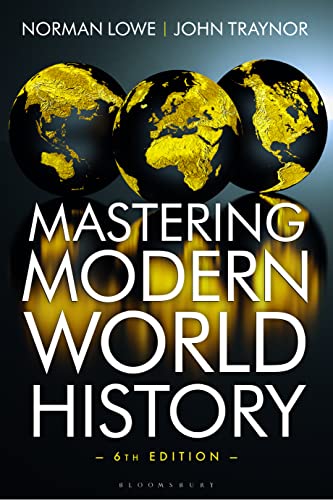
Mastering Modern World History — Norman Lowe
- 720 pages, the standard world history text
- Strong on inter-war politics, the Cold War and decolonisation
- Analytical framing that transfers straight into Mains answers
What to read: the chapters on the World Wars, the inter-war years, the Cold War, and decolonisation. What to skip: the long sections on the United Nations, the European Community’s institutional detail, and the chapter-end exam exercises meant for British school boards. The book is heavy at 720 pages, so don’t read it cover to cover. Read the six or seven chapters that map to the syllabus, mark them, and move on.
One practical tip: keep a single sheet per chapter while you read Lowe, with three columns headed causes, events, and consequences. By the time you finish a chapter you’ve effectively written your revision note, and you never have to reopen those 720 pages again. The book is dense, but it’s dense with the right thing, the analytical scaffolding that lets you frame an answer under exam pressure.
When not to buy it: if you’re a Hindi-medium aspirant or you want something you can finish in a weekend, Lowe will frustrate you. It’s thorough, not fast, and it isn’t available in Hindi. For everyone else writing GS1 in English, this is the book, and you have permission to skip every other title on this page once you own it.
Arjun Dev, History of the World: the compact NCERT-style option
This is the book for aspirants who want the syllabus covered cleanly without the page count. History of the World by Arjun Dev grew out of the old NCERT world history material, and it carries that lineage: clear sequencing, balanced treatment, and no padding. At around 288 pages it’s a third the size of Lowe, and you can genuinely read it in a few sittings.
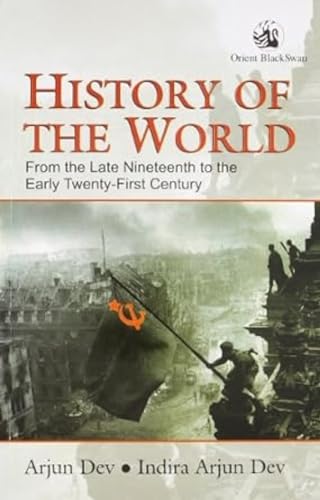
History of the World — Arjun Dev
- 288 pages — the compact option
- NCERT-style narrative pitched at exam level
- Enough for GS Paper 1 world history without over-reading
The trade-off is depth. Arjun Dev gives you the skeleton of the Industrial Revolution, the rise of nationalism, the World Wars, and decolonisation, but it won’t hand you the rich causal analysis that lets you write a confident 250-word answer on, say, why the Treaty of Versailles failed. Use it as your first read or your revision read, and pair it with Lowe for the chapters that come up most. If your time is tight and you’ve already decided world history is a one-mark-per-page subject for you, this compact, affordable book alone is a defensible choice.
Jain & Mathur and Krishna Reddy: the reference-shelf books
These two are reference books, not reading books, and you should treat them that way. A History of the Modern World by Jain and Mathur runs to about 705 pages and is a long-time favourite of optional-subject students and Hindi-medium aspirants, partly because it’s available in both languages. It’s exhaustive and reliable, which is exactly why it can sink a GS aspirant who reads it linearly.
History of the Modern World — Jain & Mathur
- 705 pages, reference depth on revolutions and world wars
- More detail than GS needs, useful for History optional
- Good for essay material on nationalism and decolonisation
World History from 1500 to 2000 AD by Krishna Reddy sits in the same bracket: a fuller, exam-coaching-style account that some find easier to follow than Lowe because it’s written with the Indian student in mind. There’s no need to buy both, and there’s rarely a need to buy either if you have Lowe or Arjun Dev. Reach for one of these only if a specific theme (the Industrial Revolution’s social impact, the Chinese Revolution, the unification of Germany and Italy) feels thin in your main book and you want a second, deeper account to settle it. For a GS-only candidate, that’s the role they play: look-up, not read-through.
Quick comparison of the four world history books
| Book | Author | Best for / Notes |
|---|---|---|
| Mastering Modern World History | Norman Lowe | The core book. Analytical, thorough (720 pages). Read the World Wars, Cold War, and decolonisation chapters; skip the UN and EC institutional detail. |
| History of the World | Arjun Dev | Compact NCERT-style read (288 pages). Best as a first pass or revision book. Light on causal depth. |
| A History of the Modern World | Jain & Mathur | Exhaustive reference (705 pages), available in Hindi. For optional students or topic look-ups, not linear GS reading. |
| World History (1500 to 2000 AD) | Krishna Reddy | Coaching-style fuller account, India-friendly framing. A second-opinion reference if a theme feels thin elsewhere. |
How to use this list: the reading order that works
Don’t read all four. Pick a primary book and a fallback, then read in this order:
- Start with the syllabus, not the book. Write down the six themes (Industrial Revolution, the World Wars, Russian and Chinese revolutions, decolonisation, Cold War, redrawing of boundaries). Everything you read should map to one of them.
- Do one fast pass. If you have Arjun Dev, read it end to end first for the storyline. If not, skim Lowe’s chapter introductions to build the timeline before you go deep.
- Read Lowe for depth, selectively. Go chapter by chapter through Norman Lowe only for the syllabus themes. Make crisp notes on causes, consequences, and turning points, not dates.
- Keep a reference book closed unless you’re stuck. Open Jain & Mathur or Krishna Reddy only to settle a specific theme that your notes can’t explain.
- Revise from your notes, not the book. By the second revision you should be reading four pages of your own notes, not seven hundred pages of anyone else’s.
This same one-core-book discipline carries across the whole optional-free GS reading list. If you’re assembling your full stack, our guides to the best books for UPSC Prelims and the best books for UPSC Mains show where world history fits alongside polity, economy, and geography, so you spend on the books that earn marks and skip the ones that just look serious on a shelf.
The verdict
Buy Norman Lowe’s Mastering Modern World History and read it selectively, or buy Arjun Dev’s History of the World if you want something compact and finishable. That single decision settles ninety percent of your world history preparation. Treat Jain & Mathur and Krishna Reddy as the reference shelf you consult twice, not the mountain you climb. World history is a small, scoreable part of GS1, and the aspirants who do well are the ones who refused to over-read it. That’s the whole secret.
For a worked reading routine, use the guide for the source you have chosen:
Frequently Asked Questions
Which is the best single book for world history in UPSC GS Paper 1?
Norman Lowe’s Mastering Modern World History is the most reliable single choice for English-medium aspirants. It explains causes and consequences in plain language and covers the World Wars, Cold War, and decolonisation thoroughly. Read it selectively rather than cover to cover, since it runs to 720 pages.
Is Arjun Dev enough for UPSC world history?
Arjun Dev’s History of the World is enough if your time is tight and you want clean syllabus coverage without depth. At around 288 pages it reads like the old NCERT material and works well as a first pass or revision book. For richer analytical answers, pair it with Norman Lowe for the high-frequency themes.
Do I need to read the whole of Norman Lowe?
No. Read only the chapters that map to the UPSC syllabus: the two World Wars, the inter-war years, the Russian Revolution, the Cold War, and decolonisation in Asia and Africa. Skip the sections on the United Nations, the European Community’s institutional detail, and the British school-board exercises at chapter ends.
Which world history book is best for Hindi-medium aspirants?
Jain & Mathur’s A History of the Modern World is widely used by Hindi-medium aspirants because it is available in both Hindi and English and is exhaustive. Use it as a reference for specific themes rather than reading all 705 pages linearly, which can eat into time better spent on other GS1 areas.
What topics from world history does UPSC actually ask?
UPSC concentrates on roughly six themes: the Industrial Revolution, the two World Wars, the Russian and Chinese revolutions, decolonisation, the Cold War, and the redrawing of national boundaries. The questions are thematic and analytical, asking for causes and consequences rather than isolated dates or names.
How many books should I buy for world history?
One core book is enough. Choose either Norman Lowe or Arjun Dev as your primary read and keep a reference book like Jain & Mathur or Krishna Reddy only to settle a theme that feels thin. Buying multiple full-length references adds reading hours without adding marks in GS1.
Tell Google you want more of this.
Add Anantam IAS as a preferred sourceOne tap, and this site shows up more often in your own Top Stories, AI Overviews and AI Mode. Remove it any time.