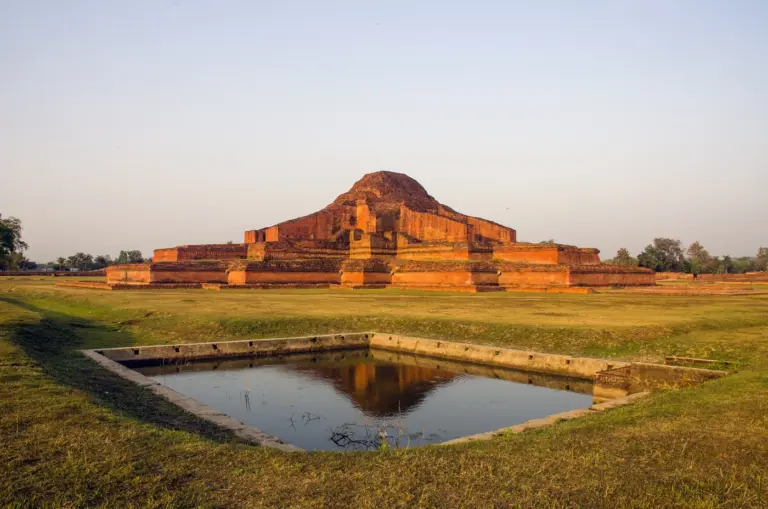
The Pallava Dynasty ruled large parts of the Tamil country from around the 3rd century CE to the 9th century CE, with their capital at Kanchipuram. They are remembered for pioneering Dravidian temple architecture — from rock-cut caves at Mamallapuram (Mahabalipuram) to the great Shore Temple — for their long rivalry with the Chalukyas of Badami, and for the flowering of Tamil Bhakti literature under their patronage. They laid the template on which the later Chola, Pandya and Vijayanagara temple traditions were built.
For UPSC, the Pallavas are a core Ancient India (GS1) topic linking polity, art, religion, and cultural exchange across South and Southeast Asia.
Origins and Political Geography
The origin of the Pallavas is debated. Major theories:
| Theory | Argument |
|---|---|
| Pahlava origin | Derived from Iranian Pahlavas (Parthians); linked by naming similarity |
| Local origin | Emerged from the Cholas' northern feudatories |
| Chola-Naga origin | Legend traces them to a Chola prince and a Naga princess |
| Brahmin origin | "Pallava" from Brahmadatta's descendants, as per their own inscriptions |
Most scholars today accept a local Tamil-country origin, with political consolidation around the Pallar / Pallavar feudatory lines.
Territory
| Region | Extent |
|---|---|
| Core | Tondaimandalam — modern northern Tamil Nadu |
| Capital | Kanchipuram (Kanchi) |
| Major port | Mamallapuram (Mahabalipuram) |
| Peak extent | From Krishna River in the north to Kaveri in the south |
| Rival powers | Chalukyas of Badami (west); Pandyas (south); Rashtrakutas (later) |
Pallava Dynasty — Key Rulers
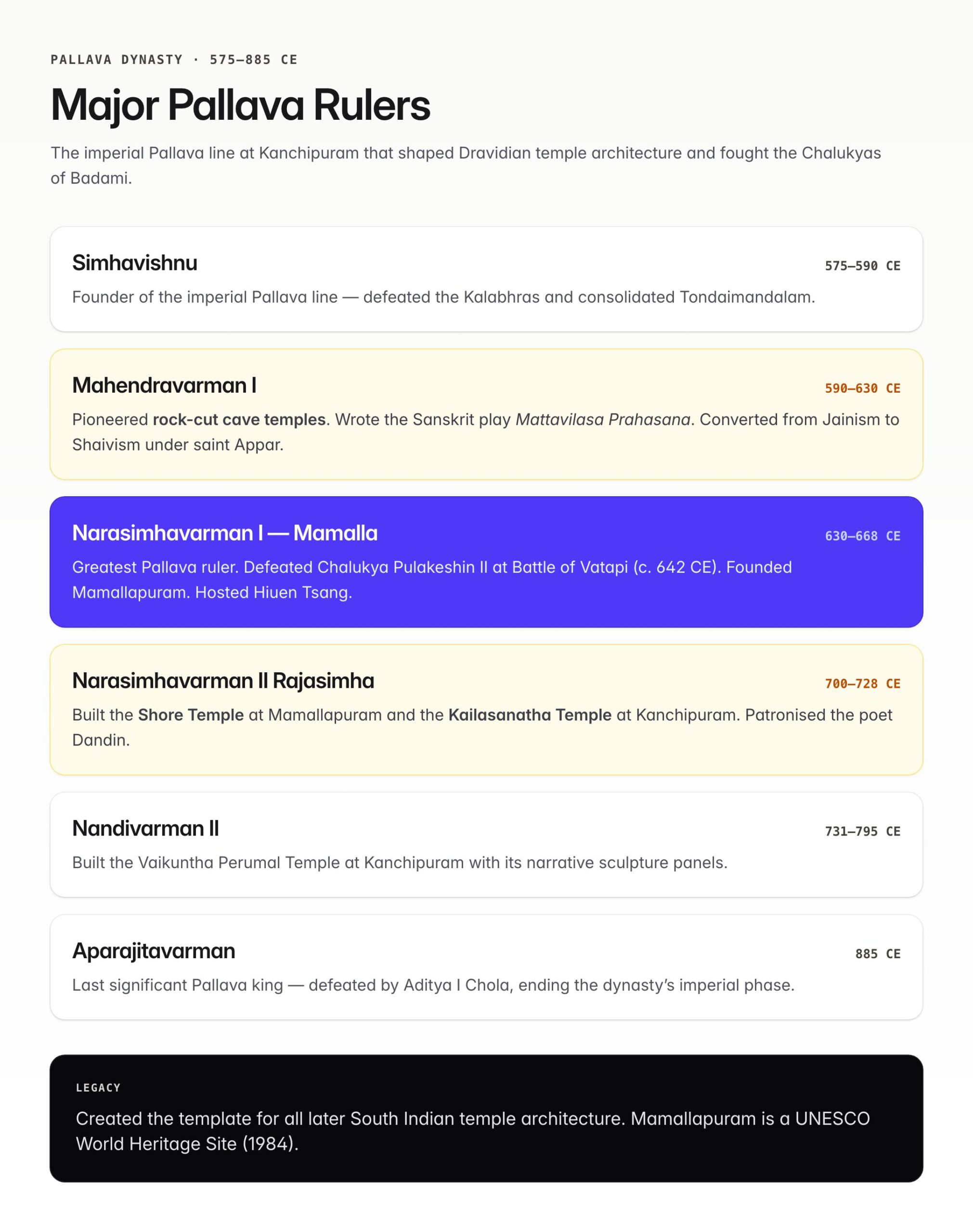
| Ruler | Period (CE) | Key Achievement |
|---|---|---|
| Simhavishnu | 575–590 | Founder of "imperial" line; defeated Kalabhras |
| Mahendravarman I | 590–630 | Initiated rock-cut temple architecture |
| Narasimhavarman I Mamalla | 630–668 | Defeated Chalukya Pulakeshin II; built Mamallapuram |
| Narasimhavarman II Rajasimha | 700–728 | Built Shore Temple and Kailasanatha Temple |
| Nandivarman II | 731–795 | Built Vaikuntha Perumal Temple, Kanchi |
| Dantivarman | 795–846 | Defeated by Rashtrakuta Govinda III |
| Aparajitavarman | 885 | Last significant king; defeated by Aditya I Chola |
Mahendravarman I (c. 590–630 CE)
- Originally a Jain; converted to Shaivism under the influence of saint Appar
- Began rock-cut cave temples — the foundation of Dravidian architecture
- Authored the Sanskrit satirical play Mattavilasa Prahasana
- Held titles: Vichitrachitta, Chitrakarappuli (painter), Chettakkari (temple-builder)
- Suffered reverses from Chalukya Pulakeshin II
Narasimhavarman I Mamalla (c. 630–668 CE)
The greatest Pallava ruler.
| Achievement | Detail |
|---|---|
| Battle of Vatapi (c. 642 CE) | Defeated and killed Pulakeshin II of the Chalukyas of Badami; sacked Vatapi |
| Title | "Vatapikonda" (Conqueror of Vatapi) |
| Founded port city | Mamallapuram (named after his title Mamalla = "Great Wrestler") |
| Patronised art | Rathas, Mandapas, great rock reliefs at Mamallapuram |
| Overseas expedition | Sent fleet to help Manavarman of Sri Lanka |
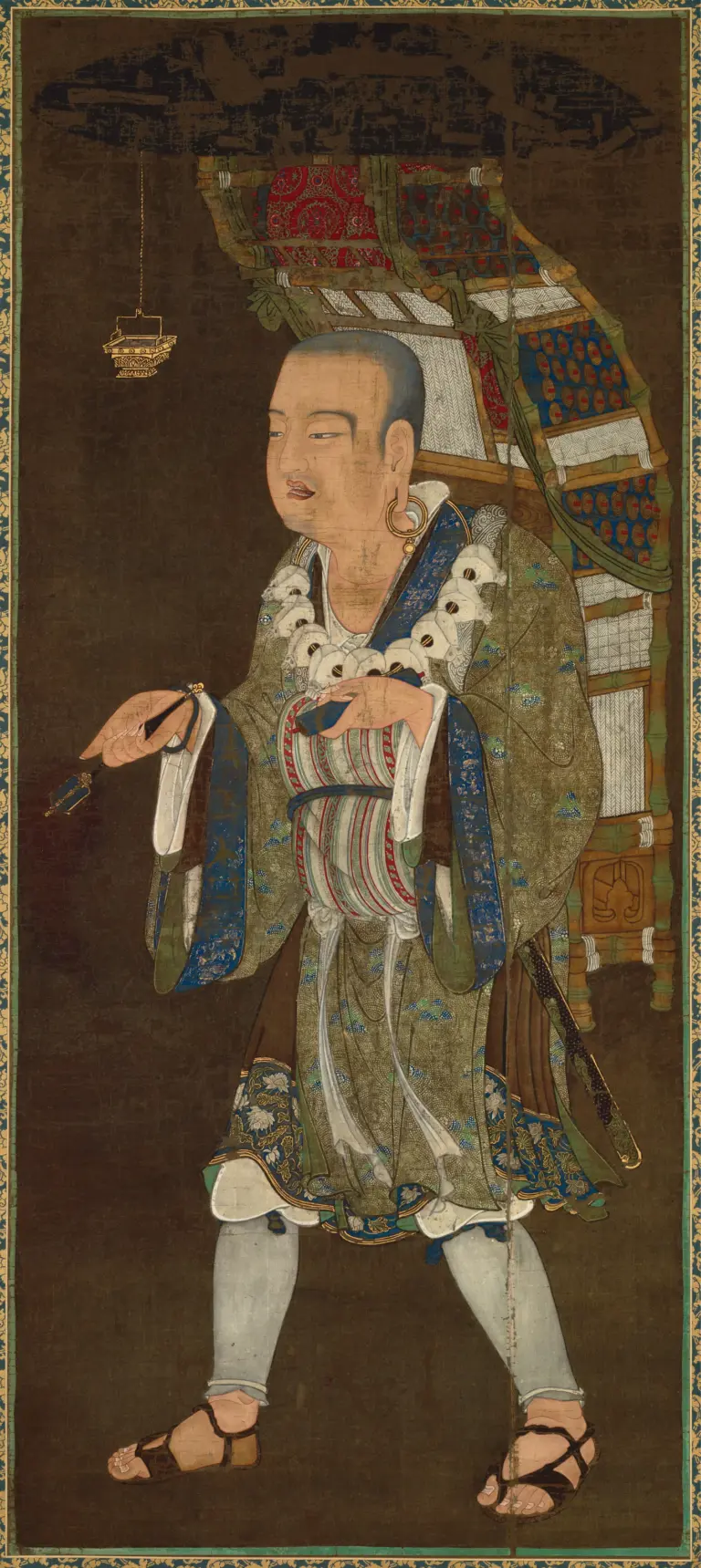
| Famous visitor | Chinese pilgrim Hiuen Tsang visited Kanchi during his reign |
Narasimhavarman II Rajasimha (c. 700–728 CE)
- Built the Shore Temple at Mamallapuram — one of the oldest structural stone temples of South India
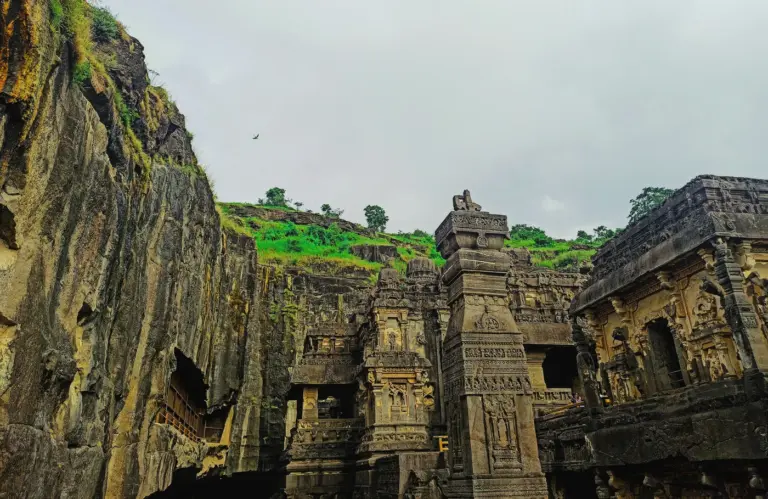
- Built the Kailasanatha Temple at Kanchipuram
- Sent embassies to China — facilitating maritime and cultural links
- Patronised the poet Dandin, author of Dasakumaracharita
- Titles: Rajasimha, Shankarabhakta
Pallava–Chalukya Rivalry
The great political theme of 7th–8th century peninsular India was the Pallava–Chalukya conflict.
| Year (c.) | Event | Outcome |
|---|---|---|
| 610 | Pulakeshin II invades Pallava territory | Chalukya success |
| 642 | Narasimhavarman I invades; captures Vatapi (Badami) | Pallava victory; Pulakeshin II killed |
| 731 | Vikramaditya II raids Kanchipuram | Chalukya success (symbolic) |
| 740 | Nandivarman II defeats Chalukya forces | Pallava recovery |
The rivalry ended only with the rise of the Rashtrakutas in the 8th century, who defeated both.
Administration
| Aspect | Detail |
|---|---|
| King | Absolute ruler with divine authority |
| Titles | Dharma Maharaja; Maharajadhiraja |
| Council | Ministers including Purohita (priest), Mantrin (minister), Senapati (army chief) |
| Land grants | Brahmadeya (to Brahmins), Devadana (to temples) |
| Village assemblies | Precursors to the Chola Ur and Sabha; democratic local governance |
| Revenue | Land tax (1/6 of produce); irrigation cess; customs |
| Military | Standing army; navy based at Mamallapuram |
Society and Religion
- Caste structure was rigid; Brahmins at apex
- Sanskrit was the court language; Tamil was the popular and devotional language
- Shaivism and Vaishnavism both thrived
- The Bhakti movement in Tamil Nadu crystallised under Pallava patronage
- Jainism and Buddhism declined
The Bhakti Saints
| Tradition | Saints | Works |
|---|---|---|
| Shaiva (Nayanars) | 63 saints, including Appar, Sambandar, Sundarar | Compiled as Tevaram |
| Vaishnava (Alvars) | 12 saints, including Tirumangai Alvar, Andal | Compiled as Divya Prabandham |
The Nayanars and Alvars transformed popular religion, used Tamil instead of Sanskrit, and included non-Brahmin and women saints (like Andal).
Pallava Architecture — The Four Phases
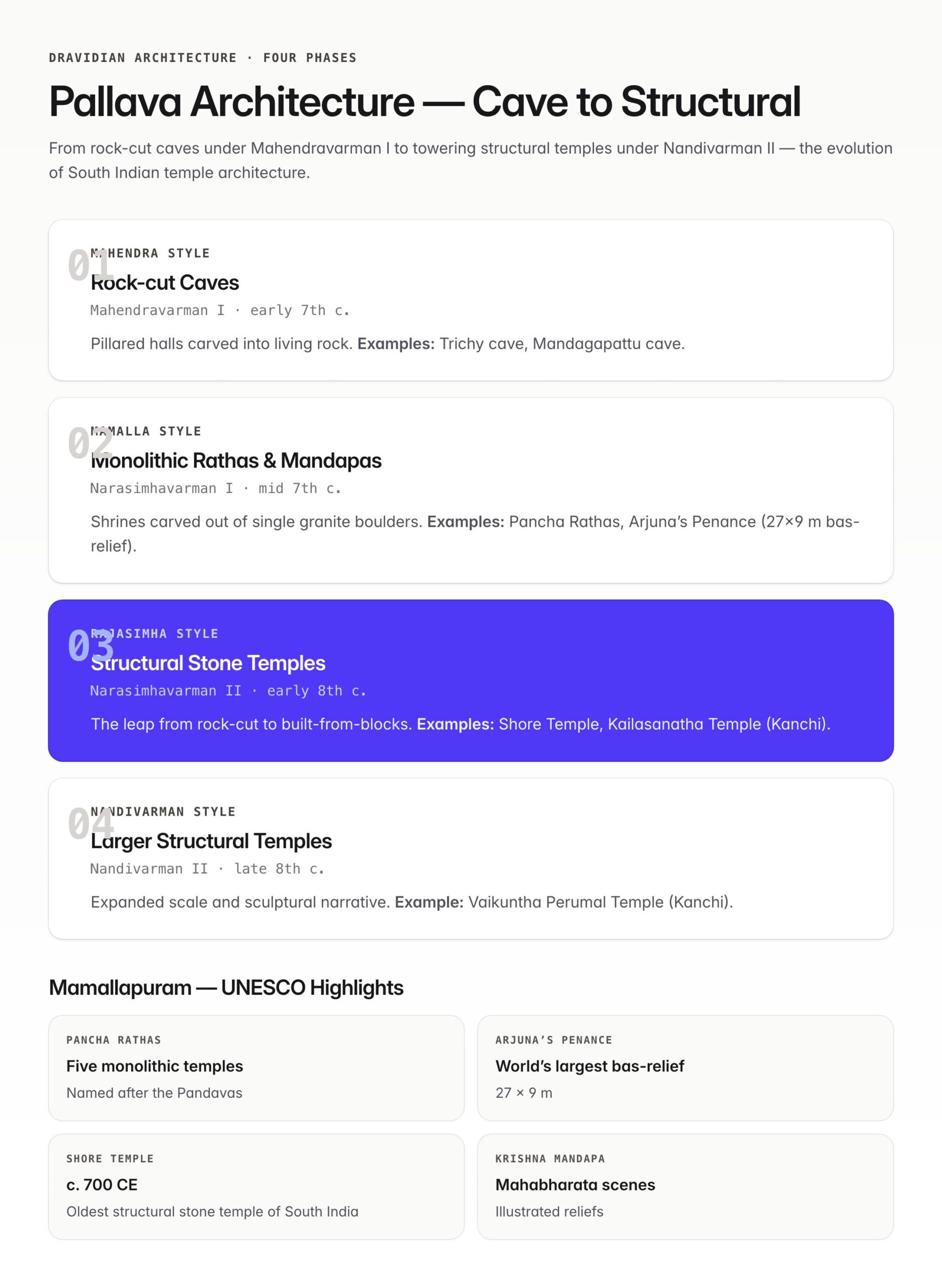
Pallava architecture is classically divided into four phases based on ruler and style.
| Phase | Ruler | Style | Examples |
|---|---|---|---|
| 1. Mahendra style | Mahendravarman I | Rock-cut caves; pillared halls | Trichy cave, Mandagapattu cave |
| 2. Mamalla style | Narasimhavarman I | Monolithic rathas and mandapas | Pancha Rathas, Arjuna's Penance |
| 3. Rajasimha style | Narasimhavarman II | Structural stone temples | Shore Temple, Kailasanatha Temple |
| 4. Nandivarman style | Nandivarman II | Larger structural temples | Vaikuntha Perumal Temple |
Mamallapuram — The Open-Air Museum
Declared a UNESCO World Heritage Site in 1984.
| Monument | Detail |
|---|---|
| Pancha Rathas | Five monolithic temples carved from single granite rock, each in a different architectural style; named after Pandavas |
| Arjuna's Penance | One of the world's largest bas-reliefs (27 × 9 m); depicts Descent of the Ganga |
| Krishna Mandapa | Illustrated Mahabharata scenes |
| Shore Temple | Built c. 700 CE under Rajasimha; structural; dedicated to Shiva and Vishnu |
| Olakkannesvara Temple | Hilltop Shiva temple |
Kanchipuram
Known as the "Golden City of 1000 Temples".
| Temple | Detail |
|---|---|
| Kailasanatha | Oldest Pallava structural temple at Kanchi; sandstone; built by Rajasimha |
| Vaikuntha Perumal | Built by Nandivarman II; narrative sculpture panels; 3 sanctums |
| Ekambareswarar | Expanded later; originally Pallava |
Art and Culture
| Field | Contribution |
|---|---|
| Literature | Sanskrit: Mattavilasa Prahasana by Mahendravarman I; Dasakumaracharita by Dandin |
| Tamil literature | Tevaram, Nalayira Divya Prabandham |
| Painting | Murals at Sittanavasal and Panamalai |
| Music | Seven-note scale formalised; temple music tradition |
| Dance | Temple sculptures show early forms of Bharatanatyam |
Overseas Influence
The Pallavas projected Indian culture into Southeast Asia through maritime trade and religious missions.
| Region | Evidence |
|---|---|
| Cambodia | Pallava-style Grantha script basis for Khmer; early Hindu temples |
| Indonesia | Pallava script roots in Javanese and Balinese scripts |
| Sri Lanka | Military and religious engagement under Narasimhavarman I |
| China | Embassies during Rajasimha's reign |
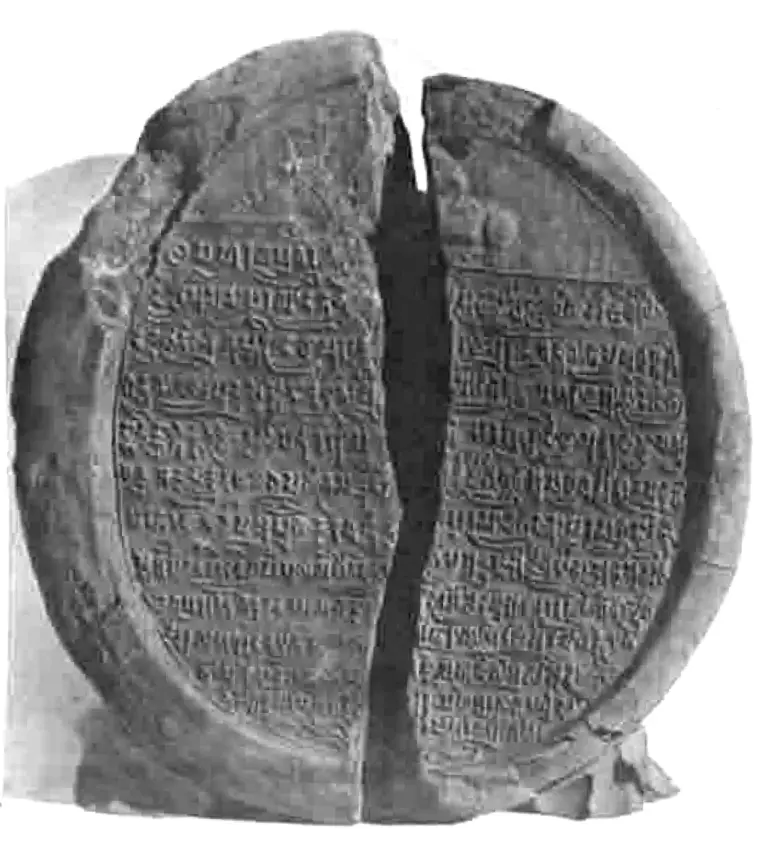
The Pallava Grantha script is the ancestor of scripts used in Tamil, Malayalam, Sinhala, Khmer, and Javanese traditions.
Decline of the Pallavas
| Reason | Detail |
|---|---|
| Rise of the Cholas | Aditya I Chola defeated Aparajitavarman around 885 CE |
| Rashtrakuta attacks | Continued pressure from the north-west |
| Pandya resurgence | Frequent southern conflicts |
| Administrative overstretch | Prolonged wars drained resources |
By the early 10th century, the Pallava dynasty was absorbed into the Chola empire.
Legacy
- Created the architectural template for all later South Indian temples
- Institutionalised temple-centric society and village assemblies
- Facilitated the Bhakti movement in Tamil Nadu
- Made Kanchipuram a great centre of learning
- Grantha script seeded Southeast Asian writing systems
- Mamallapuram is a UNESCO World Heritage Site
UPSC Relevance
GS1 (Ancient History & Culture): Dravidian architecture, temple styles, Bhakti movement, South Indian polities, Indian cultural influence abroad.
Key Prelims facts:
- Capital: Kanchipuram
- Major port: Mamallapuram (Mahabalipuram)
- Founder of imperial line: Simhavishnu (6th century CE)
- Mahendravarman I: Rock-cut architecture; Mattavilasa Prahasana
- Narasimhavarman I (Mamalla): Defeated Chalukya Pulakeshin II at Battle of Vatapi (c. 642 CE); hosted Hiuen Tsang at Kanchi
- Narasimhavarman II (Rajasimha): Built Shore Temple and Kailasanatha Temple, Kanchipuram
- Nandivarman II: Built Vaikuntha Perumal Temple, Kanchipuram
- Pancha Rathas: Five monolithic temples at Mamallapuram
- Arjuna's Penance: Largest bas-relief sculpture
- Mamallapuram: UNESCO World Heritage Site (1984)
- Bhakti saints: Nayanars (Shaiva) and Alvars (Vaishnava) flourished under Pallavas
- Grantha script: Influenced Southeast Asian scripts
- Defeated by: Aditya I Chola (c. 885 CE)
Tell Google you want more of this.
Add Anantam IAS as a preferred sourceOne tap, and this site shows up more often in your own Top Stories, AI Overviews and AI Mode. Remove it any time.