
The Quadrilateral Security Dialogue (Quad) brings together India, the United States, Japan and Australia — four Indo-Pacific democracies whose collective weight now shapes the region's security and technology architecture. For UPSC GS-II, the Quad is essential for every question on bilateral groupings, India's Indo-Pacific strategy and the contest with China.
Origin and evolution
Quad 1.0 (2004-2008)
The Quad’s predecessor was the Tsunami Core Group formed by India, the US, Japan and Australia to coordinate the 2004 Indian Ocean tsunami relief effort. In 2007, Japanese PM Shinzo Abe proposed an “Asian arc of democracy” and the four countries held informal talks on the margins of the ASEAN Regional Forum in Manila.
Australia under PM Kevin Rudd pulled out in 2008, wary of offending China. The first Quad quietly lapsed.
Quad 2.0 (2017-present)
The grouping was revived in November 2017 in Manila, as Chinese assertiveness in the South China Sea and along the Line of Actual Control alarmed all four capitals. It has since upgraded itself into a high-profile summit-level mechanism:
- March 2021: First leaders' summit (virtual) under President Biden; Quad Vaccine Partnership announced.
- Sept 2021: In-person summit, Washington.
- May 2022, Tokyo: IPMDA and IPEF launched on the sidelines.
- May 2023, Hiroshima (sidelines of G7).
- Sept 2024, Wilmington, Delaware: New ports, MAITRI, cancer moonshot, coast guard ship-rider.
- 2025: India hosts the leaders' summit (delayed from Jan 2025).
What the Quad is — and isn't
The Quad is not a formal alliance, treaty organisation, or military pact. There is no Quad secretariat, no Article 5 commitment and no permanent force structure. Member states have chosen to keep it issue-based and plurilateral rather than an "Asian NATO".
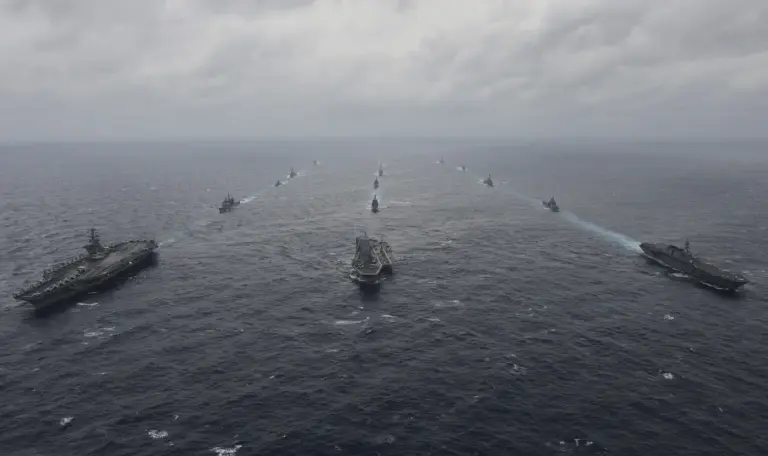
The Malabar Exercise — annual naval drills now involving all four countries — operates outside the Quad framework. Similarly, AUKUS (Australia-UK-US nuclear submarine partnership) is a parallel defence pact that excludes India and Japan.
Six pillars of Quad cooperation
- Maritime security
- Indo-Pacific Partnership for Maritime Domain Awareness (IPMDA, 2022) — satellite-based, near-real-time tracking of dark shipping, illegal fishing, maritime militia. Covers Indian Ocean, Southeast Asia and Pacific.
- Quad Coast Guard Ship-Rider programme (2024) — cross-deployment of coast guard personnel.
- MAITRI — Maritime Initiative for Training in the Indo-Pacific Region.
- Critical and emerging technologies
- MoU on 5G supplier diversification and Open RAN.
- Common principles for critical technology supply chains, especially semiconductors.
- Quad AI Engage Partnership; cooperation on biotech.
- Infrastructure
- Quad Infrastructure Coordination Group.
- Announced intent to extend US$50 billion+ in infrastructure assistance in the Indo-Pacific over five years.
- Climate and clean energy
- Quad Climate Working Group.
- Clean energy supply chains, hydrogen, and critical minerals.
- Health
- Quad Vaccine Partnership — 400+ million doses delivered (though well below the 1.2 billion promise).
- Quad Cancer Moonshot (2024) targeting cervical cancer in the Indo-Pacific.
- Cyber, space and undersea cables
- Quad Cybersecurity Partnership.
- Space-based earth observation sharing.
- Quad-led undersea cable initiative (Wilmington 2024).
Indirect China signalling
While joint statements carefully avoid naming China, all Quad communiqués have condemned:
- Coercive and unilateral actions that change the status quo.
- Dangerous use of coast guard vessels and maritime militia.
- Attempts to disrupt other countries' offshore resource exploitation.
- Militarisation of disputed features in the South China Sea.
The 2024 Wilmington statement sharpened the language further, directly criticising China's behaviour in the East and South China Seas.
India's position and distinct interests
India's approach to the Quad is shaped by strategic autonomy:
- Not an alliance — India has rejected military-alliance framing; the Quad remains political and functional.
- Not anti-China — India's public line is that the Quad is "for something", not "against someone".
- Indian Ocean primacy — India leverages Quad resources (IPMDA, coast guard) to strengthen the Indian Ocean neighbourhood.
- Divergences — India did not join the IPEF trade pillar, did not condemn Russia over Ukraine, and did not back Taiwan's World Health Assembly observership.
Limitations and criticisms
- Rhetoric-delivery gap — US$50 billion over 5 years vs the hundreds of billions the US provided Ukraine in three years.
- No hard-security commitments — no joint operations, no Article 5 analogue, no Quad fleet.
- Parallel platforms dilute focus — AUKUS, I2U2, Partners in the Blue Pacific, IPEF pull bandwidth in different directions.
- Member divergences — Russia-Ukraine, Taiwan, ASEAN centrality, trade pillar participation.
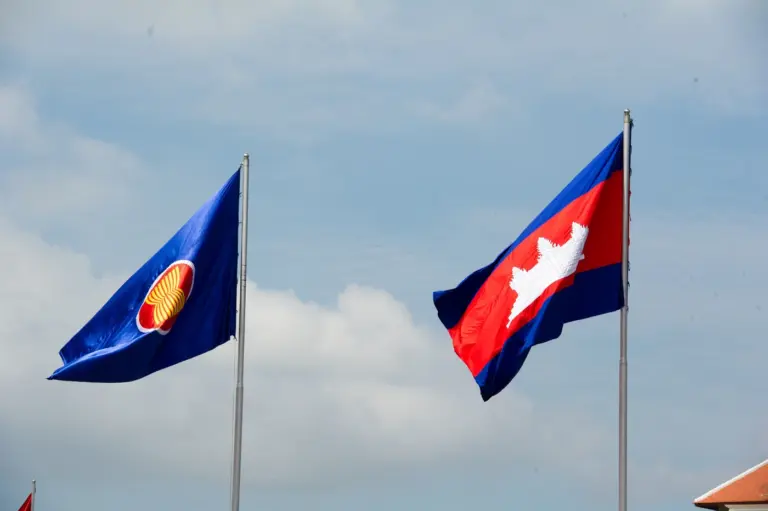
- Perception in ASEAN — some Southeast Asian states fear the Quad eclipses ASEAN centrality.
- Continuity risk — a future US or Australian government could downgrade engagement; Trump 2.0 has been more transactional about the grouping's costs.
- Technology promises vs execution — 5G, semiconductors, critical minerals face hard commercial and political constraints.
Quad vs AUKUS
| Aspect | Quad | AUKUS |
|---|---|---|
| Members | India, US, Japan, Australia | Australia, UK, US |
| Nature | Political-functional forum | Defence technology pact |
| Focus | Maritime domain awareness, tech, health, climate | Nuclear submarines, advanced capabilities (AI, quantum, hypersonics) |
| India's role | Full partner | None (observer discussions only) |
| Military commitment | None formally | Long-term capability transfer |
The coexistence of Quad and AUKUS reflects a layered Indo-Pacific architecture where India's comfort with non-alliance cooperation is preserved while the US deepens alliance commitments with Anglo-Saxon partners.
Latest developments (2024-26)
- Wilmington Summit (Sept 2024): Coast Guard Ship-Rider Programme, Quad Ports of the Future, MAITRI training initiative, Quad Cancer Moonshot, undersea cables partnership; emphasis on India hosting 2025.
- Japan leadership transition: PM Ishiba has reaffirmed Quad continuity.
- Trump 2.0 posture (Jan 2025): Reaffirmed Quad but pushed for greater allied contributions; hinted at conditionality.
- India-Maldives reset (Oct 2024): Showcased India's willingness to use Quad-adjacent capacity building (coast guard, hydrography) with Indian Ocean neighbours.
- Red Sea crisis response: Though not formally a Quad operation, IPMDA-style data-sharing supported Indian Navy anti-piracy deployments.
- BRICS+ expansion (2024): Some Quad commentators argue BRICS+ inclusion of UAE and Saudi Arabia partly offsets Quad's Indo-Pacific reach.
- Russia-Ukraine and Israel-Hamas: India's Ukraine abstentions and call for restraint in Gaza exposed the limits of Quad unity on non-Indo-Pacific conflicts.
- AI Summit Paris (Feb 2025): Quad engaged on AI governance, though US-India-Japan differences on frontier AI regulation emerged.
Way forward
- Concrete, fundable deliverables — close the rhetoric-finance gap.
- Open membership to Quad-Plus partners (South Korea, Vietnam, New Zealand) on specific workstreams.
- Deeper ASEAN engagement to preserve regional centrality.
- Codify technology commitments — chip alliances, critical minerals stockpiles, Open RAN deployment.
- Institutional anchors — consider a light secretariat to sustain continuity across administrations.
UPSC Relevance
GS-II: "Bilateral, regional and global groupings and agreements involving India."
Probable questions
- "The Quad is a grouping for something, not against someone." Critically examine. (15 marks)
- Differentiate between the Quad, AUKUS and BRICS with reference to India's strategic autonomy. (10 marks)
- How has the Quad evolved from its 2007 origins to the 2024 Wilmington Summit? (15 marks)
Prelims trigger words — Quad, IPMDA, MAITRI, Quad Vaccine Partnership, Cancer Moonshot, Malabar Exercise, AUKUS, I2U2, Tsunami Core Group, Shangri-La Dialogue.
The Quad is best understood as a coalition of convergence rather than a traditional alliance. Its value to India lies in accessing high-end capacity (IPMDA, critical tech, finance) while preserving strategic autonomy — a delicate balance the grouping has managed, so far, by design.
Tell Google you want more of this.
Add Anantam IAS as a preferred sourceOne tap, and this site shows up more often in your own Top Stories, AI Overviews and AI Mode. Remove it any time.