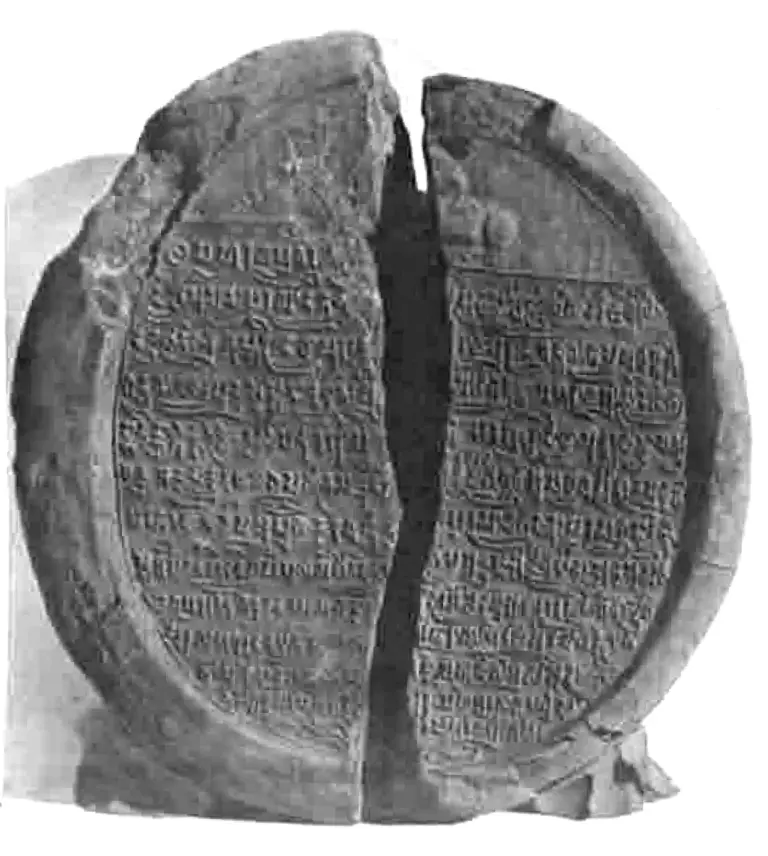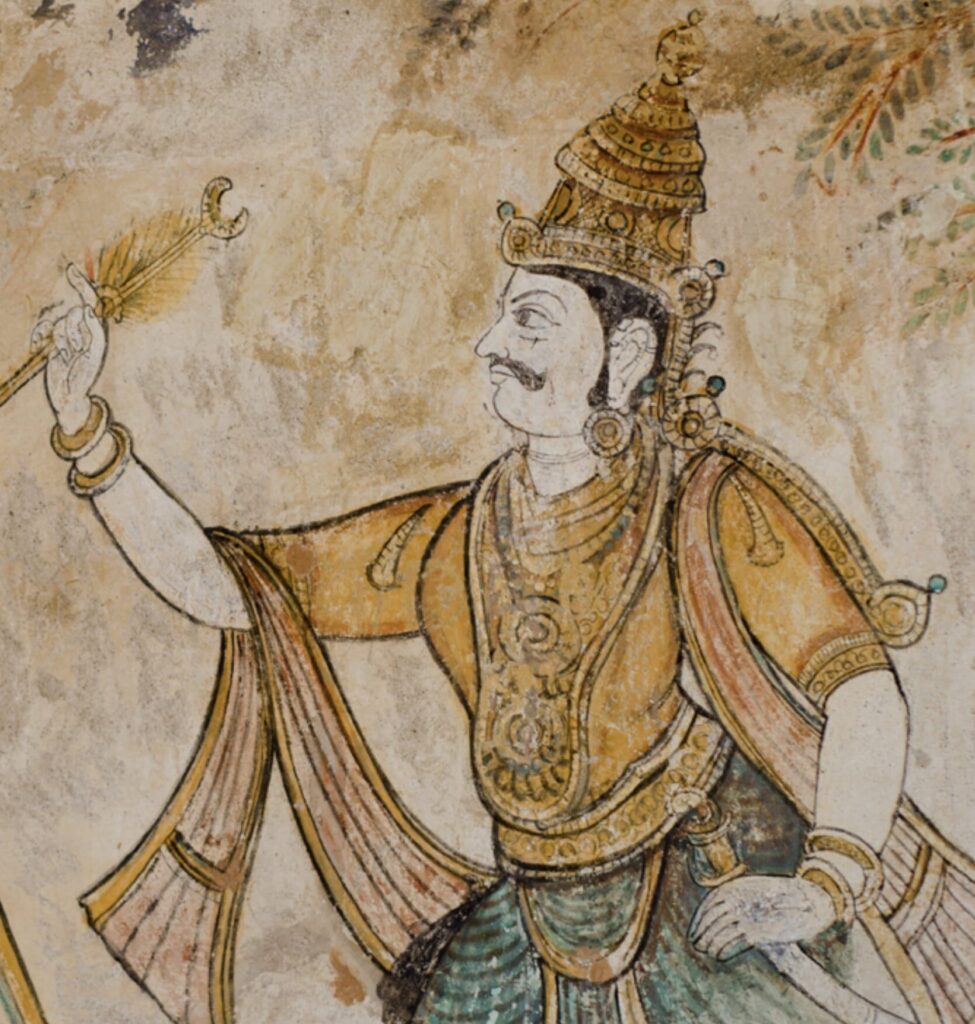
Raja Raja Chola I, who ruled from 985 to 1014 CE, is the emperor who turned the Cholas from a strong regional power in the Kaveri delta into the dominant force of peninsular India and the Bay of Bengal littoral. He defeated the Pandyas, Cheras and the Sinhala kingdom of Anuradhapura, professionalised the Chola army and navy, codified a remarkably modern revenue and survey system, patronised Tamil and Sanskrit literature, and built the Brihadeeswara Temple at Thanjavur — the granite mountain that is still the architectural signature of his reign.
For UPSC GS Paper I and Art and Culture, Raja Raja Chola I is the central figure of the medieval southern India syllabus. His military campaigns, his temple-state model, the Tanjavur Big Temple as a UNESCO World Heritage Site, and the institutional precedent he set for his son Rajendra Chola’s overseas expansion are all standard questions. His name is also the answer to the bonus prelims question about who built the Brihadeeswara Temple, which we have covered separately in our Brihadeeswara Temple Thanjavur explainer.
This piece sets out Raja Raja Chola I’s accession, his military campaigns, the administrative and revenue system, the temple-building programme, the naval foundation, and the legacy that runs through his son Rajendra and the Chola maritime empire of the eleventh century.
Accession and Background
The Cholas were an ancient Tamil dynasty whose recorded history goes back to the Sangam era. By the ninth and tenth centuries, after a long eclipse under the Pallavas and Pandyas, they had re-emerged in the Kaveri delta under Vijayalaya (c. 850 CE), who captured Thanjavur and made it the dynastic capital. His successors Aditya I and Parantaka I extended Chola control northwards.
Birth as Arulmozhivarman
Raja Raja Chola I was born Arulmozhivarman, son of Sundara Chola (Parantaka II) and Vanavan Mahadevi. His elder brother, Aditya II, was assassinated in around 969 CE. The succession then passed to Sundara Chola’s uncle Uttama Chola, with the understanding that Arulmozhivarman would eventually succeed him. Arulmozhivarman did so peacefully in 985 CE, at which point he took the regnal title Raja Raja, “King of Kings”.
A consolidated southern Indian state
When Raja Raja Chola I ascended the throne in 985 CE, the Chola country was politically intact but militarily under-utilised. The Pandyas had revived in the south, the Cheras controlled Kerala, the Sinhala kingdom of Anuradhapura held northern Sri Lanka, and the Western Chalukyas of Kalyani threatened the Deccan frontier. Raja Raja Chola I would deal with each of them in turn.
Military Campaigns of Raja Raja Chola I
The military career of Raja Raja Chola I is dated through his inscriptions, which use elaborate prashasti formulae (the meykkirtti) recording his conquests in chronological order. These prashastis are the single most important source for medieval South Indian political history.
Campaign against the Cheras — Kandalur Salai
The first major campaign, around 988 CE, was against the Chera (Kerala) ruler Bhaskara Ravi Varman. Raja Raja Chola I’s forces destroyed the Chera naval fleet stationed at Kandalur Salai, near modern Vizhinjam on the Travancore coast. The victory at Kandalur Salai is mentioned in nearly every later Chola inscription as the founding military achievement of the reign.
Conquest of the Pandyas — Madurai
Raja Raja Chola I then turned south against the Pandya ruler Amarabhujanga. He sacked the Pandya capital Madurai and assumed the title Pandya-kulashani, “thunderbolt to the Pandya dynasty”. Pandya territory was incorporated into the Chola empire as a viceroyalty, often administered by a Chola prince.
Conquest of northern Sri Lanka
Around 993 CE, Raja Raja Chola I invaded the Sinhala kingdom of Anuradhapura under Mahinda V. The Chola army occupied northern Sri Lanka, sacked Anuradhapura, and annexed the island’s northern half as a new Chola province called Mummudi Chola Mandalam, with its capital at Polonnaruwa (renamed Jananatha-mangalam). This is one of the earliest sustained occupations of Sri Lankan territory by a mainland Indian power.
Campaign in the Deccan — Western Chalukyas
Raja Raja Chola I pushed northwards against the Western Chalukyas of Kalyani under Satyashraya. The Chola army crossed the Tungabhadra and raided Chalukya territory. The frontier was eventually stabilised, but only after Raja Raja Chola I had established his claim over the disputed Gangavadi (southern Karnataka) region. He patronised the Hoysala highway through this campaign.
Maldives and the trans-marine frontier
Towards the end of his reign, around 1014 CE, the Chola navy occupied parts of the Maldives. The campaign is sometimes attributed to his son Rajendra, but the inscriptions show that the operation began under Raja Raja Chola I and built on the naval infrastructure he had created. It set the precedent for Rajendra’s Srivijaya expedition of 1025.
Title at the height of conquest
At the height of his power, his full prashasti title ran: “Tirumagal pola perunilachelviyum tanakke uriya menai mulagiya”. The capsule reading is that he held both the goddess of fortune and the goddess of the earth as his consorts. He also took the personal title Mummudi Chola Deva, “the Chola lord with three crowns” — the crowns of the Chera, Pandya and Sinhala kings he had defeated.
Administration and Revenue System
The administrative system of Raja Raja Chola I is one of the most sophisticated of any medieval Indian polity and is the basis of the standard UPSC answer on Chola local government.
Centralised monarchy with local autonomy
The empire was divided into mandalams (provinces), valanadus, nadus and ur (villages). The king governed from Thanjavur with the help of a council and a tightly organised bureaucracy. Below the imperial level, however, village autonomy was extraordinary by medieval standards.
Land survey and revenue assessment
Raja Raja Chola I ordered a comprehensive land survey and revenue settlement, recorded in inscriptions on temple walls. Land was classified by quality, irrigated status and crop, and assessed at a fixed share of produce. The survey was conducted with measured rods (kol) and recorded village by village. The clarity of the assessment is one reason the Chola state could finance the Brihadeeswara temple programme.
Brahmadeyas and devadanas
Villages were often granted to Brahmin assemblies (brahmadeya) or to temples (devadana). These assemblies, especially the famous Uttaramerur assembly inscriptions of the Parantaka I period and continuing under Raja Raja Chola I, ran their own affairs through committees (variyam) elected by ballot. Members of these committees were chosen by a draw of palm-leaf ballots from a pot (kudavolai system).
Audit and accountability
Chola inscriptions record audit and accountability mechanisms that read remarkably modern: stipulations on who could stand for variyam membership, removal procedures for misconduct, mandatory rotation, and disqualification of those whose family members had failed to keep accounts.
The Brihadeeswara Temple
The Brihadeeswara Temple at Thanjavur — also called the Rajarajeswaram or the Big Temple — was begun around 1003 CE and consecrated in 1010 CE. It is the architectural and political signature of Raja Raja Chola I.
Granite at scale
The vimana (tower) over the sanctum is 66 metres tall, the largest of any temple of its age in India. The entire structure is built almost entirely of granite, hauled from quarries roughly 60 km away. The capstone alone, an 80-tonne single block, was reportedly raised on a ramp said to have started near Sarapallam, 6 km away.
Iconography and inscriptions
The walls of the Brihadeeswara Temple carry the longest single corpus of Chola inscriptions, recording temple donations, dancers attached to the temple (devaradiyar), land grants, oil and ghee allotments for the daily offerings, and inventories of temple jewellery. These inscriptions remain a primary source for the social and economic history of medieval Tamil Nadu.
UNESCO and the Great Living Chola Temples
Brihadeeswara is inscribed on the UNESCO World Heritage list as part of the Great Living Chola Temples group, along with Gangaikondacholapuram (built by Rajendra Chola) and Airavateswara at Darasuram. Brihadeeswara was inscribed in 1987, with the other two added in 2004.
Religious patronage
Raja Raja Chola I was a Shaiva by personal religion, and Brihadeeswara is a Shiva temple. But he also patronised Vaishnava and Buddhist establishments. He granted lands to the Buddhist vihara at Nagapattinam built by the Srivijaya king Sri Mara Vijayottunggavarman, an early instance of state diplomacy through religious patronage.
Naval Power
The Chola navy under Raja Raja Chola I is sometimes treated as a footnote to Rajendra Chola’s Srivijaya expedition, but the operational foundations were laid in this reign.
Coastal fleet
The destruction of the Chera fleet at Kandalur Salai (c. 988 CE) and the invasion of Sri Lanka required organised troop transport, naval logistics, and coastal supremacy. The navy operated from ports along the Coromandel coast, with Nagapattinam and Kaveripattinam as principal bases.
Trade and diplomatic missions
Trade missions to the Srivijaya empire of Sumatra and to Song China are recorded. The Tang and Song chroniclers preserve embassies from “Chu-lien” (Chola) court. The diplomatic network ran from the Chola court to Srivijaya, Cambodia, the Burmese coast and the Chinese imperial court.
Naval doctrine
Inscriptions record the names of admirals, the categories of vessels, and the dockyard establishments. This is the institutional architecture that allowed Rajendra Chola to mount the 1025 expedition across the Bay of Bengal against Srivijaya.
Cultural and Intellectual Patronage
Tamil and Sanskrit
Raja Raja Chola I patronised the compilation of the Tirumurai canon — the corpus of Shaiva devotional Tamil hymns by the Nayanmars. He commissioned the recovery and arrangement of the Tevaram hymns of Appar, Sambandar and Sundarar, traditionally said to have been recovered from a sealed chamber at Chidambaram by his contemporary Nambiyandar Nambi. The codification of the Tirumurai is one of the foundational acts of Tamil Shaivism.
He also patronised Sanskrit scholarship at Thanjavur and at the great mathas of Tamil country. Inscriptions show grants to scholars in Vedanta, Mimamsa and grammar.
Bronzes
The Chola bronze tradition, with its standing Nataraja and Tribhanga forms, reached an early peak under Raja Raja Chola I. The Brihadeeswara temple’s processional bronzes, although some are now in museum collections, are the canonical reference for the style.
Legacy
Raja Raja Chola I died in 1014 CE after a reign of twenty-nine years. He was succeeded by his son Rajendra Chola I, who had been associated with the government in the latter part of the reign.
The Cholas after Raja Raja Chola I
Rajendra Chola I extended the empire to the Ganga (whence his title Gangaikonda Chola), launched the trans-marine expedition against Srivijaya in 1025, and built Gangaikondacholapuram as a new capital. The Chola empire reached its territorial peak under him, but the administrative and military foundations were the work of his father.
Long-term significance
The Chola period under Raja Raja Chola I and Rajendra Chola I set the institutional template for South Indian states for the next four centuries. The temple-state model, the village assembly, the survey-based revenue system, the naval-mercantile linkages with Southeast Asia, and the high Chola style of architecture all derive from this reign. The Vijayanagara state under Krishnadevaraya of Vijayanagara, five centuries later, still operated within institutional patterns established in this period.
Quick Reference for UPSC
- Birth name — Arulmozhivarman.
- Reign — 985 to 1014 CE.
- Father — Sundara Chola (Parantaka II); mother — Vanavan Mahadevi.
- Successor — Rajendra Chola I.
- Capital — Thanjavur.
- Major military campaigns — Cheras at Kandalur Salai, Pandyas at Madurai, Sinhala kingdom (Anuradhapura), Western Chalukyas, Gangavadi, Maldives.
- Title — Mummudi Chola, Rajakesari, Pandya-kulashani.
- Major monument — Brihadeeswara Temple, Thanjavur (c. 1003-1010 CE); UNESCO World Heritage Site.
- Administrative innovations — pan-imperial land survey, autonomous village assemblies, audit mechanisms, brahmadeya and devadana grants.
- Cultural patronage — compilation of the Tirumurai (Tevaram hymns of the Nayanmars), Chola bronzes, Sanskrit and Tamil scholarship.
Frequently Asked Questions
Who was Raja Raja Chola I?
Raja Raja Chola I was a Chola emperor who ruled from 985 to 1014 CE. Born Arulmozhivarman, son of Sundara Chola, he transformed the Cholas from a regional Tamil power into the dominant force of peninsular India and the Bay of Bengal. He is most famous for building the Brihadeeswara Temple at Thanjavur.
What were the major conquests of Raja Raja Chola I?
Raja Raja Chola I destroyed the Chera fleet at Kandalur Salai, sacked the Pandya capital Madurai, occupied northern Sri Lanka and annexed it as Mummudi Chola Mandalam, raided Western Chalukya territory across the Tungabhadra, and brought the Maldives under Chola control near the end of his reign.
When was the Brihadeeswara Temple built?
The Brihadeeswara Temple at Thanjavur was begun around 1003 CE under Raja Raja Chola I and consecrated in 1010 CE, in his twenty-fifth regnal year. It is inscribed on the UNESCO World Heritage list as part of the Great Living Chola Temples.
What was the administrative system of Raja Raja Chola I?
Raja Raja Chola I divided the empire into mandalams, valanadus, nadus and villages. The state conducted a comprehensive land survey and revenue assessment. Villages, especially Brahmadeyas, ran their own affairs through elected committees (variyam) chosen by palm-leaf ballot from a pot (kudavolai system).
How did Raja Raja Chola I build a navy?
Raja Raja Chola I expanded the Chola navy from coastal patrol forces into a strategic instrument capable of overseas operations. The destruction of the Chera fleet at Kandalur Salai, the invasion of Anuradhapura, and the occupation of the Maldives required a permanent naval establishment with dockyards at Nagapattinam and Kaveripattinam.
What was the Tirumurai and Raja Raja Chola I’s role in it?
The Tirumurai is the canon of Shaiva devotional Tamil literature including the Tevaram hymns of the Nayanmars Appar, Sambandar and Sundarar. Raja Raja Chola I commissioned Nambiyandar Nambi to recover and arrange these hymns. The codification of the Tirumurai is one of the foundational acts of Tamil Shaivism.
Who succeeded Raja Raja Chola I?
Raja Raja Chola I was succeeded in 1014 CE by his son Rajendra Chola I, who extended the empire to the Ganga in the north and launched the famous trans-marine expedition against Srivijaya in 1025. The Chola empire reached its territorial peak under Rajendra.
Why is Raja Raja Chola I important for UPSC?
Raja Raja Chola I is central to the medieval South Indian section of the UPSC GS-I syllabus. His military campaigns, the Brihadeeswara Temple, the Chola land revenue and local self-government system, the maritime expansion, and the cultural codification of Tamil Shaivism are standard prelims and mains topics. His name is the textbook answer to questions about the founder of the high Chola imperial system.
Tell Google you want more of this.
Add Anantam IAS as a preferred sourceOne tap, and this site shows up more often in your own Top Stories, AI Overviews and AI Mode. Remove it any time.