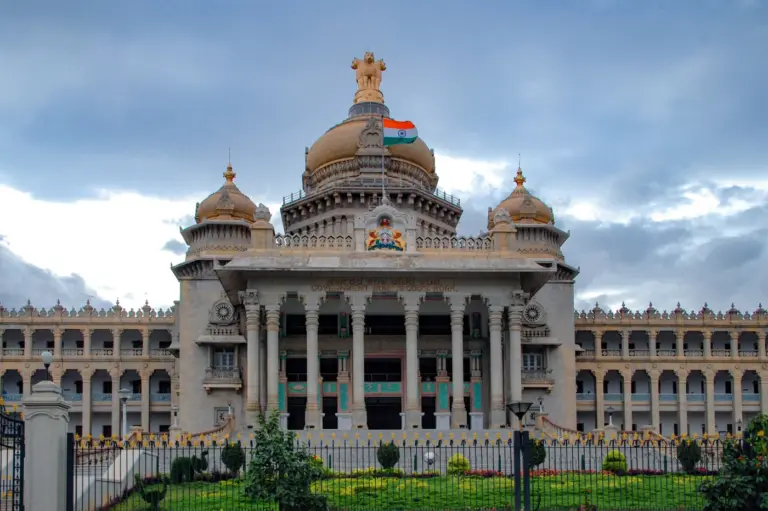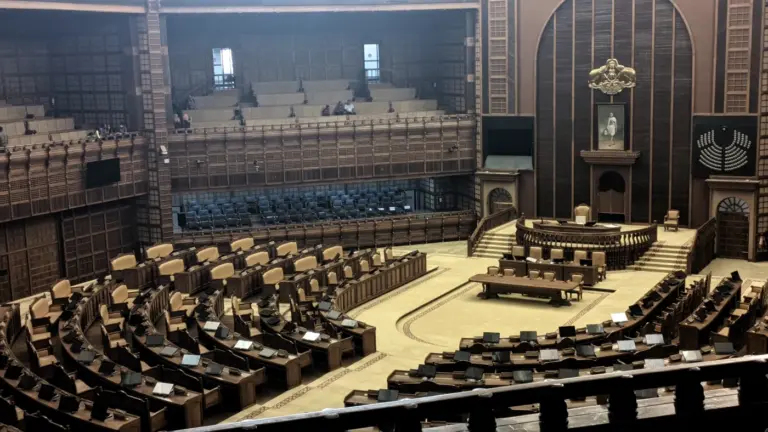

In recent years, several Indian states have passed laws reserving jobs in the private sector for local residents. Haryana, Andhra Pradesh, Jharkhand, and Karnataka have all experimented with quotas ranging from 50% to 75% for domiciles. These laws raise deep constitutional questions under Articles 14, 16, and 19(1)(g) — and speak to larger debates on federalism, employment, and migration. For UPSC Polity, this is a textbook GS-II topic that sits at the intersection of rights and regional politics.
Why This Became a Flashpoint
A 2016 Centre for the Study of Developing Societies (CSDS) survey found that nearly two-thirds of respondents supported giving priority in employment to people from their state. Political parties have translated this preference into legislation, betting that domicile-based hiring will both reduce unemployment and earn political dividends.
State Laws at a Glance
| State | Law | Scope |
|---|---|---|
| Haryana | State Employment of Local Candidates Act, 2020 | 75% of private-sector jobs paying up to Rs 30,000/month |
| Andhra Pradesh | AP Employment of Local Candidates in Industries Act, 2019 | 75% of private-sector jobs |
| Jharkhand | Jharkhand State Employment of Local Candidates Act, 2021 | 75% of private-sector jobs paying up to Rs 40,000/month |
| Karnataka (2024 bill) | Karnataka State Employment of Local Candidates Act bill | 50% managerial + 75% non-managerial |
These laws have faced immediate legal challenges. The Punjab and Haryana High Court struck down the Haryana law in 2023. The Andhra Pradesh High Court has also indicated that the AP law may be unconstitutional. The matter is pending before the Supreme Court.
Why Do States Pass Such Laws? The Case "For"
Perception of Inadequate Central Devolution
Southern states argue that successive Finance Commissions weight poverty and population heavily, directing most central transfers northward. Local reservation is sometimes framed as indirect economic justice.
Scale of Interstate Migration
Drawing on the 2011 Census, NSSO surveys, and the Economic Survey, there are about 65 million interstate migrants in India, of whom roughly 33% are workers. Local labour markets feel the pressure of this in-migration.
Agrarian Distress
The agricultural sector has been under stress across states. Young people are desperate to move out of farming and seek local non-farm jobs.
Displacement of Landowners
Most industrial land is acquired from private agricultural holdings. Landowners lose their traditional occupation and income. Local-job reservation is pitched as compensatory.
Rising Unemployment
Employment data has been consistently poor. Local reservation is framed as a policy lever against structural joblessness.
Discrimination in Corporate Hiring
The State of Working India 2018 and subsequent reports have flagged under-representation of Dalits and Muslims in the corporate sector. Reservation, the argument goes, would neutralise this discrimination.
Inclusive Development
Germany's "every village has a factory" model is cited as an aspiration. Dispersing industry and reserving local employment could support balanced regional development.
The Case "Against"
Violates Article 16 (Equal Opportunity in Public Employment)
Article 16 prohibits discrimination on grounds of residence in public employment. Article 16(3) allows Parliament — not state legislatures — to prescribe residence-based requirements, and only for certain state services. Private employment is not covered.
Violates Article 19(1)(g) — Freedom of Trade and Profession
Article 19(1)(g) guarantees the freedom to practise any profession, or to carry on any occupation, trade or business. Article 19(6) allows reasonable restrictions, but reservation in private employment does not fit any of the enumerated grounds.
Breaches the Indra Sawhney Ceiling
The Indra Sawhney (1992) cap of 50% reservation applies to public employment. A 75% local quota in private employment would far exceed the implicit constitutional logic.
Compromises Fraternity
By promoting regionalism, local reservation risks fragmenting national integration — a value enshrined in the Preamble's "fraternity assuring the dignity of the individual and the unity and integrity of the Nation."
Deters Investment
Private sector investors prioritise talent pools, skills, and ease of doing business. Domicile quotas raise compliance costs and signal regulatory unpredictability, deterring investment.
Reservation in Private Jobs: The Larger Debate
There is no constitutional provision for reservation in private jobs. Article 15(5) extends reservations to unaided private educational institutions, but the employment analog does not exist. Some states have nevertheless legislated — with uneven results. In Haryana, over 2 lakh jobs were reportedly earmarked for locals in the first year of implementation, but the underlying law was struck down by the High Court.
Arguments in Favour of Some Private-Sector Reservation
- State-sector rollback: With public employment shrinking, private jobs are where opportunity lies.
- Private sector benefits from state services: Infrastructure, subsidies, land at concessional rates.
- Discrimination persists: Empirical studies show caste and religion biases in private hiring.
- Constitutional values: Private actors should not be exempt from the social-justice framework of the Constitution.
- Mostly unskilled jobs: Local quotas in most state laws apply to lower-wage segments, minimising impact on competitiveness.
Arguments Against
- Article 19(1)(g): Burden on the freedom to carry on business.
- Private sector is not equipped to bear the full burden of social justice.
- Discourages competitiveness and harms productivity.
- Impacts merit and innovation.
- Violates "hire and fire" flexibility needed for dynamic markets.
Constitutional Flags
| Constitutional Ground | Challenge |
|---|---|
| Article 14 | Arbitrary classification between domiciles and non-domiciles |
| Article 15(1) | Discrimination based on place of birth |
| Article 16(2) | Discrimination in public employment by residence |
| Article 19(1)(d) | Right to move freely throughout India |
| Article 19(1)(e) | Right to reside in any part of India |
| Article 19(1)(g) | Right to carry on any business or occupation |
Latest Developments (2024-26)
- Haryana Act struck down (November 2023) by the Punjab and Haryana High Court; state government appealed to the Supreme Court.
- Karnataka's 2024 bill proposing 50% managerial + 75% non-managerial reservation was withdrawn for review after industry pushback.
- Andhra Pradesh law remains sub judice; AP High Court has flagged constitutional infirmities.
- Jharkhand Act has not yet been formally tested in the Supreme Court.
- Supreme Court ruling on domicile-based private reservation is awaited — it will be one of the most consequential labour-law decisions of the decade.
Updated context: The debate has intensified as states facing high youth unemployment look for populist instruments, while industry and migrant workers watch the constitutional position with concern.
UPSC Relevance
GS-II mapping: Functions and responsibilities of the Union and the States; issues and challenges pertaining to the federal structure; mechanisms for welfare of vulnerable sections; Fundamental Rights.
Prelims bullets:
- Haryana Act, 2020 — 75% local reservation.
- AP Act, 2019 — 75% for locals.
- Jharkhand Act, 2021 — 75% for locals.
- Article 16(2) prohibits discrimination by residence in public employment.
- Article 19(1)(g) — freedom of profession.
- CSDS 2016 survey — two-thirds supported local preference.
Mains angles:
- "Reservation for locals in private sector is constitutionally suspect." Discuss.
- Examine the federal and rights-based challenges to state laws reserving private-sector jobs for locals.
- Is there a middle path between economic inclusion and constitutional compliance on domicile-based private-sector reservation?
- Evaluate the drivers behind demands for local reservation and suggest non-quota alternatives.
Tell Google you want more of this.
Add Anantam IAS as a preferred sourceOne tap, and this site shows up more often in your own Top Stories, AI Overviews and AI Mode. Remove it any time.