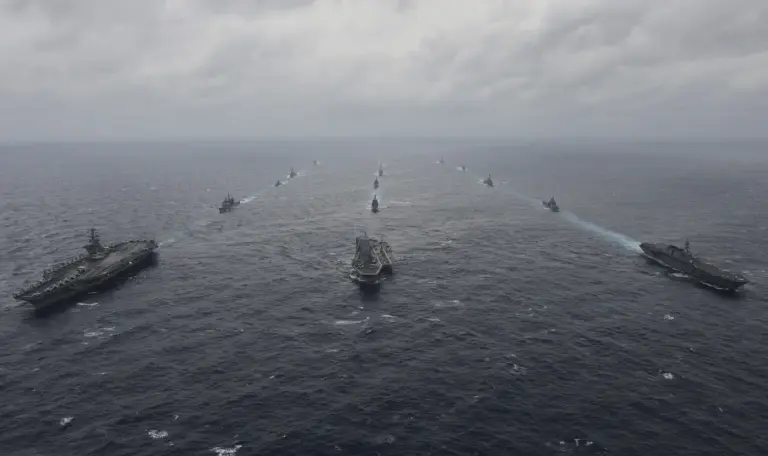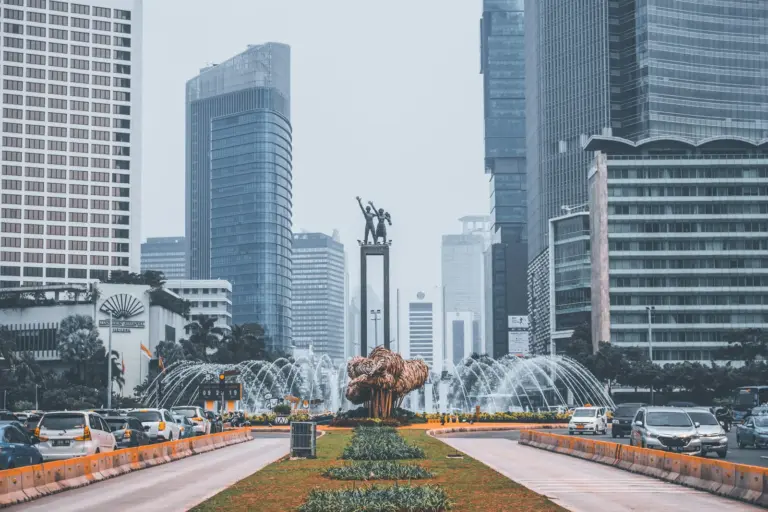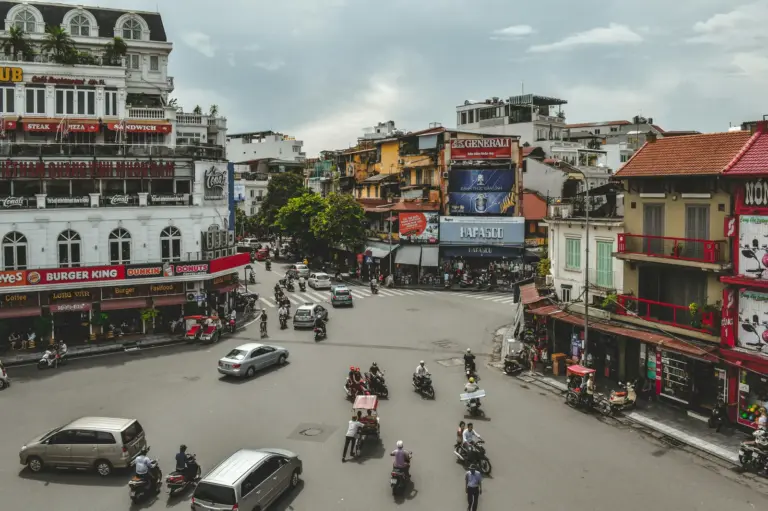
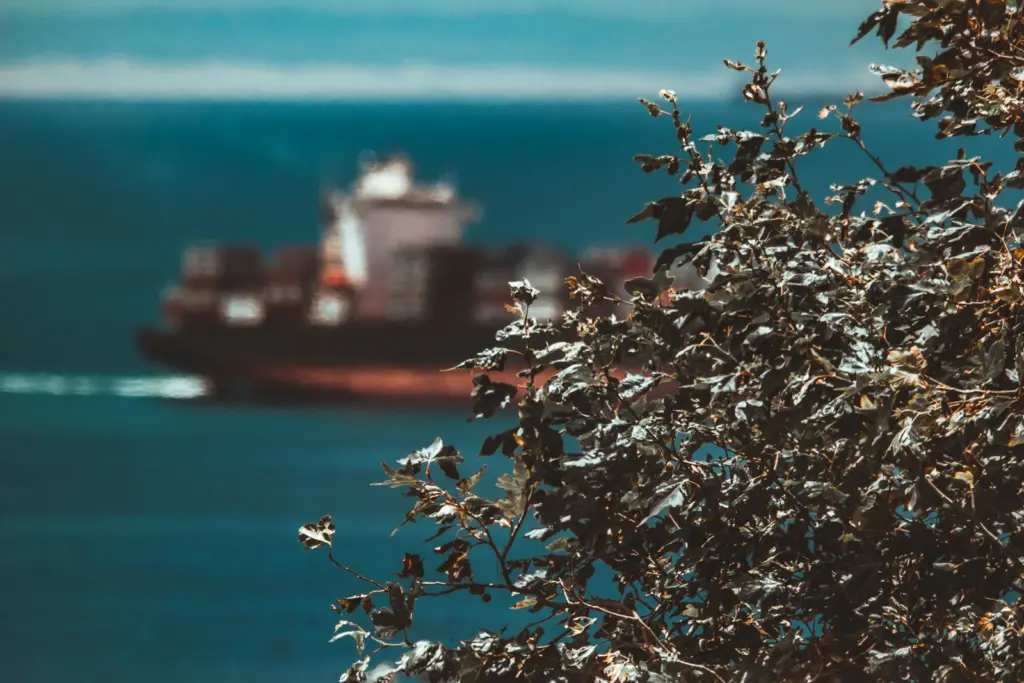
Nearly 95 percent of India’s trade by volume and around 70 percent by value moves through ports. That single fact makes maritime stability an economic necessity rather than a strategic preference, and it is the premise behind SAGAR and MAHASAGAR, India’s two-stage maritime doctrine for the Indian Ocean and beyond.
India sits astride the sea lanes connecting the Gulf, Africa, Europe, Southeast Asia and East Asia. Disruption at Hormuz, Bab-el-Mandeb, Malacca or the Mozambique Channel is not a distant event for India; it is an immediate hit to energy security, trade and diaspora safety.
Vision SAGAR
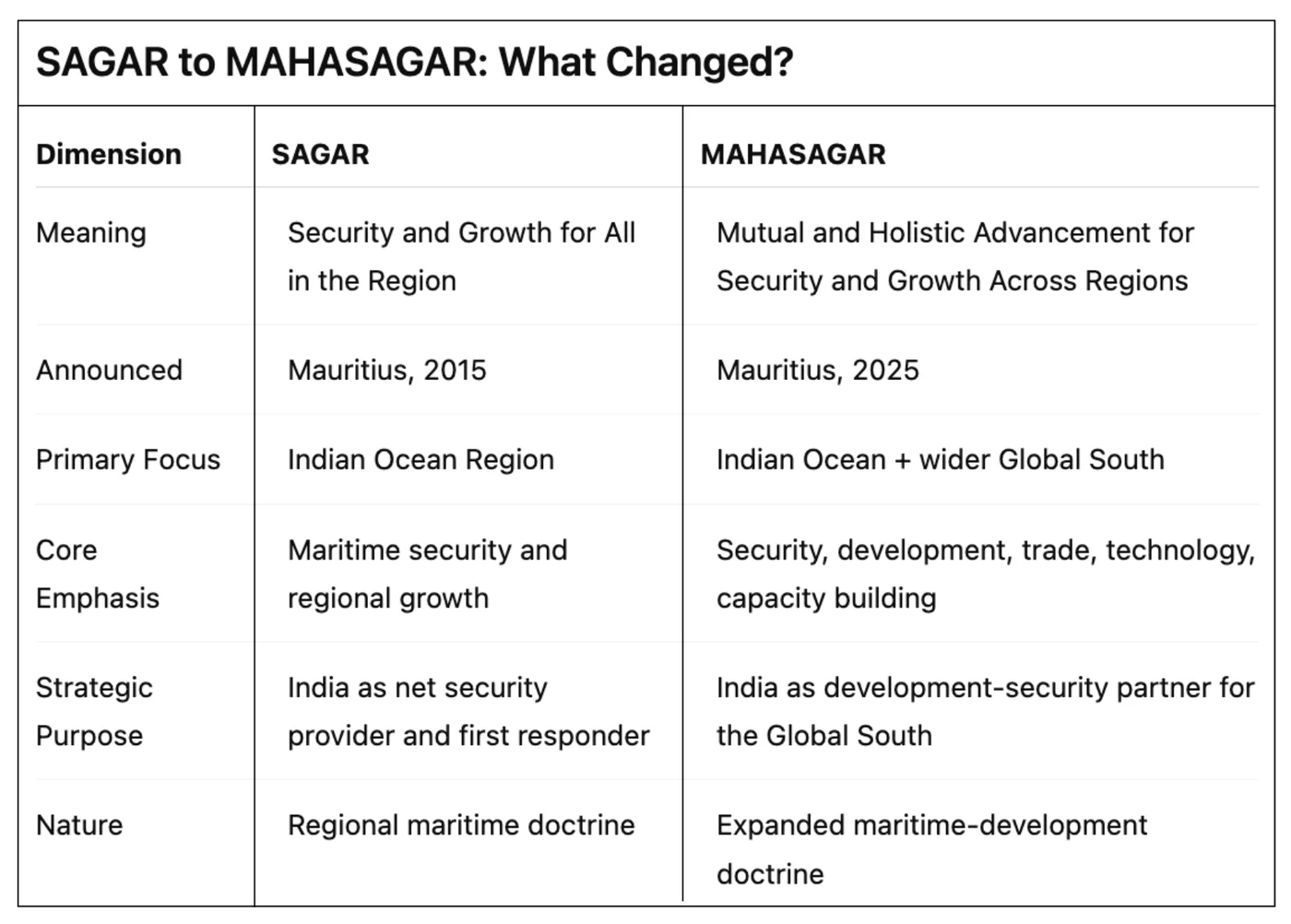
SAGAR stands for Security and Growth for All in the Region. Its central proposition is that maritime security and economic growth are interlinked, which is what distinguishes it from a purely naval doctrine.
It rests on five principles.
- India’s own security and economic prosperity are tied to a peaceful Indian Ocean
- India will support maritime neighbours through capacity building, training and equipment
- The Indian Ocean should be governed by international law and respect for maritime rules
- Regional countries should cooperate against piracy, trafficking, terrorism, illegal fishing and disasters
- The blue economy and sustainable development should benefit all littoral states
The second principle is the operative one. SAGAR is a capability-transfer doctrine, not a basing doctrine, and that is a deliberate contrast with how other powers have entered the region.
Vision MAHASAGAR
MAHASAGAR stands for Mutual and Holistic Advancement for Security and Growth Across Regions. It is an expansion of SAGAR rather than a replacement, widening India’s maritime outreach from the Indian Ocean to the broader Global South.
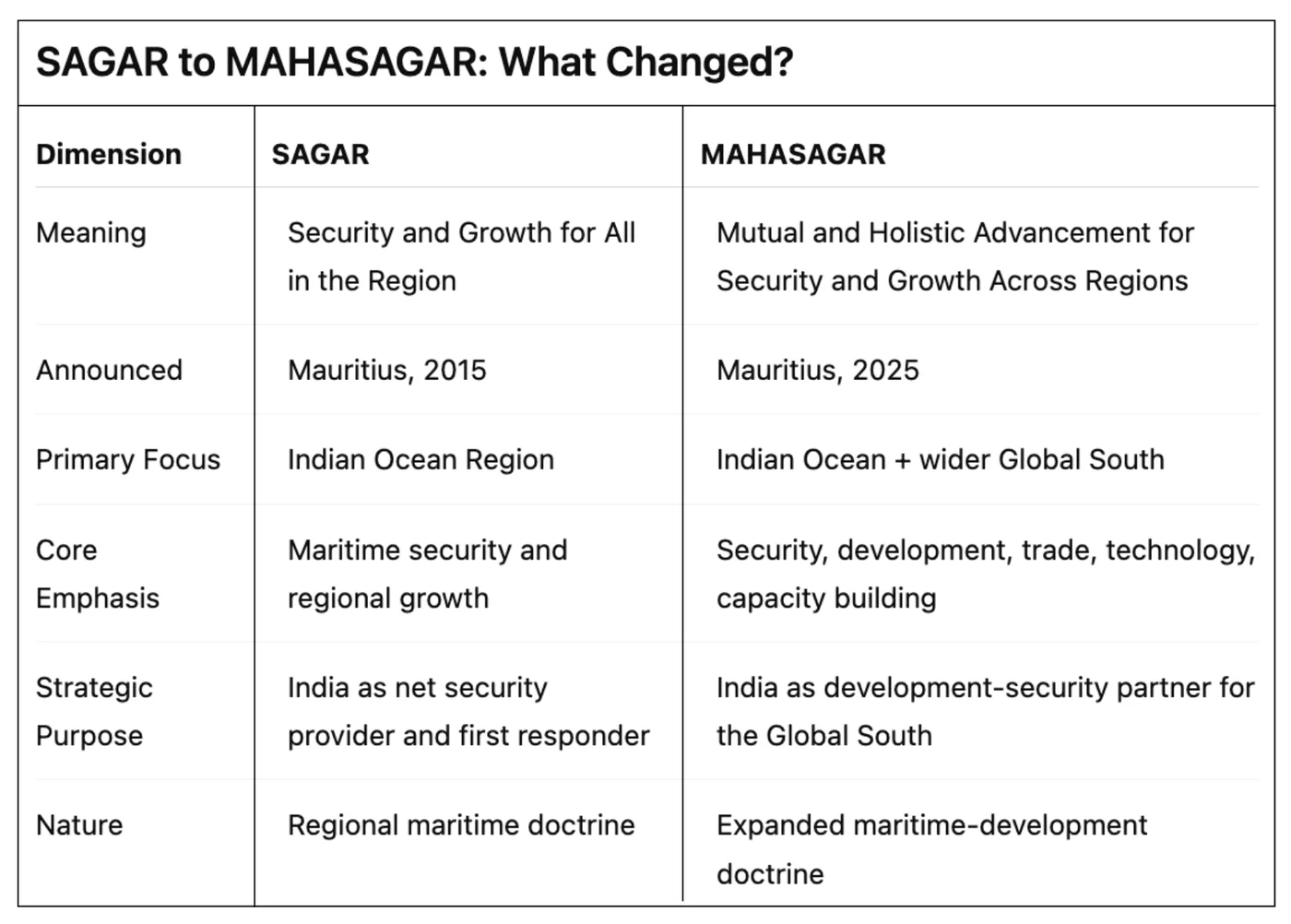
Its priority areas are trade for development, capacity building for sustainable growth, mutual security, technology sharing, concessional finance and grant assistance.
The shift is significant. SAGAR was regional and security-led. MAHASAGAR is trans-regional and development-led, which repositions India as a partner to the Global South rather than only as a regional security manager.
The Institutional Platforms
Indian Ocean Rim Association. Established in 1997, with 23 member states and 12 dialogue partners. India chairs it for 2025-27. Its agenda covers maritime safety, trade, fisheries, blue economy, disaster risk management, academic cooperation and women’s economic empowerment.
Colombo Security Conclave. India, Sri Lanka, Maldives, Mauritius and Bangladesh, with Seychelles as observer, working on maritime safety, counter-terrorism, cyber security, trafficking, organised crime and humanitarian assistance. It is the most operationally useful of the platforms because its membership is small enough to act.
Information Fusion Centre-Indian Ocean Region. Established in 2018 and hosted by the Indian Navy, improving maritime domain awareness through information sharing on shipping, piracy, smuggling and illegal fishing.
Indo-Pacific Oceans Initiative. Extends the maritime vision from the Indian Ocean to the wider Indo-Pacific, covering maritime security, ecology, resources, capacity building, disaster risk reduction, science and technology, trade connectivity and maritime transport.
The Instruments
- Capacity building: training naval and coast guard personnel from partner countries, supplying patrol vessels, supporting coastal surveillance and strengthening maritime law enforcement
- Development assistance: ports, roads, digital infrastructure, water projects, health facilities and community projects in Indian Ocean states
- HADR and first response: the 2004 tsunami, the Maldives water crisis, Covid-19, cyclones and floods
- Maritime domain awareness: coastal radar chains, white-shipping information exchange and IFC-IOR linkages
- Blue economy and climate: coastal protection, renewable energy, marine research, fisheries and climate adaptation with island states
- Connectivity and trade: ports, shipping, logistics, ferry services, digital payments and undersea cables
The first responder record is the most important asset in this list. Credibility in the Indian Ocean is earned by who arrives first after a cyclone, and India has consistently been that country.
The Honest Constraints
- China’s presence. Chinese ports, research vessels and naval deployments create a competing infrastructure and surveillance footprint that India cannot match rupee for rupee.
- Delivery capacity. India’s project execution in partner countries has often lagged its commitments, which is the recurring complaint from island states.
- Naval bandwidth. A single-carrier navy with wide responsibilities cannot be everywhere, and MAHASAGAR widens the geography without widening the fleet.
- Domestic political churn in partner states, where a change of government can reverse a port or connectivity decision.
The Way Forward
- Prioritise delivery over announcement, since credibility in this region is measured in completed projects.
- Institutionalise the Colombo Security Conclave with a permanent secretariat and standing operational protocols.
- Expand maritime domain awareness sharing, the cheapest capability with the widest strategic return.
- Fund IORA seriously during India’s chairship, converting a consultative body into a working one.
- Match MAHASAGAR’s ambition with naval and financial capacity, or scope it to what can actually be delivered.
The reframe: India’s maritime strategy is not primarily about competing with Chinese ships. It is about being the country that regional states call first, and that is a matter of reliability rather than tonnage.
Frequently Asked Questions
What does SAGAR stand for?
Security and Growth for All in the Region. It is India’s vision for the Indian Ocean Region, built on the proposition that maritime security and economic growth are interlinked rather than separate objectives.
What are the principles of SAGAR?
Five. India’s own security and prosperity depend on a peaceful Indian Ocean; India will support maritime neighbours through capacity building, training and equipment; the Indian Ocean should be governed by international law and maritime rules; regional countries should cooperate against piracy, trafficking, terrorism, illegal fishing and disasters; and the blue economy should benefit all littoral states.
What does MAHASAGAR stand for?
Mutual and Holistic Advancement for Security and Growth Across Regions. It expands SAGAR rather than replacing it, widening India’s maritime outreach from the Indian Ocean to the broader Global South, with priority areas of trade for development, capacity building, mutual security, technology sharing, concessional finance and grant assistance.
Why is the Indian Ocean central to India’s economy?
Nearly 95 percent of India’s trade by volume and around 70 percent by value is handled through ports. India also sits close to critical sea lanes connecting the Gulf, Africa, Europe, Southeast Asia and East Asia, so instability at chokepoints such as Hormuz, Bab-el-Mandeb, Malacca or the Mozambique Channel directly affects energy security, trade and diaspora interests.
What is the Indian Ocean Rim Association?
Established in 1997, IORA is the main regional platform for economic cooperation and sustainable development in the Indian Ocean, with 23 member states and 12 dialogue partners. India is Chair for 2025-27. It works on maritime safety, trade, fisheries, blue economy, disaster risk management, academic cooperation and women’s economic empowerment.
What is the Colombo Security Conclave?
A grouping of India, Sri Lanka, Maldives, Mauritius and Bangladesh, with Seychelles as an observer, focused on maritime safety, counter-terrorism, cyber security, trafficking, organised crime and humanitarian assistance. It is among the most practical instruments of SAGAR.
What is the Information Fusion Centre-Indian Ocean Region?
Established in 2018 and hosted by the Indian Navy, it improves maritime domain awareness by sharing information on shipping, piracy, smuggling, illegal fishing and other maritime threats with partner countries and international agencies.
What is India’s first responder role?
India has acted as the first external responder during the 2004 tsunami, the Maldives water crisis, Covid-19, cyclones and floods, using naval deployments for evacuation, medical aid and relief supplies. This capability, more than any declaration, is what gives SAGAR credibility with island states.
Practice Questions
Prelims MCQs
- SAGAR stands for
(a) Security and Growth for All in the Region
(b) Sustainable Action for Growth and Regional Advancement
(c) Strategic Alliance for Growth and Regional Access
(d) Security Agreement for Growth and Regional Assistance
Answer: (a) Security and Growth for All in the Region, built on the interdependence of maritime security and economic growth. - Approximately what share of India's trade by volume moves through ports?
(a) 55 percent
(b) 70 percent
(c) 85 percent
(d) 95 percent
Answer: (d) About 95 percent by volume and around 70 percent by value, which is why maritime stability is an economic necessity. - The Indian Ocean Rim Association was established in
(a) 1985
(b) 1997
(c) 2008
(d) 2015
Answer: (b) IORA was established in 1997 and now has 23 member states and 12 dialogue partners. - The Colombo Security Conclave includes which of the following as an observer?
(a) Seychelles
(b) Myanmar
(c) Thailand
(d) Oman
Answer: (a) India, Sri Lanka, Maldives, Mauritius and Bangladesh are members, with Seychelles as an observer. - The Information Fusion Centre-Indian Ocean Region was established in
(a) 2008
(b) 2014
(c) 2018
(d) 2022
Answer: (c) It was established in 2018 and is hosted by the Indian Navy to improve maritime domain awareness.
Mains Questions
- SAGAR links maritime security to regional development. Examine how far this framing has shaped India's Indian Ocean policy in practice. (250 words)
- MAHASAGAR extends India's maritime outreach to the Global South. Discuss the opportunities and the capacity constraints. (250 words)
- Evaluate India's role as a net security provider and first responder in the Indian Ocean Region. (250 words)
- Discuss the institutional platforms supporting India's maritime vision and their comparative effectiveness. (150 words)
- China's naval and port presence in the Indian Ocean challenges India's maritime primacy. Critically examine India's response. (250 words)
Tell Google you want more of this.
Add Anantam IAS as a preferred sourceOne tap, and this site shows up more often in your own Top Stories, AI Overviews and AI Mode. Remove it any time.