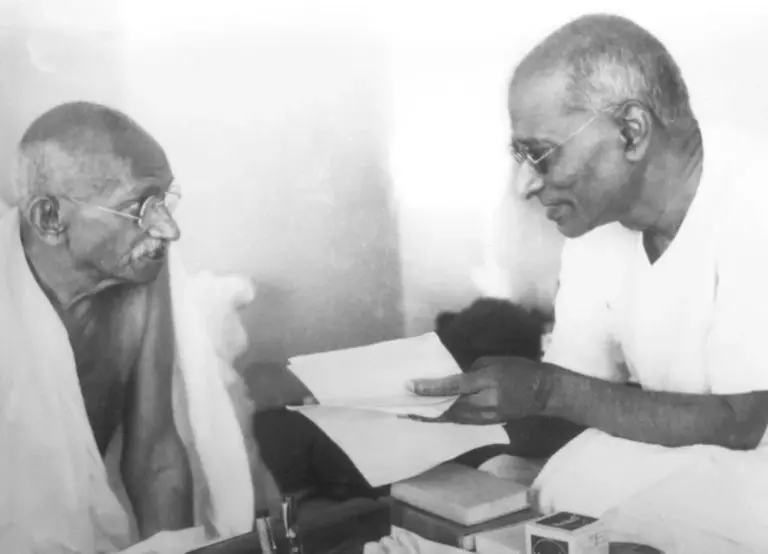
On March 12, 1930, Mahatma Gandhi walked out of his Sabarmati Ashram in Ahmedabad with 78 carefully selected volunteers. Twenty-four days later, on April 6, he picked up a handful of salt from the beach at Dandi on the Gujarat coast — breaking British law deliberately, publicly, and with global media watching.
What looks like a simple act of picking up salt was in fact one of the most carefully designed political performances in history. It triggered the Civil Disobedience Movement — the mass phase of Gandhi's campaign for Indian independence — and proved that a determined nonviolent campaign could shake an empire.
For UPSC, the Salt March tests specific factual knowledge: the route, the distance, the number of volunteers, the target (salt tax), the Gandhi-Irwin Pact. But understanding why salt worked as a political symbol matters just as much.
Background: Why Salt?
The Salt Tax
Salt in India was not merely a condiment — it was a nutritional necessity. In a tropical country where people work in heat and sweat heavily, salt depletion is a genuine health concern. Every person needed salt. And under British law, every person had to buy salt manufactured or distributed by the British government, which taxed it heavily.
The British Salt Laws made it a criminal offence to:
- Produce salt from seawater or salt deposits without government permission
- Collect or possess "contraband salt" (salt not purchased through legal channels)
- Evade the salt tax
The tax was approximately 1.6 times the cost of salt production — a regressive tax that fell proportionally hardest on the poorest Indians, for whom salt was not optional. Gandhi described it as a tax on sweat.
Salt had also deep historical resonance in India. The expression namak halal (salt-faithful — being loyal to those who feed you) shows salt's place in the culture. Taxing salt was, symbolically, taxing the most basic act of feeding people.
The Lahore Congress: Purna Swaraj
At the Lahore Congress session in December 1929 — presided over by Jawaharlal Nehru — the Congress declared Purna Swaraj (complete independence) as its goal, replacing the earlier Dominion Status demand. The Congress Working Committee authorised Gandhi to launch a Civil Disobedience Movement at a time and by means of his choosing.
Gandhi spent weeks deliberating. He considered targeting various issues — land revenue, the military budget, government service. He eventually chose salt as the focus because it was:
- Universal — every Indian, regardless of religion, caste, class, or province, used salt
- Simple — the act of picking up salt from the sea required no weapons, no organisation, no literacy
- Morally unanswerable — how do you justify taxing the sea?
- Visually powerful — a small old man walking to the sea was a story global media could tell
The Ultimatum
Before launching the march, Gandhi wrote to Viceroy Lord Irwin on March 2, 1930 — a remarkable letter. He addressed Irwin respectfully but without subservience, explained his grievances in detail, and gave the Viceroy an ultimatum: unless his demands were met, he would launch civil disobedience.
Irwin's private secretary replied that the Viceroy "regrets to learn that Mr Gandhi contemplates a course of action which is clearly bound to involve violation of the law and to produce disorder." Gandhi had his answer.
The March: Route and Key Facts
| Detail | Information |
|---|---|
| Start date | March 12, 1930 |
| End date | April 6, 1930 |
| Start point | Sabarmati Ashram, Ahmedabad |
| End point | Dandi, Gujarat (coastal village) |
| Distance | Approximately 390 km (240 miles) |
| Duration | 24 days |
| Marchers | 78 selected volunteers (from the ashram) + thousands who joined en route |
| Average daily distance | ~17 km |
| Final act | Gandhi picked up salt from the beach on April 6, breaking the salt law |
The 78 Volunteers
Gandhi selected his 78 companions with great care. They came from different regions, castes, and religions — deliberately representing the diversity of India. Among them were Hindus, Muslims, Christians, men from different castes. The youngest was 16; the oldest was 61. All had taken a pledge of nonviolence.
The Route
The march went through the coastal villages of Gujarat — Surat district, Navsari district, ending at Dandi. At each village, Gandhi spoke to crowds that gathered. Thousands lined the roads. The British authorities watched and debated whether to arrest him — ultimately deciding it would be worse to make him a martyr than to let him walk.
By the time Gandhi reached Dandi, the march had generated international media coverage. American and European newspapers ran daily reports. The newsreel footage of the march reached cinemas around the world.
April 6: Dandi
At 6:30 AM on April 6, Gandhi waded into the sea, bathed, and then picked up a handful of natural salt from the beach. He said: "With this, I am shaking the foundations of the British Empire."
The act was simultaneously a symbolic gesture and a real violation of law. Immediately across India, the signal had been sent: begin.
The Civil Disobedience Movement
Phase 1: April 1930 to March 1931
The Salt March triggered a nationwide Civil Disobedience Movement — the most geographically widespread and participatory mass movement in the independence struggle to that point.
Forms of protest:
- Breaking salt laws (manufacturing salt from seawater at beaches across India)
- Boycott of British goods — particularly cloth (swadeshi) and liquor
- Picketing of liquor shops and British goods stores
- Non-payment of land revenue in many districts
- Forest satyagraha in the Central Provinces (collecting forest produce in defiance of forest laws)
- Boycott of government schools and courts
Key episodes:
Dharasana Salt Raid (May 1930): After Gandhi was arrested (May 5, 1930), Sarojini Naidu and Abbas Tyabji led marchers to the Dharasana Salt Works. Police beat the marchers — who stood in columns, walked forward without striking back, and fell as they were beaten — with steel-tipped lathis. American journalist Webb Miller’s eyewitness account was cabled to 1,350 newspapers worldwide. It was one of the most powerful pieces of journalism in the independence movement’s history.
Peshawar: The Garhwal Rifles of the British Indian Army refused to fire on unarmed protesters — a rare instance of military disobedience that deeply unsettled the British.
Abdul Ghaffar Khan (Frontier Gandhi): The CDM spread to the North-West Frontier Province — a Muslim-majority area — under Khan Abdul Ghaffar Khan, whose Khudai Khidmatgar (Servants of God, also called the Red Shirts) practiced nonviolent civil disobedience.
Women's participation: The CDM saw unprecedented participation of women — not just as supporters but as leaders and front-line protesters. Women picketed liquor shops, spun khadi, and were arrested in large numbers. This was a qualitative shift in the gendered politics of the independence movement.
Government response: Mass arrests — approximately 90,000 people were imprisoned during the CDM. The government suspended Congress and declared it illegal. Extensive use of ordinances to bypass normal legal procedures.
The Gandhi-Irwin Pact (March 1931)
By early 1931, both sides had reached a stalemate. The British could not crush the movement without costs that were becoming unacceptable. Congress was straining to maintain the movement's momentum. Mediation occurred through Tej Bahadur Sapru and M.R. Jayakar.
The Gandhi-Irwin Pact was signed on March 5, 1931 — after two weeks of direct negotiations between Gandhi and Viceroy Lord Irwin. It was both a testament to Gandhi's standing (a Viceroy negotiating personally with a subject) and a compromise that disappointed many in Congress.
Terms of the Gandhi-Irwin Pact:
Congress agreed to:
- Suspend the Civil Disobedience Movement
- Participate in the Second Round Table Conference
- Withdraw mass civil disobedience
The British government agreed to:
- Release all political prisoners arrested during the CDM (except those convicted of violence)
- Restore confiscated properties
- Allow people living near the sea to collect or manufacture salt for their own use (no general repeal of salt tax)
- Permit peaceful picketing of foreign cloth and liquor shops
Note what was NOT in the pact: No grant of independence, no Dominion Status, no inquiry into police excesses during the CDM. Bhagat Singh, Sukhdev, and Rajguru — sentenced to death — were not reprieved. Their execution (March 23, 1931) while Gandhi was in talks with Irwin was a political crisis within the Congress that Gandhi could not reverse. It damaged his reputation among younger nationalists.
Phase 2: January 1932 onwards
Gandhi attended the Second Round Table Conference in London (September–December 1931) and returned empty-handed. The British government was unresponsive; Gandhi declared failure. Congress relaunched the CDM in January 1932.
The British government, now under a hardliner stance, arrested Gandhi immediately (January 4, 1932) and issued the Emergency Ordinances — prohibiting the Congress, its publications, and its activities. The Communal Award (August 1932) and the Poona Pact (September 1932) occurred during this phase.
The movement began losing momentum through 1932–33. Gandhi formally suspended it in May 1933 and called it off entirely in May 1934, announcing that he would focus on constructive work (the Harijans campaign) rather than political mass action. Congress was reconstituted as a political party and decided to contest the 1935 elections.
Why the Salt March Mattered
Strategic Genius
The Salt March was a masterclass in what today would be called political communication. Gandhi chose:
- A winnable issue (salt tax was indefensible even in British public opinion)
- A slow, walking format that gave media time to build coverage daily
- A nonviolent discipline that made British response to it look brutal
- A universal symbol that crossed all barriers of class, caste, and religion
International Impact
The Salt March changed how the world saw India's independence struggle. Before it, many observers saw the Congress as a lawyers' organisation making constitutional claims. After it, the independence movement had a face, a story, and a moral clarity that made British rule look unjust to international audiences. American public opinion shifted. British newspapers debated whether India was being fairly governed.
The future success of nonviolent movements — from the US Civil Rights Movement to anti-apartheid campaigns — drew lessons from how Gandhi's Salt March worked.
Domestic Impact
- It brought millions of new participants — particularly women, rural poor, and Muslims in the NWFP — into the movement
- It demonstrated that mass civil disobedience was manageable and could be sustained
- It established Gandhi's unquestioned personal authority over the Congress
- It made independence — not merely reform — the consensus goal
Key Dates: Salt March and CDM
| Date | Event |
|---|---|
| December 1929 | Lahore Congress: Purna Swaraj declared |
| March 2, 1930 | Gandhi's letter to Viceroy Irwin |
| March 12, 1930 | Salt March begins from Sabarmati |
| April 6, 1930 | Gandhi breaks salt law at Dandi |
| May 5, 1930 | Gandhi arrested |
| May 21, 1930 | Dharasana Salt Works raid (Sarojini Naidu) |
| March 5, 1931 | Gandhi-Irwin Pact signed |
| September 1931 | Second Round Table Conference, London |
| January 4, 1932 | Gandhi re-arrested; CDM Phase 2 begins |
| August 1932 | Communal Award announced |
| September 24, 1932 | Poona Pact signed |
| May 1934 | CDM formally withdrawn |
Frequently Asked Questions About the Salt March
Why did Gandhi choose salt as the basis for civil disobedience?
Gandhi chose salt because it was universal — every Indian regardless of religion, caste, region, or income needed it. The salt tax was a regressive, indefensible imposition that taxed the most basic necessity of life. Salt could be produced simply (from seawater), so breaking the law required no weapons or special skills. And the image of a small old man walking to the sea to pick up salt was a story the world's media could tell simply and powerfully.
What was the distance and duration of the Salt March?
The Salt March covered approximately 390 kilometres from Sabarmati Ashram in Ahmedabad to Dandi on the Gujarat coast. It lasted 24 days, from March 12 to April 6, 1930. Gandhi set out with 78 carefully selected volunteers and was joined by thousands of people along the route.
What were the terms of the Gandhi-Irwin Pact?
The Gandhi-Irwin Pact (March 5, 1931) had Congress suspend the Civil Disobedience Movement and agree to attend the Second Round Table Conference. In return, the British released all political prisoners arrested during the CDM, restored confiscated properties, and allowed people near the coast to collect salt for personal use. It did not grant any constitutional concessions and did not save Bhagat Singh, Sukhdev, and Rajguru from execution.
Who led the Dharasana Salt Works raid and what happened?
After Gandhi's arrest in May 1930, Sarojini Naidu and Abbas Tyabji led nonviolent marchers to the Dharasana Salt Works in Gujarat. Police beat the marchers — who walked forward in silence without striking back — with steel-tipped lathis. American journalist Webb Miller's account of the beatings reached newspapers worldwide and turned international opinion against British rule.
How did the Civil Disobedience Movement differ from the Non-Cooperation Movement?
The Non-Cooperation Movement (1920–22) was primarily a withdrawal — of students from schools, lawyers from courts, officials from government service. The CDM (1930–34) was actively law-breaking — manufacturing salt, refusing to pay taxes, picketing government institutions. The CDM also had far greater participation from women, rural poor, and Muslim communities. It was more geographically widespread and included specific acts of disobedience rather than withdrawal.
Tell Google you want more of this.
Add Anantam IAS as a preferred sourceOne tap, and this site shows up more often in your own Top Stories, AI Overviews and AI Mode. Remove it any time.