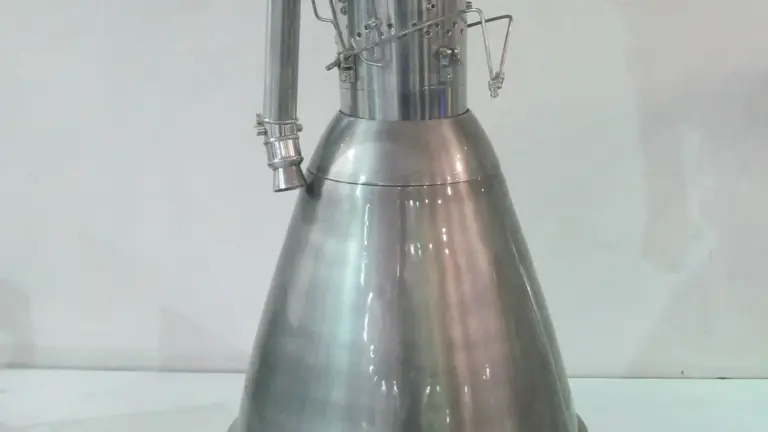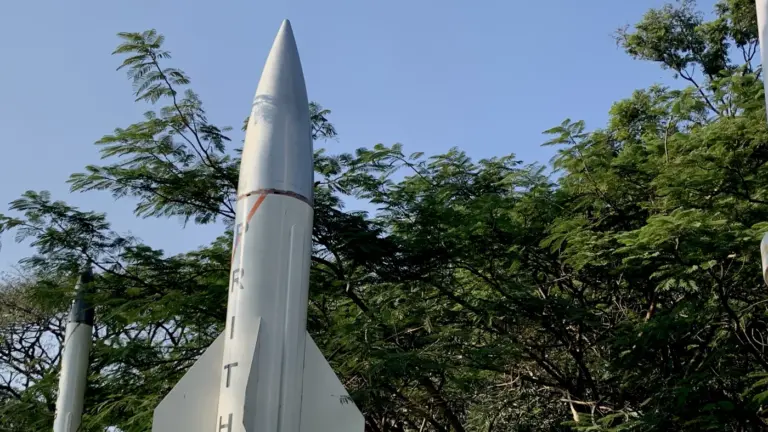
From weather forecasts on a farmer's phone to encrypted military communications, space technology quietly underpins modern life. India has built one of the world's most cost-effective space programmes under the Indian Space Research Organisation (ISRO) and, since 2020, is rapidly opening the sector to private enterprise through IN-SPACe. For UPSC GS Paper III (science, technology, strategic affairs) and Paper II (international institutions), space science is a foundational topic.
What Is Space Science?
Space science is the multidisciplinary study of phenomena beyond Earth's atmosphere — astronomy, astrophysics, planetary science, space weather, cosmology — along with the engineering of launchers, satellites and deep-space missions. In India, it also covers applied services such as remote sensing, satellite communication, navigation and meteorology.
Benefits of Space Science
Art, Culture and Society
- E-visits to museums via satellite links.
- Remote sensing for monitoring ancient monuments (for example, Hampi and Ajanta).
- Fulfils curiosity about the universe, counters superstition and inspires STEM careers.
Polity and Governance
- High-resolution satellite imagery supports urban planning, land records digitisation (SVAMITVA), and real-time monitoring of public works such as PMGSY roads.
- Village Resource Centres deliver tele-medicine, tele-education and advisories to rural areas.
- EDUSAT and DIKSHA extend connectivity to schools and colleges.
Economy
- Agriculture — remote-sensing products (Bhuvan, Bhoonidhi) drive crop insurance (PMFBY) and yield forecasts.
- Infrastructure and employment — a space economy expected to touch USD 40 billion by 2040, per the Economic Survey.
- Space mining holds long-term promise for Helium-3, cobalt and rare-earth elements.
Environment and Disaster Management
- BHUVAN for natural disaster management using space-based inputs.
- Desertification, land degradation, deforestation and water-resource mapping.
- Cyclone tracking via INSAT; early warning for floods and landslides.
Security
- Reconnaissance and surveillance (Cartosat, RISAT).
- Strategic communications (GSAT-7 Rukmini for the Navy, GSAT-7A for the Air Force).
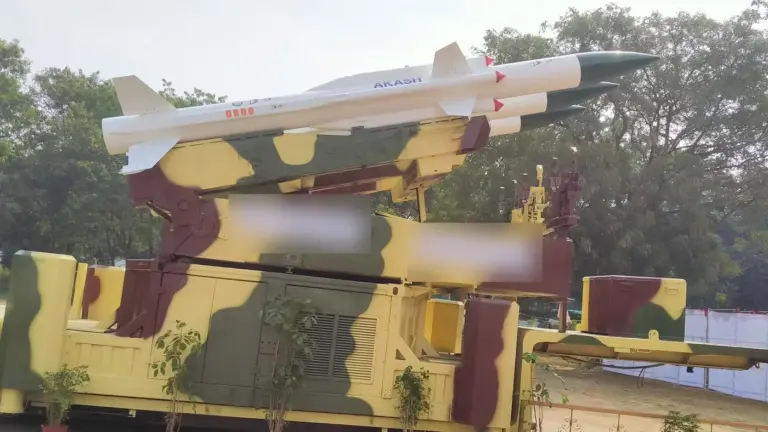
- Missile early warning and anti-satellite capability (Mission Shakti, 2019).
International Relations
- Cooperation through ISRO's commercial arm NSIL, Antrix, and missions like NISAR (NASA-ISRO SAR) and Chandrayaan.
- Soft power — launching satellites for friendly neighbours (South Asia Satellite).
Challenges of Space Science
Technological
- Space debris threatens operational satellites and crewed missions.
- Limited indigenous capacity in semiconductor chips, transponders and sensors.
Economic and Human Resource
- R&D expenditure remains around 0.7 percent of GDP — far below China, the United States and Israel.
- Talent drain as private space firms globally offer higher pay.
Governance
- Obsolete space laws; India still lacks a comprehensive national space legislation (though the Space Activities Bill is in draft).
- State-centric governance in a sector rapidly being privatised.
- Aligning national regulations with international space law to avoid conflicts.
- Risk of space oligopoly through privatisation.
International Regime
The UN Committee on the Peaceful Uses of Outer Space (COPUOS) is the primary international forum for space law. The five core UN space treaties are:
- Outer Space Treaty, 1967 — no national appropriation, peaceful use, responsibility of states.
- Rescue Agreement, 1968.
- Liability Convention, 1972.
- Registration Convention, 1975.
- Moon Agreement, 1984.
Security and Ethical
- Militarisation and weaponisation of space.
- Cyber-attacks on space assets — ground stations, telemetry and downlink channels.
- Dual-use satellites raise concerns about surveillance and data privacy.
- Uneven distribution of benefits across developed and developing countries.
India's Position
India is among the top six space powers, with capabilities spanning launch vehicles (PSLV, GSLV, LVM3, SSLV), a full range of application satellites, interplanetary missions (Mangalyaan, Chandrayaan-1, 2, 3, Aditya-L1), and a growing crewed spaceflight programme (Gaganyaan). It remains cost-competitive — Chandrayaan-3 cost roughly USD 75 million against Hollywood blockbuster budgets.
Way Forward
- IN-SPACe must effectively grow private participation; the conflict in ISRO's dual role as promoter and regulator must be resolved.
- Clear governance — independent space regulator, comprehensive Space Activities Act, and streamlined drone policy.
- Technology and IP — recognise intellectual property rights in space to encourage private participation.
- International engagement — push for an International Code of Conduct for Outer Space Activities and prevention of an arms race in outer space.
Ethical and Policy Concerns
- Equitable access for developing countries to space benefits.
- Sustainable orbital use — space debris and collision risk.
- Ethics of asteroid mining and planetary protection.
- Privacy impacts of high-resolution Earth observation.
Latest Developments (2024-26)
- AI Action Summit, Paris (February 2025) — India showcased AI-driven Earth observation products running on ISRO's Bhuvan and NSM compute.
- India Semiconductor Mission — strengthens indigenous sensor and space electronics supply chain, reducing dependence on imported space-qualified chips.
- Chandrayaan-4 — approved by the Union Cabinet in September 2024, a lunar sample-return mission scheduled around 2027.
- Gaganyaan — first uncrewed Vyommitra flight and in-orbit demonstrator tests progressing through 2025; crewed flight targeted for 2025-26.
- National Quantum Mission — ISRO is planning satellite-based QKD demonstrations.
- DPDP Act implementation intersects with Earth observation data that can identify individuals or private property.
- Indian Space Policy, 2023 implementation — FDI norms liberalised in 2024 to allow 100 percent FDI in satellite manufacturing and 49 percent under automatic route in launch vehicles.
- Bharatiya Antariksh Station roadmap and Chandrayaan-5 (LUPEX) with JAXA announced.
UPSC Relevance
For Prelims, remember ISRO, IN-SPACe, NSIL, COPUOS, Outer Space Treaty (1967), and the Indian Space Policy 2023. For GS III Mains, space science covers technology, economy, security, disaster management and international relations. Ethics papers may explore dual-use concerns and equitable access. Space science is an evergreen topic — each year brings new missions, launches and policy updates, making it fertile ground for both factual and analytical questions.
Tell Google you want more of this.
Add Anantam IAS as a preferred sourceOne tap, and this site shows up more often in your own Top Stories, AI Overviews and AI Mode. Remove it any time.