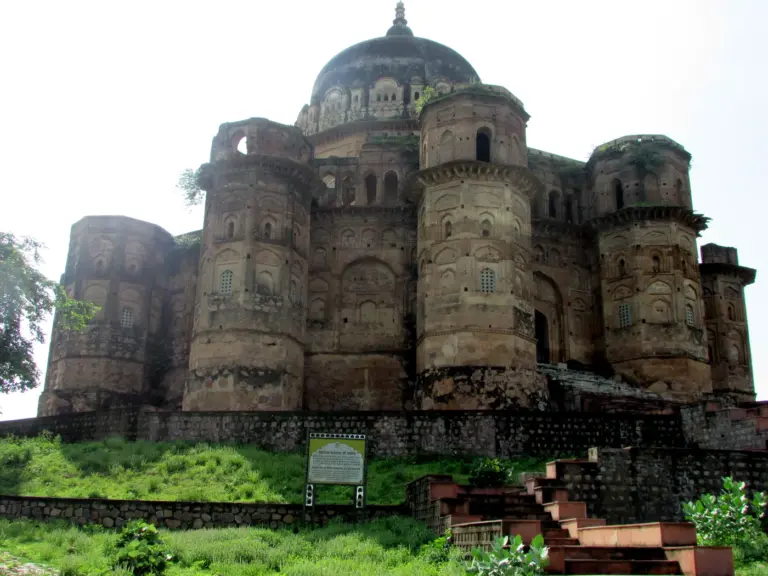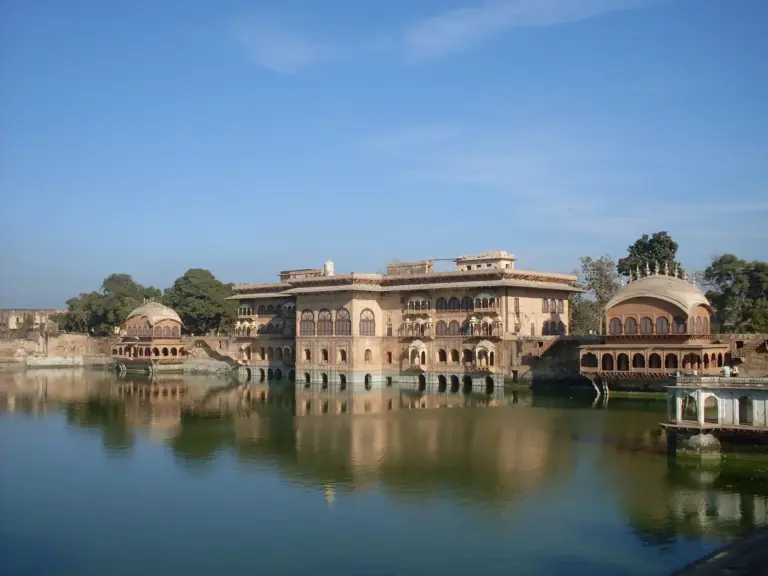
Tipu Sultan (1750–1799) was the ruler of the Kingdom of Mysore and one of the most formidable opponents the British East India Company faced in India. He fought the Company in four wars, developed military innovations (including iron-cased rockets that influenced European rocketry), attempted to modernise Mysore's administration and economy, and died defending his capital Seringapatam. The British called him the "Tiger of Mysore" — and he adopted the tiger as his personal emblem.
For UPSC, Tipu Sultan appears in Modern History (Anglo-Mysore Wars, resistance to British expansion) and is one of the most frequently asked topics in the chapter on 18th-century Indian states.
Background: Hyder Ali and the Rise of Mysore
Tipu's father, Hyder Ali, was a military commander who rose from a minor position in the Wodeyar dynasty's army to become the de facto ruler of Mysore by the 1760s. Hyder Ali:
- Built a powerful army using French-trained infantry and cavalry
- Expanded Mysore into one of the largest kingdoms in south India
- Fought the First Anglo-Mysore War (1767–69) and defeated the British, forcing them to sign a humiliating treaty
Tipu was born on November 20, 1750 and grew up in this militarised environment. He received training in languages (Kannada, Urdu, Persian, Arabic, French), military tactics, and administration. He fought alongside his father from the age of 17.
The Four Anglo-Mysore Wars
The Anglo-Mysore Wars (1767–1799) were the most significant military confrontation between an Indian power and the East India Company before the Maratha Wars.
| War | Dates | Key Events | Outcome |
|---|---|---|---|
| First | 1767–1769 | Hyder Ali invaded the Carnatic; reached the gates of Madras | Hyder Ali won; Treaty of Madras (1769) — Company agreed to mutual defence |
| Second | 1780–1784 | Hyder Ali formed alliance with Marathas and Nizam; Hyder died (1782), Tipu continued | Treaty of Mangalore (1784) — status quo ante; last occasion India dictated terms to the British |
| Third | 1790–1792 | Cornwallis led a grand alliance (Company + Marathas + Nizam) against Tipu | Treaty of Seringapatam (1792) — Tipu lost half his territory, paid heavy indemnity, surrendered two sons as hostages |
| Fourth | 1799 | Wellesley's aggressive policy; final assault on Seringapatam | Tipu killed in battle (May 4, 1799); Mysore annexed/reduced; Wodeyar dynasty restored as British puppet |
The Third Anglo-Mysore War (1790–1792)
This war was a turning point. Lord Cornwallis (the same Cornwallis who surrendered to the Americans at Yorktown) assembled a coalition:
- The Company provided the main military force
- The Nizam of Hyderabad and the Marathas joined as allies — isolating Tipu diplomatically
Under the Treaty of Seringapatam (1792):
- Tipu surrendered half his territory to the coalition
- He paid £3.3 million in war indemnity
- He surrendered his two sons as hostages to Cornwallis until the indemnity was paid
- Tipu retained his throne but was severely weakened
The Fourth Anglo-Mysore War (1799)
Lord Wellesley — who arrived as Governor-General in 1798 with an aggressive expansionist agenda — refused to negotiate with Tipu. Wellesley's alliance with the Nizam and the Marathas left Tipu completely isolated.
The British stormed Seringapatam on May 4, 1799. Tipu Sultan was killed fighting at the north gate of his fort — he reportedly refused to flee or surrender. His body was found among the fallen defenders.
With Tipu's death, the most powerful Indian opponent of British expansion was eliminated. The Wodeyar dynasty was restored as a subordinate princely state.
Military Innovations
Tipu's military innovations are a frequently tested topic:
Mysorean Rockets
Tipu developed iron-cased rockets that were more advanced than anything in European arsenals at the time:
- Iron tubes containing black powder propellant, fitted with swords or blades
- Could travel up to 2 km with reasonable accuracy
- Used effectively against British cavalry and infantry formations
- After Seringapatam, the British captured these rockets and shipped them to Britain
- William Congreve studied the Mysorean rockets and developed the Congreve rocket — which was used in the Napoleonic Wars and in the bombardment of Fort McHenry (1814), inspiring the "rockets' red glare" line in the American national anthem
ISRO connection: India's space programme honours this legacy. The Thumba launch site has a replica of Tipu's rockets. DRDO's missile programme has also acknowledged Tipu's rocketry as an Indian precursor.
Modern Army
Tipu maintained a disciplined, European-style army:
- Trained by French military advisors
- Used flintlock muskets (instead of matchlocks used by most Indian armies)
- Standardised uniforms and drill
- Created a manual of military regulations (Fathul Mujahidin)
Administration and Reforms
Tipu was not just a warrior — he attempted significant administrative modernisation:
Revenue reform: Introduced a new land revenue system with direct state collection, bypassing intermediary landlords. Revenue was assessed at a proportion of the produce.
Economic development: Promoted sericulture (silk production), established state trading companies, attempted to build a navy, and encouraged foreign trade (particularly with France, Turkey, and the Arab world).
Coinage and calendar: Introduced new gold coins (pagodas) and a new calendar system based on his accession date.
Diplomatic outreach: Sent embassies to France, the Ottoman Empire, and Afghanistan seeking military alliances against the British. His embassy to France in 1787 was particularly notable — he sought direct French military assistance. The alliance never materialised effectively, but it demonstrated his strategic ambition.
Religious Policy: The Debate
Tipu Sultan's religious policy is historically contested and politically charged:
Evidence of tolerance:
- He made grants to Hindu temples including the Sringeri Math (Shankaracharya's monastery)
- Hindus served in his administration and army at senior levels
- He maintained the Wodeyar dynasty's practice of patronising major temples
Evidence of persecution:
- The Malabar region (Kerala) experienced forced conversions and destruction of temples during Tipu's campaigns there
- Christian communities in Mangalore were also subjected to forced conversions and deportation (the Captivity of Mangalorean Catholics, 1784)
- British and missionary sources documented religious persecution, though these sources have their own biases
Balanced assessment for UPSC: Tipu's religious policy was likely driven more by political and military calculations than by religious ideology. In areas of secure control (Mysore heartland), he was relatively tolerant. In contested or rebellious frontier areas (Malabar, Coorg), he used religious coercion as a tool of political subjugation — a pattern seen in many rulers of the period, both Hindu and Muslim. Present both sides in an exam answer.
Legacy
Historical significance: Tipu was the last Indian ruler to pose a serious military threat to British expansion in south India. His death in 1799 effectively ended major resistance to British supremacy in the region until the 1857 revolt.
Contemporary debate: Tipu remains a polarising figure in Indian politics. Karnataka has periodically celebrated "Tipu Jayanti" (his birth anniversary), which has been both promoted and discontinued by different state governments.
Rocket legacy: His military innovations in rocketry are a genuine contribution to military technology that had global impact.
UPSC Relevance
GS1 (Modern History): Anglo-Mysore Wars, 18th-century Indian states, resistance to British expansion.
GS3 (Science & Tech): Mysorean rockets — an Indian contribution to military technology.
Key Prelims facts:
- Born: November 20, 1750
- Died: May 4, 1799 (killed at Seringapatam)
- Father: Hyder Ali
- Title: Tiger of Mysore
- Anglo-Mysore Wars: 1767–69, 1780–84, 1790–92, 1799
- Treaty of Mangalore: 1784 (Second War)
- Treaty of Seringapatam: 1792 (Third War)
- Innovation: Iron-cased rockets (influenced Congreve rockets)
- Capital: Seringapatam (Srirangapatna)
- Killed in Fourth Anglo-Mysore War (1799)
Tell Google you want more of this.
Add Anantam IAS as a preferred sourceOne tap, and this site shows up more often in your own Top Stories, AI Overviews and AI Mode. Remove it any time.