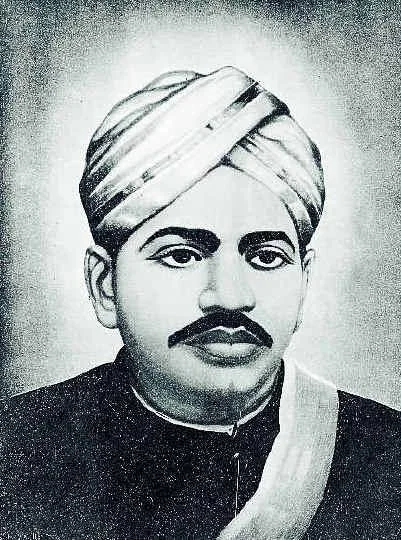
Vinayak Damodar Savarkar (28 May 1883 – 26 February 1966) — popularly known as Veer Savarkar — was a revolutionary, poet, lawyer, historian, social reformer, political theorist, and the author of the concept of "Hindutva". He endured the longest ordeal in British penal custody of any major Indian nationalist — sentenced to two life terms (50 years' transportation) in the Cellular Jail, Port Blair (Kala Pani). He later led the Hindu Mahasabha from 1937 to 1943 and remains one of the most debated figures in 20th-century Indian politics.
Savarkar's life straddles two distinct phases: the armed-revolutionary phase (1900–1911) and the post-imprisonment political phase (1924–1966) dominated by his writings on Hindu nationalism.
Key Facts at a Glance
| Particular | Detail |
|---|---|
| Born | 28 May 1883, Bhagur (Nasik district, Bombay Presidency) |
| Died | 26 February 1966, Bombay (aged 82) |
| Title | Veer ("Brave") |
| Key organisation founded | Abhinav Bharat Society (1904); Free India Society (London, 1906) |
| Legal education | Fergusson College Pune; Gray's Inn, London (barrister) |
| Political ideology | Hindutva / Hindu nationalism |
| Imprisonment | Two life terms (50 years) — Cellular Jail, Andaman (1911–1921); total ~13 years in jail; followed by internment in Ratnagiri (1924–1937) |
| Major work | Essentials of Hindutva (1923) — coined the term Hindutva |
| Hindu Mahasabha President | 1937–1943 |
| Gandhi assassination case | Accused (1948); acquitted |
Early Life and Education
Savarkar was born on 28 May 1883 in Bhagur, a small village in the Nasik district of Maharashtra, into a Chitpavan Brahmin family. He was the second of four children. A revolutionary streak ran in the family — his elder brother Ganesh (Babarao) Savarkar and younger brother Narayan Savarkar were both active nationalists.
As a teenager, deeply affected by the execution of the Chapekar brothers (1897–99) for the assassination of Rand, Savarkar took an oath before the family deity to "drive the British out of India". At Fergusson College, Pune, he organised the Mitra Mela — a secret revolutionary society — which in 1904 he reconstituted as the Abhinav Bharat Society ("Young India") modelled on Mazzini's Young Italy.
London Years (1906–1910) — The Revolutionary Apex
In 1906, Savarkar won the Shivaji Scholarship (instituted by Shyamji Krishnavarma) and sailed to London to study law at Gray's Inn. London turned him into a full-time revolutionary.
At India House (Highgate, London) — Krishnavarma's hostel for Indian students — Savarkar:
- Led the Free India Society
- Befriended Madame Bhikaiji Cama, Madanlal Dhingra, Virendranath Chattopadhyay, and Lala Har Dayal
- Wrote "The Indian War of Independence, 1857" (published 1909) — the first nationalist reinterpretation of the 1857 Revolt as a war of independence, not a "sepoy mutiny". The manuscript was proscribed in India and Britain before publication — one of the first books in history to be banned before printing.
- Organised the smuggling of Browning pistols to India
- Inspired Madanlal Dhingra to assassinate Sir Curzon Wyllie on 1 July 1909 in London
Arrest, Marseilles Escape and Trial (1910)
In March 1910, Savarkar was arrested in London on charges of waging war against the King-Emperor, abetment to murder, and sedition (linked to the killing of Nasik Collector A.M.T. Jackson by Anant Kanhere in December 1909).
In July 1910, while being transported to India aboard the SS Morea, Savarkar leapt through a porthole at the French port of Marseilles and swam ashore — one of the most dramatic escape attempts of the freedom struggle. French police promptly handed him back to the British — a transfer the Permanent Court of Arbitration at The Hague later ruled illegal, though it refused to order his release.
Tried in Bombay, 1910–11, Savarkar was convicted and sentenced to two life terms of transportation — a total of 50 years — at the Cellular Jail, Port Blair.
Cellular Jail (Kala Pani), Andaman — 1911–1921
Savarkar arrived in the Cellular Jail on 4 July 1911, aged 28. Conditions were brutal:
- Solitary confinement in a 13.5 x 7.5 ft cell
- Hard labour — oil mill (kolhu), coir-pounding
- No communication with other prisoners
- Mail restricted to one letter a year
Savarkar's elder brother Babarao was already serving a life term in the same jail. The two were confined close by for years without being allowed to meet.
During this time, Savarkar composed poetry (including "Kamala" and "Gomantak") by etching verses on prison walls with thorns and pebbles, and memorising them. He conducted "shuddhi" (reconversion) programmes among jailed convicts.
The Mercy Petitions
Between 1911 and 1920, Savarkar submitted multiple mercy petitions to the British Government seeking early release. These petitions — especially the one of 1913 — have been a subject of historical debate:
- Critics argue that the petitions contradict Savarkar's revolutionary image — he described himself as a "prodigal son" willing to serve the Empire
- Supporters argue that petitions were a standard legal strategy used by many prisoners, and that Savarkar's aim was to get out and continue the fight
Savarkar was eventually transferred to Indian mainland jails (Ratnagiri and Yerwada) in 1921 and released under restrictions in January 1924 — with conditions confining him to Ratnagiri district and barring political activity.
Ratnagiri Internment (1924–1937) — The Birth of Hindutva
Constrained from active politics, Savarkar used his internment for social reform and intellectual work:
- Led an aggressive anti-untouchability campaign — built the Patitpavan Mandir at Ratnagiri (1931) where all castes could worship together
- Campaigned for inter-caste dining, inter-caste marriage, shuddhi (reconversion) of Hindus
- Wrote historical works including “Hindu Pad Padshahi” and “Six Glorious Epochs of Indian History“
- Most importantly, in 1923, published "Essentials of Hindutva" (later reissued as "Hindutva: Who Is a Hindu?")
Essentials of Hindutva (1923)
Savarkar's most influential work. He distinguished:
- Hinduism — a religion
- Hindutva — a civilisational, cultural and political identity
He defined a Hindu as one who regards the land from the Indus to the seas as both pitrubhumi (fatherland) and punyabhumi (holy land) — thereby including Hindus, Sikhs, Jains, Buddhists, but excluding those whose holy lands lay outside India. This definition — and the accompanying political theory — became the foundational text of Hindu nationalism.
Hindu Mahasabha Presidency (1937–1943)
In 1937, with the lifting of internment restrictions, Savarkar was elected President of the Hindu Mahasabha. He served seven consecutive terms (1937–1943).
Key positions:
- Opposed the Congress's Quit India Movement of 1942 — urged Hindus to join the British Army for military training ("militarise Hindudom")
- Rejected the Pakistan demand and opposed partition
- Advocated "Akhand Hindustan" (undivided India)
- Opposed the Two-Nation Theory in its Jinnah form, but controversially articulated his own version describing Hindus and Muslims as two nations culturally
Gandhi Assassination Trial (1948)
After Mahatma Gandhi‘s assassination on 30 January 1948 by Nathuram Godse — a former Hindu Mahasabha member — Savarkar was arrested on 5 February 1948 as one of the accused.
At trial in the Red Fort, Delhi, Savarkar was acquitted (10 February 1949) for lack of corroborative evidence. The Kapur Commission (1966–69), set up after his death, observed that Savarkar and his group "almost ineluctably lead to the conclusion that they were responsible" — but this was a commission of inquiry finding, not a criminal court verdict, and did not overturn the acquittal.
Later Life and Death
After acquittal, Savarkar lived quietly in Bombay. He boycotted the Congress celebration of Indian Independence on 15 August 1947 (he held it to be a partitioned independence, not full Swaraj). He died on 26 February 1966, aged 82, having adopted prayopaveshan (voluntary fasting unto death) in his final weeks.
Contemporary Debate and the Bharat Ratna Demand
Savarkar remains deeply divisive:
- Supporters see him as a revolutionary, social reformer, and father of Hindutva deserving the Bharat Ratna
- Critics cite his mercy petitions, opposition to Quit India, and ideological role in communal politics
- Several political parties have demanded the posthumous Bharat Ratna for him; no government has yet awarded it
- Port Blair airport was renamed Veer Savarkar International Airport in 2002
- Andaman Cellular Jail has a Savarkar memorial cell
UPSC Relevance
GS1 (Modern Indian History): Revolutionary nationalism (Abhinav Bharat, London circle), Cellular Jail, Hindu Mahasabha, ideological history of Hindutva.
GS2 (Polity): Debates on ideology, secularism, and contested legacies.
GS4 (Ethics): Courage under extreme hardship vs. mercy petitions — a genuinely debated ethical case study.
Key Prelims facts:
- Born: 28 May 1883, Bhagur (Nasik) — Died: 26 February 1966, Bombay
- Founded: Abhinav Bharat Society (1904); Free India Society (London, 1906)
- Book: Essentials of Hindutva (1923) — coined the term Hindutva
- Historical work: The Indian War of Independence, 1857 (1909) — first banned-before-print book
- Sentenced: 50 years (two life terms) — Cellular Jail, Andaman
- Served in Cellular Jail: 1911–1921
- Released on conditions: January 1924; restrictions lifted 1937
- Hindu Mahasabha President: 1937–1943 (seven terms)
- Gandhi assassination case: arrested 5 February 1948; acquitted 10 February 1949
- Marseilles escape: July 1910
- Port Blair airport renamed: Veer Savarkar International Airport (2002)
Tell Google you want more of this.
Add Anantam IAS as a preferred sourceOne tap, and this site shows up more often in your own Top Stories, AI Overviews and AI Mode. Remove it any time.