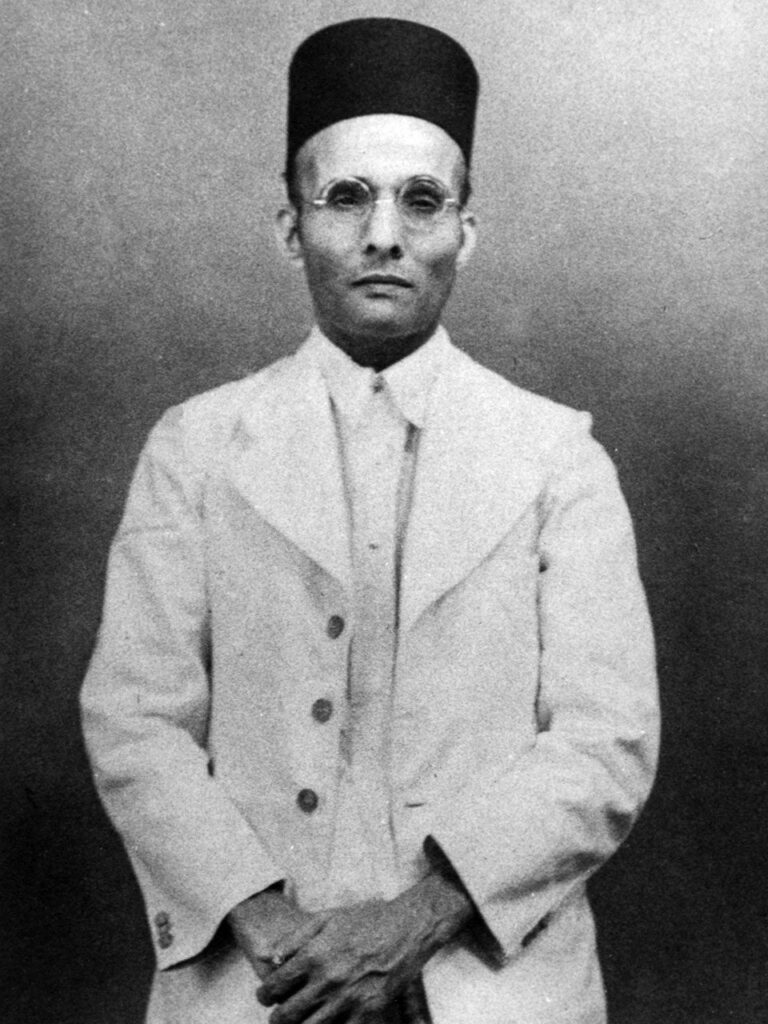
Savarkar’s Hindutva philosophy is the single most contested political doctrine in modern Indian history, and any UPSC aspirant has to be able to state it accurately before agreeing or disagreeing with it. Vinayak Damodar Savarkar (1883–1966) was a barrister, revolutionary, prisoner in the Cellular Jail at Port Blair, prolific author in Marathi and English, president of the Hindu Mahasabha (1937–43), and a vigorous social reformer in his home district of Ratnagiri. He authored Hindutva: Who is a Hindu? in 1923 — written while interned at Ratnagiri after release from the Andamans — and made the term Hindutva the centre of an explicit political philosophy distinct from religious Hinduism.
Savarkar’s Hindutva philosophy must be assessed in three layers: the textual definition in the 1923 essay, the social-reform record in Ratnagiri between 1924 and 1937, and the political claims about Gandhi-Nehru policy. The mercy petitions filed from the Andamans (1911, 1913–14) sit alongside as a biographical and ethical question that the textual analysis cannot avoid.
The 1923 essay: text and structure
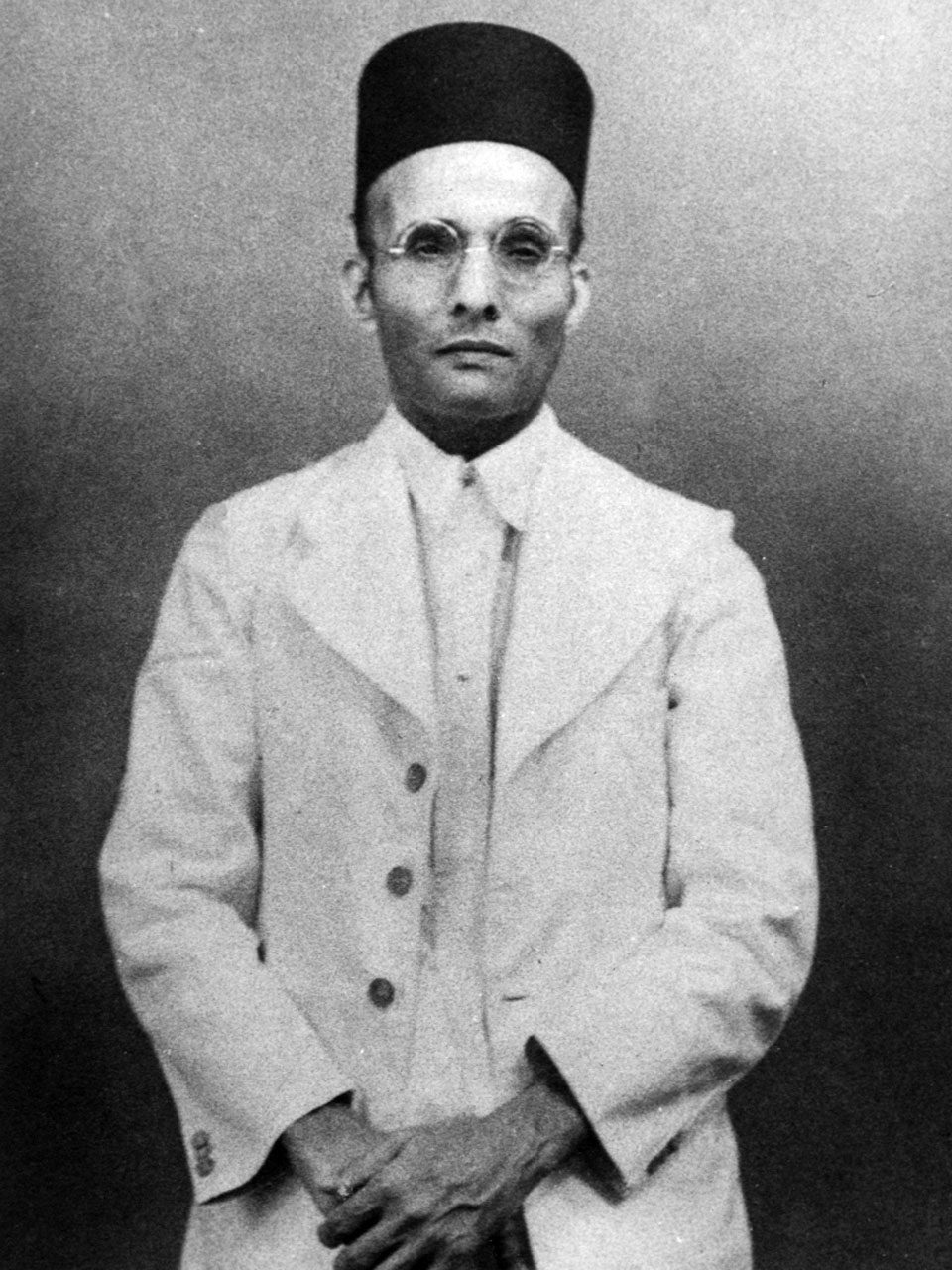
Hindutva: Who is a Hindu? was first published in 1923 under the pseudonym “A Maratha.” Savarkar’s argument is built as a definition. A Hindu, he writes, is one who regards the land between the Indus and the seas as both his Pitribhumi (fatherland) and his Punyabhumi (holy land) — and who shares in the common Sanskriti (civilisation) that this geography has produced. The definition is therefore territorial, civilisational, and ancestral all at once. Religion in the narrow sectarian sense is not a separate criterion; Hinduism (the religion) is one expression of Hindutva (the civilisational identity), not its whole.
Pitribhumi, Punyabhumi, and the Sanskriti criterion
The three-part formula is the heart of Savarkar’s Hindutva philosophy. Pitribhumi locates identity in shared ancestry and shared territory between the Indus and the Indian Ocean. Punyabhumi adds that the holy places of the religion must lie within that same territory — a criterion he argued included Hindus, Sikhs, Jains, and Buddhists, because the foundational sacred geography of all four lies inside the subcontinent. Sanskriti invokes a shared civilisational inheritance: language families rooted in Sanskrit, festivals, epics, art, and law-giving texts.
The criterion deliberately excluded Indian Muslims and Indian Christians as religious communities whose holy places lay in Arabia or Palestine. Savarkar argued this did not deny them civic rights as Indian citizens — his framework was civilisational, not theological — but it denied them the deepest layer of national identity. Critics across the spectrum, from Tagore to Ambedkar, found this exclusion intellectually and politically dangerous, and the debate on its consequences continues.
Note that Savarkar himself was a rationalist who described religion as superstition and treated Hindutva strictly as a political-civilisational identity, not as a faith. He campaigned against cow worship, idol worship, and orthodox ritual within Hindu society — a fact that complicates both the religious-right reading of him and the secular-left reading.
Social reform: Ratnagiri 1924–1937
Savarkar’s social-reform record is the part of his Hindutva philosophy most often forgotten in popular debate. After release from the Andamans in 1924 he was interned in Ratnagiri until 1937 with restrictions on political activity. He used the period to wage a sustained campaign against caste hierarchy and untouchability inside Hindu society.
He organised inter-caste dining (sahabhojan) at scale, with Brahmins eating publicly with so-called untouchables. He opened the Patit Pavan Mandir at Ratnagiri in 1931 — the first major Hindu temple in India explicitly open to all castes including untouchables, and the only temple where the priests included Dalits. He led campaigns against the seven shackles he identified inside Hindu society: prohibition of the Vedas to non-Brahmins, prohibition of inter-caste marriage, prohibition of inter-caste dining, ban on sea travel, ban on the return of converts, occupational rigidity, and untouchability.
For Savarkar, social reform was not a side-project. It was integral to Hindutva: a Hindu society that retained caste hierarchy and untouchability could not muster the civic solidarity that the political philosophy demanded. Ambedkar acknowledged this work directly in correspondence with Savarkar, even as he disagreed on the deeper diagnosis. The convergence with Ambedkar’s philosophy on the symptom — untouchability must end — was real; the divergence on the cure was equally real. Ambedkar held that the shastras themselves had to be abandoned; Savarkar held that scriptural reinterpretation and social engineering could suffice.
The Patit Pavan Mandir as philosophical statement
The Ratnagiri temple is the most concrete artefact of Savarkar’s Hindutva philosophy. It enacted in stone what the 1923 essay argued on paper: that the Hindu jati (caste community) was a colonial-era fossilisation of the jana (people), and that recovering the jana required dissolving the jati lines that British administrators had hardened.
Critique of Gandhi-Nehru “appeasement”
The third layer of Savarkar’s Hindutva philosophy is its political-historical critique. Savarkar argued that the Indian National Congress under Gandhi and Nehru had pursued a strategy of appeasement of Muslim political demands — beginning with the Khilafat alliance of 1919–22, continuing through the Lucknow Pact, the communal award, and the Cabinet Mission Plan — that gradually conceded a constitutional veto to a religious minority and made Partition inevitable.
He criticised the Khilafat movement in particular for tying Indian nationalism to a pan-Islamic cause (the Ottoman Caliphate) external to India, which he argued legitimised extra-territorial religious loyalty inside Indian politics. He criticised the two-nation theory when Jinnah propounded it — but also charged that Congress, by repeatedly conceding separate-electorate logic, had given the theory its political handhold.
Read against Gandhian philosophy, the disagreement is structural. Gandhi believed Hindu-Muslim unity was the precondition of Swaraj and worth almost any tactical concession. Savarkar believed concessions to communal demands hardened the demands. Both men were intelligent witnesses to the same events and read them in opposite directions. The historiography of Partition is essentially the continuation of this disagreement.
The mercy petitions controversy
No assessment of Savarkar’s Hindutva philosophy is complete without confronting the mercy petitions. Sentenced to two life terms (fifty years) for revolutionary activity, Savarkar was transported to the Cellular Jail at Port Blair in 1911. From there he filed petitions to the British colonial government — in 1911, 1913, 1914, and subsequently — seeking clemency. The 1913 petition is the most quoted: he offered to “serve the Government in any capacity they like” and described himself as “the prodigal son” willing to return.
Defenders argue the petitions were a tactical move available to all kala pani (Cellular Jail) prisoners as a recognised legal route, that other prominent revolutionaries also petitioned, and that the petitions were not unique to Savarkar. Critics argue the tone went beyond procedural petitioning and amounted to a pledge of loyalty that other revolutionaries — Bhagat Singh notably — refused even on the gallows. The Indian government released him to internment in Ratnagiri in 1924 partly on the strength of these undertakings.
The historiographical debate cannot be settled in a textbook line. For UPSC purposes, the relevant point is that the petitions are part of the primary record and any answer that ignores them is incomplete; equally, any answer that treats them as the entirety of Savarkar’s record ignores the 1923 essay and the Ratnagiri reform work.
Comparing Savarkar with other ethical traditions
Savarkar’s Hindutva philosophy sits uneasily with the universalisms of Tagore and the Gandhian fraternity of Antyodaya. It shares with Ambedkar’s philosophy a structural critique of caste, but diverges sharply on the scriptural question. Its emphasis on the political community as a civilisational unit places it closer to communitarian than to Kantian deontology (see deontology and Kant) or to the felicific calculus of Benthamite utilitarianism. It is also distinct from Rawlsian justice, which begins from individuals behind a veil of ignorance rather than from a civilisational we. Savarkar’s framework was largely indifferent to questions of women’s personal-law reform that Sucheta Kripalani and the women drafters championed and that culminated in the Hindu Code Bill — a silence his readers must register honestly.
Contemporary relevance
The contemporary uses of Savarkar’s Hindutva philosophy run through CAA-NRC debates, Uniform Civil Code discussions, the redefinition of citizenship under the 2019 Act, the discourse on civilisational versus territorial nationalism, and the long argument over Partition responsibility. Reading the 1923 essay before adopting any position on these debates is the minimum scholarly courtesy an aspirant owes a Civil Services answer-sheet.
Frequently Asked Questions
What is Savarkar’s definition of a Hindu?
A Hindu is one who regards the land between the Indus and the seas as both his Pitribhumi (fatherland) and his Punyabhumi (holy land), and who shares in the common Sanskriti (civilisation) of that geography. The definition is territorial, civilisational, and ancestral rather than purely religious.
How does Hindutva differ from Hinduism in Savarkar’s framework?
Hinduism is the religious tradition; Hindutva is the broader civilisational and political identity. Savarkar treated Hinduism as one expression of Hindutva, not its whole, and explicitly included Sikhs, Jains and Buddhists within Hindutva because their holy geography lies within the subcontinent.
What was Savarkar’s record on caste reform?
During his Ratnagiri internment (1924–37) he organised mass inter-caste dining, campaigned against the u0022seven shacklesu0022 inside Hindu society, and in 1931 opened the Patit Pavan Mandir — the first major Hindu temple explicitly open to all castes with Dalit priests.
What were Savarkar’s mercy petitions?
A series of clemency petitions Savarkar filed from the Cellular Jail at Port Blair from 1911 onwards, the most-cited dated 1913. He sought release in exchange for renouncing revolutionary activity. The petitions remain a contested ethical and biographical question and form part of any honest UPSC answer.
What is Savarkar’s critique of Khilafat?
He argued that the Khilafat movement (1919–22) tied Indian nationalism to a pan-Islamic cause external to India — the Ottoman Caliphate — and thereby legitimised extra-territorial religious loyalty within Indian politics, weakening a territorial nationalism that should have been built on the subcontinent itself.
How did Savarkar disagree with Gandhi?
He believed Gandhi’s strategy of repeated concessions to Muslim communal demands had hardened those demands and made Partition more, not less, likely. Gandhi believed Hindu-Muslim unity was the precondition of Swaraj and worth large tactical concessions. The disagreement is structural and continues to shape Partition historiography.
Was Savarkar religious himself?
No. Savarkar was a rationalist who criticised cow worship, idol worship, and orthodox ritual. He treated Hindutva as a political-civilisational identity, not as a faith — a fact that complicates both religious-right and secular-left readings of him.
Why does Savarkar matter for UPSC?
Because Hindutva — for or against — is a live constitutional and political category in contemporary India. CAA-NRC, UCC, citizenship debates, and Partition historiography all run through arguments Savarkar formalised. An aspirant must be able to state his position accurately before assessing it.
Tell Google you want more of this.
Add Anantam IAS as a preferred sourceOne tap, and this site shows up more often in your own Top Stories, AI Overviews and AI Mode. Remove it any time.