With over 5 crore pending cases across Indian courts, the traditional adversarial system has reached a breaking point. Alternative Dispute Resolution (ADR) — a non-adversarial, cooperative set of mechanisms to settle disputes outside regular court proceedings — is central to every judicial reform conversation. For UPSC aspirants, ADR cuts across GS II (governance, access to justice), GS III (ease of doing business) and essay/ethics papers.
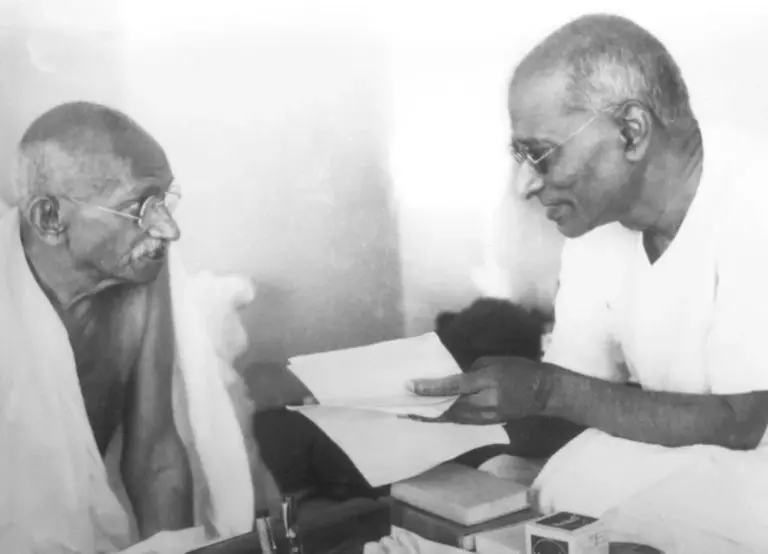
ADR finds its roots in ancient Indian dispute resolution through panchayats, and was forcefully advocated by Mahatma Gandhi who saw adversarial litigation as inherently divisive. The Chief Justice of India has repeatedly reiterated that ADR is essential to achieve the goal of justice.
The legal architecture
India's ADR framework rests on multiple statutes:
- Arbitration and Conciliation Act, 1996 — core legislation for arbitration and conciliation.
- Civil Procedure Code (Section 89) — mandates courts to refer suitable cases to ADR.
- Legal Services Authorities Act, 1987 — enables Lok Adalats.
- New Delhi International Arbitration Centre Act, 2019 — creates a flagship institutional arbitration hub.
- Mediation Act, 2023 — first standalone statute for mediation; operationalises pre-litigation mediation.
- Commercial Courts Act, 2015 — mandates pre-institution mediation for commercial disputes.
The four kinds of ADR
| Mechanism | Binding? | Third party role | Formality | Appeal |
|---|---|---|---|---|
| Arbitration | Yes | Tribunal decides the dispute | Formal, quasi-judicial | Limited (Section 34/37 Arbitration Act) |
| Conciliation | No (until parties sign settlement agreement) | Conciliator proposes terms | Less formal | Settlement has effect of arbitral award |
| Mediation | No (unless parties sign settlement) | Facilitates communication; does not decide | Informal, flexible | Settlement agreement enforceable under Mediation Act |
| Negotiation | No | Optional; parties may engage a third party | Least formal | None — private agreement |
Arbitration
- Submission to tribunal by agreement between parties.
- Decision (called an arbitral award) is largely binding and has the force of a court decree.
- Little judicial intervention, except at enforcement or limited challenge stage.
- Can be ad hoc or institutional (e.g., MCIA Mumbai, NDIAC Delhi).
Conciliation
- Impartial third party assists parties to reach settlement.
- Non-binding recommendations; parties may accept or reject.
- Emphasises mutually agreed outcomes.
- Less formal than arbitration; no strict procedural code.
Mediation
- Impartial mediator does not decide; helps parties communicate.
- Control of the outcome remains with the parties.
- Useful in family, commercial, labour and community disputes.
- Now statutorily regulated by the Mediation Act, 2023.
Negotiation
- Direct discussion between parties, sometimes with a facilitator.
- Non-binding until a written agreement is signed.
- Least intrusive mechanism.
Advantages of ADR
- Direct control over the outcome.
- Creative and tailored solutions — not limited by statutory remedies.
- Specialised expertise utilised (e.g., domain arbitrators in IT, shipping).
- Procedural flexibility and economy.
- Time saving — much faster than the regular court process.
- Confidentiality — particularly important for commercial disputes.
- Preserves relationships — helpful in family, community and B2B contexts.
Arbitration in India
The Arbitration and Conciliation Act, 1996, based on the UNCITRAL Model Law, is the principal statute. Key features:
- Part I governs arbitrations seated in India.
- Part II covers enforcement of foreign awards under New York and Geneva Conventions.
- Section 34 allows limited challenge to an award (procedural grounds).
- Courts cannot re-appreciate evidence; minimal intervention.
The New Delhi International Arbitration Centre Act, 2019 created the India International Arbitration Centre (IIAC) — a flagship body to rival Singapore, London and Hong Kong as an institutional arbitration hub.
Together, these two statutes create a binding mechanism enforceable through courts.
The 2019 and subsequent amendments
Key changes brought by the Arbitration and Conciliation (Amendment) Act, 2019 and subsequent updates:
Arbitration Council of India
- Independent body tasked with promoting ADR and grading arbitral institutions and arbitrators.
- Acts as a repository of judgments, both Indian and international.
- Maintains uniform standards of arbitration across the country.
Appointment and procedure
- Appointment of arbitrators by Supreme Court-designated arbitral institutions.
- Removes time restriction on institutional commissions.
- Written submissions within 6 months of appointment of the arbitrator (earlier had no upper limit).
Time-bound awards
- Awards in ad hoc arbitrations must be passed within 12 months (extendable by 6 months with consent); in international commercial arbitrations, the 12-month clock starts on completion of pleadings.
Positive effects
- Makes the process time-bound and facilitates ease of doing business.
- Creates the prospect of India as a global arbitration hub.
- Encourages resolution within India instead of preferred foreign seats such as London, Singapore or Hong Kong.
Concerns
- Initial composition of the Arbitration Council was dominated by government Secretaries, raising independence concerns.
- Interim measures under Section 9 are still routed through courts.
- Enforcement of awards against government entities remains slow.
Mediation Act, 2023
The Mediation Act, 2023, is a landmark:
- Establishes a Mediation Council of India to regulate mediators and training.
- Mandates pre-litigation mediation in civil and commercial disputes up to specified categories.
- Settlement agreements are enforceable in the same manner as court judgments.
- Recognises online mediation and community mediation.
- Creates a cadre of qualified and accredited mediators.
This Act complements the Commercial Courts Act, 2015, which already required pre-institution mediation for commercial disputes not involving urgent relief.
Lok Adalats
Though not always classed as pure ADR, Lok Adalats under the Legal Services Authorities Act, 1987, are India's most widely used statutory ADR:
- Decisions are binding and have the force of a civil court decree.
- No appeal lies from a Lok Adalat award.
- Cover both pre-litigation and pending cases.
- Permanent Lok Adalats deal with public utility services with enhanced pecuniary jurisdiction.
Latest developments (2024-26)
- The Mediation Act, 2023 was notified; the Mediation Council of India is being operationalised.
- The IIAC has begun administering commercial arbitrations; model rules are being finalised.
- The Supreme Court's Mediation and Conciliation Project Committee (MCPC) continues to accredit mediators and run training programmes.
- Updated context: The Arbitration and Conciliation (Amendment) Bill 2024 is under discussion to further streamline emergency arbitration, tribunal formation and enforcement against government entities.
- Section 89 CPC amendments and practice directions across High Courts now more aggressively refer cases to mediation.
UPSC relevance
For Prelims, remember:
- Arbitration and Conciliation Act, 1996 is based on the UNCITRAL Model Law.
- Section 89 CPC mandates courts to refer to ADR.
- NDIAC Act 2019 created the India International Arbitration Centre.
- Mediation Act 2023 is India's first standalone mediation statute.
- Awards of Lok Adalats are final and binding.
For Mains (GS II and GS III), ADR links to:
- Reducing judicial pendency and access to justice.
- Ease of doing business and investment climate.
- Constitutional ethos of peaceful dispute resolution (Gandhian principles).
- Federal dimensions — many ADR institutions exist at state level.
Common Mains prompts:
- Discuss how ADR mechanisms can address the problem of judicial pendency in India.
- Evaluate the role of the Mediation Act 2023 in transforming India's dispute resolution landscape.
- Can India become a global arbitration hub? Analyse legal, institutional and infrastructural requirements.
In essays, ADR illustrates the distinction between dispute "resolution" and dispute "adjudication" — a theme with rich philosophical and governance implications that goes to the heart of how a modern state balances liberty, efficiency and social harmony.
Tell Google you want more of this.
Add Anantam IAS as a preferred sourceOne tap, and this site shows up more often in your own Top Stories, AI Overviews and AI Mode. Remove it any time.