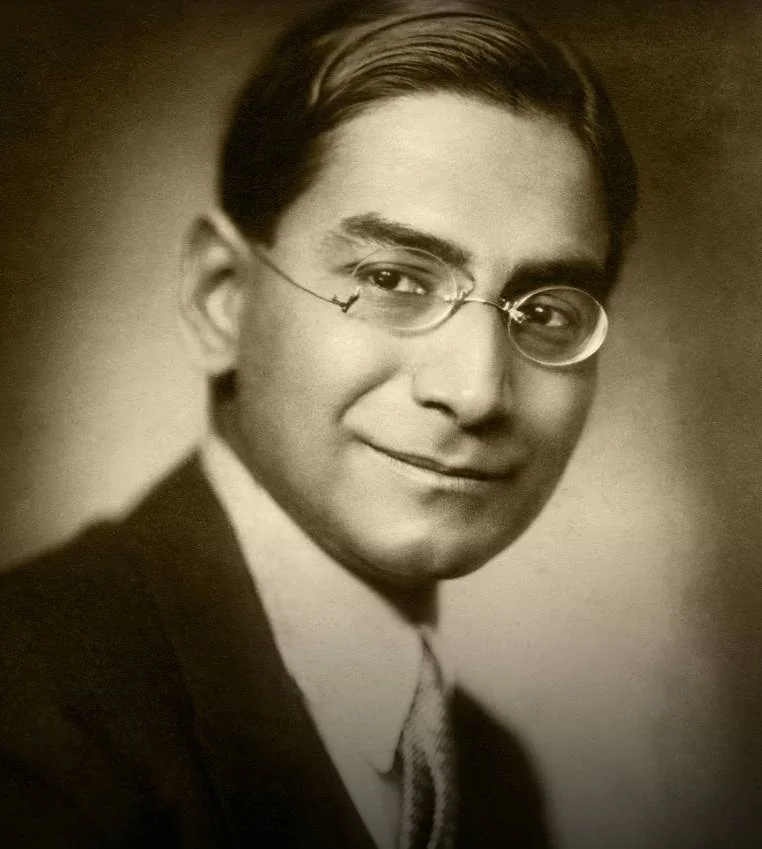
Dr Avul Pakir Jainulabdeen Abdul Kalam was India's 11th President, a distinguished aerospace scientist, and one of the most beloved public figures of the twenty-first century. Before serving as the "People's President" (2002-07), Kalam anchored India's science and technology programme through landmark contributions at ISRO, DRDO and the nuclear weapons programme. For UPSC, he is a foundational personality for GS Paper III (science and technology, defence), Ethics (case studies, role models) and Essay papers.
Early Life and Career
- Born on 15 October 1931 at Rameswaram, Tamil Nadu.
- Graduated in aerospace engineering from the Madras Institute of Technology in 1960.
- Joined DRDO (Aeronautical Development Establishment), then moved to ISRO in 1969.
- Eventually served as Scientific Adviser to the Prime Minister, Director of DRDL and Secretary of the Department of Defence Research and Development.
- President of India, 2002-2007.
- Passed away on 27 July 2015 while delivering a lecture at IIM Shillong.
Contributions to Indian Science and Technology
India's First Indigenous Satellite Launch Vehicle (SLV-III)
In the 1980s, India depended on foreign launchers. Kalam served as Project Director for SLV-III, which successfully deployed the Rohini satellite in near-Earth orbit in July 1980. India joined the exclusive club of countries capable of independent satellite launch. SLV-III laid the foundation for the ASLV, PSLV, GSLV and today's LVM3.
Missile Man of India: IGMDP
Kalam conceived and played the central role in implementing the Integrated Guided Missile Development Programme (IGMDP), which developed five missile systems:
- PRITHVI — surface-to-surface short-range ballistic missile.
- AKASH — medium-range surface-to-air missile.
- NAG — third-generation anti-tank missile.
- AGNI — intermediate and intercontinental range ballistic missile series.
- TRISHUL — short-range quick-reaction surface-to-air missile.
The IGMDP turned India into a missile-capable power, strengthening deterrence and reducing strategic vulnerability.
Pokhran-II Nuclear Tests (1998)
As Chief Scientific Adviser to the Defence Minister and Director of DRDO, Kalam played a central role in the Pokhran-II series of nuclear tests in May 1998, which established India as a declared nuclear weapon state. Operation Shakti tested fission, boosted fission and thermonuclear designs, securing strategic deterrence.
LCA Tejas
Kalam was deeply involved in the development of India's indigenous Light Combat Aircraft (LCA) Tejas, a symbol of aerospace indigenisation. He became the first Indian Head of State to fly in a fighter aircraft.
Kalam-Raju Stent
Kalam collaborated with Dr B. Soma Raju to develop the Kalam-Raju stent for coronary heart disease, drastically cutting costs and reducing dependence on imported stents — an early example of frugal biomedical innovation in India.
Kalam-Raju Tablet
Together with Dr Soma Raju, Kalam designed a rugged tablet for health-care administration in rural India, anticipating today's tele-health and ASHA worker digital tools.
India Vision 2020
Kalam co-authored "India 2020: A Vision for the New Millennium" (1998), laying out a roadmap for India to become a developed nation by 2020 through agricultural and food processing, electric power, education and health, infrastructure, IT and critical technology. The vision shaped policy thinking across successive governments.
As the People's President (2002-07)
- Known for his accessibility, humility and inspirational interactions with schoolchildren.
- Championed scientific temper, STEM education, and youth empowerment.
- Delivered transformative addresses on development, governance and ethics.
- Popular books: Wings of Fire, Ignited Minds, India 2020, Turning Points.
Awards and Honours
- Bharat Ratna (1997) — India’s highest civilian award.
- Padma Bhushan (1981) and Padma Vibhushan (1990).
- King Charles II Medal (Royal Society, 2007).
- Honorary doctorates from over 40 universities.
- Kalam's birthday, 15 October, is observed as World Students' Day by UN.
Influence on India's Strategic Ecosystem
Kalam’s career helped build an ecosystem linking ISRO, DRDO, the Department of Atomic Energy, academic institutions and the private sector. His emphasis on PURA (Providing Urban Amenities in Rural Areas), empowerment of youth, and technology for the last mile continues to shape programmes like Atmanirbhar Bharat, Make in India and Startup India.
Ethical and Policy Dimensions
- Exemplary public servant-scientist ethic: simplicity, integrity and service.
- Encouraged debate and dissent while maintaining national security responsibility.
- Advocated ethics in science, particularly around nuclear and missile technology.
- Promoted interfaith harmony through his personal life and writings.
Applications of Kalam's Legacy in Contemporary India
- SLV-III heritage continues in today's LVM3, PSLV and SSLV.
- IGMDP missiles underpin India's operational deterrent today.
- Pokhran-II led to the No First Use doctrine and the Nuclear Command Authority.
- Frugal bio-innovation inspired by Kalam-Raju stent influenced Jan Aushadhi and low-cost medical devices.
Latest Developments (2024-26)
- AI Action Summit, Paris (February 2025) — Kalam's advocacy of accessible technology echoes in India's AI for All framing.
- India Semiconductor Mission — realises Kalam's long-standing call for indigenous strategic electronics.
- Chandrayaan-4 and Gaganyaan — extensions of the space vision Kalam seeded via SLV-III.
- National Quantum Mission — frontier-science programme continuing Kalam's institutional legacy.
- DPDP Act implementation — digital governance anchored in Kalam's information-age thinking.
- Numerous Kalam Technology Centres, libraries and memorials have been dedicated through 2023-25.
- His vision of youth-led development resonates in India’s demographic dividend discourse and the National Education Policy 2020 implementation.
UPSC Relevance
For Prelims, remember SLV-III, Rohini satellite, IGMDP missiles (Prithvi, Akash, Nag, Agni, Trishul), Pokhran-II (1998), Bharat Ratna (1997) and Kalam-Raju stent. For GS III Mains, Kalam's work covers space, missile, nuclear and biomedical sciences. For Ethics and Essay papers, he is a peerless role model for integrity, vision, simplicity and patriotism. His speeches and books remain an inexhaustible source of quotes for Mains and Interview.
Tell Google you want more of this.
Add Anantam IAS as a preferred sourceOne tap, and this site shows up more often in your own Top Stories, AI Overviews and AI Mode. Remove it any time.